Cape Coast Area Head Calls On UCC Pro Vice-Chancellor

Cape Coast Area Head Calls On UCC Pro Vice-Chancellor

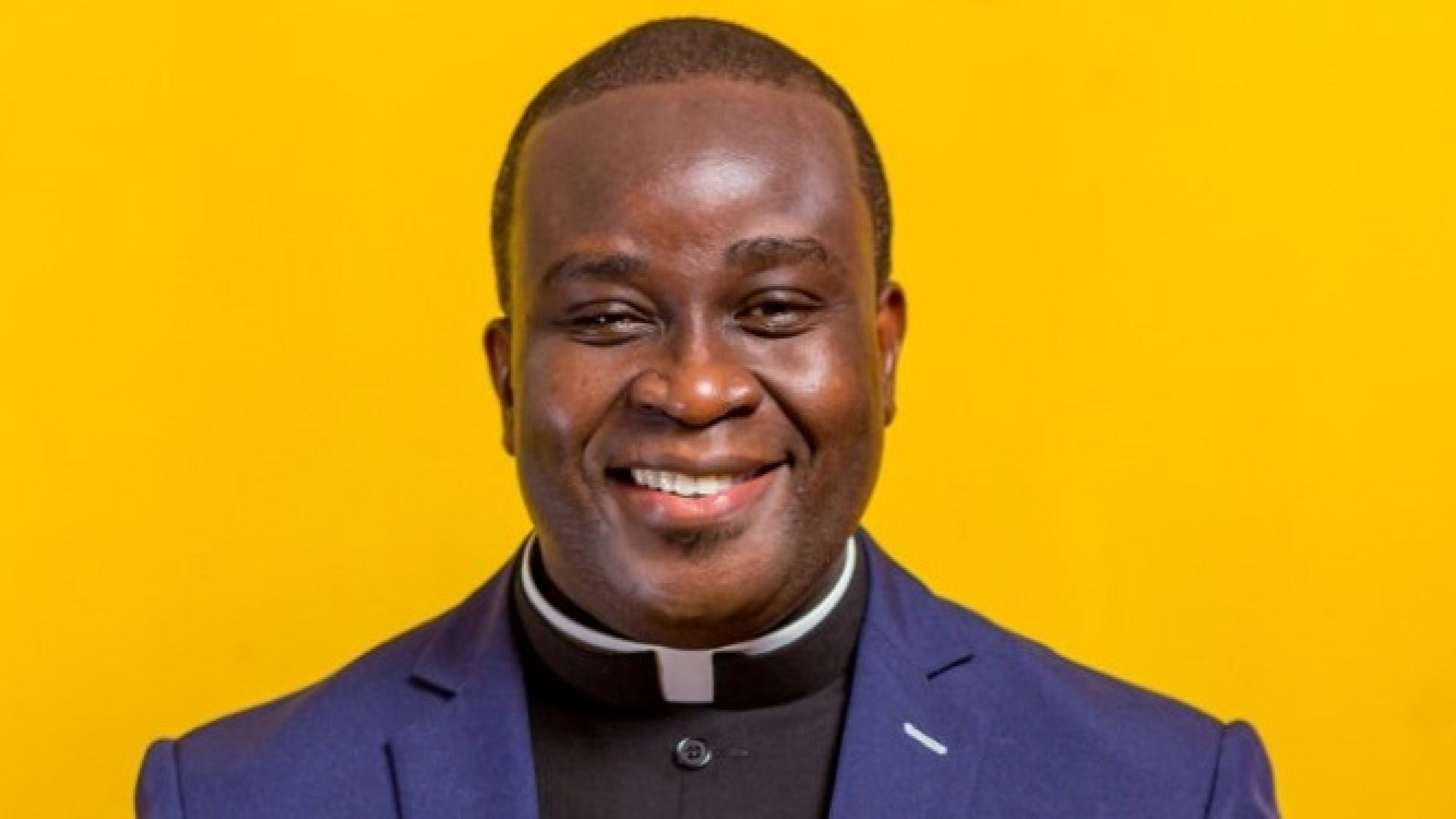
The Cape Coast Area Head of The Church of Pentecost, Apostle Samuel Yaw Antwi, has paid a courtesy call on the newly-appointed Pro Vice-Chancellor of the University of Cape Coast (UCC), Professor (Mrs.) Rosemond Boohene.

Visiting with his entourage on January 13, 2021, Apostle Antwi, an Executive Council Member of the church, on behalf of the leadership of the church, congratulated Prof. Rosemond Boohene on her appointment to the high office.

The delegation comprised Pastor Gideon Osei-Appau (Cape Coast Area Secretary), Pastor Frank Akonnor (Resident PENSA Campus Pastor of UCC), Elder Daniel Quainoo (Cape Coast Area Deacon), Elder George Amfo Antiri (Ag. Deputy Finance Director, UCC), and Elder Adom Konadu (UCC Human Resource – Senior Members Session).

Apostle Samuel Yaw Antwi took the opportunity to introduce to the Pro Vice-Chancellor the Resident PENSA Campus Pastor, Pastor Frank Akonnor. He also shared the Church’s Vision 2023 with her.

Assuring her of the church’s support, Apostle Samuel Yaw Antwi indicated that it has become prudent for the church to station Campus Pastors in tertiary institutions that have more than 1000 members to provide pastoral care and guidance to the students.

In her response, Professor (Mrs.) Rosemond Boohene expressed gratitude to the leadership of The Church of Pentecost for their immense support to the University. She took the opportunity to outline a few of her plans to the delegation, notably among them is the introduction of Community Clubs that will comprise Sports Clubs, Language Literacy Clubs, among others to help propagate the gospel of Jesus Christ to the youth.

The Pro Vice-Chancellor pledged to make a positive impact on the lives of the chiefs and the youth in the communities around the University, and in consultation with the PENSA Resident Campus Pastor, involve PENSA members in the mobilization processes.

Apostle Samuel Yaw Antwi stood in to present a congratulatory letter and a copy of the Church’s diary to Professor (Mrs.) Boohene. He also prayed with her.

Professor (Mrs.) Rosemond Boohene took over from Professor Dora F. Edu-Buandoh, whose term ended on 31st December, 2021. Prior to her appointment, she was the Director of the Centre for Entrepreneurship and Small Enterprise Development and has served the University for 24 years.

Report by Pastor Frank Akonnor, UCC.

Meet The Men Championing ‘Pentecost Hour’ Broadcast In Kumasi (2)

Meet The Men Championing ‘Pentecost Hour’ Broadcast In Kumasi

In a time when the entire world is faced with numerous challenges, difficulties, and trials, the authentic gospel of Jesus Christ, the Saviour of the world, must be preached earnestly, in season and out of season, using all available means to save the dying world.

Pentecost Hour, a religious broadcast programme sponsored by The Church of Pentecost, has been featured on the airwaves (radio, television, and online) over the years to propagate the unadulterated Word to people from all walks of life in the church’s quest to possess the nations with life-transforming truth that nourishes the soul, ignites passion, and restores hope in the nations.

Elder Kwame Ansah and Elder Isaac Owusu Ansah a.k.a. Mr. ‘O.’ have taken the Pentecost Hour radio broadcast in Kumasi, the Ashanti regional capital, to new heights.

PENTECOST NEWS has caught up with them and has provided this report.

Elder Kwame Ansah

Through the instrumentality of Elder Kwame Ansah, Pentecost Hour is now preached on four major radio stations in Kumasi, namely Silver FM 98.3 MHz, Hello FM 101.5 MHz, Ashh FM 101.1 MHz, and soon on Kapital Radio 97.1 MHz.

Elder Kwame Ansah fellowships with M. K. Yeboah Memorial Temple in New Tafo District in Kumasi. He joined The Church of Pentecost in 2008 as an ordained pastor from the erstwhile Christian Service Centre, a church he co-founded with one Anthony Owusu Amankwaah.

He had a special relationship with The Church of Pentecost as a result of his work as a dealer in musical instruments, and as a result, he had a soft spot for the church. Along the way, he and his co-founder decided to join The Church of Pentecost as a group, after consulting with the members, who numbered around 40.

Despite being an ordained pastor, he was made a member and sat among his members while an elder was transferred to preside over them.

According to him, he has never regretted his decision to join The Church of Pentecost because the Lord has used him to win many souls for Christ. He claimed that the church provided him with a larger platform and allowed him to be at the forefront of the evangelism drive at various levels of major conventions and rallies.

Elder Ansah stated that his former District Pastor, then Pastor Samuel Antwi (now Apostle and current Head of New Tafo Area), recommended him to the then Area Head, Apostle Kwasi Ackah-Baidoo (now retired), to represent the church on Hello FM. His first appearance pleased leadership of the church in his Area, which encouraged him to become a regular on Hello FM.

A man on fire for Christ, he is responsible for handling the Pentecost Hour broadcast in the city of Kumasi.

Elder Isaac Owusu Ansah alias Mr. ‘O’

Elder Owusu Ansah is a Kumasi-based businessman who specializes in iron rods, cement, and automobiles. He is the presiding elder of Hill Top Assembly, the Kwadaso District Finance Committee Chairman, the Kwadaso Area Assistant Evangelism Leader, and a member of the Area Executive Committee.

Despite his hectic business schedule, Elder Isaac Owusu Ansah is a devout evangelist who preaches the gospel both in and out of season. Elder Owusu Ansah has been regular preacher on Angel FM in Kumasi since 2012.  He described Elder Kwame Ansah as his mentor who introduced him to radio preaching.

The Church of Pentecost Media Ministry salutes these two cross-bearing giants, as well as many others who are doing outstanding work in spreading the authentic gospel of Jesus Christ through the mass media.

PENTECOST NEWS.

Untitled-1 (11)

Media Ministry Strategies With Social Media Ambassadors

Plans by The Church of Pentecost to take over the media space to propagate the gospel of Jesus Christ have been given an impetus following a gathering of social media ambassadors in the church.

The strategic meeting which was organised at the behest of the Media Ministry Pastor, Dr. Felix Dela Klutse, took place on Wednesday, January 19, 2022, at the Headquarters of the church, La in Accra.

Present at the meeting was the Head of IT at the Headquarters, Pastor Paul Laryea. It was also attended by leading bloggers behind various Christian channels such as Asa TV Christian Vibes, Asaph Diary, and Christocentric.

Giving the rationale for holding the meeting, Pastor Dr. Dela Klutse said that it has become necessary to meet all stakeholders to strategise in the church’s efforts to hijack the social media space for Christ.

According to him, the church cannot possess the nations without possessing the media, saying, “As Christians, if we do not possess the media space Satan will take over.”

The Media Ministry is poised to turn around the church’s media landscape by leveraging on the various ideas wrought forward by the participants.

PENTECOST NEWS.

Mangoase Assembly Donates To Heart For Ghana Missions Orphanage

Mangoase Assembly Donates To Heart For Ghana Missions Orphanage

The Mangoase Assembly of The Church of Pentecost in Akosombo District on November 8, 2021, paid a visit to the Heart for Ghana Missions Orphanage and presented a quantity of items to the inmates.

Led by the presiding elder, Elder Anthony Kottah, the church presented items such as bags of rice, cooking oil, toiletries, soft drinks, biscuits, foodstuffs, among others to the orphanage.

After the presentation, the management of the orphanage expressed gratitude to the church for the invaluable support.

It is interesting to state that majority of the children in the Home and one of the care takers fellowship with the Mangoase assembly.

Report by Anthony Kofi Kwarteng Kottah.

Pastor Emmanuel Foster Asamoah (Abasraba District, Winneba Area)

AFTER CHRISTMAS WHAT NEXT?

Christmas, a mass celebration of Christ, is one of the memorable Christian festivals that is celebrated worldwide to remember the birth of our Lord Jesus Christ who entered into this world through the womb of the virgin Mary. God implanted the seed of His Son—Jesus Christ—into the flesh of Mary so that Jesus would enter the world through the accepted means. The Christmas story marks the entrance of Jesus Christ in the activities of humankind in human form. This happened some 2000 years ago. The essence is for humanity who has fallen short of God’s glory because of sin to be restored through the saviour’s blood. God gave us the saviour because of his love for the world.

Yearly, Christians celebrate Christmas out of gratitude for what God did and is still doing, by giving to us Jesus. During such times, believers remember Jesus’ birth by giving each other gifts, worshiping him, and being especially conscious of the poor and less fortunate. During such periods, believers anticipate God’s visitation to cause them to ‘conceive’ treasures from above as Mary conceived Jesus. Some heavenly treasures could be wisdom, healing, business opportunities, marriage, and others.

Technically speaking, December 25 is the day earmarked for the celebration of Jesus’ birthday. Arguments are surrounding this day as to whether Jesus was really born or not on December 25. In spite of all these, the most important part of the story is that Jesus was born, and he lived among men. Fixing his birthday anywhere does not negate the fact that our saviour came into the world.

Now that the celebration of Jesus’ birthday (December 25) is passed, what must Christians do afterward? What must believers do after celebrating Christmas? In other words, after observing the birth of Jesus which is an event so to speak, what must believers do as lifelong activities? In short, “After Christmas, what next?” This write-up seeks to help Christians to know what must be done after observing Jesus’ birthday. Lessons are taken from the wise men (Magi), I prefer using the former in this study to guide us to live as ‘wise men’ by following their examples as they followed the leadings of God in search for Jesus after birth.

Who is a Wise Man?

Merriam-Webster Dictionary gives more than one definition of who a wise man is. One of them is that a wise man is a man of unusual learning, judgment, or insight. Wise men are people who are highly respected in their communities, for they speak wisdom and their messages carry weight. They comport themselves were well, hence makes it difficult for people to speak ill of them. They are thinkers and intellectuals in nature. Because of this, people look to them as mentors in life. Solomon opines that a wise man is very cautious, fears the Lord and does not condone evil (Prov. 14:16). Adam Clarke adds that such a person can never trust in himself, though he can be satisfied from himself. He knows that his sufficiency is of God; and he has that fear that causes him to depart from evil, which is a guardian to the love he feels. Love renders him cautious. This caution leads him from sin, and his confidence leads him to God. Out of fear of harm, Matthew Henry asserts they keep out of harm’s way, and stand in a fright when they find themselves entering into temptation. Adding on, John Wesley believes that wise men have all these qualities because they tremble at God’s judgments when they are either inflicted or threatened.

The Wise Men

Generally, it is assumed that there were three wise men because of the three gifts that were given: gold, incense, and myrrh (Matt 2:11). It must be stated clearly that the Bible does not give any number. There could even be only two, since such a calibre of persons might not be common in a given community. Some even have given the names of the wise men as Gaspar/Caspar, Melchior, and Balthasar/Balthazar.

The wise men came days, months, or possibly even years later to Jerusalem to look for Jesus, and not as early as the shepherds did (in Luke 2:8-20). They came from afar—from eastern lands (Matt 2:1), a vague point of origin that left room for many subsequent hypotheses. Some church fathers proposed Arabia on the basis of where the gifts (gold, frankincense, and myrrh) were likely to have originated. Others suggested Chaldea or Media/Persia because Persia had a caste of priests (magi), which would fit the description in Matthew. In a nutshell, the wise men came from a distant place. It is for this reason that Matthew tells his audience that the wise men visited and worshiped Jesus in a house, not at the stable (Matt 2:11). The implication was that when they got to Judea, Jesus had been moved into a house.

The historian Herodotus, together with Plutarch and Strabo suggested that wise men were partly responsible for ritual and cultic life (supervising sacrifices and prayers) and partly responsible as royal advisers to the courts of the East. Herodotus explained this belief by saying the ruler of the East commonly utilized the wise men’s knowledge of astrology and dream interpretation to determine affairs of state. The wise men were, therefore, concerned with what the movement of the stars (as signs and portents) might signify for the future affairs of history.

Such an interest could account not only for the wise men’s interest in the star in Matthew but also their conclusion, shared with Herod, that the star’s appearance signified the birth of a new ruler of great importance (Matt 2:2).

The Visitation by the Wise Men

We are told that the birth of Jesus sent signals to many people including shepherds (according to Luke) and wise men (magi), according to Matthew. Some people find it difficult to get a clear picture of these two groups. While some think they are not different just that the evangelists gave them different identities, others hold that they are not the same. I side with the latter. God intentionally through his agents (angels and star, Lk 2:9; Matt 2:2) broke the news about Jesus’ birth to both the shepherds and wise men. He did it for a reason, all relating to a common meaning. With a Gentile audience, Luke’s focus is on Mary (the favoured, Lk 1:28, 30) and the shepherds (the not favoured, Lk 2:14), while Matthew, with a Jewish audience, is on Joseph (Jew) and the wise men (unbelieving Gentiles). The Jews would have found it difficult to accept Luke’s Gospel for choosing a woman, Mary and the shepherds who were considered ‘perpetually unclean’. Hence, Matthew’s usage of Joseph and the wise men sounded okay to his audience. The essence of these two groups visiting Jesus is for the world to know that Jesus will show God’s favour, love, peace, and bring healing not only to his own (Jews), but to anyone willing to come to him: Jew or Gentile, those near or far, ‘the clean’ or ritually unclean, or the ones who have not even believed in Israel’s God.

Immediately when they received the information about Jesus’ birth and have observed his birthday by acknowledging him as ‘the new born king of the Jews’ (Matt 2:2), the wise men decided to go beyond acknowledging his kingship to search for him (the giver of life). While the shepherds went to Jesus’ birth place earlier because they stayed closer, the wise men came later. From a distant place in far Eastern land, how did the wise men identify where Jesus was? They followed the leadings of God through the star to search for Jesus. Because of time constraints, I will limit myself to the activities of the wise men from their home country to the time they finally saw Jesus to help us know their steps and take a clue.  I am doing so because of Solomon’s assertion that when we walk with the wise, we become wise, but associating oneself with fools leads them into trouble (Prov 13:20). This does not literally mean that the shepherds were fools, for they are not our focus of discussion. Not at all! They are also ‘wise men’, for they sought for Jesus. As said earlier, this study is limited to the wise men. Let us identify their footprints in search of Jesus to help us live as such in the days ahead of us.

Activities of the Wise Men

On receiving the news of the birth of the king of the Jews (Jesus) through the appearing of Jesus’ star (that is how the wise men referred to it), the wise men engaged in so many activities till they finally saw Jesus at Bethlehem in Judea. The following are some of their activities or what they encountered.

Wise men immediately set off to search for Jesus and worship him. They never exhibited a lackadaisical attitude but marshalled all their energy and strength to pay homage to Jesus. Not being Jews or believers, the wise men decided to walk through storms, rains, and dust to look for Jesus; they were from a distant place. They did it from their own volition; without compulsion. They did not allow the distance to deter them from undertaking that deadly journey, for they could have been devoured by wild animals. But because their intention to see Jesus was a good one, God ordered their steps till they found Jesus. As Christians, we must eschew laziness and dress up to search for Jesus at all times, irrespective of the times. Jesus offers life daily when all and sundry seek him continually. God through his prophet Jeremiah (29:13) tells us that “If you look for me wholeheartedly, you will find me.” Let us in humility search for Jesus to receive life and mysteries of life. It is no wonder that during the earthly ministry of Jesus, Gentiles sought to look for him (cf. Jn 12:21). They knew what was in him. We must search for him at all places as well as the temple, where God has placed his name. Jesus could be found anywhere—in homes, schools, workplaces, etc., but here is a place God has put his name where he wants his own to meet and worship him (2 Chr 33:7). Believers must not forsake the gathering of the brethren (Heb 10:25). As the wise men searched for Jesus, so must we do likewise to see the glory of the Lord. We must do so by following the leadings of God.

Wise men leave in humility. The wise men were no ordinary persons so to speak, for their outfits and gifts (gold, incense, and myrrh in Matt 2:11) give a clue of who they were. They were also partly responsible as royal advisers to the courts of the East. They never looked at who they were but made it a point to go and worship the child who was born. This is real humility. In this sober manner, God also made it possible for them to see Jesus. Aside that God exalted them to the point of making them sit with King Herod and the priests when they got to Jerusalem and were looking for Jesus. This affirms James 4:10 statement that when one humbles themselves, God lifts them up. As Christians, we must be humble in all matters that is our holistic Christian walk. In so doing, God will lift us up in all our endeavours, in addition to making us see Jesus.

Wise men look for the king of life to worship him. In their quest of looking for the king of life, their goal was to worship him when found. Waoo! People who are not even Jews and do not relate with Jesus in any way purposed to worship him at the expense of their god. (Looking at where they come from they do not serve the Almighty God). Remember the wise men are not Jews and would not be serving the LORD God Almighty. But their reason to worship Jesus tells that they mean business. Some Christians of late are looking for Jesus, not as the wise men did; their goal for searching for Jesus is other than to worship him. Are you searching for Jesus for material gains? Or for what reason? To receive healing? Or what? Let your reason for searching for Jesus be to worship him. It should not be limited to what you will get as Peter inquired (Matt 19:27; Lk 18:28). Worshipping Jesus is a form of seeking the kingdom of God and its righteousness (Matt 6:33). In so doing, God will add to you the all other things you will need for life and godliness.

Wise men pay attention to God’s leadings. The leadings of God is so clear that if one follows it closely they will not miss their way. God is our guide who leads us on always. He does so perfectly and in many ways. God leads the wise men with a star. This is a miracle! According to scientists (Astronomers), stars do not move. But in this story, we are told that the wise men are led by a star from the Eastern land to Jerusalem. There are always miracles for those who pay close attention to God’s leadings. I pray you will receive a miracle by pursuing the directions of God.

In following the leadings of God, we need not go ahead of him, neither must we fall far from him. Remember, he is our guide. As a tour guide will lead their tourists around to show and explain some tourist sites, so does God lead us in our Christian journey and tell us mysteries. We must neither go ahead of him nor fall far from him; we may miss what he tells us. Remember, he knows the way, and Jesus is the way. Paying attention to the one who knows the way is a done deal, for he will definitely take us home. We must follow the Lord closely with our senses working; he will speak to us and show us things. If we follow him punctiliously, we will know all these. Those who do not pay attention to God’s leadings fall into trouble. I guess you remember the story of the Israelites from Egypt to Canaan, a picture of believers walk to Heaven. Those who failed to follow the directions of God through his servant Moses did not get to Canaan; they died. May it not be said of you!

Words of wise men words, which come from their beliefs trouble wicked rulers and their kingdom (v 3).

Hardly do wise men speak loosely, for they live according to their name tag. They speak wisdom to effect changes and bring transformation. This wisdom comes from God who gives without measure. Wise men use this wisdom to speak against ills to cause people to live an upright lifestyle. This is exactly what the wise men did. On reaching Jerusalem, the star that led them disappeared. In wisdom, they decided to visit the king of the land to greet and inquire of the birth of Jesus. Their words (which were all about Jesus) that came from their mouths brought trouble to the wicked king and his kingdom. Why? On hearing of the birth of Jesus, they did not become okay. For the king knew someone was after him to take away his throne. Being partly Jewish, Herod knew someone with full Jewish descent was after his kingdom. Hence, became troubled. You have received Jesus in your life. Speak the oracles of God to cause trouble among people who have taken over your rightful possession. They have to leave the property for you. God should let it happen. Aside the physical is spiritual. There are times spiritual powers inhabit people to torment and destroy them. But these powers will always fall to the mighty power of God when God’s people speak. With Christ in you, speak to subdue their powers, for God to take over.

This causes rulers and priests to sit up in emergency meetings to conduct research (v 4). The inquiries of the wise men brought work to men—to search for where Jesus was to be born. The rulers and priests who were supposed to know the times and season for the Messiah’s coming had forgotten. Could it be that they had abandoned their assignment of searching through the scriptures? I think your guess is as good as mine. They should have told the king off head immediately they were asked. Well, it is to let us know that when wise men speak, it causes people to sit up for work. As believers, we must also not be like the priests, but must work vigorously and be studious. We should not be like those who do not know Jesus. As the priests forgot the times they found themselves to the extent of forgetting the birth of Jesus, if research had not been conducted, so this can happen to us when we fail to always stay glued to Jesus. Also, now that Jesus who is life is in us, may our messages cause lackadaisical people to work. As Christians, we must make sure things are working as expected; we have life.

Wise men engage in meetings with top officials to give them situational reports about the king of life (vs 4-6).

Who on earth has ever thought that foreigners could hold meetings with top officials without protocols? But it happened. The wise men were able to hold meeting with the king, and later with the others where the place of birth of Jesus was made known. This clearly tells us that anyone who diligently seeks Jesus is elevated to a higher position. Hardly did the natives had meeting with their leaders, but the wise men had the opportunity to have meeting with them. Herod had an ulterior motive of having the secret meeting with them, but it was all to underscore the fact that they were recognised in a foreign land. Be recognised as a true child of God in all spheres of life. Be elevated like the wise men to a position you will be among top management. God will surely let it come through.

Wise men search diligently for the king of life to help the unknown to know.

When the star that was leading them disappeared, the wise men in wisdom, as said earlier, went to inquire from the king of the land. I believe God intentionally made the star to disappear for the wise men to break the announcement of the birth of Jesus to the citizenry through the king; they did not know what was going on. This tells us that as believers anytime we fail to understand the times, God will bring people from nowhere to teach us what to do. We must not let this happen to us. Because God wanted them to be part of the story, God used the wise men to bring in the unknown for them to know. The king and the priest who did not know what was happening were made to know when the wise men paid them a visit to inquire of the birth of Jesus. This also tells us everything that happens to us is for a purpose. The wise men could have blamed God for causing the star to disappear. Or better still, they could have said so many adverse things about God as some Christians often do when they enter into trouble. But they seized the opportunity to inquire from the king. They continued to search for Jesus, and never abandoned their search. It was from this that they had the opportunity to have a meeting with the king. It was God’s way of announcing Jesus’ birth. It affirms that God works in mysterious ways. Some things happen to you for a purpose, to make God’s purpose or plan be fulfilled. We should avoid unnecessary talking and follow the leadings of God. He knows what he does.

Wise men are not cut off from God’s leadings, for the star appeared to them again. After God had brought in the king and his citizenry to hear of the birth story of Jesus, he made the star to appear to them again. Unbelievable! God will never leave his own to suffer loss. Never! He is always on time to save a situation. When he got to know that the wise men would have a challenge, aside bringing in the people, he continued leading them with a star. Note that when the star disappeared, God was still leading them not with the star, but in their steps. Remember what David says: “The Lord directs the steps of the godly. He delights in every detail of their lives” (Ps 37:21). God really directed their steps into the king’s palace. This tells us that when we are not seeing physical signs, God will still not leave nor forsaken his own (Deut 31:6). You used to hear God but you do not hear from him anymore. It could be a reason best known to you or otherwise. It happened to Abraham. He did not hear God for some time. After he had separated himself from Lot, the LORD appeared to him again. Set yourself apart from the things that make it difficult for God to show himself to you, and you will hear from him.

Wise men rejoice when they see God’s leadings in their life again.

Immediately they saw the star, a representation of God’s leadings, the wise men became happy. Always be grateful to God when he makes himself available to you. If you are able to have visions and revelations, praise God for it and do not make yourself the champion and the only available person. Be informed that God can use other people. Just be grateful to him for counting you worthy and showing you mysteries. Their (wise men) joy tells us that they were eagerly waiting for the leading of God. We must likewise be eagerly waiting for God to lead us at all times, irrespective of where we find ourselves—workplace, in business meetings, schools, cars, lorry stations, etc.

Wise men enter into Jesus’ house and they see him (v 11).

They finally located the place where Jesus was staying, not in a manger, but a house. This tells us that they met Jesus not at where he was born, but in a house they had relocated to. This is clearly telling us it took more days and months for them to finally get to where Jesus was. God always rewards those who diligently look for him. The writer of Hebrews (11:6) affirms this: “And it is impossible to please God without faith. Anyone who wants to come to him must believe that God exists and that he rewards those who sincerely seek him.” God will never allow one to work in vain, especially when you are looking for him. He always wants his own to look for him, to give them life. The wise men found Jesus. Their journey finally has come to an end. This tells us that until we find Jesus, we must not stop searching for him. We stop our search when we are done with our life on this world. Oh, yes! Searching for Jesus is not a one-day wonder. You will find him today, but it cannot sustain you throughout. You must continually search for his deep mysteries. No wonder Paul tells us that “I want to know Christ and experience the mighty power that raised him from the dead. I want to suffer with him, sharing in his death, so that one way or another I will experience the resurrection from the dead!” (Php 3:10-11).

Wise men worship the king of life and give him treasures (vs 11, 12).

How sweet it will be if I happened to be there. The joy that filled their heart on seeing Jesus caused them to give a planned offering or gifts to Jesus. First, was their whole beings given as an offering to Jesus. That is why Paul tells us to present our whole being as a living sacrifice—a true way to worship God (Rom 12:1). This was followed by thoughtfully planned parcels that were possibly not from Jerusalem, but from their home country. Anytime one sees Jesus, the joy in them causes them to give bountifully. They give cheerfully. They do not think of what they have but think of what Jesus will get. They make sure that those working on Jesus will get enough to cater for him and his work. What do you have for Jesus? Offer to him something costly, and not from the abundance of what you have. Everything we have, we received from God. Let’s give our all—body, soul, and might including our resources to Jesus, for with an open arm, he is waiting to receive.

Wise men pay heed to God’s warnings.

The wise men were told not to go back to Herod, for he had a diabolic motive. They hurriedly listened to God’s directions and never took the old route. It might have been difficult if the king had promised them something. But they listened to God’s voice instead of man. We are often confronted with two voices—God’s and man. As the wise men listened to God’s voice, so we must do likewise in order to keep Jesus safe. If they had gone back to Herod, Jesus might have been killed. There are so many things Christians at times do to kill Jesus in our daily living—heeding to the voice of Herod (in this case the devil). We do so because the devil gives us juicy offers that we find it difficult to turn down. Let us heed to God’s voice, for it will give us life and keep Jesus safe.

Conclusion

From the foregoing discussions, we know who wise men are—people who fear God and always make it a duty to search for Jesus. In their search for Jesus, the wise men undertook the assignment with all seriousness and in humility. This made God to reward them by seeing Jesus and holding meetings with people in authority. They worshipped Jesus on seeing him and gave him gifts. They never deviated from God’s leadings to the extent of not using the way that lead to the king’s palace when going back to their country. Their messages caused trouble among wicked rulers and caused them to sit up to hold emergency meetings—towards knowing the place of birth of Jesus.

We have to follow in these footsteps to make us remain wise men in this perverse generation now that we are done with Christmas. Be informed that a true soldier always heeds to the instructions and leadings of his commander. To be successful, we must follow the directions of God in our quest to search for Jesus and to know more of him. After Christmas what next? We must live as wise men who will search for Jesus through the leadings of God to know more of him. “Search for the Lord and for his strength; continually seek him” (1 Chronicles 16:10, 11).

By Pastor Emmanuel Foster Asamoah (Abasraba District, Winneba Area)

Pastor James Orhin Agyin (2)

“Jonah” And The Innocent “Cargoes” In The Ghana Black Stars’ Ship

Giving people the sack is not new in organisations. Of course, some were found to be complicit and, therefore, to blame. Still, there are also some whose innocence came to light by the passage of time. Over the last thirty-nine (39) years, the Ghana football association (G.F.A.) has engaged and sacked not less than thirty-six (36) managers of the Black Stars. Barely twenty-one months after taking up the appointment of managing the Black Stars, Coach C.K Akonnor was sacked for non-performance. To the surprise of many, Coach Milovan Rajevac was re-engaged in September 2021 as the manager of the national team. Yes, we all cannot wait to see Ghana’s fourth participation in the World Cup and annexing our fifth AFCON title. I was just nine years of age when I watched goalkeeper Owusu Mensah saving a penalty on a black and white television in 1982 when Ghana last won the cup in Libya. 

The multi-million-dollar question is whether C.K Akonnor and his predecessors were the real problems of the Black Stars in recent times. Or he had probably become one of the numerous personalities after James Kwesi Appiah to have suffered the fate of what I describe as an innocent “cargo” of a stormy voyage. On April 16, 2014, a South Korean shipping vessel known as M.V Sewol, en route from Incheon towards Jeju, sank and killed 304 people onboard. While fighting a strong current, the ship, which had loaded more than twice the legal limit of cargo, made a sharp turn that affected its balance and ended up capsizing. “Cargo” refers to the goods carried aboard the Ship for hire. 

The first chapter of the book of Jonah describes a similar crisis that resulted in a particular response by the Captain of a Tarshish- bound shipping vessel. Unlike the M.V Sewol, the cause of this near disaster had nothing to do with the cargo on board. It was orchestrated by God. The first thing the sailors of this ship did was to call and cry out unto their gods. Conspicuously missing in that desperate prayer was Jonah, who had gone below the deck, sleeping. When it became evident that their gods could not offer any help, the Captain and his crew decided to throw the cargo into the sea to lighten the ship. The innocent cargoes which carried the livelihood of many had to be sacrificed whiles the main reason for the crisis (i.e., Jonah) had gone into hiding. In this article, the innocent “cargoes” refer to those who may have nothing to do with an individual or organisation’s woes, yet one of the first to be fingered and treated as the scapegoats of that crisis. The “Jonahs” represent the leading cause and reason for a particular problem. 

Jonah’s interrogation began after the cargo was sacrificed in the Tarshish-bound ship, but the situation kept worsening. After casting lots, it came to light that someone, much lighter in weight than the cargo, should instead have been offloaded into the sea. In the stormy weather the current Black Stars ship is cruising through, is there anyone lighter in weight than Kwesi Appiah or C.K Akonnor or Milovan Rajevac that needs to be offloaded instead?

Today, we can all conveniently take cover under the management principle of ultimate responsibility and call and justify the sacking of Coach Milovan who has been with the team just a couple of weeks since his re-engagement. Still, time is what will tell whether he and his predecessors were the real problems. Judging from where Jonah had gone to hide, he would have been the last to be found and thrown overboard if it got to the stage where human lives were to be treated as the cargo. As we oscillate between local or expatriate managers, are some “Jonahs” comfortably hiding in our football management who instead need to be ousted? Some of the possible “Jonahs” hiding in the Black Stars ship may include;

  • Defective player selection regime,
  • Lack of courage to rest some of the exhausted legs,
  • The attitude of those selected,
  • Populace’ impatience in the rebuilding process,
  • Lack of support for the players,
  • Low morale of players,
  • Quality of the managers engaged etc.

The simplest and easiest to offload from the Black Stars ship have always been the coaches. I will, therefore, not be surprised if people begin to call for the termination of Coach Milovan’s contract especially when the Stars have suffered an early and embarrassing exit from the ongoing AFCON in Cameroun. Similarly, and without condoning ungodly provocative dressing, specific colours, styles, hairstyles, and even footwear have been made scapegoats instead of dealing decisively with the people’s problem of lust. 

If favouritism in player selection is the problem, let us offload it and leave the issue of winning bonuses alone. If player attitude at camp and on the field of play is the problem, let us offload it and stop entertaining superstitious beliefs around jersey numbers and colours. Absolute calmness only comes after offloading the “Jonahs,” and not their accompanying innocent “cargoes.” The handlers of the national soccer team must, therefore, seek the face of God and gather the courage to imbibe professionalism in managing the team. It is well. We will surely bounce back. 

Long live Ghana Black Stars!

Written by Pastor James Orhin  Agyin (j.orhinagyin20@icloud.com)

Pastor Abraham Gyabaah Fetes 46 Widows (2)

Pastor Abraham Gyabaah Fetes 46 Widows

The Twifo Bimpong-Egya District Minister of The Church of Pentecost in Twifo Praso Area, Pastor Abraham Gyabaah, and his wife Evelyn have feted 46 widows in the district.

During the maiden event which took place on December 29, 2021, at the Twifo Bimpong-Egya Central Auditorium, Pastor Gyabaah said that the occasion was to enable the widows to experience the joy of Christmas.

He encouraged them to focus more on Christ by placing their trust in Him and relying solely on Him while reflecting on Matthew 6:25-33. He said it is not difficult for God to provide for His children.

Pastor Gyabaah emphasized that despite the various challenges in widowhood, God is always ready to supply and provide for the needs of His children as he shared the story of his mum, a widow to encourage them.

“I understand your challenges as widows, because my mother is also a widow. She lost her husband (my father) when I was a little boy. She went through a lot of challenges such as financial hardships, loneliness and psychological instability for some time, but thank God He has been able to sustain her and her children,” he said while encouraging them to engage in activities that will make them profitable and economically sound.

Deaconess Abigail Koi-Larbi, the Twifo Praso Area Women’s Ministry Leader, advising the widows, asked them to cast their burdens unto God through prayer, faithful service and believing in His Word.

As part of the event, the widows were given free medical screening and half pieces of clothes each, among other packages.

In a heartfelt appreciation, the widows expressed their gratitude to Pastor Abraham and Mrs. Evelyn Gyabaah, and Deaconess Abigail Koi-Larbi for the kind gesture.

Also, joining in the celebration were some District Executive Committee Members and District Women’s Ministry Executives.

Report by Joseph Smiles Adu.

Nkawkaw Area Women's Ministry Organises Entrepreneurship Training For Women

Nkawkaw Area Women’s Ministry Organises Entrepreneurship Training For Women

The Nkawkaw Area Women’s Ministry of The Church of Pentecost has organised a three-day entrepreneurship workshop and exhibition for women in the Area.

The event, which took place from December 13th to 15th 2021, was targeted at empowering women in tackling societal challenges of unemployment with vocational and entrepreneurial skills. It also sought to inculcate the habit of saving in the women.

The facilitators were Mrs. Grace Aniakwaa (wife of the Area Head), Mr. Joshua Nii Quaye, Mrs. Millicent Ndedeh, Mrs. Beauty Buabeng, Mrs. Harrienta Danquah and Mrs. Wendy Gyimah.

Notably among the courses covered were the making of Powerzone (Thick/light Bleach), Liquid Soap, Washing Powder, Bar Soap, Disinfectant, Floor Cleaner, Shower Gel and Hair Shampoo.

With over 500 participants, the trainees left the exhibition centre skilled in the making of Body Cream, Asaana, Millet Drink, Fresh Yogurt, Soya Bean Khebab, Koose, Pastries and Cakes, Fried Rice and many more. They were also given certificates and training manuals as part of the packages.

The participants in return showed their appreciation to the Area Head and his wife, Prophet Foster and Mrs. Grace Aniakwaa, as well as the Area Women’s Ministry led by Mrs. Gifty Addo, for their thoughtful initiative in empowering them.

PENTECOST NEWS.

Article - Apostle Denteh

Tackling The Prophecy Controversies In Ghana: An Open Discussion

Many Christians are displeased with the way the prophetic ministry is being handled by some “men and women of God” in Ghana as against the noble biblical standards of Christian leadership. The glorious ministry that is one of the five-fold apostolic ministry, characterised by the virtues and fruit of the Spirit, as stated in 1 Timothy 3:1-7 and Galatians 5:21-22, appears to have largely turned into a harem of ungodliness, mischief, and vices on the Ghanaian Christian landscape.

This article discusses fundamental issues of the desperation of a section of the Ghanaian public concerning “prophecy about deaths” of certain individuals, the chaos it creates among the populace, and the ridiculous behaviour of some so-called prophets behind such prophecies. An attempt will be made in the article to recommend ways to improve and streamline the prophetic ministry in Ghana to minimise the rampant scandals it has witnessed.

While one cannot rule out the presence of genuine prophets in Ghana who speak the mind of God in an aura of revered spirituality and Christian ethics, we equally cannot close our eyes to the excesses and unethical behaviour of some purported church leaders in the light of the precepts of Scripture. The limitation of this article is not to give a theological meaning to the prophetic ministry, but to address the ethical dimension of how the prophetic ministry is operated in Ghana. How do we deal with this situation in our cultural context and legal framework without stifling the fire of the Holy Spirit in the prophetic ministry?

The Biblical Qualifications of a Christian Leader

For the sake of the discussion, we need to take note that the apostle Paul is very particular about the qualifications of Christian leadership: 

Whoever aspires to be an overseer desires a noble task. Now the overseer is to be above reproach, faithful to his wife, temperate, self-controlled, respectable, hospitable, able to teach, not given to drunkenness, not violent but gentle, not quarrelsome, not a lover of money. He must manage his own family well and see that his children obey him, and he must do so in a manner worthy of fullrespect. (If anyone does not know how to manage his own family, how can he take care of God’s church?) He must not be a recent convert, or he may become conceited and fall under the same judgment as the devil. He must also have a good reputation with outsiders, so that he will not fall into disgrace and into the devil’s trap (1 Tim. 3:1-7, NIV).

The above passage opens with a description of Christian leadership as a noble task, but that statement is followed by a call for Christian leaders to be “above reproach.” In this context, “to be above reproach” means church leaders must be blameless and role models of society. A critical issue in the passage is the requirement for every God-fearing, noble, and decent Christian leader.

The church leader must be “faithful to his wife, have self-control, be respectable and not violent but gentle, not quarrelsome, and not a lover of money.” The inference is that the Bible is emphatic on the character of a church leader, even more than his capacity or anointing to perform a specific task in God’s Kingdom. This is evident in 2 Peter 1:5: “In your faith supply moral excellence.”

Paradoxically, and unfortunately, the aforementioned biblical principles are flouted by some church leaders today to the extent that they do not show remorse when they fall short of these biblical standards. Their unethical actions speak louder than the gospel they profess to preach. For example, how do we relate the attitude of ministers who boast of being quarrelsome, violent, and intemperate in their use of language to the qualification of Christian leadership stated in the above passage?

It is quite common in recent times to observe some Christian leaders spending time on various media outlets abusing others, fabricating stories against their innocent victims, priding themselves in being quarrelsome, treacherous, wealthy, and dreadful in unleashing terror or invoking curses on their perceived opponents. Sadly, their “disciples” applaud them for their rudeness and unethical behaviour. Are these traits what Christianity stands for?

Since the Bible is clear on the life and ministry of Christian leaders, many people who are well-versed in the scriptures and conversant with Christian ethics and virtues wonder why some church leaders, particularly the self-acclaimed prophets in our day, seem to comfortably behave contrary to the above biblical principles. 

Their aggression, vituperation, and threats make it difficult or risky for noble Christian leaders to attempt to counsel them. Their use of intemperate language has a national concern. The misconduct is becoming so alarming that continued silence will let some people perceive all Christians to be like-mannered and also cast a slur on the prophetic ministry.

The Battle Lines of the Prophets

Some of these “prophets” seem to have drawn the battle lines to assert their prophetic authority and supremacy in a bid to remain relevant to their followers. Their modus operandi has introduced what many people see as unethical practices into Ghanaian Christianity and the situation is very worrying.

Prophet versus Prophet

Fundamentally, prophets are ministers of God who declare the will of God to His people. The term “prophet” in the context of this discussion is chosen to represent any operator of the five-fold ministry stated in Ephesians 4:11, 12 (apostles, prophets, evangelists, pastors, and teachers) because some of them also prophesy. It is common these days to see two or more prophets with their “disciples” locking horns over trivial issues. The insults, uncharitable words, and invectives used by the contending factions make the church look unattractive to some people, including potential converts to Christianity.

The situation has become so common that, these contending prophets try to rationalise and theologise their actions just to give false assurance to their unsuspecting followers to accept their misconduct as normal of Christian leaders. Sometimes, they twist certain passages of Scripture to justify their actions. The most worrying aspect of these conflicts is that they prefer to be captured live in the mass media as they showcase their anger and power in terms of their ability to insult and invoke curses on their opponents.

To them, the more insults and curses they invoke, the more powerful and good they feel about themselves over others who are noble and meek in Christ and would not want to descend into the gutters with them. They have no regard for decorum, confidentiality, and Christian ethics. The church leader, as a spiritual mother or father, deals with many private issues of people making confidentiality and trust the hallmark of his or her ministry. Jesus says, “Take my yoke upon you and learn from me, for I am gentle and humble in heart, and you will find rest for your souls” (Matt. 11:29, NIV).

Unfortunately, most of the people purported to be doomed because of their curses still live on to enjoy God’s grace for their lives, and yet these prophets would not learn their lessons to model the life and ministry of Christ. Many of them have not come to the realisation that their style of ministry and behaviour is an affront to the tenets of Christ’s Kingdom principles and values because that is not how Jesus behaved even in the midst of adversity.

Warning against Revenge

The Bible says, “Never take revenge. Leave that to the righteous anger of God. For the Scriptures say, ‘I will take revenge; I will pay them back,’ says the LORD” (Rom. 12:19, NLT). This gives us an idea that even if it becomes necessary for us to exonerate ourselves amidst unfounded allegations, we should leave the vengeance aspect in the hands of God without resorting to pouring of curses and invectives on our opponents.

Much as we have the right to defend ourselves, it does not mean that we should use insults and curses to address our situation. The Bible says, “But I say, if you are even angry with someone, you are subject to judgment! If you call someone an idiot, you are in danger of being brought before the court. And if you curse someone, you are in danger of the fires of hell” (Matt. 5:22, NLT). This is a warning by Jesus against invoking curses on other people. How do we justify or defend the phenomenon of some people of God who curse their perceived opponents in the light of this Scripture? 

Prophet versus the State

There have been reports in the Ghanaian media about the contention between some prophets and the state security apparatus. The most recent of these situations resulted from the directive by the Ghana Police Service that reminded the nation that issuing statements of “doom with potential to cause fear and panic” in the name of prophecy is against the laws of Ghana and, therefore, prophets are to be discreet with their public utterances during the 31st December 2021 watch night-church services.

The directive caused anger among some prophets to the extent that they reacted differently to the order from the Ghana Police Service. The directive is against the backdrop of a series of what many consider as “the prophecy of doom” concerning certain individuals during previous December 31 watch-night church services and the chaos that followed those prophecies. This means that both our socio-cultural context and legal framework consider public declaration of impending deaths of individuals as causing “fear and panic,” particularly if it is declared through the mass media. 

Sadly, being so frustrated about the directives, some prophets and their followers hypocritically made it look as if the Police Service has banned prophecy in its entirety, and as such, they will fight back. They threatened that they would not allow any institution to gag the prophets of God from speaking the mind of God.

Although it is biblically acceptable to be steadfast in our faith as Christians and uphold our Christian values in the face of persecution, no matter how the consequences may be, the question being asked is, should this principle be applied to the case at stake when it is obvious to even the Christian community in Ghana that the mischief of some church leaders tends to undermine the development of Christianity in this country?

Another question parting my lips is: Did the police administration really say that they were banning prophecy? The answer is a big “NO”! and that is obvious to all well-discerning Ghanaians. Perhaps some people have resorted to these lies just to win public sympathy and to make room for their invectives and misconduct to thrive.

On the contrary, the police rather issued a warning to those prophets who seek to create fear and panic such as prophesying publicly through the mass media about the death of someone. Such prophets seem to be insensitive to the psychological trauma that their victims and families may pass through as a result of being informed in the media through prophecies that they are going to die. What prevents these men and women of God from issuing the prophecies privately to their intended recipients? Is the use of the mass media (even before the potential victims hear of it) a fame-induced or Spirit-inspired approach?

Confidentiality as Ethics

Frankly speaking, the Police Service would not prevent prophets to reveal privately to any individual who is facing a looming disaster and that has been the practice of men and women of God with high ethical standards. The new phenomenon of employing the media to telecast such revelations is actually very disturbing. After all, the prophecy is not meant for the consumption of all Ghanaians? How would society accept the behaviour of a health practitioner who makes public the medical condition of his or her client?

If we are to consider that the prophets of God are spiritual fathers and reputable people in society, then why should their revelations about a private individual (oftentimes some of these individuals are not even members of their churches), which are supposed to be confidential, be broadcast or telecast on all media outlets for the public to know about someone’s “spiritual problems”? Are they sensitive to the privacy of the individual and the stigmatisation he or she is likely to face? Is the prophet seeking fame or the redemption of the victim’s situation?

In the Bible, the Lord revealed to the prophet Isaiah the impending death of King Hezekiah. Instead of declaring it publicly to the hearing of the entire nation Israel, Isaiah delivered the prophecy privately to the king. The Bible says, “The prophet Isaiah, son of Amoz, went to him and said, ‘This is what the LORD says: Put your house in order, because you are going to die; you will not recover” (2 Kgs. 20:1, NIV).

In fact, any well-trained Christian leader with decorum knows how to handle confidential issues because every man or woman of God needs self-control as a fruit of the Spirit (Gal. 5:22). After all, our achievement in ministry is to glorify the name of the living God and not for our self-glorification.

Back to the discussion, while the directives of the Police Service aroused debate among the Ghanaian Christian community with many anticipating what the news on prophecies during the new year festivities (particularly during the 31st December, 2021 watchnight services) will be, some of the prophets settled on what people consider as funny and weird strategies. Out of desperation for fame and power, they adopted unethical schemes, ploys, fictions and lies to communicate their messages, just to give their “disciples” a false sense of hope that they were still in charge as “commanding” prophets of God. 

The Prophet and his Territory

Critical in the causes of battles among some prophets in Ghana is the issue of territorial powers, the battle for supremacy, political, and regional, national or international recognition. One may think that the various titles such as regional prophet, national prophet, major prophet, territorial prophet, and the African prophet found in our society are merely wading into absurd nomenclature, but they are not.

These titles have been strategically churned out by some prophets and conferred on themselves just to look dreadful or famous. The titles are jealously defended to the extent that they monitor the ministry of one another to undermine those who may want to rise to their levels. Ironically, these titles have also become the source of conflicts among some prophets and their followers. Like their masters, one’s ability to insult, vilify, and abuse the perceived opponents of one’s master has become proof of loyalty to some “men and women of God”. The most loyal disciple must be an expert in insults and vituperation on behalf of his or her master. Those who do that perfectly can secure their master’s favour and admiration.

In James 4:1-3, the Bible speaks into the dynamics of these kinds of pride-induced conflicts in the church and we must allow ourselves to be counseled by this passage:

What causes fights and quarrels among you? Don’t they come from your desires that battle within you? You desire but do not have, so you kill. You covet but you cannot get what you want, so you quarrel and fight. You do not have because you do not ask God. When you ask, you do not receive, because you ask with wrong motives, that you may spend what you get on your pleasures.

Insults as a Weapon – The Invective Ministry Syndrome

As already stated, insults and curses through the media have become the major weapons of these prophets, instead of God’s Word which is described as the sword of the Spirit. I have termed this shameful attitude as Invective Ministry Syndrome (IMS). IMS in a sense that the strand of ministry they exhibit is characterised by insults, vilification, vindictiveness, and abuses.

The IMS is so cherished by its followers that it is common nowadays to hear some men and women of God blatantly boasting of their ability to insult people rather than propagating the gospel for salvation of souls. Some so-called church leaders have been able to acquire their own television or radio stations not necessarily to promote the gospel as it is mandated in the Bible but to have a wider media platform to abuse their opponents and promote their ungodly attitude.

Sadly, when God wants His true children to dare harsh climatic conditions (like it happened in the early days of Christian mission) to propagate the gospel to His creation, some Christians today are seriously rehearsing insults, curses, flaunting their wealth on the mass media, and using profane language in place of righteousness. Most of them even fear to minister to the downtrodden at remote places where they know that their effort will not accrue any fame, financial returns, or dividends.

If this is the case, then how do we understand the Great Commission and the Missio Dei (the mission of God) divinely mandated through the church (Matt. 28:18-20; Jn. 20:21; Ac. 1:8)? The major concern is that the rich Christian legacy bequeathed to us may be corrupted with this Invective Ministry Syndrome and abuses if we all become passive and allow it to fester.

Addressing the Culture of Insults

Already the ecumenical bodies in Ghana are concerned about the culture of insults in the Ghanaian political space and its effect on our nation-building. They are trying their best to address the situation so for some church leaders to be exhibiting the same attitude is an issue of concern. We want our children to be innovative, creative, progressive, and people with decorum rather than being rude to the elderly and other innocent people. We have many progressive people in the world whose ingenuity has transformed their systems of this world without using insults and abuse of other people.

The unfortunate effect of this is that some young Christians wrongly think that the prophet who is ‘anointed’ or progressive is the one who is able to insult or curse more than his colleagues. This might suggest why some church leaders seem to have a stand-by squad of young people armed to the teeth with insults ready to cast insinuations against the perceived opponents of their masters. This model of Christianity being presented to the younger generation should be a serious issue of concern for every Christian; it is ridiculous because it is not what Christian values and principles stand for.

The future of Christianity with its glorious nature should not be destroyed in our day because our forebears toiled to develop the Christian faith to bring it to its current status. They fancied righteousness, holiness, and had the passion for mission work; instead of boasting of material wealth and abuse of innocent people. Christianity in Ghana has earned an enviable position across the globe and it must be jealously guarded for posterity to cherish.

All over the world, there are Christians sent by mission-minded churches in Ghana as missionaries to preach the gospel and that is what we want to see more of from any thriving Christian denomination in Ghana. We need more young people ready to sacrifice their lives and wealth for the propagation of the gospel; not those trained to cast insinuations as their core mandate in ministry.

Resolving the Issue

Based on the arguments advanced herein, the prophecy brouhaha in Ghana and the desperation to be the first to release a prophecy of doom about certain individuals is indeed largely, fame driven and about self-aggrandizement. Otherwise, there would not have been any reason to make it the core mandate of ministry while the propagation of the unadulterated gospel of Christ at every part of the country has been relegated to the background by some of these prophets.

Although this challenge seems insurmountable to address, the church would still have to attempt to resolve it in the light of biblical standards for Christian leadership. While we admit that no human being is perfect and may faulter in the discharge of their duty, the apostle Paul gives us a clue that Christians must press on towards perfection (Phil. 3:12).

In Matthew 5:16, Jesus admonishes Christians to be role models in society so that by their good behaviour, His name would be glorified: “In the same way, let your light shine before others, so that they may see your good works and give glory to your Father who is in heaven” (ESV). Children of God have the responsibility to model Christian virtues wherever they are; that is what makes people glorify God’s name. To glorify God means, through our good conduct in Christ, many are attracted to faith in Christ.

Another focal point is the role of the Christian community in redeeming the good image of the church in a society where many people ridicule the model of the prophetic ministry as demonstrated by some church leaders. The prophetic ministry itself is a noble office, but the misbehaviour of some prophets today constitutes serious concern for the church in Ghana.

To avoid external regulation of the activities of the church (as has been agitated in some quarters), we should avoid being passive or intimidated by the insults. We need to muster the courage to take the bull by the horns to address the excesses exhibited by the activities of some ministers of the gospel. The church should rethink models of Christian doctrines and practices to be promoted and develop strong ecumenical conferences to help church leaders pattern their ministries after that of Jesus from which the Christianity we believe in, live by and preach originated.

I must reiterate the point that some prophecies being experienced today are purely divine while the issue of fame has also been the main reason for some. The kind of fruit some prophets bear affirms this claim. An authentic ministry is a blend of character and charisma.  No genuine church leader should decouple one from the other. Our passion for the charismata (gift) must complement the desire to be virtuous leaders as enjoined in Galatians 5:22.

Finally, it should be stressed that Jesus is love and church leaders must demonstrate love in all aspects of their lives; Jesus preaches salvation and church leaders must do likewise. Jesus is not quarrelsome, boastful, arrogant, haughty, and lustful. Any person who claims to be a follower of Christ must exude the virtues of Christ; that is the only way to fulfill the diagnostic test prescribed by Jesus that: “Beware of false prophets, who come to you in sheep’s clothing, but inwardly they are ravenous wolves.You will know them by their fruits” (Matt. 7:15, 16, NKJV).

Having discussed the chaos being caused by some prophets and its negative effect on Christianity, there is the need to consider the recommendations made in this article. I end by calling on Christians to focus on Jesus Christ as the perfect example and Master. May the Lord have mercy!

By: Apostle Vincent Anane Denteh (vadentcop@gmail.com)

Apostle Eric Nyamekye

God Rewards Faithful Service – Chairman Tells Officers

Unpaid Officers of The Church of Pentecost, who are the custodians of the church at the local level, have been advised to continue with their services to God and church since their efforts in the Lord would not be in vain.

Apostle Eric Nyamekye, Chairman of The Church of Pentecost, gave the assurance when addressing Officers in the Teshie-Nungua Area on Wednesday evening [January 12, 2022]. The meeting, which was attended by Elders, Deacons and Deaconesses in their numbers as well as ministers and their wives in the Area, took place at the Fred Stephen Safo Memorial Temple at Nungua-Nshorna in Accra.

The Chairman revealed that God always rewards faithful service and that anyone who does something good for God and His church receives the appropriate blessings from Him in due course.

Taking his main scripture reading from Matthew 19:27-29, he postulated that Apostle Peter’s question to Jesus about their rewards for following Him was legitimate, else Jesus would not have answered him.

Also reading from Hebrews 11:6; Matthew 25:14-30; 2 Corinthians 8:20-21, he entreated officers of the church to continue to serve with a faithful and honest heart so as to attract God’s manifold blessings into their lives.

Quoting from Exodus 18:21-22, he eulogized officers for being indispensable pillars around which The Church of Pentecost has been built. He held that the church has grown to this enviable height due to the selfless services of officers.

The Chairman however charged them to strive to develop their skills (ability to teach), attitude (the best way to react and respond to issues), and then their character. This, when done, he stated, would make officers of the church more capable, effective, and efficient for the task.

To help sustain the inner joy in doing the work of their Master (Psalm 100:1-2; Nehemiah 8:10), Apostle Nyamekye stressed the need for officers to continue to build themselves up in the Lord by committing themselves to constant prayer and the study of the Word.

The meeting, which was hosted by the Area Head, Apostle Wilberforce Nkrumah Agyeman, was also used for intercessory prayers for officers, the vision of the church, and the nation.

Also present were Apostle (Lt. Col.) Benjamin Godson Kumi-Woode (Director Religious Affairs, Ghana Armed Forces), Apostle Lawrence Otu Nyarko (Finance and Administration Director of the church), and Prophet Fred Antwi (Baatsona District Minister) and their wives, among others.

PENTECOST NEWS.