We Need To Sustain Discussions On NADEC'23 web

We Need To Sustain Discussions On NADEC’23

I have seen people try to rubbish the idea of the establishment of a National Morality and Integrity Council; however, I think it is something worth discussing.

The current state of politics in our land is bereft of morality and integrity. I’ve heard arguments about the existence of CHRAJ, the Office of the Special Prosecutor, EOCO, et al., but let’s be truthful to ourselves: how have these established bodies really advanced anything regarding morality and enforced the same?

Again, I have read arguments about the Church in Ghana being complicit on issues of morality and integrity. Granted that the church in Ghana is complicit, is it far from right if the church decides that, “okay, let’s start making amends and start righting the wrongs from somewhere?”

It is important to establish that the Church is the custodian of Morality, and the Bible is the standard for morality. As a Christian, this is my belief.

It is on this basis that I believe the Church in Ghana should lead such a discussion on morality and integrity.

Personally, I think this agenda should be a non-denominational one. That is why I was excited about Apostle Eric Nyamekye’s point that all flags should be subservient to the Ghana flag.

Similarly, this agenda on morality and integrity should be subservient to any one denomination’s vision and agenda, and it is heartwarming that we saw this quite clearly at the opening session of the recently-held National Development Conference 2023 (NADEC’23), with Muslim clerics and other denominational Heads not only present but also equally sharing the platform of The Church of Pentecost in advancing their thoughts on how this can be achieved.

From every speaker, right from the Vice President, H. E. Dr. Mahamudu Bawumia, to the former president, H. E. John Dramani Mahama, to the Speaker of Parliament, Rt Hon. Alban Kingsford Bagbin, to the Chief Justice, Her Ladyship Justice Gertrude Torkornoo, to the former President, H. E. John Agyekum Kufour, they all admitted there is a problem and a disconnect between governance and morality, and this is the reason a discussion beyond such a great event is crucially important.

Let me give you one reason why it is important for us to sustain this discussion and have it worked out.

There is a certain “proposition” in politics called “girls for votes.” I don’t want to call it a theory because I’m not so sure it’s grounded in empiricism. By this analogy, the known and influential men in politics, once they have multiple “girlfriends and squeezes and sharps,” these ladies will invariably bring in votes from their friends and families. And anyone tells me there’s not a breakdown in morality which is crucial for Ghana to urgently conduct a surgical procedure and administer some moral pills? Food for thought!

One last thing I think we need to consider while addressing the issue of governance and morality and integrity and corruption is the issue of Political party funding. It’s one major factor and enabler of corruption in the land.

We will continue the discussion some other day.

Blessings!

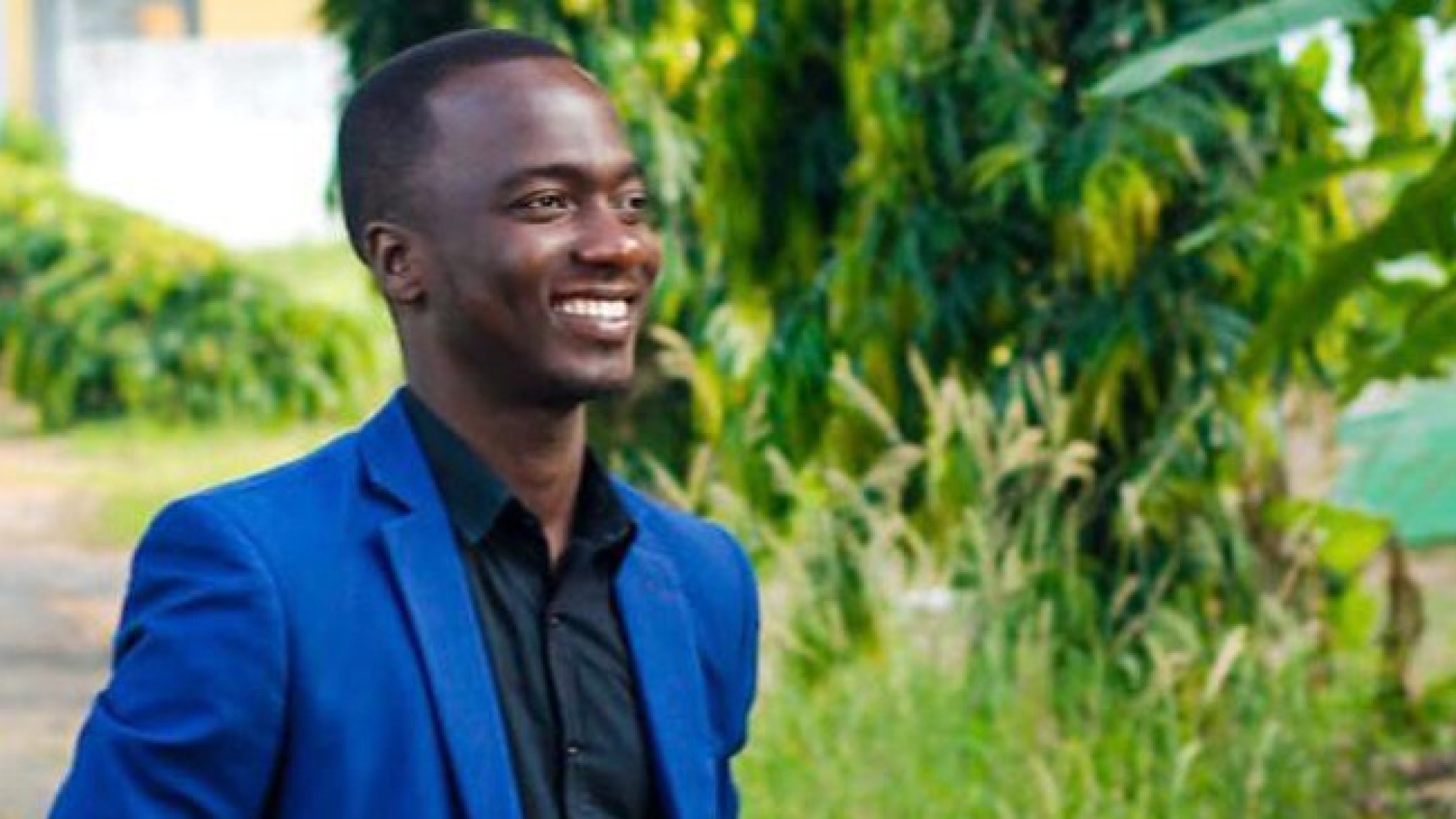
Written by Pastor Emmanuel Kyei Boate (#SofoQB)

The Photographer's Focused Lens Telling Stories Of Decency And God's Glory In The Age Of Social Media pn web

The Photographer’s Focused Lens: Telling Stories Of Decency And God’s Glory In The Age Of Social Media

INTRODUCTION

The evolution of photography from the monochromatic era of the pin-hole cameras in the 5th Century to the more sophisticated James Webb telescope equipped with cameras capable of capturing coloured images that are 13.6 billion light years away from Earth is mind-boggling. Undoubtedly, photography has not only evolved in technology but has increased its relevance in our lives. The ever-evolving world of social media continues to amplify the inevitable role of photography in capturing moments, freezing time, and sharing stories with a global audience. That notwithstanding, one cannot ignore the dominance of damaging and needless sensational and provocative content online due to the powerful union of photography and social media. Consequently, it is now more critical than ever for Christian photographers to focus our lenses on telling stories of decency, portraying the beauty of God’s creation, and honouring Him through our graceful works of art. By responsibly utilizing our skills and platforms, photographers can showcase a perspective that inspires, uplifts and glorifies God.

BIBLICAL FOUNDATION

In the Bible, numerous references highlight the importance of purity, integrity, and glorifying God through our actions. Philippians 4:8 says: “Finally, brothers and sisters, whatever is true, whatever is noble, whatever is right, whatever is pure, whatever is lovely, whatever is admirable if anything is excellent or praiseworthy, think about such things.” This verse provides a guiding principle for photographers to focus their lens on stories embodying decency, beauty, and honouring God.

EMBRACING A HIGHER CALLING

As photographers, we are blessed with a unique gift: the ability to capture the world through our lenses. In Genesis 1:27, we read that humankind is made in the image of God. By acknowledging and embracing this divine connection, we understand the importance of reflecting God’s character in our work. Our focus should be on capturing the beauty, harmony, and dignity that God instilled in His creation rather than exploiting it for worldly gains.

THE POWER OF PERSPECTIVE

The Bible reminds us of the significance of perspective in shaping our actions and impacting others. In Matthew 6:22-23, Jesus says, “The eye is the lamp of the body. So, if your eye is healthy, your whole body will be full of light.” Similarly, as photographers, our lens becomes the “eye” through which we view the world. By focusing our lens on decency and righteousness, we can illuminate the beauty and goodness around us.

STORIES OF DECENCY AND MODESTY

In a culture that often glorifies immodesty and objectification, photographers have an opportunity to promote decency and modesty through our art. The Bible reminds us in 1 Timothy 2:9-10 that “women should adorn themselves in respectable apparel, with modesty and self-control.” By selecting subjects, compositions, and themes that honour these values, photographers can counter the prevailing narrative and encourage viewers to appreciate the inherent worth and dignity of every person.

THE PHOTOGRAPHER’S DILEMMA

The photographer’s dilemma arises when societal pressures clash with the desire to remain faithful to God’s principles. However, this dilemma can also serve as an opportunity for growth and spiritual development. In Romans 12:2, believers are urged to “not conform to the pattern of this world but be transformed by the renewing of your mind.” By embracing this transformation, photographers can find innovative ways to tell engaging stories that align with our faith.

SOCIAL MEDIA AND ITS TEMPTATIONS

Social media platforms have revolutionized the way we share and consume visual content. However, they also present numerous challenges for photographers seeking to uphold moral standards. Pursuing popularity and instant gratification can tempt photographers to cater to the demands of an audience hungry for sensationalism. Yet, as followers of Christ, we are called to a higher standard of righteousness.

SOCIAL MEDIA REACTIONS AND RESPONSIVENESS

The advent of social media has given photographers a vast platform to share their work. However, it also presents challenges, as reactions can be swift, unpredictable, and sometimes filled with negativity. As followers of Christ, it is crucial to navigate this digital landscape with grace, responding to criticism and praise alike in a manner that honours God. Proverbs 15:1 reminds us that “a gentle answer turns away wrath, but a harsh word stirs up anger.” Photographers can create a positive impact and initiate meaningful conversations through humble and respectful engagement.

THE POWER OF STORYTELLING

Photography is a powerful storytelling medium, capable of evoking emotions, challenging perspectives, and capturing the essence of a moment. By leveraging this power, photographers can weave narratives that reflect God’s love, grace, and redemption. Whether through portraits that capture the resilience of the human spirit or landscapes that reveal the grandeur of God’s creation, our lens can become a tool for communicating the beauty and hope in a relationship with Him.

THE CLASH OF VALUES

When clients present sexually explicit attire for their photography sessions, Christian photographers face a profound clash of values. We are mostly torn between the desire to serve the client professionally and the commitment to our faith. Engaging in a creative process involving explicit clothing may compromise our moral compass and contradict our spiritual convictions.

DECEPTIVE DIGITAL SCULPTING

Deceptive digital sculpting refers to digitally altering or manipulating photographs to change the subject’s appearance, often to an unrealistic or idealised extent. It involves using various software tools to enhance or modify features, such as slimming bodies, altering facial proportions, or adding or removing elements from the image. This technique can be used to create images that present an idealised version of reality, which may not accurately represent the original subject or the scene captured by the camera.

LET’S EXPLORE SOME RELEVANT BIBLICAL PASSAGES THAT RELATE TO DECEPTIVE DIGITAL SCULPTING.

  1. Proverbs 31:30: “Charm is deceptive, and beauty is fleeting; but a woman who fears the Lord is to be praised.” This verse reminds us that external appearance can be misleading and that true worth lies in one’s character and reverence for God. Altering photographs to enhance physical features can perpetuate a superficial focus on appearance rather than nurturing inner virtues.
  2. Psalm 139:14: “I praise you because I am fearfully and wonderfully made; your works are wonderful; I know that full well.” God has fearfully and wonderfully designed each individual, and altering one’s appearance through digital sculpting can undermine the appreciation of our unique and natural beauty. It is essential to embrace and celebrate our authentic selves rather than strive for an unattainable ideal image.
  3.  Matthew 23:27-28: “Woe to you, teachers of the law and Pharisees, you hypocrites! You are like whitewashed tombs, which look beautiful on the outside but on the inside are full of the bones of the dead and everything unclean. In the same way, on the outside, you appear to people as righteous, but on the inside, you are full of hypocrisy and wickedness.” This passage highlights the danger of presenting a false image of oneself. The temptation to portray an idealized version of our lives on social media can lead to a stark contrast between online personas and reality. This discrepancy can contribute to feelings of inadequacy and discontent among individuals comparing themselves to curated online identities.

The negative outcomes of engaging in digital sculpting and the deceptive nature of social media include:

  1. Unrealistic beauty standards: Digitally altering photographs to conform to societal expectations can perpetuate unrealistic beauty standards, leading to dissatisfaction and low self-esteem for those who strive to meet these unattainable ideals.
  2. Self-comparison and insecurity: social media often showcases curated and enhanced versions of people’s lives, creating a breeding ground for comparison and feelings of inadequacy. Seeing others seemingly perfect online can lead to increased self-doubt and insecurity.
  3. Disconnection from reality: The stark contrast between online portrayals and real-life experiences can create a disconnection from reality. This can negatively impact mental well-being and lead to a distorted perception of oneself and others.
  4. Lack of authenticity: Individuals may sacrifice authenticity and genuine connections with others by relying on digital sculpting and presenting a curated online image. Building relationships based on honesty and transparency becomes challenging when people strive to project an idealised version of themselves.

WHAT DO WE DO? – “RELATING TO SOME PERSONAL EXPERIENCE”

In the dynamic world of photography, professionals often encounter diverse requests and challenges that test our personal boundaries and beliefs. Every photographer cherishes the trust and collaboration shared with clients. However, sometimes requests can cross personal boundaries. As a photographer, I encounter clients who seek provocative or sexually explicit pictures, while others even go as far as requesting a complete alteration and sculpting of body parts in images taken. Remaining faithful to my principles, I respectfully decline such requests. Such instances led me to incorporate an explicit clause in my contracts, stating the refusal to capture sexually inappropriate images or sculpting images taken to suit any purpose. Establishing this boundary allowed me to maintain strict values while providing a professional service. I think colleague photographers can replicate the same.

THE IMPACT OF NEGATIVE MODERNITY ON WEDDING PHOTOGRAPHY AND THE WAY FORWARD

Wedding photography is a significant part of many photographers’ careers. However, changing fashion trends have presented new challenges for Christian photographers. It is enough to mention that today’s wedding gown is enough to cover the ground but not enough to cover the breast and back. When brides and maidens choose sexually explicit dresses for their weddings, it can compromise the sanctity of the occasion. The focus shifts from the celebration of love and commitment to the sensual or provocative nature of the attire. Such choices may lead to distractions, temptations, and conflicts among attendees, detracting from the purpose of the ceremony. Consequently, many Christian photographers, including myself, have become selective in accepting wedding bookings, ensuring that the values we hold dear align with the client’s preferences.

In Matthew 5:28, Jesus teaches about the importance of guarding our hearts and minds, saying, “But I tell you that anyone who looks at a woman lustfully has already committed adultery with her in his heart.” Applying this principle to wedding attire, it becomes evident that sexually explicit dresses can potentially foster lustful thoughts and temptations in the minds of others.

INCULCATING OPEN COMMUNICATION INTO CLIENTS’ ENGAGEMENTS

Maintaining a successful photography business as a Christian requires open communication with clients. Photographers can create an environment of mutual understanding and respect by discussing expectations, preferences, and values upfront. Establishing this rapport helps avoid misunderstandings and ensures both parties are comfortable and satisfied with the final outcome. It also allows photographers to express their artistic style within the bounds of their faith.

NAVIGATING A CHANGING INDUSTRY

As the photography industry evolves, photographers face the challenge of balancing artistic freedom with personal beliefs. While it may require turning down certain opportunities, it is essential to remember that adhering to one’s faith does not diminish the value of one’s work. In fact, the ability to uphold personal convictions while still providing exceptional services can become a defining strength for Christian photographers. It is important to admit that striving to maintain Christian values within one’s work can be challenging and rewarding. Upholding personal boundaries and communicating openly with clients are vital in navigating diverse requests. By remaining steadfast in our faith, photographers can find fulfilment in our work, create meaningful connections with clients, and contribute positively to an ever-changing industry.

PURSUING EXCELLENCE

Lastly, as photographers striving to glorify God, we must constantly pursue excellence in our craft. Colossians 3:23 states, “Whatever you do, work heartily, as for the Lord and not for men.” Investing time, effort, and passion into our photography demonstrates our commitment to presenting our best work as an offering to God. Through continuous learning, refining our skills, and pushing creative boundaries, we can inspire others and bring honour to His name.

CONCLUSION

In a world increasingly consumed by self-indulgence, photographers who intentionally focus their lens on decency, modesty, and the glory of God can make a profound impact. By utilizing social media responsibly, telling stories that uplift and inspire, and pursuing excellence in our craft, we can change the narrative and remind others of the divine beauty surrounding us. Let us strive to be photographers whose work reflects God’s love, points to His grace, and invites others to see the world through a lens of hope and decency.

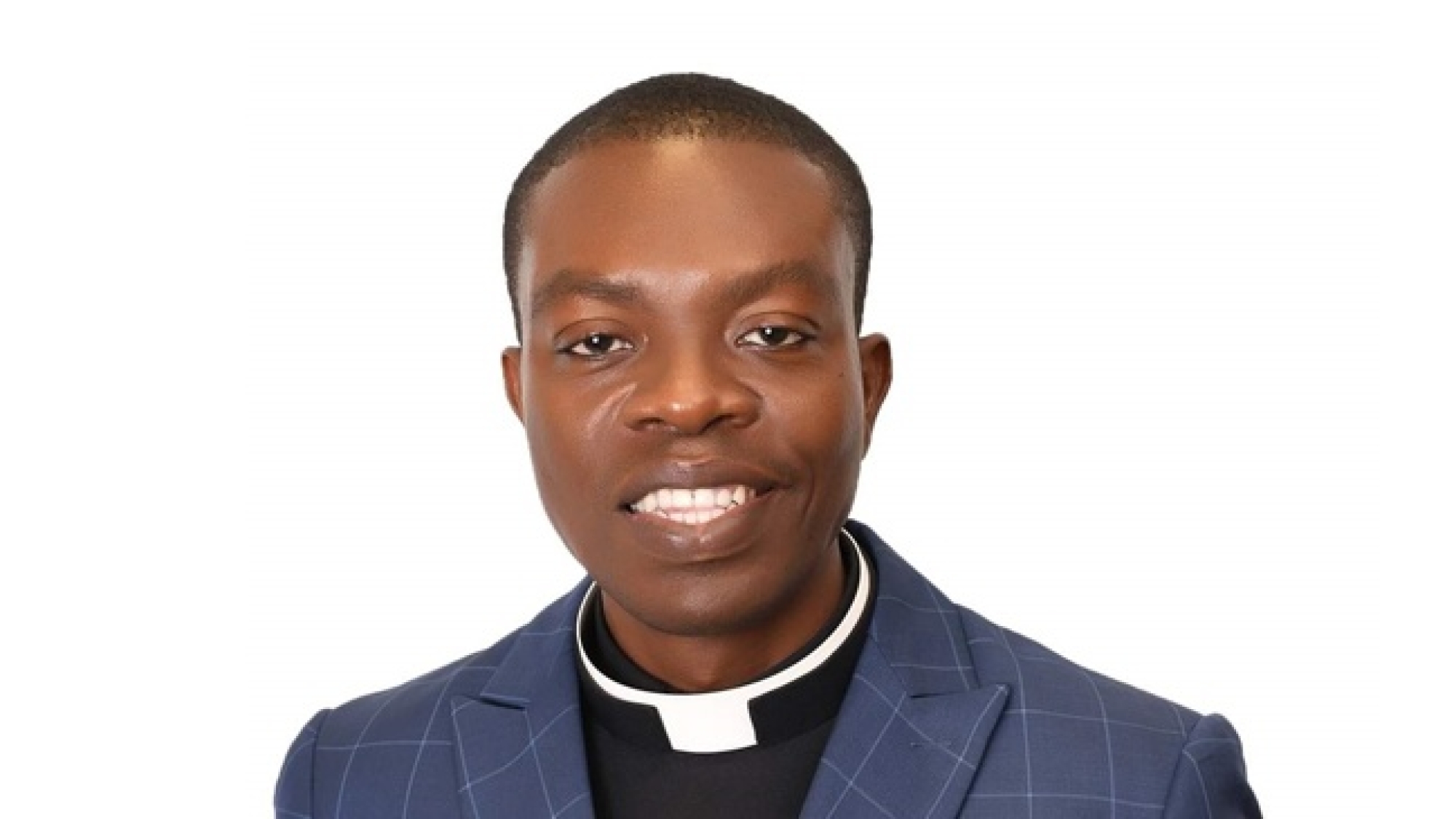
Written by Benjamin Mwinbeogre Zii  (Photographic Officer – The Church of Pentecost)

The Christian Healthcare Worker God's Channel Of Divine Health And Healing pn

The Christian Healthcare Worker: God’s Channel Of Divine Health And Healing

In recent times, one of the main tools Satan is using to fight God’s agenda and purpose in this fallen world is sickness. This is why I believe that although there have been significant improvements in the field of Public Health and Healthcare, there is no denying the rise of diseases, ailments, and previously unknown sicknesses on our planet, according to the 2022 WHO statistics.

In Job’s account of his trials in Job chapters 1 to 3, Satan attacks his possessions and then his health. However, we read and come to understand that the attack that caused him physical, emotional, and spiritual misery was the attack on his health.

“Satan replied to the LORD, ‘Skin for skin! A man will give up everything he has to save his life. But reach out and take away his health, and he will surely curse you to your face!'” – Job 2:4-5

We can assume that Satan knew the secrets of man and understood the extent to which the pain and burden of an unhealthy body can cost us. In Chapter 3, Job’s response to his second test – physical affliction – contrasts greatly with his attitude after the first test in Chapter 1. Though he did not curse God, he cursed the day of his birth. He felt it would be better never to be born than to be forsaken by God, all because he was distressed in his body.

Many people in our present day and age are experiencing this second trial of Job. How then can the saints carry on with the Great Commission when they are sick? How can we serve the Lord in an unhealthy body?

In Matthew 10:1, Jesus called the twelve disciples together and gave them authority over evil spirits and to heal every kind of disease and illness. In our time, I believe that God has also set apart and equipped Christian Healthcare workers to minister and administer divine health and healing to every sick person they care for, even themselves.

“Heal the sick, raise the dead, cleanse those who have leprosy, drive out demons. Freely you have received; freely give.” – Matthew 10:8

God has made the healthcare giver a channel through which He will extend His divine healing power to the sick and afflicted. He has equipped every Christian Healthcare Worker to transform every sphere of the health sector with the values and principles of the Kingdom of God.

It is imperative to note that all healthcare givers ought to understand and imbibe in themselves that the work God has entrusted to them as doctors, nurses, midwives, nutritionists, etc., is a ministry that the Lord has entrusted to them. Every work done, in whatever respect, will be accounted for.

As God’s channel of divine health and healing, it is a must that every health worker should reposition themselves to:

Be Spiritual: Every healthcare giver should endeavor to have a strong and deeply meaningful spiritual life. We interact with and treat the whole person—body, soul, and spirit (1 Thess 5:23). This means that we should not be afraid to delve into the spiritual if that is the area in need of healing for the souls in our care.

  • Love and value the sick: “Perfect love casts out fear” (1 John 4:18). Our work should be marked by love—in the way we relate to our patients and also to our colleagues and fellow workers. We should embody the principle of love and allow ourselves to be stirred to respond to the needs of others around us by the same motives that our Lord had, and not according to the lifeless structured ways of society. That same love will also drive us to professional excellence as we do the best jobs possible as if we were treating the Lord Himself. So, work while recognising the face of Christ in those we serve. In Matthew 25:40, Christ says, “Whatever you did for one of the least of these brothers of mine you did for Me.”
  • Grow in prayer and the Word of God: As part of our arsenal, we have not only our black bag but also prayer, the Word, and spiritual gifts. We pray for our patients, as well as with them, whenever possible. We are also vigilant lest the illness have a spiritual or personal root, in which case the Spirit can lead to a word of wisdom, discernment, or casting out spirits. As we fortify ourselves in prayer and in the Word, we can expect God to work miraculously.
  • Do the work of an evangelist: As mentioned earlier, our work is also our ministry. There need not be any separation between our tent-making and our service. No matter our service, a hospital is a place where we meet people at a time when they are most vulnerable and needy. It is a privilege to be able to enter their lives at this point and become a channel for the Lord to work. We share not only medicine but also the Gospel.

On this note, I encourage every Christian healthcare worker to reposition themselves to accept and value the ministry entrusted to them. God has placed us in the health sector to fill the gaps, and as we partner with God in the field, every kind of disease and illness will be healed, the dead will rise, souls will be saved, and the glory of God will fill every sphere of the health sector.

And may the Lord our God show us His approval and make our efforts successful. Yes, make our efforts successful! – Psalm 90:17

This is one of my favourite verses in all the Psalms. I am pleading for God’s favour to bless the work of every healthcare giver’s hands in ways far beyond what we can imagine and to cause it to bear fruit for His glory and for the good of others. Because the days are numbered, let’s make our work count, be effective and productive in the Kingdom of God. Let’s desire to see God’s eternal plan revealed now for our work to reflect His permanence.

If we feel dissatisfied with this life and all its imperfections, we must remember that our desire to see our work established is placed there by God. However, our desire can only be satisfied in eternity. Until then, we must apply ourselves to serving and loving God, ministering and administering divine health and healing in our health facilities.

May His grace abound.

Written by Elder Jonathan Avornyo, Nurse – Tokpo CHPS (KMHD)

Adabraka District's Weeklong Rescue Mission Yields 215 Souls1 web

Adabraka District’s Weeklong “Rescue Mission” Yields 215 Souls

Two hundred and fifteen people accepted Jesus Christ as Lord and Saviour during a weeklong evangelism outreach organised by the Adabraka District of The Church of Pentecost.

The event, dubbed “Rescue Mission,” also saw 126 people being baptised in water, with 23 others receiving Holy Ghost baptism.

The Rescue Mission campaign was unlike any other in the district, with multiple evangelistic campaigns including house-to-house, school and market outreaches, two simultaneous rallies at Obra Spot (Circle) and CMB market (Accra Central), and a massive one-on-one evangelism exercise by all members of the Church on Sunday.

Two evening prayer sessions and one all-night service were also held under the theme “The Lord Needs You” Luke 19:29-31.

The souls won were mobilised and baptised the same night of the rallies, followed immediately by prayer for Holy Ghost baptism. Some who were possessed were liberated by the power of the Holy Ghost during the session.

The new converts were taken through the New Converts’ Class on Sunday morning to establish them in the Christian faith.

In an interview with PENTECOST NEWS, Elder John Addae Ansah, the Chairman of the Rescue Mission 23 Committee, assured that plans are underway to retain the souls won, adding that, those desiring to learn a trade will be assisted in learning any trade of their choice.

“We are going to work earnestly to ensure that the many souls we have baptised are retained in the Church. They have different needs, some are spiritual, physical, and financial, among others, and we are trusting God to meet their needs through our members,” he said.

For his part, the District Minister, Pastor Emmanuel Osei Agyapong, was grateful to God for the unprecedented feat.

“The outcome is unprecedented. Winning over 200 souls, baptizing almost 130 of them, and having over 104 of them at the service on Sunday is a great achievement, and we bless God for that.”

He commended the committee, officers, and the membership for their commitment towards achieving the set objectives.

“The preparation was fantastic. I believe we don’t go out without being in. We spread our net wide to cover all kinds of evangelism. I was impressed. All in all, we give glory to God. I want to acknowledge the massive effort of the Rescue Mission 23 teams. They were relentless and tireless, working day and night, and to the glory of God, we have had an excellent outreach program with less cost.

“Some massive crusades have not produced 200 souls. So if we have been able to preach the gospel in this manner at Accra Central and Circle, where people came to listen to us and gave their lives to Christ, then I think we are on course. This is the vision of our Chairman; that’s to prepare the youth and unleash them. The youth in the Church drove this campaign with the support of the fathers and mothers, and I want to commend them for their sacrifices towards this outreach.

Report by Elder Caleb Kudah

Websize 2

How Deep Is Your Foundation? – A Case Study Of The Burj Khalifa

It is a common phenomenon to see people celebrate the physical structure and architectural design of a building. The painting, design, style of roofing, lighting systems, flowers, and interior decoration, to mention a few, are a delight to watch. Some of these buildings even serve as tourist sites due to their magnificent nature. You cannot talk about wonderful architectural buildings in Ghana without mentioning the World Trade Centre, the Octagon, the Mirage Residence, the Exim Bank, and many others. All these spectacular edifices are highly praised and adored only because of their external outlooks. But have you ever wondered about how deep those buildings may be?

The tallest building in the world is called the Burj Khalifa, named after the Emirate of Abu Dhabi, Sheikh Khalifah IBN Zayid Al-Nahyan. According to researchers, over 45,00m3 (58,900 cu yd) of concrete weighing 110,000 tonnes were used to construct the foundation. The foundation features 1992 piles buried over 50m or 164ft deep.

However, while the world celebrates its heights and outlooks, it often forgets the foundation. Before the world can celebrate you, you must consciously work on your foundation. Being the talk of the town doesn’t come out of the blue. It demands consistent and deliberate effort to achieve that feat. Many times, young people aspire to be like revered personalities they see or hear of. Some even go to the extent of emulating the way they walk, speak, or dress. For instance, some young men in the church have ignorantly resorted to shaping their hair like Apostle Prof. Opoku Onyinah because they want to be like him.

We must learn to be like such people of noble standings, but how prepared are we to go to the depth they went before achieving the height they have in life? The fasting, prayers, Bible study, devotional times, dedications, commitments, and obedience they had for God and the orderliness are less of our concern today. We live in the domain of “fast” people.

Preachers find it difficult to delve deeper into the Bible and search for God’s work for the congregation. With just a click on Google, the scriptures will pop up for use. Most pastors now prefer to use messages they receive by watching videos on YouTube for their members instead of waiting patiently on God for Him to speak to them. No wonder most of the sermons we hear in our churches these days are borrowed messages.

I am not trying to downplay the significance of technology in spreading the gospel. However, it is making most Christians lazy to learn the scriptures and patiently meditate on the word of God. It is even hilarious to hear that some will go to the extent of hiring people to fast for them.

The foundation of the world is the word of God. God built the world on a solid foundation, which is the very word from His mouth. Genesis 1:3 says, “And God said, ‘Let there be light,’ and there was light.” Also, John 1:1-3 states, “In the beginning was the Word, and the Word was with God, and the Word was God. He was in the beginning with God. All things were made through Him, and without Him, nothing was made that was made.”

God, the chief architect of the wonderful and beautiful world we see, did so on an unmovable foundation—the Word. Show me a man who broods on the word of God consistently, and I will show you a man who is shining like a galaxy of stars. The writer of Psalm 11:3 asked a thought-provoking question: “If the foundations are destroyed, what can the righteous do?”

It must therefore be noted that even though the physical architectural design of a building makes it beautiful, for the said building to stand the test of time, it must be rooted on a solid foundation.

CONCLUSION

In conclusion, just as the longevity of a building solely depends on the foundation and not just its design, so does our Christian journey. As young, energetic Christians, we must not only be interested in praises. We must consciously work on the foundation before we think of the celebration.

If sermons preached today were to be marked by lecturers, most of them, if not all, would be considered plagiarised messages. This is because preachers of today do not invest much time in reading and meditating for God to speak to them. In fact, most of our sermons have become “copy and paste” or “leftover messages.” Before we even think of being like the most revered and celebrated men and women of God, we need to redirect our attention to building on a solid foundation of:

  • Consistently reading and meditating on the word of God.
  • Fasting and prayers.
  • Living a righteous and blameless life.
  • Volunteerism.
  • Respect and humility towards rules and authority.

Remember the popular adage, “Pay the price before you receive the prize.”

Written by Elder Richard Mbelembote (President, PENSA-PU)

The Church of Pentecost Is A Steadfast Development Partne web

The Church of Pentecost Is A Steadfast Development Partner – Veep

The Vice President of Ghana, His Excellency Dr. Mahamudu Bawumia, has commended The Church of Pentecost for its continued support to national development, describing the Church as a “steadfast development partner.”

“Indeed, the contribution of The Church of Pentecost to education, healthcare, social welfare and the financial development of Ghana continues to merit the unalloyed gratitude of the Ghanaian people,” the vice president said when he addressed participants at the National Development Conference 2023 (NADEC’23), organised by The Church of Pentecost, on Wednesday, July 26, 2023.

The conference held under the theme ‘Moral Vision and National Development’ was attended by all major stakeholders in Ghana’s development, including former presidents H.E J.A. Kufuor and H.E. John Mahama; Speaker of Parliament, Rt Hon Alban S.K. Bagbin; the Chief Justice, Her Ladyship, Justice Gertrude Torkonoo, National Executives of political parties, leaders of religious bodies, civil society organisations and governance experts.

Alluding to the theme for the conference, the Vice President pledged that Government would work assiduously for the “establishment of a free and just society, where entrepreneurship and individual initiative are the sources of wealth creation with a strong social safety net for the marginalised and disadvantaged; and the improvement of the governance architecture to deepen accountability and respect for the rule of law in our body politic.”

He said that the government of Ghana is leveraging digitalisation to shape national discourse and promote behavioural change based on moral principles.

Outlining the positive effects achieved by the ongoing infusion of digitalisation in daily national life, Dr Bawumia said Government had taken a deliberate decision to reduce the human interface, which is usually the arena for corruption, in order to reduce its incidence and cultivate a new approach to national life.

“The behaviour of the people determines the transformation of a nation. This is why, as a government, we have focused on putting in place systems that will reduce the role of the human factor and enhance transparency through the digitalisation of the economy. We have put in place systems that will encourage or compel morally upright behaviour.”

“Through digitalisation, we are compelling behaviour that is morally upright”, he continued, noting that by reducing the human interface, state institutions and their clients have no choice but to do the right things and pay the right fees because “computers don’t understand bribes,” he said

Dr Bawumia cited the major impacts digitalisation has had on efficiency and revenue generation in some key government institutions.

“The DVLA is now a world-class institution, without the need for ‘goro boys’. Now you can apply for a passport online and have it delivered to your house without having to pay a bribe. The port is now paperless, and clearing your goods has become much easier.

“Digitalisation has also had a major impact on revenue generation. Take the Electricity Company of Ghana, for instance. Before digitalisation, the company collected an average of GHS 450 million a month. We noticed that this figure had not changed for some years, despite an increase in customers. Something clearly was not right. So, we introduced digitalisation into their processes and made all payments cashless. Despite initial resistance, the system is working smoothly. And interestingly, the monthly revenue has shot up from GHS 450 million a month to GHS 1.2 billion a month,” he disclosed.

“Before digitalisation, the Passport Office generated an average of GHS 1 million annually. After digitalising the process, including cashless payments, the Office now generates over GHS 60 million a year.

“It is therefore evident that with the infusion of digitalisation, we are creating an environment where corruption cannot thrive due to the reduction and elimination of the human interface,” he noted.

PENTECOST NEWS.

Former Finance And Administration Of The Church Of Pentecost Retires

Former Finance And Administration Director Of The Church Of Pentecost Retires

The immediate past Finance and Administration Director (FAD) of The Church of Pentecost, Pastor Dr Nicholas Darko, and his wife, Mabel, have retired from the full-time ministry after serving the Church in various capacities for 22 years.

Pastor Dr Darko spent a record 19 years of active ministry at the Church’s General Headquarters as the Finance and Administration Director, making him the longest-served Exchequer of the largest Pentecostal Church in Ghana. 

A glamorous retirement service held in his honour at the Twereboa Central Assembly Auditorium in Dansoman on Sunday, July 30, 2023, was attended by people from all walks of life. Among them were officials from the National Cathedral, including Rev. Dr Joyce Rosalind Aryee (Member, Board of Trustee) and Dr Paul Opoku-Mensah (Executive Director of the National Cathedral). Also in attendance was a high-powered delegation from the Akwamu Traditional Area, led by the Paramount Chief, Odeneho Kwafo Akoto III.

Ministers from the Church present included the Dansoman Area Head, Apostle Daniel Kodjoe Sey, who officiated the service; Apostle Lawrence Otu-Nyarko (Finance and Administration Director of The Church of Pentecost), Apostle Emmanuel Agyei Kwafo (National Co-ordinator of the Home and Urban Missions), Apostle Daniel K. Dekpor (Asankrangwa Area Head), Deaconess Vivian Amfo (Deputy Director of the Women’s Ministry), Apostle Rigwell Ato Addison (Rtd) – a former General Secretary of the Church, among other serving and retired ministers of the Church.

Profile of Pastor Dr Nicholas Darko

Born 65 years ago at Koforidua in the Eastern Region, Pastor Dr Nicholas Darko, who hails from Akwamufie, also in the Eastern Region, had his secondary education at the New Juaben Secondary Commercial School (now New Juaben Senior High School) at Koforidua, where he obtained the General Certificate of Education Ordinary and Advanced Levels (GCE – ‘O’ and ‘A’ Levels) in 1979 and 1981, respectively.

He is a Chartered Accountant, a Fellow of the ACCA and a member of the Institute of Chartered Accountants of Ghana (ICA). He holds a Post-Graduate Diploma and a Master’s Degree in Organisational Development (OD) from the University of Cape Coast. He is a Registered Organisation Development Consultant (RODC) with the International Society of Organisation Development and Change (ISODC).

He was among the five people selected from some developing countries sponsored by Global Peers and the International Organisation Development Association (IODA) to participate in capacity-building training in Organisation Development in Austria in 2012. He also received training in Group Dynamics at the University of Graz’s Centre for Social Competence in Austria. At the ISODC International Conference held in Ghana in 2013, he received an Award of Excellence for being an Outstanding OD Student and for Exceptional Performance, Willingness to Learn, Share, and an Exemplary Disposition to OD Values. 

While in ministry, he obtained a Bachelor of Theology (Hons) with distinction and a PhD in Practical Theology at the South African Theological Seminary (SATS). He is affiliated with professional bodies in Accountancy, Theology and Organisation Development.

While working as Head of the Audit Department at the Headquarters of the Church, he was called and ordained a pastor and stationed at the Headquarters as Finance and Administration Director (FAD) in 2001. He served under three General Secretaries: Apostles Albert Amoah (now retired), Dr Alfred Koduah (now retired) and Alexander Kumi-Larbi. He also served in the administration of three Chairmen: Apostles Dr Michael Kwabena Ntumy, Prof. Opoku Onyinah (now retired) and Eric Nyamekye. In 2020, he was transferred from the Head Office to Twereboa District in the Dansoman Area after serving as FAD for 19 years.

Sermon

Speaking at the service on the topic, “The Unslumbering God is your Keeper” based on Psalm 121:3-4, the Dansoman Area Head, Apostle Daniel Sey, stressed the need for believers to rely on the God Almighty because He does not slumber and fails not. According to him, God can keep and protect all who trust Him.

Testimonies 

Various testimonies read lauded Pastor Dr Nicholas Darko and his wife, Mabel, for their dedicated and selfless services and life of integrity and simplicity.

The General Council’s testimony read by his successor, Apostle Lawrence Otu-Nyarko, revealed that Pastor Dr Darko, during his tenure as FAD, utilised his extensive professional experience as an Accountant and Administrator to institute a robust financial and management system for the Church. He worked closely with the leadership of the Church to introduce monetary policies that have helped to ensure the prudent management of the Church’s resources, earning The Church of Pentecost a well-deserved reputation as an organisation with strong financial and administrative structures.  

“Equally deserving of honour is Mrs Mabel Darko, his virtuous wife. She is a woman of great cheer and love who supports her husband’s ministry with unwavering dedication,” the General Council noted. 

It added: “Her sound Bible teachings, hospitality, excellent communication skills, and respect for others have been instrumental in their successful ministerial journey. Her contribution to the Women’s Ministry at the national level and other boards and committees has been phenomenal.”

PENTECOST NEWS.

Omanhene Pastor Opuni Boateng Retires From Full-Time Ministry pn web

“Omanhene” Pastor Opuni Boateng Retires From Full-Time Ministry

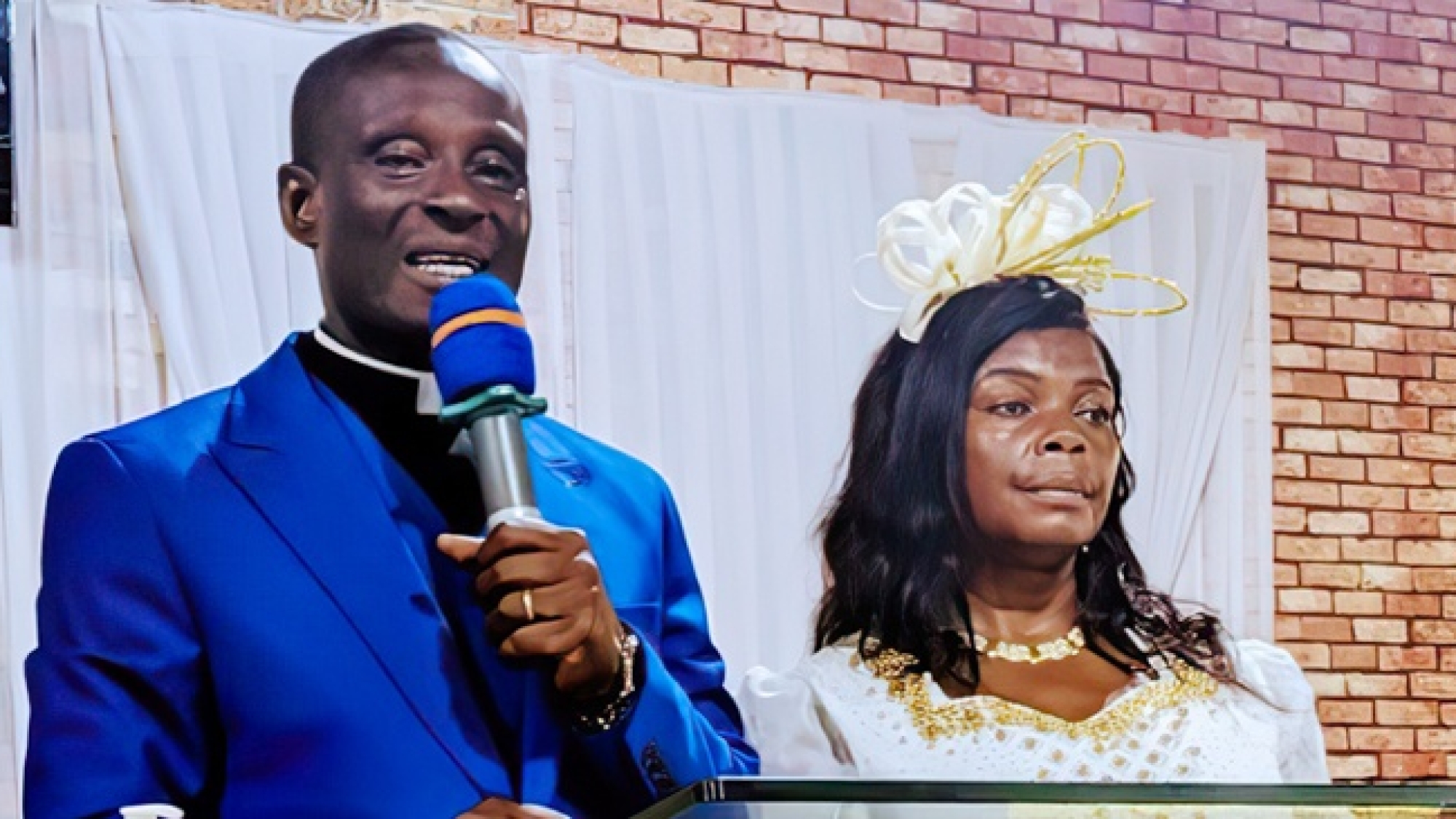
After 23 years of dedicated service, Pastor Opuni Boateng, the New Awoshie District Minister of The Church of Pentecost, along with his wife, Agnes, has retired from active ministerial service.

A retirement service was held today at the Mt. Olivet Assembly church auditorium at Awoshie in Accra to honour the retired minister, affectionately called “Omanhene” (Paramount Chief) due to his deep knowledge in cultural and chieftaincy matters.

The event saw the presence of many dignitaries, with the General Secretary of the Church, Apostle Alexander Nana Yaw Kumi-Larbi, officiating the ceremony.

Other esteemed ministers, including Apostle Isaac Tetteh Juddah (Odorkor Area Head), Apostle Patrick Aseyoro (Immediate-past Area Head and now Suhum Area Head), Apostle Wilberforce Nkrumah-Agyeman (Teshie-Nungua Area Head), and Apostle Dr. Christian Tsekpoe(Head of Department, Pentecost School of Theology and Mission), were also present to mark this significant occasion.

Until his retirement, Pastor Opuni Boateng served as the Odorkor Area Chieftaincy Ministry Committee Chairman, which led to some traditional leaders in the Area gracing the event in their regalia; thus, adding a touch of cultural significance to the event.

Throughout their ministerial journey, Pastor Opuni Boateng and his dear wife served at various stations, including Nandom, Oyarifa, Kade Kubease, Mamprobi, and finally, New Awoshie, leaving a lasting impact in each place.

The General Council of The Church of Pentecost, in a testimony read by Apostle Wilberforce Nkrumah-Agyeman, expressed gratitude for the couple’s meritorious service, acknowledging Pastor Opuni Boateng’s adherence to the Church’s policies and directives.

“Throughout his ministry, [Pastor Opuni Boateng] cultivated the habit of pleasing God and fulfilling his ministry,” the testimony read.

Mrs. Agnes Opuni Boateng, a retired nurse, was commended for her unwavering support to her husband, especially in very challenging times of the ministry life.

The Council also wished the couple a peaceful rest from active pastoral ministry.

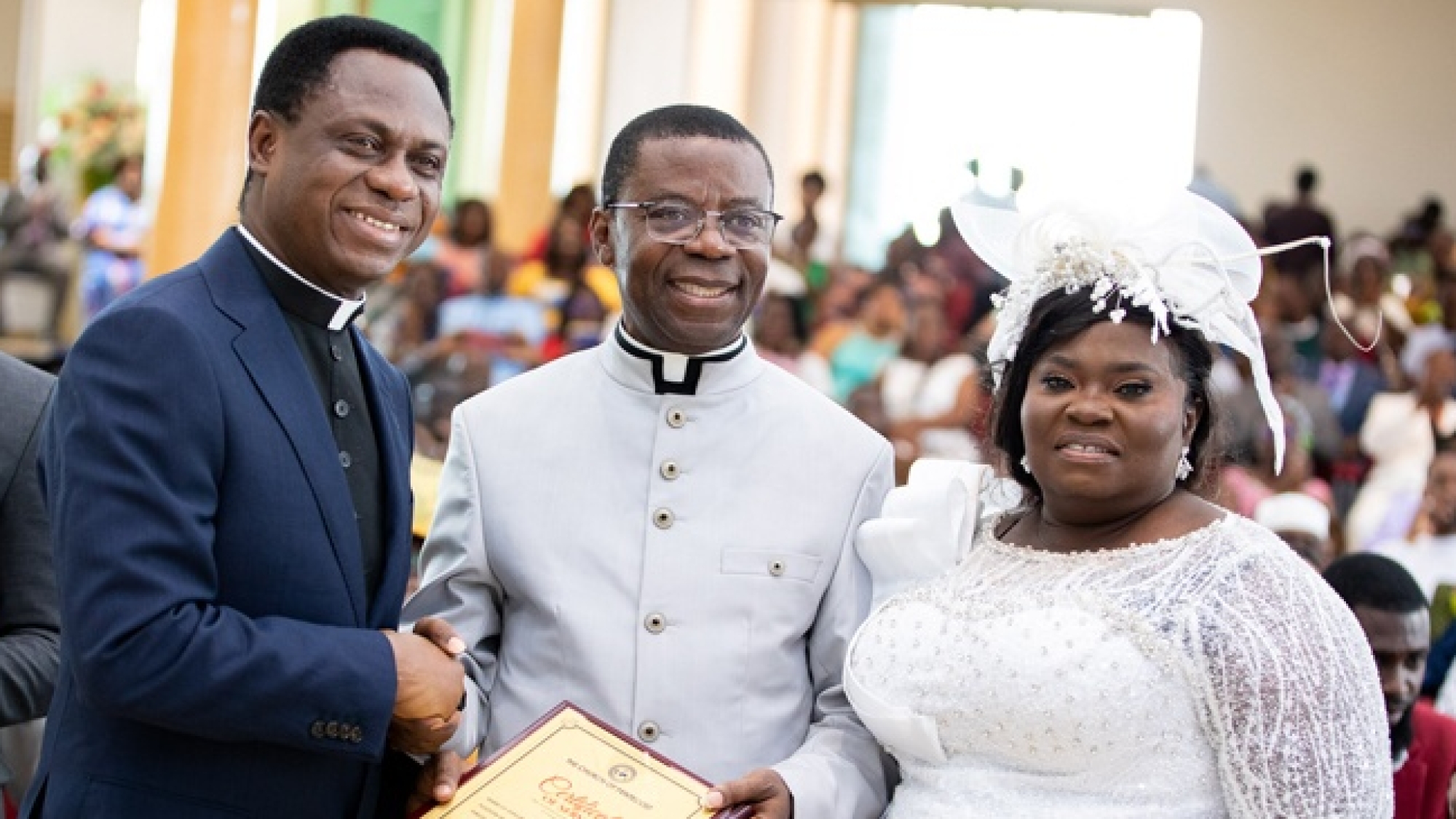
During the service, the couple was honoured with a Certificate of Service from the Church, along with citations from the Awoshie District Presbytery and the Women’s Ministry of the District. Pastor Opuni Boateng was also presented a retired minister’s licence of The Church of Pentecost by the General Secretary.

Using 2 Corinthians 12:7-10 as his main scripture reference, Apostle Isaac Tetteh Juddah delivered a sermon at the event on the topic: “My Grace is Sufficient for You.”

In his sermon, the Odorkor Area Head emphasised that God’s grace provides for every need of the believer.

He highlighted different kinds of God’s grace in the Bible and encouraged believers to trust in God’s sovereignty, finding comfort in His sufficient grace during life’s challenges.

Apostle Juddah drew lessons from Apostle Paul’s experiences, saying:. “We learn from Paul’s case that the spiritual is far more important to the dedicated believer than the physical; God knows how to balance burdens and blessings, suffering and glory; not all sickness is caused by sin; there is something worse than sickness, and the worse of sickness is pride; physical affliction is not an excuse for the believer, and finally we can always rest in God’s word.”

Ending his message, the Odorkor Area Head assured the retired couple that just as God’s grace guided them through their ministerial journey, same grace would continue to be sufficient in their retirement.

PENTECOST NEWS.

Websize 2

Apostle Samuel Appiah Goes Home

Apostle Samuel Appiah Goes Home “The Church of Pentecost has lost a gallant soldier. Even though we wished he was around to break more ground and open missions for the Church, he won 18 nations for the Lord and the Church. It is not about the number of years you live on earth but the works that follow when you are dead and gone.”

Apostle Eric Nyamekye, Chairman of The Church of Pentecost, shared these heartfelt words as countless individuals mourned the passing of the late Apostle Samuel Appiah.

He had served as the former United Arab Emirates (UAE) National Head of The Church of Pentecost and the Regional Coordinating Committee (RCC) Coordinator for the UAE, Middle East, and Gulf Region Bloc of the Church.

The memorial service took place at the West African Senior High School (WASS) School Park, Adenta in Accra on Saturday, July 29, 2023.

Delivering a brief sermon on the theme, “Our appointment with Death,” the Haatso Area Head of the Church, Apostle Emmanuel Gyesi-Addo, underscored that death is an irreversible and inevitable part of human life.

He explained that due to the inevitability of death, everyone should prepare for it, saying, “Because of its nature, man does not consider it as part of plans.”

The former International Missions Director (IMD) of the Church stressed the need to keep the memories of the dead alive.

Samuel Appiah was born on 18th July 1960 at Prestea in the Western Region of the Republic of Ghana. His father was Rev. Joseph Kojo Appiah of The Church of Pentecost, and his mother – Mrs Ruth Ekua Nyarko Appiah, both parents are of blessed memory.

As a serial church planter who conquered many grounds and nations in the United Arab Emirates (UAE), Middle East, and the Gulf Region and in Africa, Apostle Appiah served at Airport District in Cote d’Ivoire (1993-1995), Beposo Dunkwa in Sekondi Area (1995-2001), Dodowa in Madina Area (2001-2005), Adenta in Haatso Area (2005-2010), Abrepo in Bompata Area (2010-2012), Mauritius (2012-2013), and UAE (2013–2023) within his 30-year ministry.

The late former Dubai National Head left behind a widow, Mrs Salomey Adwoa Owusua Appiah, eight children, three adopted, and others.

In a tribute read by the General Secretary of The Church of Pentecost, Apostle Alexander Nana Yaw Kumi-Larbi, on behalf of the General Council, Apostle Appiah was described as “fearless and courageous” as he set out on an ambitious quest to establish a branch of The Church of Pentecost in an Arab nation.

“His generosity and heart of giving endeared him to many and boosted the growth of the church in the places he served in his ministerial life. As a missionary, he was wise and witty, having mastered the skill of knowing what to say and how to say it, which helped him anytime he was met with serious opposition,” he stated.

The widow said her husband was a hardworking man who took his ministry seriously and ensured the timely delivery of all his ministerial assignments.

She added that her late husband was passionate about his family and ensured they lacked nothing, adding, “He always wanted the best for his children and never compromised on their education.”

The endearing tribute from his children read: “Daddy gave us all the opportunities in this world that any caring and loving father would give to his children. He was the reason some of us got the opportunity to advance our careers.”

The Church in the United Arab Emirates emphasised that the late Apostle Appiah was a father, a counsellor, and an encourager who kept his head in all situations, endured hardship, did the work of an evangelist, and discharged all the duties of his ministry.

“His selflessness towards God’s work encouraged us not to forsake the gathering of the saints, which helped us to stand firm in all the difficulties and challenges we go through in the UAE,” it stressed.

The Church of Pentecost has lost a son, a missionary, an evangelist, a Church planter, and a disciple-maker. We take consolation in the fact that the righteous are taken away to be spared from evil.

May his soul rest peacefully in the bosom of the Lord.

PENTECOST NEWS

Integrity Is Essential For Nation Building web

Integrity Is Essential For Nation Building – Apostle Kumi-Larbi Urges

Apostle Alexander Nana Yaw Kumi-Larbi, the General Secretary of The Church of Pentecost, has passionately urged national leaders and stakeholders to embrace and uphold integrity as a fundamental key ingredient for successful nation-building.

Speaking at the National Development Conference 2023, held at the Pentecost Convention Centre (PCC), Gomoa Fetteh, near Kasoa, on Thursday, July 27, 2023, Apostle Kumi-Larbi emphasised that integrity is an essential aspect of righteousness, and without it, true success cannot be attained in any aspect of life.

Elaborating on the topic, “Integrity In Nation Building,” he highlighted that a leader’s moral vision encompasses understanding what truly matters, what holds value and worth, and what merits respect and attention.

Integrity, according to him, involves aligning one’s life with God’s standards and principles, adding that leaders of integrity inspire joy and contentment among their followers.

The General Secretary stressed that Ghana’s path to prosperity and happiness depends on leaders with unwavering integrity at every level.

He expressed concern about the nation’s reliance on external borrowing despite its abundant natural resources.

He, therefore, called for leaders who cannot be influenced by personal gain but rather dedicate public resources to serve the greater good.

Apostle Kumi-Larbi urged all stakeholders involved in nation-building to actively strive to rectify the shortcomings in the system.

Citing Proverbs 11:3 and Nehemiah 7:1-2, he highlighted Nehemiah’s success in rebuilding the city walls of Jerusalem by appointing men of integrity.

He further emphasised that true national development requires the wise and honest management of resources, not just their abundance.

Addressing the issue of corruption, he described it as the misuse of public office or authority for personal gain, stressing that its prevalence hinders the desired development.

A leader of integrity, according to Apostle Kumi-Larbi, is fearless of scandals, confident in approaching God, possesses inner peace from a clean conscience, reflects personal salvation, upholds a valuable reputation, exercises wise judgment and discernment, and is shielded from divine judgment.

In conclusion, Apostle Alexander Nana Yaw Kumi-Larbi called upon all Ghanaians to embrace moral values through repentance, faith in Christ, and daily meditation on the Word of God.

He fervently hoped that more individuals would be counted among the virtuous, God-fearing leaders committed to serving the nation with integrity, skill, and a genuine heart.

PENTECOST NEWS