PMKY Worship Centre Begins Rehoboth Conference 2024 web

PMKY Worship Centre Begins Rehoboth Conference 2024

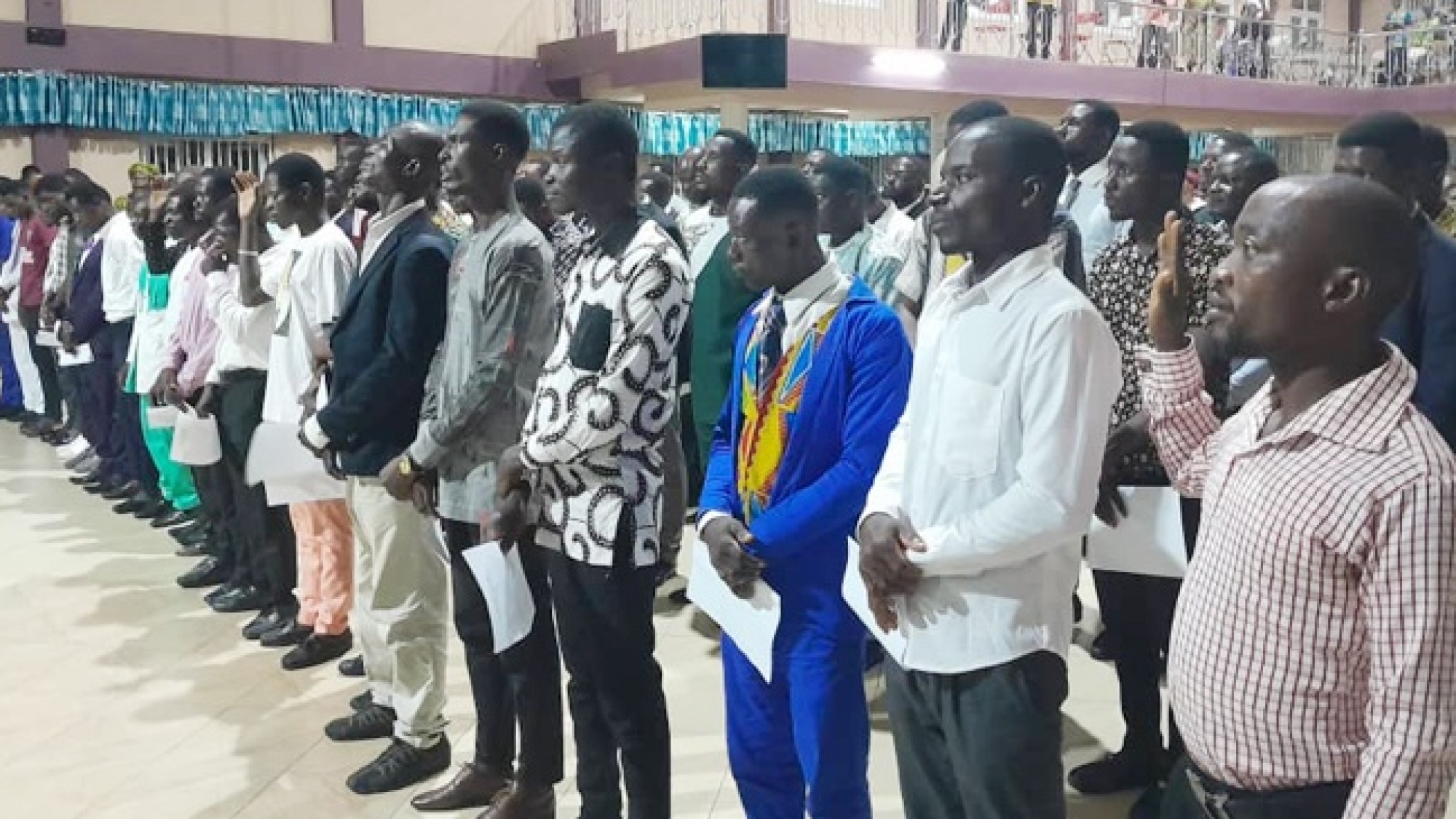
The Prophet Martinson Kwadwo Yeboah (PMKY) Worship Centre in the Kasoa Area of The Church of Pentecost began its maiden Rehoboth Conference on Wednesday night, June 5, 2024, with a powerful ministration by Pastor Thomas Tete Asare, Windy Hill District Minister.

The annual prayer and music festival which is under the theme, “Is this not Joseph’s son?” – Luke 4:22, will end on Sunday, June 9, with a mega offering.

Hosted by the Resident Minister, Pastor Fred Amoakohene Sarpong, other speakers include Apostle James Kwabena Asare (Kasoa Area Head) and Pastor Dr. Emmanuel Awudi (Resident Minister of Diamond City Worship Centre), with song ministration by Ministers Emmanuel and Anita, among others.

Opening the conference on Wednesday night, Pastor T. T. Asare spoke on the topic, “Yes, he is the carpenter’s son but ordained from heaven.”

Explaining the reason why the Jews found it difficult to accept Jesus as the Messiah, Pastor Asare posited that the people despised Jesus due to his poor background – having been born in a manger (sharing a common place with sheep) and raised in a small town called Nazareth which had nothing good to boast of.

According to him, the Jewish people were expecting a great king and a warrior to be sent by God to rescue them from their oppressors, the Romans. However, Jesus came to the scene from a humbly background, beating the imaginations of the people.

He said that although the people despised Jesus, God ordained him and accredited him as the only saviour of the world.

Reading from John 1;29-35, 3:22-36, Pastor Asare disclosed that although Jesus started his ministry on the quiet, it was John the Baptist who brought him to public limelight, bearing testimonies about him.

“Everybody needs somebody for introduction. God has given everyone a destiny helper,” he said, adding, “Jesus had destiny helpers – Mary to conceive him, John to introduce him to the world, the disciples to carry on the job of ministry, and Judas Iscariot to betray him to be crucified for the salvation of the world.”

Using his touching personal life story to indicate the transformational power of God to change the fortunes of men, Pastor Asare stated that “being born into a poor family is not a mistake, but growing to be a poor man, is a mistake.”

He assured the congregation that no matter their backgrounds, God can change their stories and cause a great miracle in their lives.

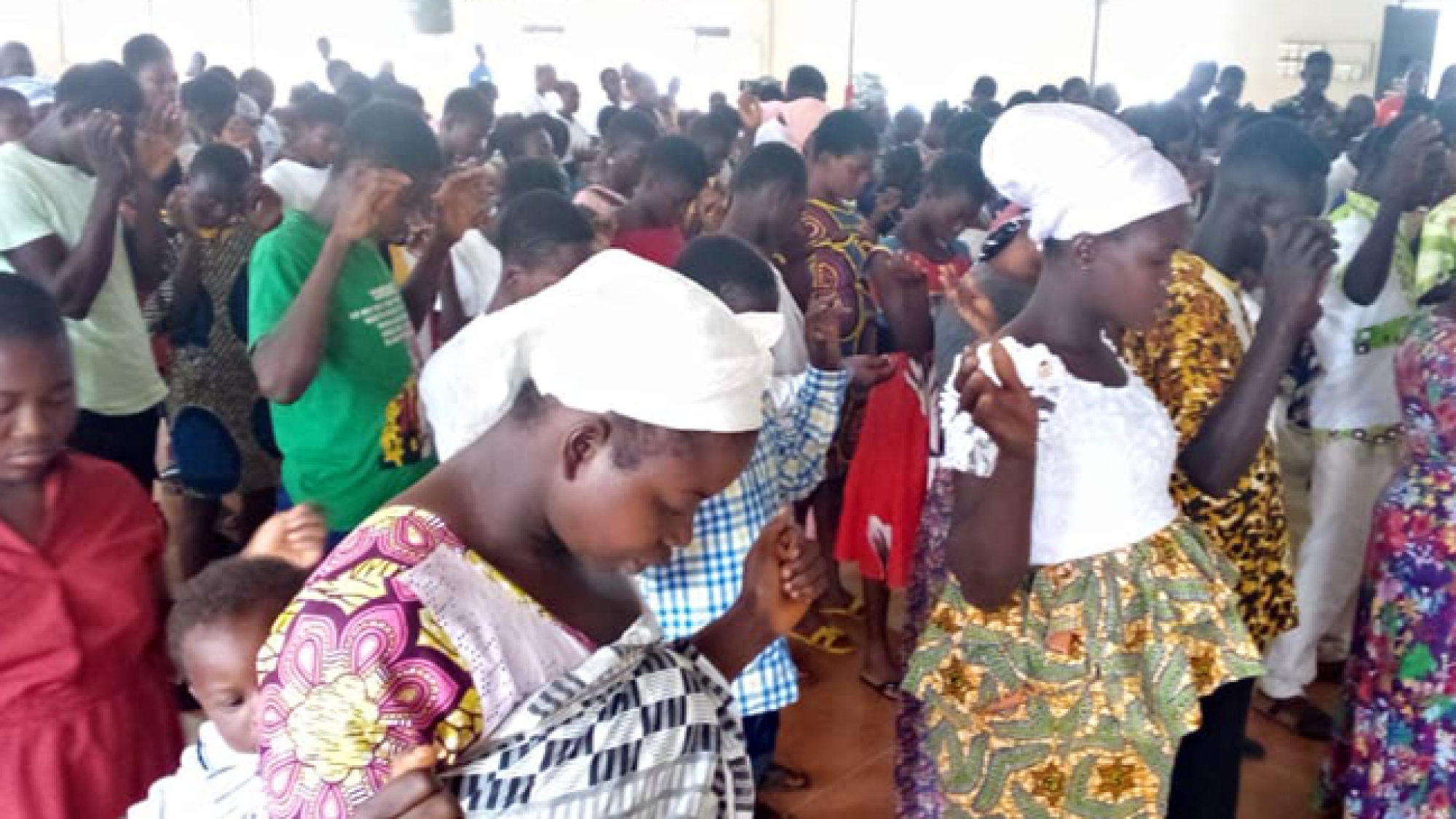
Pastor T. T. Asare then led the congregation in a spirit-led prayer session to seek the power of God for their breakthrough.

PENTECOST NEWS

Apostle Nyamekye Meets KNUST Vice-Chancellor web

Apostle Nyamekye Meets KNUST Vice-Chancellor

The Chairman of The Church of Pentecost and President of the Ghana Pentecostal and Charismatic Council (GPCC), Apostle Eric Nyamekye, on Thursday, June 6, 2024, paid a courtesy call on the Vice-Chancellor of the Kwame Nkrumah University of Science and Technology (KNUST), Prof. Rita Akosua Dickson, as part of the activities marking the university’s 60th Anniversary mission event.

The meeting, held at the Vice-Chancellor’s office, was attended by senior members of both the university and the church.

Introducing the Apostle Nyamekye and his delegation to the Vice Chancellor, the Chaplain of KNUST, Rev. Dr. Joseph William Acheampong, said that KNUST’s mission, which began in 1964, is a spiritual programme held every four years. This year’s event, themed “Formed, Deformed, Transformed,” features Apostle Nyamekye as the main missionary, a role for which he was graciously invited and accepted.

Rev. Dr. Acheampong highlighted that The Church of Pentecost has generously provided technical gadgets valued at over GHS 200,000.00 to support the event, underscoring the church’s commitment to spreading the gospel to the university community.

In his address, Apostle Nyamekye expressed gratitude to the university authorities for the invitation to be the main missionary, emphasising the privilege and blessing of speaking to young people who represent the future of the church and the nation.

He was hopeful that the event would lead to a significant spiritual impact on the students. He praised the university for the continuity of the mission crusade over the years.

“The human being is a complex entity, and it takes the Master (God) to mould and manage humans effectively. We must touch both the mind and the heart,” Apostle Nyamekye stated, reflecting on the holistic approach needed in ministry.

Apostle Nyamekye seized the opportunity to invite the Vice-Chancellor and her team to the dedication ceremony of the Pentecost Students and Associates (PENSA) church building on Sunday, June 9, 2024.

The Vice Chancellor, Prof. Akosua Dickson, on her part, expressed her appreciation for the Chairman’s visit and the church’s support.

She acknowledged the immense responsibility of overseeing the welfare of over 80,000 students and staff, stressing the importance of holistic development that includes not just professional skills but also character and attitude.

She asked for continued prayers for the university’s leadership and praised the new PENSA KNUST building, set to be dedicated on June 9, 2024, as a beautiful addition to the campus.

Present at the meeting were officials from both the university and the church. Notably among them were Elder Prof. Eric Appau Asante (Deputy Youth Director of The Church of Pentecost and Lecturer at the university), Kwesi Boateng (Registrar), Pastor Jonathan Ebo Quaye (KNUST Campus Pastor of The Church of Pentecost), Dr. Evelyn Mireku (Lecturer), Elder Emmanuel Kofi Akowuah, Elder Christopher Addo and Theodore Oko (Director of Student Affairs)

The Church of Pentecost was also represented by Apostle Dr. Amos Jimmy Markin (Evangelism Ministry Director), Apostle Ebenezer Hagan (Youth Director), Rev. Prof. William Otu Ellis (Children’s Ministry Director of The Church of Pentecost and former Vice Chancellor of KNUST); Apostle Peter Kofi Dzemekey (Asokwa Area Head), Apostle John Obeng Kesse (Suame Area Head), Prophet Tetteh Doku (New Tafo Area Head), Pastor Dr. Felix Dela Klutse (Director of Pent Media Centre) and Pastor Frank Awuah Fordjour (Crusades Coordinator, Evangelism Ministry).

PENTECOST NEWS.

AngloGold Ashanti Obuasi Mine Appoints Elder Pobee As New Managing Director web

AngloGold Ashanti Obuasi Mine Appoints Elder PobeeAs New Managing Director

AngloGold Ashanti has appointed Samuel Boakye Pobee, an elder of The Church of Pentecost, as the new Managing Director for its Obuasi Mine.

Elder Pobee brings extensive experience spanning over 21 years in both open-pit and underground mining.

His impressive career trajectory includes key roles in the mining industry. Prior to his current appointment, he served as the Managing Director of AngloGold Ashanti’s Iduapriem Mine since July 2021. His leadership has been instrumental in driving operational excellence and technical innovation.

Notably, Elder Pobee held senior positions at other prominent mining companies. He served as the Interim Managing Director for Barrick Gold (formerly Acacia Mining) in Tanzania and as the General Manager of Technical Services at Resolute Mining in Australia.

Elder Samuel Boakye Pobee’s academic qualifications reflect his commitment to excellence. He holds a master’s degree in Business Administration from INSEAD Business School and a post-graduate certificate in Applied Finance from Macquarie University, Australia. Additionally, he earned a diploma in Mining Engineeringfrom the University of Mines and Technology, Tarkwa in Ghana.

Furthermore, he obtained a master’s degree in Geostatisticsfrom the University of Adelaide, Australia, enhancing his expertise in geological modeling and resource estimation.

Report by Charles Wundengba.

Spread The Gospel To Everyone web

Spread The Gospel To Everyone – Chairman Charges Christian Youth

The Chairman of The Church of Pentecost and President of the Ghana Pentecostal and Charismatic Council (GPCC), Apostle Eric Nyamekye, has charged Christian youth to make every effort to spread the gospel to everyone in order to help depopulate hell.

He warned, “If we do not preach the gospel of the Kingdom, people will go to hell. If we do preach it, we will depopulate hell.”

He made this statement on Wednesday, June 5, 2024, during the third day of the Kwame Nkrumah University of Science & Technology (KNUST) Students’ Chaplaincy Council (SCC) Mission 2024 crusade happening at the Parade Grounds of the campus.

Speaking on the topic, “Formed, Deformed, Transformed,” he stressed the importance of the gospel and its role in the world.

“The gospel is an exclusive one,” he said, while referencing Matthew 24:14.

He noted that in the midst of all trials, the gospel must still be preached to the whole world.

The GPCC President stressed the significance of God’s love, stating, “When we say ‘God so loved the world,’ it is not so cheap. The love of God is not cheap. The fact that God is love, does not mean he tolerates everything and anything. The forgiveness of our sins cost God his only begotten son.”

He further explained the complexity of God’s nature, saying, “God has many attributes; He is not only love, He is a holy God. While the love of God is trying to ask mankind to come to Him, the Holiness of God rejects that idea.”

The Chairman also highlighted the importance of faith in receiving Christ.

“He presented Christ to be received by faith. So, if the sinner does not receive Christ by faith, he has himself to be blamed,” he said.

Apostle Nyamekye went on to discuss the concept of forbearance, which he defined as “abstaining from the enforcement of right of punishing the sinner to eternal condemnation.”

He also touched on the significance of God’s oath, saying, “God packaged salvation and bagged it with an oath. There is nobody greater for God to swear by, so he swore by Himself” – Hebrews 6:16.

Towards the end of his sermon, Apostle Nyamekye spoke on the importance of preserving, preaching, teaching, and demonstrating the gospel with signs and wonders.

“We should go about telling the good news that God has made an arrangement for unbelievers; that if you believe in the son of God you will be saved and if you do not believe in the son of God, you will not be saved,” he concluded.

PENTECOST NEWS.

Post-Pentecost Experience Breaks All Barriers – La Area Head Asserts web

Post-Pentecost Experience Breaks All Barriers – La Area Head Asserts

The La Area Head of The Church of Pentecost and Executive Council Member, Apostle Dr. Dieudonne Komla Nuekpe, has opined that the aftermath of Pentecost in the Bible breaks all barriers occasioned by human traditions that stand opposed to the gospel of Jesus.

He made these remarks when he delivered a message titled, “A people of God unleashed to transform their world through Pentecost” on the climax of the 2024 Pentecost Week, which fell on Sunday, May 19, coinciding with the naming and dedication service at the Alajo District English Assembly.

Apostle Dr. Nuekpe said that the Day of Pentecost, which emanates from the Jewish agricultural festival celebrated seven weeks after the Passover, marks the beginning of the Wheat Festival to express the people’s appreciation to God for providing food for the community.

According to him, Pentecost officially marks the day the covenant promise of the Holy Spirit was poured out on the Apostles and other followers. This, he said, led to the early church fathers sending the gospel outside the confines of Jerusalem and their immediate environment which was engineered by the persecution that broke out in Jerusalem, scattering them abroad.

He said Peter’s word of encouragement to them, energised leaders of the  early church to break out of their comfort zone and some indigenous Jewish traditions that stood in the way of other people accepting the gospel of Jesus, as is  referenced in Acts 10:34-48.

“This boldness of Peter’s statement drums home the point that salvation is not achieved by observing some traditions of some tribe, community or nation, but rather by placing one’s faith in Christ Jesus,” he said.

The Area head disclosed that post-Pentecost experience is about reaching out to all cultures across the globe with the gospel of Jesus to bring people from all walks of life to the saving gospel of Christ.

He concluded: “Pentecost which marks the day the covenant promise of the Holy Spirit was fulfilled brings power for effective witnessing which leads to cross cultural mission enhancing unity among the body of Christ with the expectant result being transformed lives with positive influence with spillover effect on effective leadership choices.”

In attendance were wife of the Area Head, Mrs. Juanita Nuekpe, Pastor Godwin and Mrs Esther Ako-Addo, Pastor Daniel Henanaopeh and Mrs Eunice Yeboah Asare of Kotobabi District.

Report by La Area Media Team.

Eunice Sallah's Story wen

“I Can’t Thank The Church of Pentecost Enough.” Says Eunice Sallah

Five years ago, Eunice Sallah’s father was diagnosed with stage 4 prostate cancer. At the time, Eunice was pursuing a Bachelor of Science in Logistics and Supply Chain Management at Pentecost University, and her father’s deteriorating condition severely impacted her education. As the breadwinner of the family, her father’s illness created significant financial challenges, making it difficult to pay her tuition and accommodation fees.

To support herself through school, Eunice took on various hard jobs. Despite her efforts, things continued to worsen. “I had support from my elder brothers, but it wasn’t much because most of their monies went into my father’s treatment,” she explained.

After completing the second semester of her third year, she applied for a partial scholarship from The Church of Pentecost through Pentecost University. “I was hoping for a 50 to 70% scholarship so that I could work to fund the rest of my education fees through my side jobs and support from my brothers,” she said in an interview.

Just a day before the semester began, Eunice’s worst nightmare occurred – she lost her father. This devastating loss left her feeling hopeless and broken, as she was very close to him. It took immense strength and the support of good people around her to regain her composure. However, it was clear that she needed financial assistance, as she now had no one to depend on to see her through her course.

When she returned to campus, it was a difficult period both psychologically and emotionally. She was drained, grappling with her father’s passing and the need for financial resources to cover her fees. One thing that provided solace for Eunice was her love for serving the Lord. Through it all, she never gave up, continuing to serve as a key member of the university’s media team, always ready to contribute her part.

One day, as she returned to campus after participating in a Business Challenge organised by Universal Merchant Bank (UMB), she received a phone call to come to the Business Advancement Office as soon as she arrived. When she arrived, a lady at the office presented her with a letter from the University’s Scholarship Committee.

“While handing over the letter, the woman said, ‘Whatever your hand finds to do, do it as unto the Lord and not unto man,’” Eunice recalled.

She found the statement strange and didn’t understand why the lady had said to her. When she opened the letter, she discovered that although she had applied for a partial scholarship, she had been granted a full scholarship. “I didn’t know what to do,” she said, recounting the memorable moment.

According to her, she sighed with huge relief as her eyes swelled with tears. She was grateful and finally had peace of mind to complete her education.

On the day of graduation, Eunice received an award as the “Most Supporting Student” at Pentecost University in acknowledgement of her dedicated service to the school. She currently works as the Lead Procurement Officer at the PSC Tema Shipyard. Eunice returned to Pentecost University in 2020 to further her education, graduating the following year with a Master’s in Procurement and Supply Chain Management from the University of Salford, UK.

“So, this is my story! God has been good. Thank you, The Church of Pentecost. Thank you, Pentecost University,” she said.

The Church of Pentecost has long recognised that education is the key to unlocking potential and driving societal progress. To this end, the leadership of the Church has implemented a robust scholarship program that extends beyond mere financial aid.  In 2019, despite having quite a significant number of churches under trees and dilapidated structures, the Church took the extraordinary and quite audacious decision to use part of the funds meant for the construction of church buildings to support needy but brilliant members of the church through tertiary education at the Pentecost University and other institutions.

“It is better to invest in people more than in physical structures. After all, these young ones will one day grow and put up more significant structures for the Church,” Apostle Eric Nyamekye, the Chairman of the Church, who was the chief proponent of this action, justified.

Thus, the Church’s scholarships are particularly aimed at students from underprivileged background, providing them with opportunities that would otherwise be out of reach. The scholarship covers tuition and accommodation, lifting a significant burden off families and allowing students to focus on their studies.

As a result, countless young men and women like Miss Eunice Sallah have graduated in fields such as medicine, engineering, and education, poised to contribute meaningfully to the country’s development.

Last year alone, The Church of Pentecost disbursed a substantial sum of GHC 14,281,540.13 towards scholarships at all levels. By providing these scholarships, The Church of Pentecost did not only ease the financial burdens of many families but also enabled countless young individuals to pursue their academic dreams and reach their full potential. Such an investment in education is a testament to the church’s foresight and dedication to creating a more knowledgeable and skilled populace.

Had The Church of Pentecost chosen to allocate this significant amount of money elsewhere, there are numerous other impactful avenues it could have explored. However, the choice to prioritise educational scholarships highlights the church’s understanding of the transformative power of education. By empowering the youth with the tools they need to succeed academically and professionally, The Church of Pentecost is fostering a generation of well-educated and capable leaders who will contribute to the nation’s growth and prosperity. This strategic investment will yield long-term benefits, not only for the recipients of the scholarships but for the Church and society as a whole. The church’s decision to support education so generously is a powerful example of how faith-based organisations can play a pivotal role in societal development, demonstrating a profound commitment to both spiritual and practical growth.

Miss Eumice Sallah currently fellowships at the English Assembly of the Bubiashie North District in the Kaneshie Area of The Church of Pentecost and continues to offer her services to the Church at local, district, area and national levels.

HOW CHIEFTAINCY CAN PROMOTE CHRISTIANITY web

How Chieftaincy Can Promote Christianity – Biblical Perspective

Introduction

Among the various traditional systems that the early Church faced in the West African sub-region were traditional rulers (kings) who were seen as obstacles to the spread of the Gospel. The early Christian missionaries had a daunting task to integrate these royal institutions into the societies. The French Roman Catholic theology and the mission realized that these traditional authorities were like the “pillars of the society” without whom the mission would be a difficult one. So, one of these early missionaries, Bishop Joseph Lamotte, thus created a theology of the chieftaincy in which spirituality was merely a matter of simply discovering Jesus Christ inside the traditional kings or chiefs. We may, therefore, say that established Churches in West Africa find themselves in the position to integrate or promote the element of the “savior” contained in their traditional authorities. So, the early return of Saint Joseph to Egypt is a biblical example used by Lamotte in the support of his theological argument.

Chieftaincy, deeply rooted in many cultures, plays a significant role in shaping societal norms and values. From a biblical perspective, chieftaincy can be a powerful vehicle for promoting Christianity and advancing the principles of the kingdom of God within communities. This article explores the potential of chieftaincy in fostering spiritual growth, social development, and cultural preservation through the lens of biblical teachings.

Role of Chieftaincy in Promoting Christianity

  • Preservation of Cultural Heritage

Chieftaincy serves as a custodian of cultural traditions and values, providing a platform for integrating Christian principles into existing cultural practices. By incorporating biblical teachings into traditional ceremonies and rituals, chieftains can reinforce Christian values such as love, compassion, and communal harmony, fostering a sense of unity and identity rooted in faith.

  • Spiritual Leadership

Historically, chieftains have held positions of spiritual authority within their communities, guiding religious practices and beliefs. When chieftains embrace Christianity, they become influential spiritual leaders, leading their people in worship, prayer, and moral instruction. Through their example and teachings, chieftains can inspire devotion to God and promote spiritual growth among their followers.

  • Community Development Initiatives

Chieftaincy often intersects with community development initiatives, providing a platform for addressing social challenges and promoting holistic well-being. Chieftains, as respected community leaders, can spearhead projects that alleviate poverty, improve access to education and healthcare, and empower marginalized groups. By integrating Christian values of compassion, justice, and stewardship into development efforts. They can contribute to the flourishing of their communities.

Challenges and Opportunities

  • Resistance to Change

Despite its potential for positive transformation, integrating Christianity into chieftaincy may encounter resistance from traditionalists and vested interests. Chieftains who embrace Christianity may face opposition from those reluctant to abandon ancestral practices or hierarchical structures. Overcoming this resistance requires patience, dialogue, and a commitment to bridging cultural divides while upholding biblical principles.

  • Collaboration with Church Leaders

Effective promotion of Christianity through chieftaincy necessitates collaboration between chieftains and church leaders. By working together, they can leverage their respective spheres of influence to advance shared goals of spiritual renewal and social upliftment. Establishing partnerships based on mutual respect and shared values strengthens the impact of their efforts and fosters unity within the body of Christ.

  • Engaging the Youth

Engaging young people is essential for sustaining the influence of chieftaincy in promoting Christianity. Chieftains can mentor and disciple youth, equipping them with biblical knowledge, leadership skills, and a passion for serving their communities. By investing in the next generation of Christian leaders, chieftains ensure the continuity of their legacy and empower youth to become agents of positive change.

  • Leveraging Traditional Practices

Chieftains can leverage traditional practices and ceremonies as opportunities for imparting Christian values and teachings. By infusing traditional rites with biblical symbolism and narratives, chieftains create avenues for spiritual instruction and reflection. This approach preserves cultural heritage while imbuing it with the transformative power of the gospel, enriching the spiritual lives of participants.

Example of Kings Who Transformed Their Kingdoms

Throughout history, there have been notable examples of kings who governed their realms according to the values and principles of the kingdom of God. These kings exemplified righteous leadership, promoting justice, compassion, and spiritual renewal within their domains. Let us explore some of these exemplary rulers:

  1. King David (Israel)

David, often regarded as a man after God’s own heart, ruled Israel with a focus on justice, righteousness, and faithfulness to God. Despite his flaws, David prioritized worship, established Jerusalem as the spiritual center, and sought to unite the nation under the rule of God. His Psalms reflect deep devotion and reliance on God’s guidance, setting a spiritual tone for his reign.

  • King Alfred the Great (England)

Alfred, a Christian king of Wessex in the 9th century, implemented laws and reforms based on biblical principles. He promoted education, justice, and compassion for the poor, laying the foundation for a just and prosperous society. Alfred’s commitment to Christianity helped shape England’s cultural identity and inspired future leaders to govern with wisdom and integrity.

  • King Haakon VII (Norway)

Haakon VII, the first king of Norway after its independence in the early 20th century, exemplified Christian values of humility, service, and reconciliation. Amidst political turmoil, Haakon maintained neutrality during World War II and stood as a symbol of national unity and resistance against Nazi occupation. His leadership fostered peace and stability, earning him respect and admiration from his people.

  • King Josiah (Judah)

Josiah, a young king of Judah in the 7th century BCE, embarked on a spiritual revival based on the principles of the Mosaic Law. He initiated religious reforms, purged idolatry, and restored the Temple of Jerusalem, emphasizing the centrality of God’s covenant with Israel. Josiah’s dedication to God’s word brought about a renewal of faith and righteousness among the people, leading to a period of spiritual revival and national prosperity.

  • King Baudouin I (Belgium)

Baudouin I, king of the Belgians from 1951 to 1993, governed with a deep commitment to Christian values and social justice. He advocated for human rights, compassion for the marginalized, and ethical governance, earning him widespread admiration both nationally and internationally. Baudouin’s principled leadership reflected his faith and contributed to Belgium’s reputation as a progressive and inclusive society.

These kings demonstrated how aligning governance with the values and principles of the kingdom of God can lead to transformative leadership, fostering spiritual renewal, social justice, and national prosperity.

Conclusion

Chieftaincy, when aligned with biblical principles, has the potential to serve as a catalyst for promoting Christianity and advancing the kingdom of God within communities. By embracing spiritual leadership, fostering community development, and engaging with contemporary challenges, chieftains can contribute to the spiritual and social transformation of their societies. As agents of God’s grace and ambassadors of Christ, chieftains play a vital role in bringing about God’s kingdom on earth.

By Overseer Solomon Boadi (Otsenkorang District)

The Untold Story Of The Church Of Pentecost – Part I web

“The Church Of Pentecost Gave Me A Future”: From Street Hawking To Nursing

“It is better to invest in people more than in physical structures. After all, these young ones will one day grow and put up more significant structures for the Church,” Apostle Eric Nyamekye, the Chairman of The Church OF Pentecost.

______________________________________________________________________________________

In recent times, The Church of Pentecost (CoP) has faced unwarranted criticism on social media, with some accusing its leadership of failing to support the poor in society.  These allegations are not just inaccurate, but they also overshadow the profound and ongoing contributions of the church to uplift society’s most vulnerable members.

Over the years, The Church of Pentecost with presence in 171 nations has committed itself wholeheartedly to the welfare of the poor, yet it has chosen to do so quietly, adhering to a philosophy of humility and discretion. (Matthew 6:3: But when you give to someone in need, don’t let your left hand know what your right hand is doing). 

For years, the leadership of The Church of Pentecost has been quietly, and effectively spearheading efforts aimed at addressing the multifaceted challenges faced by the poor.  Far from being indifferent, the church has been implementing wholistic programmes that cater for the social needs of the disadvantaged without seeking public accolades or recognition. This modesty should not be mistaken for inactivity as the church’s endeavours have been both extensive and impactful.

Educational Scholarships

One of the cornerstone initiatives championed by the church is its commitment to education. Recognising that education is the key to breaking the cycle of poverty, The Church of Pentecost offers an array of scholarships to students from underprivileged backgrounds. These scholarships not only cover tuition fees but also provide accommodation, books, uniforms, and other essential supplies.

The Church of Pentecost has long recognised that education is the key to unlocking potential and driving societal progress. To this end, the leadership of the Church has implemented a robust scholarship programme that extends beyond mere financial aid. 

Five years ago, despite having quite a significant number of churches under trees and dilapidated structures, the Church took the extraordinary and quite audacious decision to use part of the funds meant for the construction of church buildings to support needy but brilliant members of the church through tertiary education at the Pentecost University and other institutions.

“It is better to invest in people more than in physical structures. After all, these young ones will one day grow and put up more significant structures for the Church,” Apostle Eric Nyamekye, the Chairman of the Church, who was the chief proponent of this action, justified.

Thus, the Church’s scholarships are particularly aimed at students from underprivileged backgrounds, providing them with opportunities that would otherwise be out of reach. The scholarship covers tuition and accommodation, lifting a significant burden off families and allowing students to focus on their studies.

As a result, countless young men and women have graduated in fields such as medicine, engineering, and education, poised to contribute meaningfully to the country’s development.

______________________________________________________________________________________

Last year alone (2023), The Church of Pentecost disbursed a substantial sum of GHC 14,281,540.13 (over GHC 14.2m) towards scholarships at all levels.

______________________________________________________________________________________

By providing these scholarships, The Church of Pentecost did not only ease the financial burdens of many families but also enabled countless young individuals to pursue their academic dreams and reach their full potential. Such an investment in education is a testament to the church’s foresight and dedication to creating a more knowledgeable and skilled populace.

_____________________________________________________________________________________

Take, for instance, the story of Lucky Agbavor, a young and bright street hawker with a dream of becoming a medic. His family’s financial constraints made this dream seem unattainable until he received a four-year scholarship from The Church of Pentecost

_____________________________________________________________________________________

You can just imagine the relief this brought to Lucky’s mother, a single parent. Today, Lucky is a practicing physician, giving back to his community and serving as an inspiration to others.

___________________________________________________________________________________________

“The Church of Pentecost didn’t just fund my education; they invested in my future and the future of my community. I am very grateful to the Church for helping me follow my dream,” Lucky shares.

______________________________________________________________________________________

Had The Church of Pentecost chosen to allocate this significant amount of money elsewhere, there are numerous other impactful avenues it could have explored. However, the choice to prioritise educational scholarships highlights the church’s understanding of the transformative power of education. By empowering the youth with the tools they need to succeed academically and professionally, The Church of Pentecost is fostering a generation of well-educated and capable leaders who will contribute to the nation’s growth and prosperity.

This strategic investment will yield long-term benefits, not only for the recipients of the scholarships but for the Church and society as a whole.

The church’s decision to support education so generously is a powerful example of how faith-based organisations can play a pivotal role in societal development, demonstrating a profound commitment to both spiritual and practical growth.

By Pastor Dr. Felix Dela Klutse (Media Director, The CoP Headquarters)

Democracy Or Monecracy - How Did We Get Here web

Democracy Or Monecracy – How Did We Get Here

INTRODUCTION

A careful observation of the political landscape in Ghana over the last two decades reveals a disturbing trend that is reeling its head and even gaining grounds.

However, the situation has become dire in recent times, especially in the build-up to the internal politics of some of our major political parties in the country.

Not long ago, our reverred Chairman, while exhorting to members of the legislature, bemoaned the monetization of our politics and indicated that if care was not taken, only the financially endowed would be assuming these high offices.

The purpose of this article is to highlight the dangers of this growing trend in the light of the polarized nature of our political landscape especially this year when we would be going to the polls to elect a new president and members of parliament.

THE NATURE OF OUR DEMOCRACY

The 1992 constitution makes provision for a multi-party system that has run over the period, seeing to the successful organisation of eight elections and the smooth transition of power with a few legal tussels here and there.

The gains chalked over the period on our political front hinge on many factors, including the financial investment that go into such pursuits. Hence, the need for money in politics cannot be overemphasized.

MONEY AND POLITICS IN GHANA

With the understanding from the scriptures that money answers everything, it is safe to indicate that one cannot decouple money from politics. Indeed, for purposes of political participation and representation, one would need a strong injection of financial capital to prosecute the political agenda to the latter.

Star Ghana Foundation reports that between 2012 and 2016, costs associated with running for political offices increased by 59% with an average of GH₵389,803 (approx. US$85,000) needed by candidates to secure the party primary nomination and compete in the parliamentary election in their constituency. This is aside other expenditure such as media and advertisement, meeting and catering, transport and logistics, and campaign costs, among others.

The foregoing notwithstanding, we cannot overlook the channels of extremities plunging the political ecosystem, giving cause for concern for which reason, this call has become immanent. This is the reason for addressing this issue called money.

THIS THING CALLED MONEY

From the outset of creation, attractiveness has also been our bane, and one of such objects of attraction is  MONEY. Indeed, the subject of money – the good, the bad, and the ugly – have been captured in the scripture. To wit that even though money is good if care is not taken could lead one into threading dangerous grounds. Jesus admonished against loving God and maamon explaining how money has been deified. Again, the Apostle Paul admonished his son Timothy to be wary of the love of money, which is the root of all evil. What that means is that while money is considered a necessity, one ought to watch so we are not embroiled and risk falling into its pit of iniquity.

MONECRACY: HOW DID WE GET HERE?

In reflecting on the growing canker of monecracy bedeviling our politicking, a few thoughts I think might have contributed to bringing us here. Let me indicate that these are my personal observations and may not be exhaustive in their entirety.

FAILED ELECTORAL PROMISES

One of the reasons that might have created the culture of monecracy is failed Electoral Promises. Over the period, most electorates have had to grapple with failed electoral promises from candidates vying for political offices. The painful disappointments associated with political actors despite the flamboyant promises they make have left voters with no other option than demanding their share of the political cake. This has come at the backdrop of unmet expectations, knowing that once bitten, twice shy.

EXTRAVAGANT LIFESTYLE OF POLITICIANS

Another factor that might have contributed to this issue of monecracy is the extravagant lifestyle of some of the political class. Over the years, voters have observed how politicians demonstrate a drastic display of opulence, flamboyance, and profligacy to the surprise of the masses. From traveling in very expensive vehicles, residing in high-class neighborhoods, among others, voters have come to the understanding that though these political actors campaign with a message of service but live extravagantly once in power. The end result is the posture of voters wanting to enrich themselves right from the outset without looking at the consequences.

THE WINNER TAKES ALL MANTRA

The winner takes all mantra weaved with the hems of Ghana politics, which is also a contributor to this canker of monecracy. The power system is structured in such a way that the party in power controls all the assets and resources choosing who gets what and what goes where, to the extent that appointments are based on affiliations and not necessarily on competence or merit. The challenge with a system like this is that the majority of the voting masses would be denied opportunities, and the playing field would not be leveled – a situation that courts the temptation of monecracy.

WANTON LOVE FOR MONEY

Another point is what I call the wanton love for money. This is evidenced in Apostle Paul’s admonition to his son Timothy that in the last days, terrible times will come and people would be lovers of men. Now, with the understanding that the scripture can not be broken, it is clear that humanity has become so engrossed in the passion, desire, and pursuit for money through various means and forms, one of which is the monetization of our politics.

EFFECTS OF MONECRACY

The efforts of monecracy would be the election of political office holders who may be square pegs in round holes.

Secondly, it creates an atmosphere of creation, looting and sharing as politicians are compelled to look for avenues within the national cake to recoup the investment made in the build up to the assumption of the political office.

A third reason is the risk of having to buy the conscience of voters, hence muting their voice due to the influence of money. The consequence is that voters are no longer able to speak truth to power, allow for business as usual leading to the downward trend in development and societal growth.

THE WAY FORWARD

The foregoing has attempted to highlight the monetization of our politics and the potential effects it can have on our electioneering.

There is therefore the need for systems to be put in place including education, rigorous law enforcement rules, the creation of a uniform playing field for everyone as well as the propagation of the gospel strongly to assuage the minds of citizens away from the love of money.

CONCLUSION

The call to leadership is one of service, dedication and commitment. It therefore behoves on citizens who have been given the power of the thumb to elect people into office to allow the spirit of a clear conscience, driven by the desire to build a better nation to lead in choosing our leaders and not necessarily the motivation of money.

Prophet Kwasi Asante Annor

General Manager, PENT TV

PIWC-Takoradi Gives To Salaga District web

PIWC-Takoradi Gives To Salaga District

The Pentecost International Worship Centre (PIWC) in Takoradi Area of The Church of Pentecost has donated a brand-new motorbike, a variety of children’s books, Bibles, wax prints and clothing with a cash amount of GH¢22,000.00to the Salaga District of the church.

Speaking at a short presentation ceremony on Sunday, April 26, 2024, the Resident Minister of PIWC-Takoradi, Pastor Selasi Amedeka, said that the Lord laid it on the heart of the leadership of the district to visit the Salaga district (his former duty station) to extend brotherly love to the district. 

“Our thoughts and prayers have been with Salaga district ever since we left here and we continue to pray for you seriously that it will be well with you,” he said, adding, “As the Lord blesses us, we will continue to support you.”

Presenting the items, the District Missions Committee Chairman PIWC-Takoradi, Elder Lawyer Benjamin Ackaah Gyasi, indicated that GH¢10,000.00outof the total cash amount donated to the district was to be used to put up a single room for a person with disability who is a member of the church.

Pastor George Nawuremi Lawoh, who received the donation on behalf of the Salaga district, expressed his gratitude for the generous gesture, describing it as a timely intervention. 

Present at the event were the Salaga district minister and wife, some officers and members of the district and a team of 17 members from PIWC-Takoradi.

Also in attendance were Mrs. Edzordzinam Amedeka (Wife of the Resident Minister, PIWC-Takoradi) and Mrs. Joyce Maddy (Wife of the Presiding Elder, PIWC-Takoradi), Elder Rexford Norvieku Tekpete (District Secretary) and Deaconess Rachel Takyi (Assistant Women’s leader).

Report by Pastor Ernest Perbi-Asare (Takoradi Area Media Pastor)