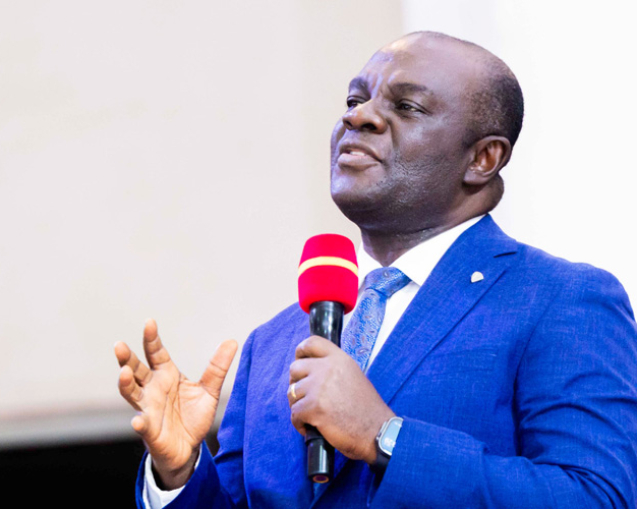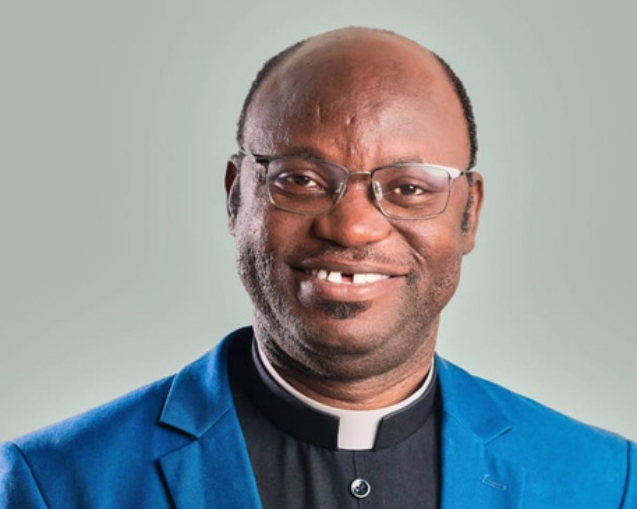


The Chairman of the Prisons Service Council, Apostle Alexander Nana Yaw Kumi-Larbi, has called for urgent government intervention to address critical challenges facing the Ghana Prisons Service. According to him, the prions work should be taken serious as missions work.
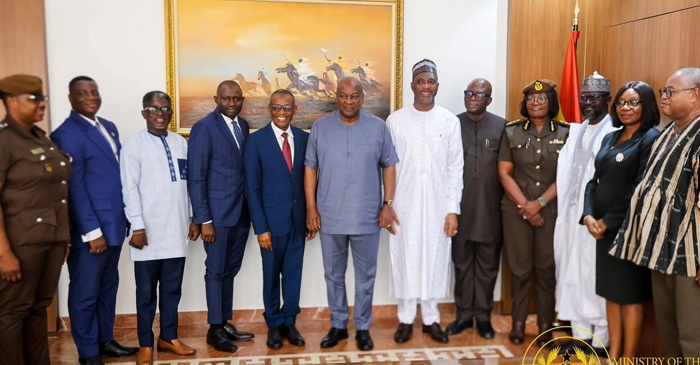
Delivering a speech during a courtesy call on the President at the Jubilee House on April 14, 2026, the Prisons Council Chairman outlined a comprehensive overview of the Service’s operations, highlighting both notable achievements and pressing concerns.
He was accompanied by the Minister of the Interior, Hon. Mubarak Mohammed Muntaka; the Director-General of the Ghana Prisons Service, Mrs Patience Baffoe-Bonnie (Esq.); and other Council members.
Apostle Kumi-Larbi indicated that while the Ghana Prisons Service has made strides in areas such as inmate rehabilitation, healthcare delivery, and security enhancement, persistent issues continue to undermine its effectiveness. Chief among these are inadequate budgetary allocation, severe prison overcrowding, poor staff accommodation, and obsolete logistics.
According to the Chairman, Ghana’s prisons currently house over 15,000 inmates across 44 facilities, with an overcrowding rate nearing 50 percent. Some facilities reportedly operate at more than double their capacity, creating security and humanitarian concerns.
Apostle Kumi-Larbi further revealed that delays in payments to food suppliers, with some exceeding a year, are threatening inmate feeding, while outstanding medical bills risk disrupting healthcare services for inmates and officers. The situation, he cautioned, could trigger unrest within prison facilities and strain national security systems.
Despite these challenges, the Service, he noted, has recorded significant progress, including improved inmate classification systems, enhanced healthcare through the establishment of a Health Directorate, expanded vocational training programmes, and strengthened security through specialised units such as intelligence, rapid response, and counter-terrorism teams.
A major highlight of the address was the introduction of the “Think Prisons 360 Degrees Transformational Agenda,” a reform blueprint aimed at modernising the Service into a self-sustaining and human rights-compliant institution.
Under this initiative, he disclosed that the Service has secured a landmark agreement with the Ministry of Education to produce at least 30 percent of school uniforms and furniture, as well as 25 percent of sanitary pads. The Council described this as a breakthrough that will boost inmate skills development and generate revenue.
Looking ahead, the Council proposed several measures to improve operations, including the completion of a 2000-capacity remand prison at Nsawam, acquisition of modern security equipment, expansion of prison infrastructure, and digitalisation of inmate management systems.
He also called for reforms such as the passage of the Parole and Community Service Bills to reduce congestion, improved conditions of service for prison officers, and increased recruitment of professionals, including medical personnel and technical instructors.
Apostle Kumi-Larbi concluded by reaffirming the Council’s commitment to supporting government efforts in strengthening national security, public safety, and the rehabilitation of offenders.
He expressed optimism that with the President’s support, the Ghana Prisons Service can be transformed into a model corrections system in Africa.
PENT NEWS