Mampong Akyeremade District Mission House Dedicated web

Mampong Akyeremade District Mission House Dedicated

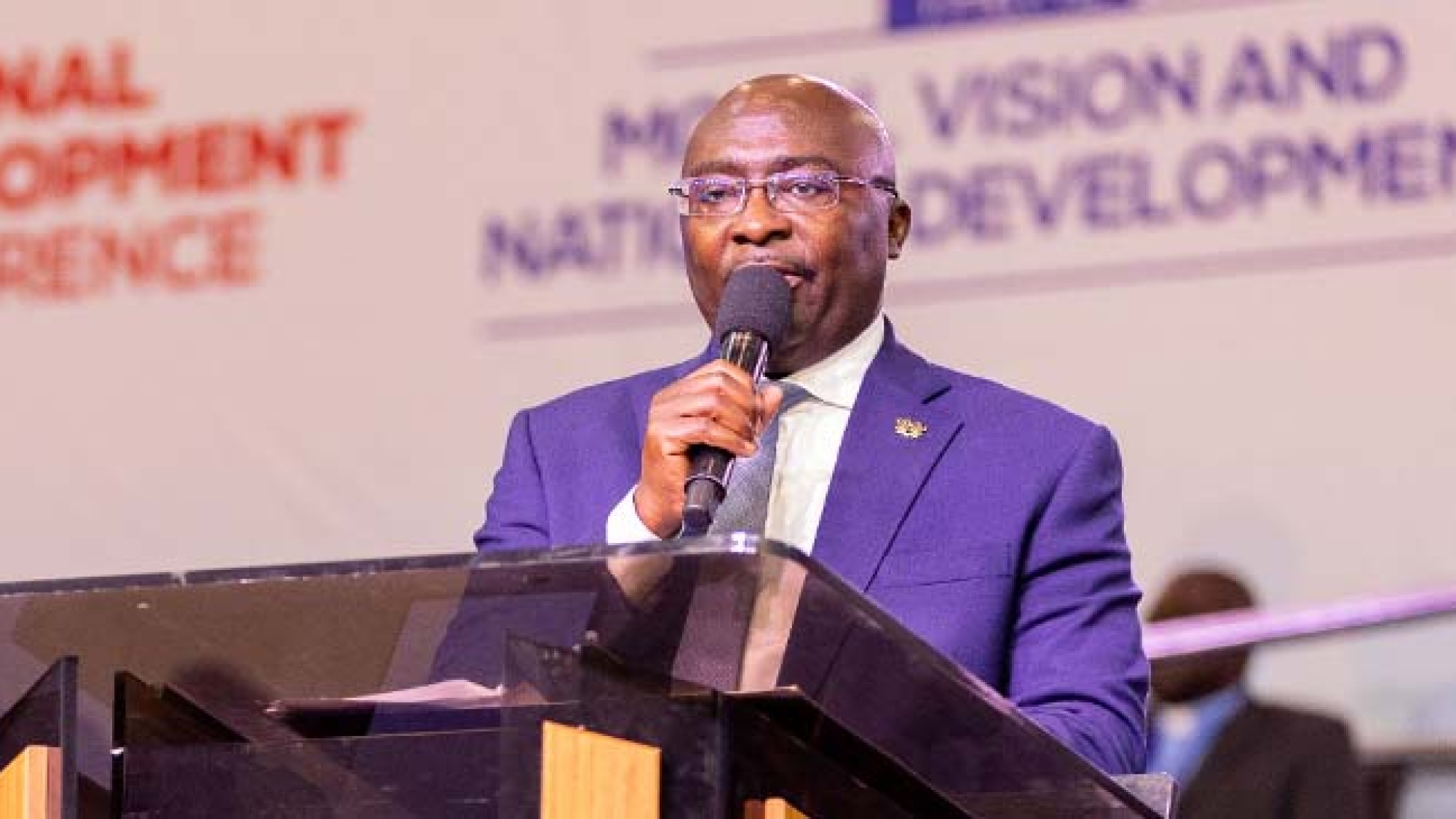
The Mampong Area Head of The Church of Pentecost, Apostle Samuel Kwabena Asare, has dedicated the mission house of the Akyeremade District in the Mampong Area to the glory of God.

Apostle Asare was assisted by Pastor Stephen Obeng Asare, the Mampong Akyeremade District Minister.

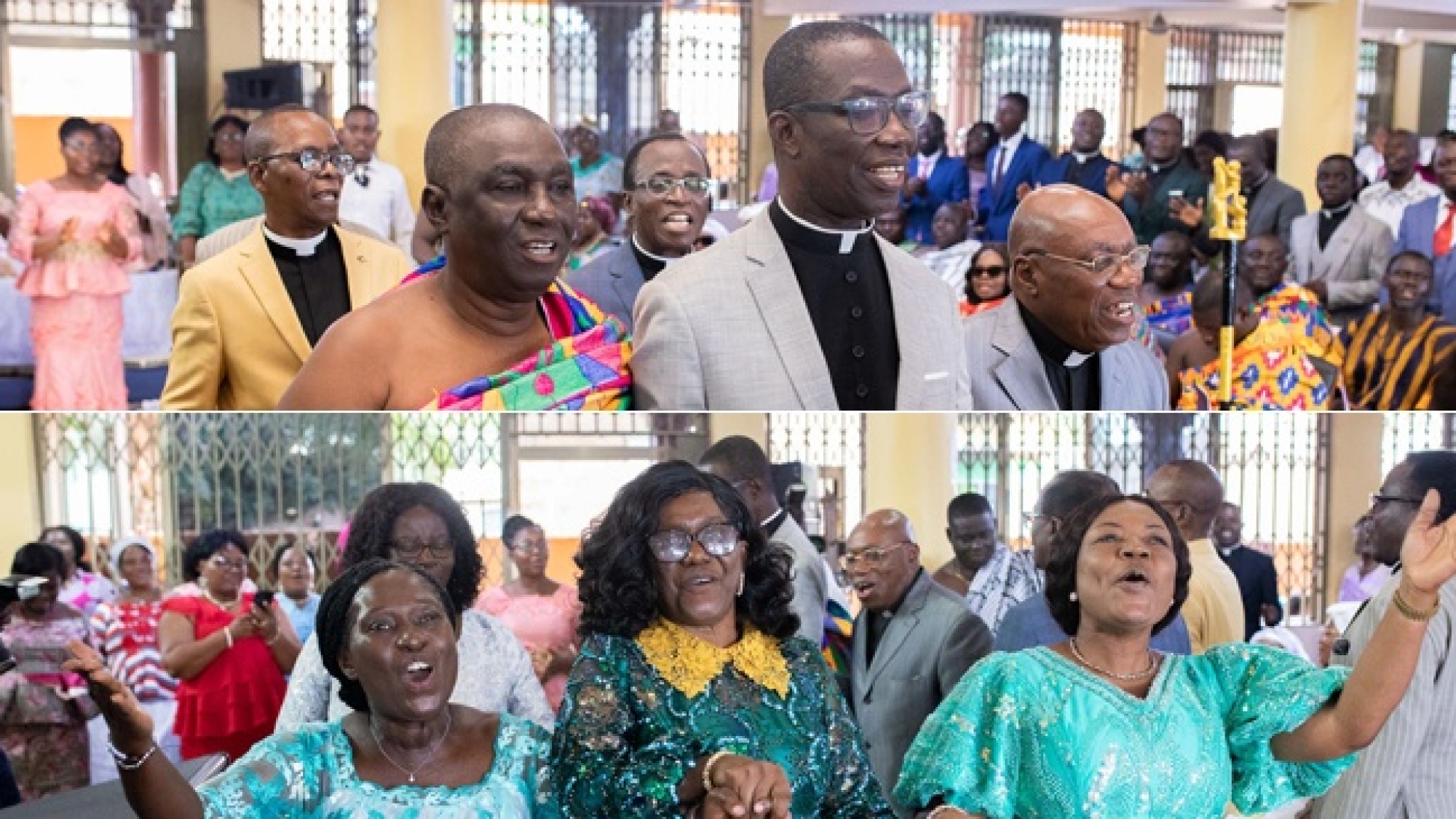
The dedication ceremony, which took place at the Mary Afia Amaniampong Temple (MAAT) auditorium on June 18, 2023, brought together people from all walks of life, including active and retired ministers, as well as officers and members of the Church.

Delivering a sermon on the topic “The Local Church Upholding Godliness” with scripture references from Matthew 5:13-15, Matthew 13:33, and 1 Timothy 6:6, Apostle Asare explained that the local church connotes a group of individuals who have believed in Jesus and are found in one community, coming together to worship at one place.

He further noted that the local church, like yeast, exists to permeate society with the values and principles of the kingdom of God.

“The local church must impact society, and as long as the church is not impacting society, then something is wrong somewhere,” he said.

According to the Mampong Area Head, “impact does not come from building temples and mission houses but rather from godliness.”

He also stressed that godliness is not about material gains but rather about living a Christ-centered life.

Apostle Asare, therefore, called on Christians to strive to please God with their lives so that people around them would see them as real representatives of Jesus Christ.

Giving a brief history of the mission house project, Elder June Gyimah said that the idea for the mission house was conceived in 2008 by Pastor S K. Asiedu (Rtd.), during his tenure as the District Minister.

The foundation for the project was started on the parcel of land adjacent to the Central Assembly church building. It, however, became necessary to relocate the building upon the advice of the immediate-past Chairman of The Church of Pentecost, Apostle Prof. Opoku Onyinah (now retired) when he visited the area for the dedication of the Akyeremade Central Assembly auditorium (MAAT) in 2016.

In compliance with the recommendation, the Prophet Foster Aniakwaa-led Area Executive Committee donated a parcel of land owned by the Area in 2017 for the project.

He also acknowledged Prophet James and Apostle John Osei Amaniampong and their family, Mr. Yaw Marfo (Agya Wiase), Mr. Kofi & Deaconess Gyima, Deborah Kyei, officers, and members of the Akyeremade District, among others, for their immense contributions towards the completion of the building.

The event also had in attendance the Mampong Area pastorate and their wives, Nana Serwaa Akuamoa Boateng (Mampong Newtown Queen mother), Elder Emmanuel Kobea (Area Deacon), Elder Emmanuel Ofori Fordjour, and Elder Samuel Owusu Agyapong (former Area Deacons).

Also present were Apostle I. K. Amoako (Rtd.), Pastor Robert Odame (Rtd.), Pastor Edmund Antwi (Assemblies of God and GPCC-Mampong Chairman), and Pastor Godwin Eghaghe (Missionary from the House of Discipleship Church, Nigeria).

Report by Mampong Area Media Team

Canadian Missionary Donates Boat To Buipe District Of The Church of Pentecost web

Canadian Missionary Donates Boat To Buipe District Of The Church of Pentecost

A Canadian missionary, Evangelist Bradley Hugh, and his family and the JGLM Saskatoon Life Team have donated a flying boat and outboard motor worth GH¢30,000.00 to the Buipe District of The Church of Pentecost.

In November 2022, the Buipe District of The Church of Pentecost, under the leadership of Pastor Eric Owusu, in collaboration with Jesus Rescue Team (JRT), led by Pastor Michael Davies, organised an All Believers Crusade.

Evangelist Bradley Hugh of Life Hope Street Ministry, based in Canada, who attended the crusade in consultation with Pastor Owusu, pledged to purchase a flying boat to reach out to the many unreached people residing along the banks of the Black Volta.

According to Pastor Owusu, “The need for transportation has made it difficult to reach out to these individuals. Therefore, obtaining a flying boat would be a tremendous blessing.”

Supported by the JRT group, Evangelist Hugh donated the flying boat and the outboard motor this year. Apostle Francis Agyemang Badu, the Kintampo Area Head of The Church of Pentecost, commissioned it. 

Pastor Eric Owusu expressed his heartfelt appreciation to Evangelist Bradley Hugh and his partners for the timely intervention. 

“This generous contribution would significantly expand the Kingdom’s work in the community,” he stated.

Apostle Francis Agyemang Badu, on his part, advised the district to maintain the boat properly to ensure its longevity. 

He offered prayers for Evangelist Bradley Hugh and his team, invoking God’s blessings upon them.

Report by Buipe Media Team

Ground Up The Youth For Excellence WEB

Ground Up The Youth For Excellence – Apostle Dr Nuekpe Tells Church Leaders

Apostle Dr Dieudonne Komla Nuekpe, the La Area Head of The Church of Pentecost and Executive Council Member-elect has called on church leaders to instill the value of excellence in the youth in all aspects of their work.

According to him, excellence entails standing out among others, being excellent, and striving to be the best in all endeavours.

Apostle Dr Nuekpe said this at the culmination of this year’s National Youth Week Celebration at the Rhema Assembly, Burma Camp.

During his presentation, Apostle Dr Nuekpe referred to 2 Peter 1:1-12, highlighting Apostle Peter’s teachings on living a life of excellence as believers and making a significant impact. 

“Christians are called to exemplify excellence in reflecting God’s glory,” he stated.

He added: “Every youth and Christian should possess this quality; God has equipped you with attributes of excellence for greatness.”

He urged Christians to aspire to operate beyond the standard or societal norms.

Apostle Dr Nuekpe stressed the importance of continually improving oneself and seeking personal growth. 

He encouraged the youth to pursue excellence, reminding them that there is always more to achieve, adding, “Upgrading your skills and abilities; you can reach your full potential in wisdom, knowledge, work, and spirituality.”

Apostle Dr Nuekpe further emphasised that excellence is observable and evident in the lives of individuals who possess it. 

“Those who strive for excellence know their capabilities and consistently build on the gifts God has bestowed upon them,” he hinted.

Citing Proverbs 22:29, he highlighted that excellent people feel their presence wherever they go, stressing that the opinions of others do not sway them but remain focused on their goals as they refuse to succumb to mediocrity. 

He urged individuals to identify their talents and gifts and work diligently to maintain their position of excellence.

The La Area Head stated that excellence is not merely a school subject but a quality of life, emphasising that Christian youth can live lives of excellence by setting themselves apart above reproach.

He said that Christianity goes beyond the mere profession of faith and regular church attendance, noting that their commitment to excellence determines the quality of one’s life. 

Apostle Dr Nuekpe outlined that excellence is achieved through faith and qualities such as nobility, knowledge, hard work, diligence, and commitment. 

Recalling biblical characters such as Joseph, Daniel, and his friends who excelled in their endeavours, he encouraged members to strive for excellence in the walk with God, work and daily lives.

He said that there would come a time when individuals can no longer perform as before, emphasising the importance of being active and pursuing excellence in the present.

Reported by Gina Akua Padi

NOTE TAKER OR WORD PRACTITIONER web

Note Taker Or Word Practitioner?

The habit of taking notes at church has become prevalent. You often see young men and women pulling out their iPads, phones, notebooks, and pens as soon as the moderator announces, “It is time to listen to the word of God.” This practice is commendable since written messages serve as future references for the writer and those who come across them. It has resulted in many people accumulating valuable notes. However, the question arises: how are these insightful notes, taken week after week and sometimes on weekdays, being applied in our lives?

Nothing is more frustrating than observing people diligently taking notes during a sermon, only to do nothing with the information they have heard. Consequently, there is little distinction between many of us in church and our unbelieving neighbours.

In his book, James chapter 1:22-23, the Apostle James urges believers to not only be hearers of the Word but also doers of it. For someone who merely listens but fails to act, it is likened to looking in a mirror, seeing oneself, but then immediately forgetting one’s appearance upon leaving. Sadly, this has become a general pattern in our time. Most individuals prefer to record every revelation that falls from the preacher’s lips, but applying these teachings for personal transformation and impact becomes a challenge.

God purposely left believers on earth to be a light in the world. Our lives should serve as a proclamation of an impending kingdom. People should be able to observe us and recognise that there is something distinct about us. Our conduct in business should be different. Our marriages should testify to the love of Christ. How we raise our children should send a message to unbelievers that through Christ, children can be nurtured with moral values.

Christians cannot expect unbelievers to surrender to a Lord whose servants cannot even get along. As Apostle Paul declared in 2 Corinthians 3:2, “You are our letter, written on our hearts, known and read by everyone.” Our friends who have yet to believe, as well as others, are continually observing our lives. They want to witness changes that would inspire them to embrace our beliefs. The church must make God’s abundant wisdom known to those who are concerned. Thus, the responsibility rests on us to spread the fragrance of the knowledge of Christ everywhere we go by living out what we hear and write.

The sermons we write down from the pulpit should always be reviewed, and the lessons learned should be put into practice.

Therefore, let us not merely be Note Takers, but let us become Word Practitioners.

Written by Overseer Seth Frimpong (Jama District)

The Church of Pentecost Dedicates First Church Building for Chakali Community WEB

The Church of Pentecost Dedicates First Church Building for Chakali Community

It was a joyous occasion on Friday, June 16, 2023, when Apostle Daniel Nii Tetteh Tackie, the Wa Area Head of The Church of Pentecost, dedicated the Gurumbelle Assembly church building.

The building project was funded by the Pentecost International Worship Centre (PIWC), Dansoman at a cost of GH¢101,000.00 and serves as the first church building of The Church of Pentecost for the Chakalis, an unreached people group in the Wa Area.

During the dedication ceremony, Overseer Alfred Obeng, the Bulenga District Minister, provided a brief history of the Assembly.

He narrated that Gurumbelle Assembly was established in 2015 by Pastor Gabriel Owusu Akyaw, the former Bulenga District Minister. The need for a church in Gurumbelle arose when Mr. Joseph Wusah Weaga, a member of the Church from Gurumbelle, discovered that The Church of Pentecost was not present in his hometown.

Together with one Mr. Jonathan, a teacher in the community, they approached the District Minister and organised a three-day mega rally, which resulted in 25 adult souls and 15 children being won for Christ. A total of 15 individuals underwent water baptism, and started the Church fellowshipping under a tree.

The enthusiastic members initially constructed a mud structure as their place of worship. However, it was destroyed during a heavy downpour, and they continued to struggle, gathering under the tree.

Apostle Emmanuel Agyei Kwafo, the National HUM Coordinator, heard about the zealous Chakali people during his visit to the Wa Area in 2019. He, along with Apostle Daniel Nii Tackie, paid them a visit and pledged to raise funds for a permanent place of worship for the Church.

Subsequently, Apostle Kwarfo reached out to PIWC-Dansoman, and they generously funded the project with Pastor Ebenezer Amartey Ahuakese, the Resident Minister of PIWC-Dansoman, leading the funding-raising efforts.

Upon completion, the chief and people of Gurumbelle expressed their joy through songs and dance, celebrating the remarkable edifice in their community.

Delivering a sermon titled “The Complete Temple,” at the historic event, Pastor Karim Awuni urged Christians to prioritise Christ and His teachings in all aspects of their lives.

Dedicating the building, Apostle Tackie expressed his gratitude to God for being present among the Chakalis, who hold a priority in the Church’s strategic vision (Vision 2023).

He also extended his appreciation to the Executive Council of the Church for their timely vision that has been a blessing to various segments of society, including the Chakalis.

Apostle Tackie further thanked Prophet E.K. Appiah (Rtd.) and Apostle Daniel Sey, the immediate-past and current Area Heads of Dansoman, respectively, for their dedication to missions. He also acknowledged Apostle Emmanuel Agyei Kwafo for the instrumental role he played in making this reality. 

The Wa Area Head also expressed his gratitude to Pastor Ebenezer Amartey Ahuakese, the Resident Minister of PIWC-Dansoman, and the presbytery for their commitment to reaching unreached people groups, and called for God’s blessings upon them.

The Chief of Gurumbelle, who graced the event, also expressed deep gratitude to God and the Church for the love they had shown to the community.

Others present at the event were Pastor Daniel Nabaku (HUM Pastor for the Northern Sector), Pastor Gabriel Owusu Akyaw (Former Bulenga District Minister and HUM Pastor for the Koforidua Sector), Wa Area pastorate and their wives as well as the people of Gurumbelle, among others.

The Home and Urban Missions (HUM) is a specialised ministry of The Church of Pentecost that focuses on unreached people groups, expatriates, migrants and other marginalised groups.

Report by Pastor Gordon Ansah & Overseer Stephen Supir Bedim

A PROBLEM OF THEOLOGY web

A Problem Of Theology: How Must African Christians Relate To Their Past In African Traditional Spirituality?

Introduction

Following the charge given by the Lord Jesus Christ for his disciples to venture into the world, evangelize and disciple the nations (Matthew 28:18-20), the Christian faith has been on a pilgrimage.  The fire of the Gospel has been burning its way into diverse cultural contexts. The journey of Christianity has been essentially eventful. The progress of Christianity creates a picture of water flowing through a landscape of an array of topography. As it ebbs along, it takes the shape of the valleys, traverses the hills, bridges the canyons, and generally finds an abode on the land. In the same vein, as Christianity encounters the cultural centres, it expresses itself in terms of the cultural ideologies and practices in which it finds itself. From Jerusalem to somewhere in Africa, Christianity presses on in the power of the Holy Spirit. It has always triumphed. There are always issues of Gospel and Culture encounter whenever the Gospel makes an incursion into a new territory with a unique cultural identity. Meanwhile, because God does not live himself without witness in the world (Acts 14:17; Romans 1:19-20), the Gospel always finds points of contact in these cultures. Where these familiar grounds in the culture and traditional religious apprehension are ignored in the imagination of the Gospel, Christianity becomes superficial and the faith of the people becomes wobbly. Against this backdrop, this article shall very briefly point out the sequela of the demonization of African culture and its attendant religion when Christianity entered Africa. It would discuss how vital engagement between Christianity and African traditional spirituality led to the rise of the Christian faith in Africa. Suggestions are given as to how Christians in Africa must relate to this religion of their ancestors towards a thriving Christianity.

The “Demonic” Victimization of African Culture and Traditional Spirituality

God is ultimately the originator of culture. He is the one who creates people and endowed them with the mind that they utilize to reflect on their surroundings and eventually inform their way of life. Culture encapsulates the entirety of the way of life of a people including but not limited to their language, food, religion, clothing, government, values, technology, and art. As people behold and reflect on the tangible aspect of their environment and the transcendental aspect, a worldview emerges. This is important to their way of life. This worldview connotes their philosophy of life and churns out unique beliefs and practices. It informs their religion. Today, to a significant extent, we can listen to and observe people from afar and tell who they are. We can thus talk about African culture, Western culture, and the diverse nuances within a large cultural pattern. Worldview, which is innate to culture, is thus intimately connected to the identity of a people.

Religion is key to culture. In Africa, religion is intertwined with all of life such that it is difficult to separate them. Religion in Africa is not that which is revealed to one person to be passed on to others. It is in continuity with the total way of life of African people. Africans are absolutely religious. This religion is African Traditional Religion. A unique spirituality emerges as Africans attempt to relate to the Transcendent. The various means by which the world of the spirit is approached in Africa define African Traditional Spirituality. This spirituality also includes the various attitudes Africans adopt in their quest to relate to the spiritual realm. This is the religion that Africans practised before the European missionaries entered Africa with Christianity.

I have indicated earlier that Christianity attempts to incarnate itself into the culture of any territory it enters. The Christian faith as presented by the European missionaries was cloth in cultural thought forms of the West. The West was very much impacted by the Enlightenment of the late 17th century to the early 19th century. The missionary work which was done in Africa by Europe was done through the lens of the West. The missionaries could not engage adequately with the African culture to enable a great harvest of people coming to faith in Christ. Unsurprisingly, many of the missionaries overly struggled to plant thriving churches.

African culture, and of course, African Traditional Religion (since they are intimately intertwined) was treated with contempt. It was regarded as animistic, primitive, and demonic. The result was that Christianity as was presented by these missionaries could not answers the questions and aspirations of the Africans who converted to Christianity. The result was a Christianity faith that was not deep-seated. In times of trouble, many of the African converts revert back to the African Traditional Religion for answers mainly through divinatory consultation. This is the result of the victimization of the African culture and religion. The effect is even felt today.

This attitude to find answers to life’s challenges find expression in the chase after oracles from “men of God” who claim to have answers to the questions of life people are confronted with, only for them to become deceived and cheated. This is one of the Achilles’ heel of Christianity on the continent of Africa.

The Eddies of African Christianity

When the 20th century dawned, Africans strived to set themselves free from Western hegemony. From the arena of politics to religion, they sought to have inner reflections and to own their destinies. The first strand of resistance against Western dominance in Africa had a more political orientation. The second delves into the traditional religious recesses to express the Christian faith. These movements took inspiration from the Bible. The first reaction produced the ‘Nationalist’ churches or the ‘Ethiopianist’ churches. The AICs are the product of the second means of dealing with imperialist religious ideas that do not appeal to their (Africans’) worldview. These are churches that have been established as a result of the direct ministry of some indigenous prophetic figures. With respect to Ghana, their rise has been linked to the ministry of William Wadé Harris and Sampson Oppong. Garrick Sokari Braide is another important figure in the rise of AICs in West Africa. Other forerunners of the AICs include Simon Kimbangu of the Congo and South Africa’s Isaiah Shembe among others.

The display of spiritual power by the AICs appeals more to the Africans. This power ministry brought home the Gospel to them. The AICs became the precursors of the Pentecostal, then, the Charismatic movements in Africa. The AICs have been classified as Pentecostal today. These expressions of the Christian faith responded to the religious aspiration of the Africans since it engaged with vital elements of the African Traditional Spirituality. Pentecostalism, therefore, won many African converts when it swept over the African continent. Where the European missionaries struggled to win converts, the Pentecostal churches flourished. Engaging with African Traditional Religion, which is intimately interwoven with the African way of life is the eddies of Christianity in Africa.

In all of this rise in Christianity in Africa, Bible translation into the mother tongues of Africa played a major role. It was a catalyst indeed. These translations utilize elements of the African Traditional Religion. For instance, God in English has been translated into the Akan Bible as Onyankopɔn, Mawu in the Dangme and Ewe Bible, and Nyɔnmɔ in that of the Ga language.

Another example is the word “priest” as used in both the Old Testament and the New Testament. Literally, the term “priest” should have been rendered wɔnɔ in Dangme but osɔfo was used in place of wɔnɔ. Strictly speaking, osɔfo does not exist in Dangme. It was, arguably, loaned and altered slightly from Akan, which uses asɔfo for servants at the shrine. The Ewe Bible also uses osɔfo. The Akan uses ɔsɔfo for a Christian priest or pastor. Somehow, ɔkomfo, the actual term for an Akan traditional priest has been used synonymously with osɔfo. An ɔsɔfo is one who has a particular task at the shrine. He is not the one who is possessed by a deity and used as a vessel by the deity. However, the functions of both the ɔsɔfo and ɔkomfo are priestly. The point of the note here is that that Christian priest became ɔsɔfo, a term taken from the African Traditional Religion just like Onyankopɔn and Mawu among other personal names for the Supreme Being in various African languages. This means that the Almighty God is not a new concept introduced by the European missionaries. He is known in Africa already.

I could go on to give more examples including but not limited to such thematic terms like atonement, purification, angel, prayer, and prophet. Essentially, the African who becomes a Christian would realize that per his or her past in African Traditional Religion or Spirituality, he or she has encountered a familiar faith. African Traditional Religion, therefore, becomes a preparatory ground for the Christian Evangel. This is God leaving a witness of himself in the world. He is still working in the world in various cultures.

Concluding Remarks

Jesus Christ is Lord overall. Our appreciation of his Lordship calls for fruitful engagement with other faiths. In a religious pluralistic context, it is not an outright condemnation of cultures and religions but a vital reflection on them to be able to turn all cultures to Christ. If you treat chieftaincy as demonic because of its association with the ancestral cult through its black stool rituals and shun away from it, how can you possess that institution for Christ? This also includes other aspects of African culture and religion such as festivals, naming ceremonies, funeral rites, puberty rites, and other aspects of the African culture. It is laudable to see Christians doing works on how Jesus Christ comes alive in traditional festivals; how the sacrificial cult helps us to understand the atonement in Christ;  how key aspects of the Bible come alive when expressed in the African context, and to see African theological reflections on other themes of the Christian faith. May we not repeat the mistakes of the past. Let us not victimized African Traditional Spirituality again. Let all cultures be passed through the sieve of the Bible and may they be refined and converted to our Lord Jesus Christ.

Written by Elder Dr. Stephen Ofotsu Ofoe

Abedwum Church Building Dedicated web

Abedwum Church Building Dedicated

The Abedwum Assembly church building in the Akrokerri District of the Obuasi Area of The Church of Pentecost has been dedicated amidst great joy.

Apostle William Boakye Agyarko, the Obuasi Area Head, dedicated the building on Sunday, April 24, 2023.

The entire project, with a total cost of 578,000.00, was sponsored by Mr Joseph Antwi, a philanthropist based in South Africa and CEO of ASDS South Africa and Gye Nyame Company Ltd Ghana.

Mr Antwi personally contributed 553,000.00 towards the construction of the church building, demonstrating his deep commitment to the cause.

The church building was named in honour of his late father, Elder Paul Akwasi Antwi.

The Akrokerri District Minister, Pastor Richard Osei Mensah, and his wife, Esther, were also hailed for their role in ensuring the successful completion of the building.

Addressing the congregation on the theme, “Dedication to the Service of God for Maximum Impact,” Apostle Boakye Agyarko underscored the significance of believers wholeheartedly dedicating their lives to God’s service, urging them not to fear death.

He emphasised the importance of leading a righteous life, free from sin, as God blesses those who separate themselves for His divine purposes, encouraging the believers to stand firm against false doctrines.

During the dedication ceremony, Apostle William Boakye Agyarko offered heartfelt prayers, calling for God’s abundant blessings upon Mr Joseph Antwi and all those who contributed their time and resources to the completion of the church building.

The Area Head took a moment to inspire the youth, urging them to prioritise education for personal and spiritual growth.

Mr Joseph Antwi, the project sponsor, shared his deep desire and lifelong dream to build a church.

He called upon those whom God has blessed to use their resources to support the work of the Lord, as it serves as a testament to His grace and goodness.

Mr Antwi thanked God for His abounding grace and encouraged everyone to persevere despite challenges.

The Chief of Abedwum and his elders graced the ceremony, along with the Obuasi Area pastorate and their wives, showcasing unity and support within the community.

The dedication of the Abedwum Assembly church building marked a significant milestone in the spiritual upliftment of the community.

Report by Pastor Francis Kwame Wugban.

Embrace God's Purpose and Find Peace web

Embrace God’s Purpose and Find Peace – Apostle Hagan To Christian Youth

The Director of the Youth Ministry of The Church of Pentecost, Apostle Ebenezer Hagan, has encouraged young individuals to embrace their circumstances in order to find contentment in God’s purpose for their lives.

Apostle Hagan said this yesterday when he delivered a sermon titled “Discontentment” at the D. K. Arnan Worship Centre during the Teshie Zone of the Teshie-Nungua Area youth meeting.

Emphasising the destructive nature of discontentment, Apostle Hagan noted that “Discontentment is dissatisfaction with one’s circumstances or status or possession or situation. It can be your sex, parents, background, tribe, or school. It is the lack of contentment. You look at what you’ve got and compare. It makes you feel bad.”

Highlighting the struggles faced by teenagers and young adults in discovering themselves, Apostle Hagan offered a comforting reminder from Psalm 139, stating, “You were made in the glory of God.”

He encouraged the youth to find solace in their unique identities, cautioning against the desire to change one’s sex, as it contradicts God’s purpose.

He emphasised that “to change your sex is to change God’s purpose in your life.”

Drawing wisdom from the parable of the prodigal son, Apostle Hagan noted, “In life, your money and resources can be exhausted. Money answers many questions but not all questions.”

He urged young people not to place undue importance on material wealth, reminding them that circumstances beyond their control, such as famines or personal trials, can leave them feeling vulnerable.

Addressing the importance of humility and self-reflection, Apostle Hagan stated, “Sometimes you can make mistakes, but you can ‘come to your senses.’ Don’t be too big to apologise.”

He highlighted the need to take responsibility for one’s actions and seek forgiveness when necessary rather than blaming oneself or God for discontentment.

Referring to 1 Timothy 6:6-10, Apostle Hagan emphasised the negative consequences of discontentment, saying, “Discontentment yields many immoral behaviours among youth.”

He encouraged the youth to seek contentment in their relationship with God and to trust in His plans rather than succumbing to negative influences.

Present at the service were Apostle Wilberforce Nkrumah Agyemang, Area Head of Teshie Nungua, Pastor Gabriel Nti, PENSA Travelling Secretary of the Madina Sector, and a section of the pastorate in the Teshie Zone.

Report by Teshie-Nungua Area Youth Ministry

Mampong Area Children’s Ministry Organises Training Workshop For Ministers’ Wives web

Mampong Area Children’s Ministry Organises Training Workshop For Ministers’ Wives

The Mampong Area Children’s Ministry of The Church of Pentecost organised a one-day workshop for the ministers’ wives within the area.

The workshop, a novelty of the Area Head, Apostle Samuel Asare, was held on Thursday, June 8, 2023, and aimed at equipping minister wives to take direct involvement in the children’s ministry affairs of the various districts.

The workshop was facilitated by Pastor Vincent Cudjoe Amuzu (Area Children’s Ministry Leader, Area Executive Committee Member, and Kofiase District Pastor) and Mrs. Ruth Afrah Koomson (Area Children’s Ministry Executive Member and Wife of Nsuta District Minister).

Participants were taught how to use the ministry’s syllabi to teach children by Mrs. Ruth Koomson. She began her presentation by saying, “Just as we prayerfully prepare and deliver sermons at adult congregations, the story should not be different if we really want to make the needed impact in a children’s ministry class.”

She further explained that Bible stories and memory verses should not be taught in the same class or session with the children on the same day.

“These are to be separated to help the children properly comprehend what we want to teach them on a particular day, class, or session,” she added.

She emphasised that “it is always advisable to separate the children according to their age grouping (0-6, 7-9, and 10-12) for the sake of their comprehension or absorption capacity.”

Mrs. Koomson also stressed that lessons from the Bible stories should be outlined to the children rather than just narrating the stories to them.

Pastor Vincent Cudjoe Amuzu, in turn, took participants through the concepts of the Community Children’s Club (CCC), Jethro Initiative (JI), Box Library, and My Community My Responsibility.

He encouraged participants to employ these insightful, playful, and colourful initiatives proposed by the Children’s Ministry directorate to plant Jesus in the hearts of our children.

There was also a breakout session where participants were grouped and made to practice what they had learned.

In a brief remark at the event, Apostle Samuel Asare admonished participants to take the training seriously to help impact the children in the Area, especially when the ministry is challenged with inadequate Children-Workers.

“The area is positioned to offer you all the necessary support as far as this initiative is concerned in order not to leave these God-given children out of the maximum impact agenda,” he passionately added.

The event, which coincided with ministers’ wives’ monthly prayer meeting, also had in attendance Mrs. Beatrice Asare (Wife of the Area Head).

Report by Mrs. Janet Osei-Yeboah

3 Officers Retire In Amasaman District web

3 Officers Retire In Amasaman District

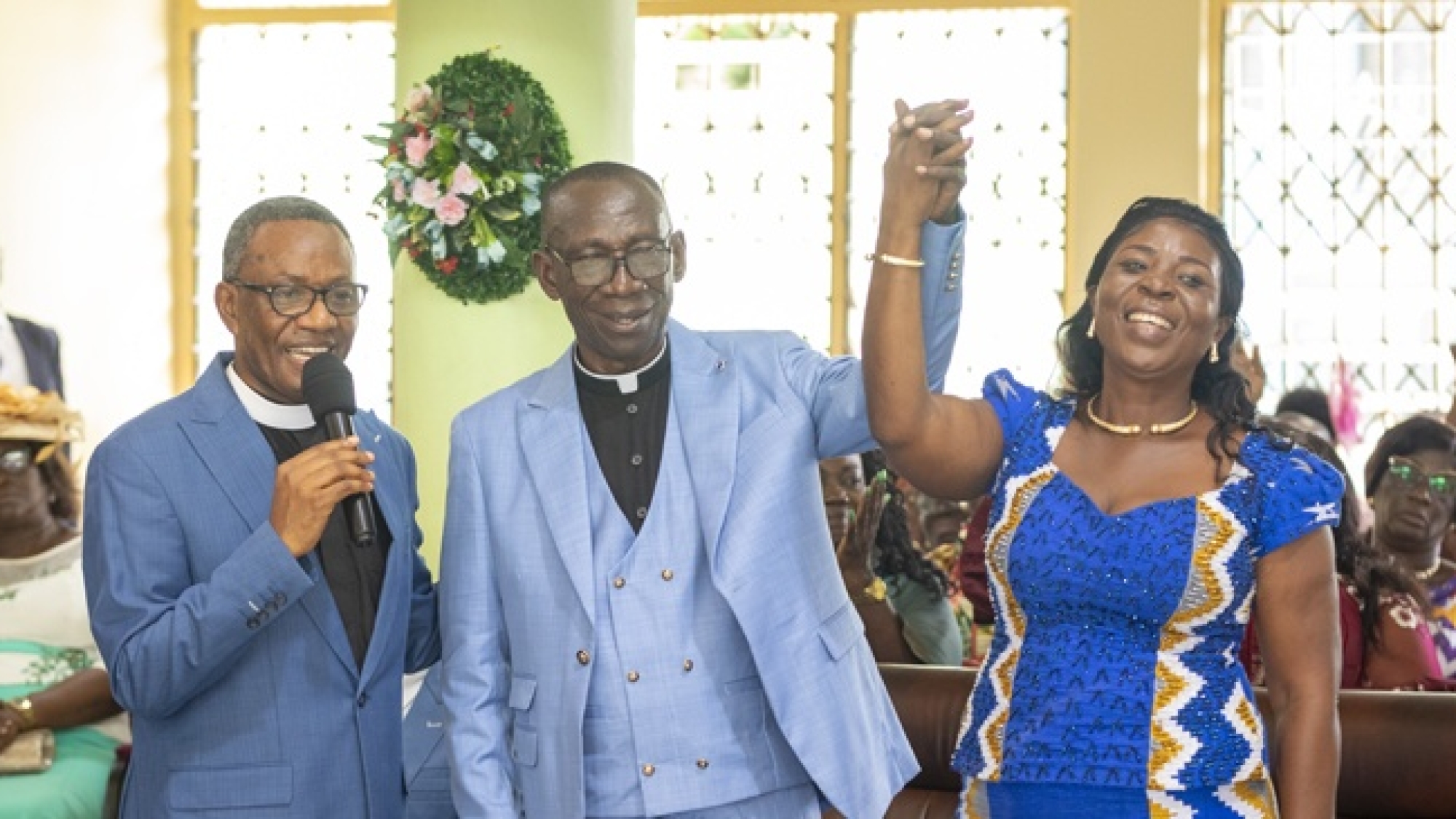
The Amasaman District in the Achimota Area of The Church of Pentecost on Sunday, June 18, 2023, held a retirement service for three illustrious officers who have served dutifully in various capacities in the church for several years.

These retirees, Elder Albert Brefo, Elder Peter Mensah, and Deaconess Grace Mensah, have dedicated many years of diligent service in various capacities within the church.

The retirement service took place at the Amasaman Central Assembly auditorium (Mercy Temple) in Amasaman and was officiated by Apostle Eric Nyamekye, the Chairman of The Church of Pentecost.

Apostle Abraham Swanzy, the National Director of the Ghana Evangelism Committee, also assisted in the ceremony.

Officiating the service, Apostle Nyamekye stated that those who believe in Jesus are blessed and extend to future generations.

He encouraged the congregation, stating, “Even if you don’t have children, adopt someone and treat them as your own.”

Speaking on the theme “Possessing the Cities of Your Enemies,” Apostle Nyamekye reiterated that for descendants to overcome the challenges and obstacles, they must possess strength and empowerment.

He emphasised the importance of being capable, competent, and influential in specific fields.

Elder Albert Brefo, a highly regarded Bible teacher and staunch guardian of the Pentecostal heritage, was ordained as a deacon in The Church of Pentecost in 1976 by Pastor Painstil in Accra. Later 1988, Apostle S.K. Ansong ordained him as an elder in Kumasi. Elder Brefo, married to Theresa Afia Owusu-Nyarko, has seven sons, two of whom are church ministers.

He served in several leadership roles throughout his tenure, including being the first Presiding Elder of Woraso Assembly in Kumawu District (1983-1987) and the first Presiding Elder of Opah Assembly in Taifa District (2003-2004). He also served as the Chairman of the District Marriage Committee in Amasaman (2004-2023) and was a member of the District Ministerial Committee (1998-2023), among other responsibilities.

Elder Peter Mensah, the founder of the Royal Priesthood Academy since 1996, was ordained as a deacon in 1994 and as an elder in 2001. He is known for his expertise in Bible teaching, discipline, exceptional generosity and support for church projects, and youth mentorship. Elder Mensah, married to Deaconess Grace Mensah, is the father of six children.

His contributions to the church include serving as a District Executive Committee Member in Sarpeiman (2016-2020), a District Ministerial Committee Member in Sarpeiman (2016-2020), a District Executive Committee Member in Amasaman (2009-2016), and an Amasaman Local PEMEM Leader (2000-2004), among other roles.

Deaconess Grace Clottey-Mensah, a registered nurse and midwife, has co-founded the Royal Priesthood Academy since 1996. She was ordained as a deaconess of The Church of Pentecost in 1998. She actively supports the Ministry to Prisons, demonstrates exceptional generosity, mentors the youth, and possesses a captivating charisma.

Her notable positions include serving as the Amasaman Worship Center/ District Women’s Ministry Leader (2004-2008), Amasaman WC Prisons Coordinator (2004-2015), Chieftaincy Ministry Secretary in McKeown Assembly (2022-date), and Sarpeiman District PENTSOS Committee Secretary (2016-2021), among others.

These dedicated officers are highly esteemed for their selfless service to the church and commitment to positively impacting humanity.

PENTECOST NEWS.