INTRODUCTION
Ghana is confronted with numerous obstacles that have resulted in persistent leadership crises, despite the presence of high-calibre leaders throughout the nation’s history. The nation, which first exhibited promising progress following its attainment of independence, is currently grappling with a precarious state of existence as a result of a series of leadership crises. The nation, which in the past had the capacity to provide assistance to other nations, is currently burdened with significant levels of debt. According to my memory, Singapore is among the nations that have acquired knowledge on the utilisation of palm nuts for various products, afterward becoming a prominent global player in this field. What nation are leaders handing over to the next generation?
Solomon, the recipient of a superior nation or kingdom from his father David, unfortunately, bequeathed a virtually fragmented nation to his son due to his acts and behavior, despite his renowned wisdom. What are some of the leadership issues that Solomon encountered, that bear resemblance to those faced by Ghana? Ghana can derive valuable insights for enhancing its nation-building efforts from the lessons learned.
SOLOMON’S LIFE AND REIGN
Solomon, a biblical giant, was known for his intelligence, wealth, and magnificence. His prosperous and magnificent reign is immortalised in religious and historical books. However, beneath Solomon’s magnificence, a tale of major mistakes and their far-reaching consequences develops, warning leaders of all times.
Solomon’s time is considered Israel’s “Golden Age.” The insight God gave him in response to his sincere appeal for discernment (1 Kings 3:5–14) became legendary. Solomon’s judgment in the case of two ladies claiming the same child shows his practical insight. His followers admired his ability to reconcile justice and compassion by dividing the baby to disclose the true mother (1 Kings 3:16-28).
However, even the most illustrious of reigns can falter when hubris and lapses in judgment creep in. Solomon’s journey, despite his divine wisdom, took a perilous turn. One of his most profound mistakes was the series of marriages he contracted with foreign women from nations steeped in idolatry (1 Kings 11:1–8). These unions initially intended to strengthen political alliances, soon steered Solomon off the path of righteousness. He allowed the idolatrous practices of his foreign wives to infiltrate the kingdom, culminating in the construction of high places for idol worship, a grave departure from his faith. This diversion from God’s commands carried dire consequences, including divine judgment and the eventual division of the kingdom (1 Kings 11:9–13).
Ironically, in the pages of history, King Solomon faced parallel challenges that threatened the integrity of his rule. His inability to navigate these challenges with wisdom and moral rectitude culminated in the loss of a significant portion of his kingdom. The profound irony lies in the fact that, as Ghana strives for effective leadership and governance, Solomon’s experiences offer invaluable insights into the importance of ethical leadership, accountability, and the unwavering commitment to the well-being of its people.
PRESSING CHALLENGE OF GHANA
Fast forward to the modern era, and we encounter Ghana, often lauded as the “Gateway to West Africa.” Emerging from the shadows of colonial rule in 1957, Ghana embarked on a journey towards progress. The nation’s strides in politics, economics, and social development have ignited optimism for a brighter future. Yet, like many nations, Ghana grapples with a host of contemporary challenges on its path to effective leadership and governance.
These challenges, akin to the threads of a complex tapestry, encompass economic constraints, environmental dilemmas, corruption, political polarization, inequality, poverty, infrastructure gaps, and the persistent specter of youth unemployment. Their reverberations have cast a broad shadow, intricately weaving a web of consequences that touch nearly every facet of Ghanaian society.
John C. Maxwell asserts that “everything rises and falls on leadership.” In the Ghanaian context, many of the repercussions of these challenges can be traced back to leadership behaviors that have not been adequately addressed. These behaviors, whether stemming from a lack of accountability, ethical lapses, or misaligned priorities, have cast a pall over the nation’s progress.
But there is hope. The belief that God will visit the nation with transformative change underscores the enduring faith and resilience of Ghana’s people. A collective call for leadership rectification, grounded in moral rectitude and the unwavering commitment to the welfare of all citizens, forms the cornerstone of this hope.
The tapestry of King Solomon’s reign, interwoven with triumphs and errors, provides a poignant backdrop against which modern Ghana can assess its leadership and governance. Solomon’s journey from wisdom to folly serves as a poignant reminder that the consequences of leadership behaviors extend beyond individual actions, shaping the destiny of nations. As Ghana continues its journey toward effective governance, may the wisdom distilled from Solomon’s legacy illuminate its path toward a more prosperous and equitable future where the welfare of all citizens remains paramount.
MISTAKES WITH MONUMENTAL IMPLICATIONS IN UNRAVELING SOLOMON’S LEGACY
As previously mentioned, Solomon’s legacy encompasses valuable teachings that have lasting relevance for both leaders and nations. However, there were several significant errors that he committed, which had a profound impact on his ability to lead. The life of Solomon is characterised by a disregard for the accumulation of wealth and indulgence for ethical principles, the consequences of political alliances, excessive opulence, a lack of ethical integrity, the neglect of marginalised voices and inclusivity, and the avoidance of divine guidance. These significant errors have profound and wide-ranging implications.
ACCUMULATION OF WEALTH AND INDULGENCE
The tribute from nearby kingdoms and lucrative commerce gave King Solomon great wealth. The golden shields he made for his royal guard show his vast gold and silver collection (1 Kings 10:16–17). His court was lavished with ivory, apes, and peacocks from his commerce network (1 Kings 10:22). Solomon’s palace and the First Temple in Jerusalem awed the Queen of Sheba (1 Kings 10:4-5). In his reign, “silver was not considered anything” due to his wealth (1 Kings 10:21). A huge entourage of officials and extravagant feasts characterised Solomon’s court (1 Kings 4:22–23). His wealth and military might be shown by his many horses and chariots, often obtained from Egypt (1 Kings 4:26–28). Visitors and ambassadors from outside confirmed his rank as one of history’s wealthiest and wisest monarchs (1 Kings 10:1–13). However, his overwhelming wealth created a concentration on materialism and luxury that distracted him from his duties.
LACK OF ETHICS
King Solomon, known for his wisdom and enlightenment, illustrates the conflict between great intellect and moral decay. God’s knowledge supported his reign and drew admirers from abroad. When personal impulses clashed with ethics, Solomon’s life went downhill. Initially married for political reasons, his marriages to foreign women led to his moral decline. These partnerships caused him to accept their pagan practices, a major departure from his faith. He built great idol-worship locations throughout his empire. His moral decline has far-reaching effects. Divine judgment fell on him, showing that even the wisest can err. A servant received part of the kingdom, which God divided (1 Kings 11:11–13). This had a major impact on Solomon’s united and flourishing Israel. This led to the kingdom’s partition.
POLITICAL ALLIANCE PITFALLS
Solomon, the clever king of Israel, used political marriages to form strategic partnerships that promised stability and wealth. These unions had unanticipated and significant effects. His marriages were planned political moves to achieve peace treaties and alliances with nearby countries and powerful kings. Such marriages were a typical diplomatic strategy for promoting international collaboration. These unions had hidden risks despite their immediate rewards. Solomon’s foreign brides brought royal ancestry, cultural differences, and theological beliefs, including the worship of other gods that conflicted with Israel’s monotheism. These foreign princesses brought their customs and religion to Solomon’s court. Solomon became drawn to these alien gods to please his wives and establish ties. His dedication to the God of Israel, who had given him wisdom and fortune, changed drastically. Solomon’s violation of “You shall have no other gods before me” (Exodus 20:3) by building high places for his foreign wives’ idols was his worst sin. The divine judgment followed Solomon’s compromises’ dire repercussions. God said the kingdom would be divided and a servant given a piece, indicating political and spiritual instability in Israel (1 Kings 11:9–13). This emphasises the need to stick to religious and ethical principles even when politically expedient. It reminds leaders that wisdom and wealth must be guided by morality. The nation’s morality suffered through these alliances.
AVOIDED INCLUSIVITY
Despite his reign’s wealth and prosperity, the poor were sometimes neglected. Solomon’s palatial palace and the First Temple in Jerusalem showed his grandeur. These buildings were decorated with expensive metals, excellent wood, and lavish embellishments to show off his wealth. These architectural marvels showed the kingdom’s prosperity but highlighted resource allocation concerns. International trade and profitable projects boosted the kingdom’s prosperity under Solomon. This economic prosperity did not always benefit all sectors of society. The poor, widows, orphans, and foreigners fought to benefit from the kingdom’s economic success. This broke God’s word to Moses which says, “For there will never cease to be poor in the land. Therefore, I command you, ‘You shall open wide your hand to your brother, to the needy and to the poor, in your land’” (Deuteronomy 15:11).
DID NOT HEAR THE MARGINALISED VOICES
The Bible shows Solomon’s justice and social welfare approach. The famous judgment between two women claiming to be the mother of the same kid (1 Kings 3:16-28) is an example. Solomon’s insight into this situation showed his commitment to justice for the weak. This was not always the case. One example that illustrates Solomon’s later disregard for the marginalised is found in 1 Kings 12, following his reign. After Solomon’s death, his son Rehoboam succeeded him as king. Rehoboam’s harsh and oppressive policies led to a rebellion among the northern tribes of Israel, resulting in the division of the kingdom into two: the northern Kingdom of Israel and the southern Kingdom of Judah. This division was partly a response to the grievances of the people, particularly those who felt marginalised and burdened by Solomon’s taxation and labour policies; clearly telling us what Solomon did to the marginalised. Solomon’s bureaucracy and administrative apparatus added red tape and inefficiencies that slowed marginalised issues’ resolution.
AVOIDED DIVINE GUIDANCE
Solomon had great wisdom, but his human brain and judgments led to costly, far-reaching decisions. Solomon’s marriages to foreign women in 1 Kings 11 were a prime example of his lack of divine guidance. Solomon made this vital decision based on his own wishes and politics rather than God’s advice. He married ladies of non-Israelite nationalities. He ultimately compromised his commitment to the God of Israel and adopted his foreign wives’ pagan practices. Solomon’s disregard for God’s advice had dire consequences. God declared the monarchy would fall apart under Solomon’s son Rehoboam. For millennia, Israel was split into the northern Kingdom of Israel and the southern Kingdom of Judah.
SOLOMON’S LESSONS FOR GHANA
The lessons derived from Solomon’s experiences in Ghana provide significant contributions to the understanding of good leadership, governance, and the process of nation-building. The following are the key insights derived from the teachings of Solomon that are applicable to the context of Ghana.
AVOID THE EXCESSIVE ACCUMULATION OF WEALTH AND AN OPULENT LIFESTYLE
People in leadership positions must avoid a huge entourage of officials and extravagant spending sprees that have characterised their activities. They should know that “[t]rue wealth is not measured in money or status or power. It is measured in the legacy we leave behind for those we love and those we inspire.” They should think about the next generation rather than thinking more of themselves. Also, leaders must avoid corruption, public distrust, and progress-stifling riches and extravagance. They should not ‘grab’ anything since it fosters corruption. Corruption wastes resources and erodes trust in government, affecting society. Ghanaians should prioritise transparency, equitable resource allocation, social welfare, and ethical leadership to address these issues. They should fight corruption, involve the public, and seek international cooperation. They must allow the Ghana Integrity Initiative (GII), Commission on Human Rights and Administrative Justice (CHRAJ), Economic and Organised Crime Office (EOCO), Ghana Anti-Corruption Coalition (GACC), and Citizens’ Movement Against Corruption (CMAC) to operate without intimidation as long as they don’t break the law. The Office of the Special Prosecutor (OSP) must also be funded and empowered to operate independently from the government. Rigoberta Menchú believes that “without effective watchdog agencies, impunity underpins corruption regimes. If impunity remains, all efforts to combat corruption fail.”
MAINTAIN ETHICAL INTEGRITY
Having ethical integrity means following morality, upholding the law, being transparent, being accountable for actions, promoting fairness and equity, fighting corruption, engaging with the public, setting long-term goals, and cooperating internationally to improve governance and development. The manifestation of honesty, principled conduct, and moral uprightness in the acts, decisions, and behaviors of individuals in leadership roles, particularly among Ghanaians, is not readily discernible. Leaders in Ghana should desist and avoid flirting around and should be faithful to their husbands and wives rather than destroying their marriages all in the name of political reasons as Solomon did which led to his moral decline. They should again avoid forming partnerships with some groups such as the LGBT+ to prevent them from hoisting their flag in the nation as Solomon did and built great idol-worship locations throughout his empire. Ghanaian leaders must prioritise personal and professional ethics to avoid Solomon’s ethical integrity challenges. Practicing ethical leadership will build a better future for Ghana and its people. Leaders must value morality and national prosperity. They must uphold morality and the law to gain public trust and promote long-term stability and prosperity.
AVOID THE PITFALLS OF POLITICAL ALLIANCES
Ghanaian leadership and administration require careful political alliances that balance the nation’s interests, values, and sovereignty. In contrast to Solomon, whose marriages were employed as a conventional diplomatic tactic to foster international cooperation but ultimately resulted in complications related to royal lineage, cultural disparities, and conflicting theological convictions, such as the veneration of deities that contradicted Israel’s monotheistic principles, it is imperative for leaders to exercise caution in their diplomatic alliances in order to safeguard the integrity of their nation’s values and autonomy. Leaders must always uphold democracy, morality, human rights, social fairness, and the rule of law when dealing with other nations and political entities. International collaboration is essential for economic progress, security, and addressing global issues, but Ghana’s leaders must never compromise the nation’s values. They must carefully weigh the pros and cons of any political coalition. The well-being of Ghana’s people and economy must be their top priority. Alliances that benefit Ghana while preserving its sovereignty and ideals are admirable. However, leaders must be cautious when making arrangements that suit outsider’s interests. The country is a pioneer in African independence and political resistance. Leaders should honour this legacy and protect Ghana’s hard-won sovereignty. Diplomacy which allows the nation to assert its interests, strengthen its position in regional and global affairs, and build positive relationships with other states must be used wisely in international policy.
PRACTICE INCLUSIVITY
It is imperative for Ghanaian leaders to place a high priority on promoting inclusivity and addressing the concerns of its citizens. This holds particular significance for individuals who are socioeconomically disadvantaged. The commitment to such a level of dedication is vital in the establishment of a fair and impartial society in which the government serves the entirety of the populace. In contrast to Solomon’s failure to acknowledge the marginalised members of society, such as the impoverished, widowed, orphaned, and foreign individuals who want to partake in the economic prosperity of his kingdom, it would be inaccurate to make a similar assertion about the leaders of Ghana. In the context of a vibrant democratic system such as that of Ghana, the imperative of inclusion assumes paramount significance. It is vital for leaders to refrain from stigmatising individuals within the population who express dissenting opinions on matters that are incongruous with their own perspectives, and to abstain from engaging in efforts to undermine or dismantle such individuals. It is imperative to ensure that political activists are held accountable for their actions, particularly when they engage in derogatory language and criticism against others under the guise of political expediency. Leaders must possess the understanding that despite our diverse tribal backgrounds, we are ultimately a unified collective. Consequently, it is imperative for leaders to foster inclusivity and unity, transcending any differences that may exist among individuals. It is imperative to dismantle the winner-takes-all mindset in order to provide opportunities for those possessing the necessary qualifications to assume national roles. The practice of granting contracts based on personal favouritism should be eliminated. The practice of favouring family and friends for positions of power, while excluding qualified individuals, should be actively resisted. The practice of inclusivity should be embraced from diverse perspectives.
LISTEN TO THE VOICES OF THE MARGINALISED
Unlike Solomon who heavily taxed the people to the extent that the marginalised felt it and became overburdened to the extent of not listening to them, Ghanaian leaders should listen to the entire populace, especially on youth issues, for they form the greater percentage of the country’s population, and provide education, employment, and civic engagement possibilities. They must establish citizen interaction and feedback channels to hold leaders accountable. Leaders should give every citizen a voice, and they must be heard and seriously weighed in decision-making. They must avoid Solomon’s bureaucracy and administrative apparatus, which added red tape and inefficiencies that slowed marginalised issues’ resolution, and they must actively seek out and engage with citizens from different backgrounds to hear their plight. Ghana, like many nations, has socioeconomic inequities that hurt particular communities. Disparities emerge from historical injustices, unequal resource access, and systemic concerns. Leaders must address the unique challenges and vulnerabilities of these underprivileged communities. Leaders must promote economic and social fairness through their policies and activities. This requires programs to eliminate the wealth divide, provide equal education and healthcare, and create economic opportunity for everybody. Protecting social safety nets protects the most vulnerable. Ghana’s rural communities have infrastructure issues and restricted access to vital services. Leaders should invest in rural development, improve education and healthcare, and boost economic possibilities outside large cities to address these gaps. Given its young population, youth empowerment is crucial to Ghana’s development.
SEEK DIVINE WISDOM AND GUIDANCE
Ghanaian leaders have responsibilities beyond politics and government. They must also understand the relevance of heavenly direction and morality in decision-making. This approach emphasises humility and reliance on a higher moral authority, transcending individual interests and goals for the nation’s benefit. Ghanaian communities have a long history of seeking heavenly direction. Faith and morality are important to the nation’s spirituality. This tradition recognises that leaders are responsible for moral and ethical stewardship as well as political leadership. This strategy emphasises humility to keep leaders grounded and connected to their constituents. Arrogance can lead to impulsive and self-serving decisions, but acknowledging their limitations and fallibility avoids it. Humility opens the mind to learning from religious and spiritual leaders, elders, and the nation’s collective wisdom. Dependence on a higher moral authority protects against the temptations of power and personal gain in leadership. Leaders must recognise that their authority comes from the people and morality are less susceptible to corruption. They must recognise that their activities have moral and spiritual implications. Hence, they should seek heavenly guidance and follow moral principles which require talking to religious and spiritual leaders, praying and ritualising together, and consulting religious traditions’ ethical precepts. They follow a moral code that transcends political power and resonates with justice, compassion, and integrity. The acceptance of spiritual guidance and moral values in leadership will help them to build a better Ghana for posterity.
CONCLUSION
The legacy of Solomon provides insightful lessons for Ghana, shedding light on the convergence of historical and contemporary factors within the realm of leadership and governance. Solomon, widely acknowledged for his exceptional wisdom and remarkable affluence, nevertheless exemplifies a cautionary narrative illustrating the potential downfall of even the most distinguished reigns when leaders break from ethical precepts and commit significant errors. Ghana, in the process of transitioning from its colonial history and pursuing advancements, is confronted with present-day obstacles that necessitate proficient leadership and governance. By integrating the teachings derived from Solomon’s historical heritage, Ghana’s leadership and administration can potentially facilitate a more promising, affluent, and just future, wherein the well-being of every individual is of utmost importance. In the ongoing trajectory of Ghana, the insights derived from Solomon’s experiences assume a pivotal role in illuminating the path toward proficient leadership, principled government, and the attainment of national prosperity.
God bless our homeland Ghana, and make our nation great and strong.
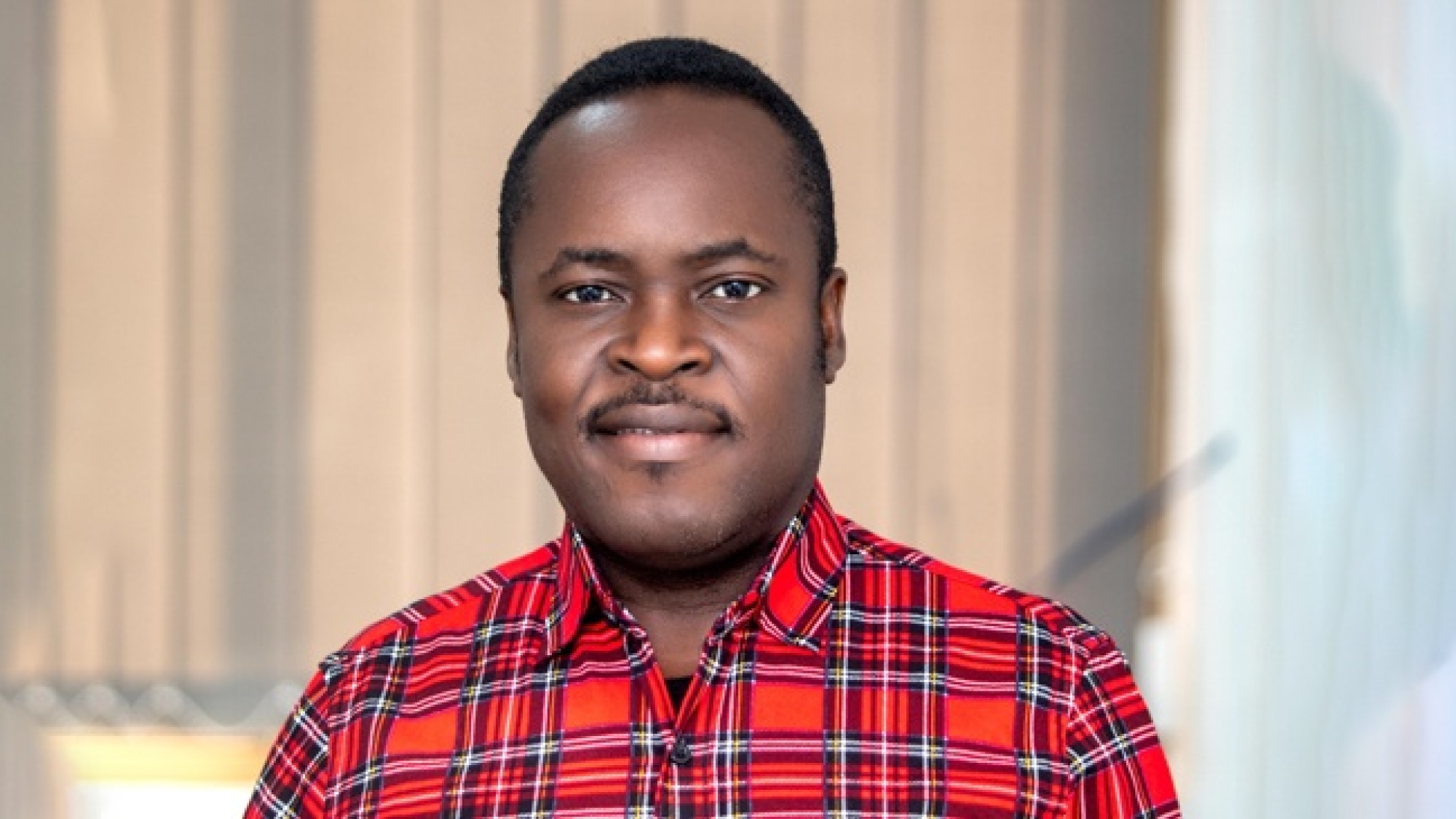
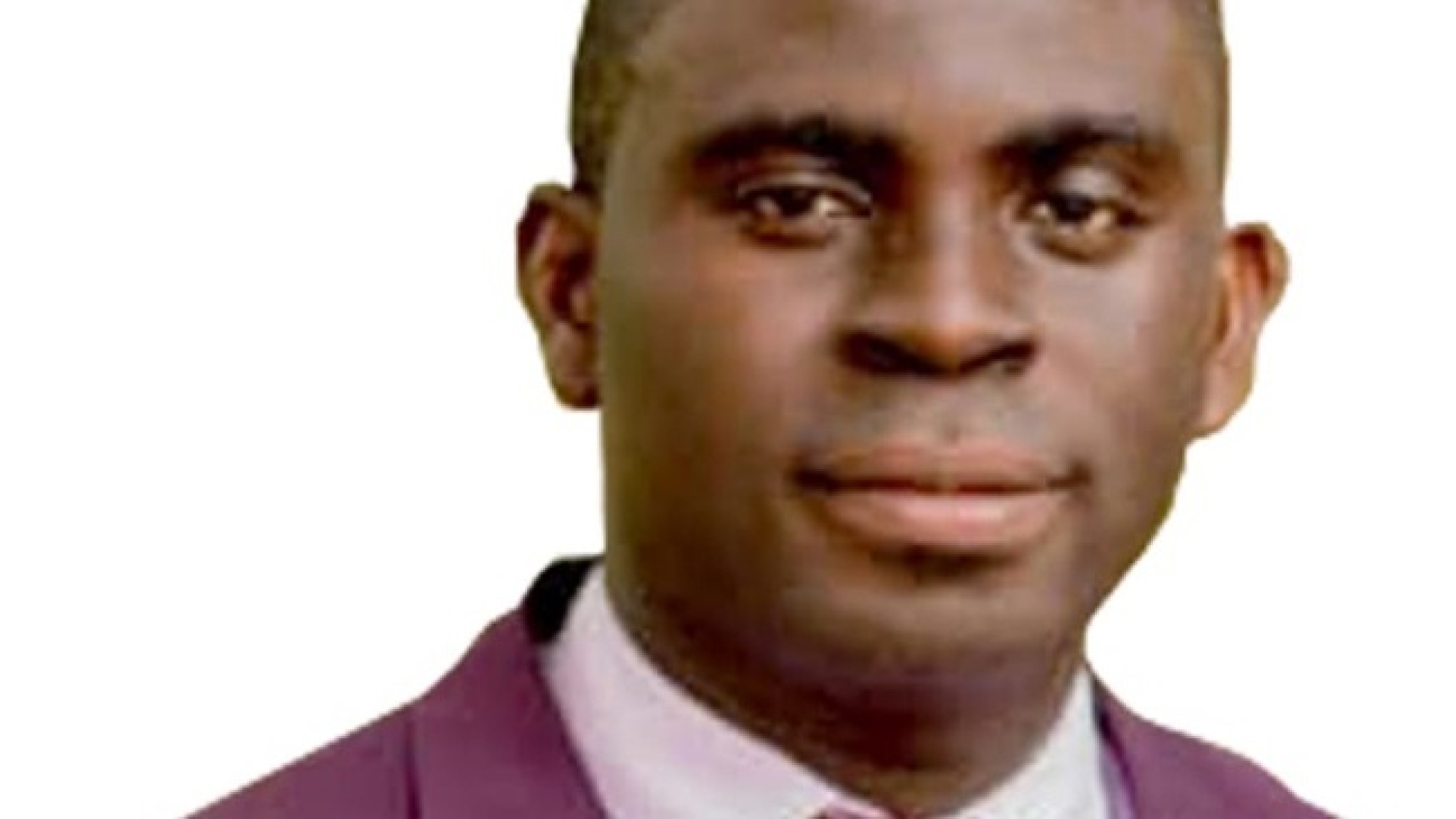
Written by Pastor Emmanuel Foster Asamoah