BABEL SCATTERED, PENTECOST GATHERED web.jpg

Babel Scattered, Pentecost Gathered

“Come, let us go down and confuse their language there, so that they will not understand one another’s speech.” — Genesis 11:7

The story of the Tower of Babel in Genesis 11:1–9 demonstrates humanity’s attempt to assert independence from God. The people who migrated from the surrounding regions and settled in Babylon, driven by pride, sought to build a tower that would reach the heavens. This symbolised their desire to make a name for themselves apart from God.

In response, God confounded their language, causing confusion among them and scattering them across the earth, thereby bringing their plans to a halt. The diversity of languages that emerged became a reflection of the disunity and confusion that result when humanity turns away from God.

The question then is: How would this brokenness find redemption?

Let us reflect on what occurred in Acts chapter 2.

The Day of Pentecost marks the moment when the story of Babel finds its redemption. Through the outpouring of the Holy Spirit, the division of Babel was reversed. As the apostles spoke in diverse tongues, people from many nations heard and understood them in their own languages. Through this miraculous event, they were united in hearing and receiving the proclamation of God’s mighty works.

Pentecost therefore signifies the restoration of the unity that was lost at Babel. It marks the birth of the Church as one body in Christ, brought together not by a common earthly language but by the power of the Holy Spirit.

While Babel warns us against pride, self-reliance, and rebellion against God, Pentecost reminds us that true unity comes through the Holy Spirit. As we reflect on Babel and Pentecost, we are called to reject pride and embrace the unity that Christ offers through His Church.

May we become instruments of that unity, proclaiming God’s glory through our words and actions, and drawing others into the fellowship of His Kingdom.

Babel scattered. Pentecost gathered. What pride divided, the Holy Spirit united.

Written by Deacon Stephen Nigmagma Nkubanye (Michel Camp District)

Modernism and Christ-Centred Integrity in Pentecostal Gospel Music web.jpg

Modernism and Christ-Centred Integrity in Pentecostal Gospel Music

“Let the message of Christ dwell among you richly as you teach and admonish one another with all wisdom through psalms, hymns, and songs from the Spirit, singing to God with gratitude in your hearts” (Colossians 3:16).

For nearly a century, The Church of Pentecost has been recognised as a Spirit-filled movement marked by revival fervour, missionary zeal, doctrinal clarity, and a distinctive musical heritage. Within this identity, music has remained not merely an accompaniment to worship but a theological expression of Pentecostal spirituality. Popularly referred to as “Opɛnte,” Pentecostal music has shaped congregational life, nurtured devotion, and served as a vessel of evangelism across generations.

However, the contemporary era presents new dynamics. A digitally exposed, professionally trained, and globally influenced generation of Pentecostal musicians now operates at the intersection of tradition and modernism. On one hand stands a Christ-centred musical heritage rooted in Scripture, spiritual depth, and congregational participation. On the other hand is modern gospel expression shaped by global industry standards, technological innovation, commercial aesthetics, and cross-genre experimentation. This tension continues to shape conversations on identity, purpose, and direction in Pentecostal musicianship.

Historically, Pentecostal music within the Church of Pentecost evolved through distinct phases. Early worship, influenced by missionary hymnody, reflected structured theological songs drawn from Western hymn traditions, which provided doctrinal depth and spiritual formation. As the Church matured, worship transitioned into Spirit-led spontaneity marked by indigenous choruses, call-and-response singing, rhythmic clapping, and expressive congregational participation. This period emphasized experience over performance, with music functioning as a direct conduit of spiritual encounter.

Over time, contextualisation deepened as local languages, indigenous instruments, and Ghanaian rhythmic structures were incorporated into worship. This phase affirmed the theological principle that worship must be both Spirit-led and culturally relevant. The subsequent emergence of simplified praise and worship formats further democratized congregational singing, making participation more accessible and scripture-oriented, while strengthening evangelistic appeal.

In the contemporary era, Pentecostal music reflects an even broader stylistic spectrum. Influences from global worship movements, neo-soul gospel, orchestral arrangements, urban praise, and digitally produced soundscapes have become increasingly visible. Musicians now operate within a hybrid space where theological conviction, artistic excellence, and technological innovation converge. This development has produced a vibrant ecosystem of choirs, gospel artists, and instrumentalists both within the Church and across interdenominational platforms.

Alongside this evolution, modern gospel musicianship has introduced new expectations. These include advanced vocal training, instrumental proficiency, structured harmonisation, formal music education, and increased professionalism in production and sound engineering. Additionally, contemporary worship culture places strong emphasis on media aesthetics, stage design, branding, and digital engagement. While these developments reflect global standards of excellence, they also raise important questions about balance, purpose, and spiritual focus.

These shifts have not occurred without tension. Younger musicians often express concern that institutional structures sometimes underprioritise music development, limited budgets for creative ministry, and insufficient integration of professional expertise. Conversely, church leadership frequently raises concerns about the increasing influence of secular styles, performance-driven ministry approaches, and the gradual erosion of consecration in worship. This creates a delicate intersection between innovation and preservation.

Scripture, however, provides a stabilising foundation. Music in biblical tradition is both divine and functional, serving worship, instruction, warfare, and spiritual formation. From Moses’ song in Deuteronomy to Jehoshaphat’s victory through praise, and Paul’s instruction on Spirit-inspired singing, Scripture affirms music as a sacred instrument for conveying truth and shaping spiritual life. Therefore, excellence in music is not opposed to spirituality; rather, it must be governed by reverence, obedience, and Spirit-led expression.

The central challenge of modern Pentecostal musicianship lies in maintaining Christ-centred integrity within modern expressions. Modernism, when unchecked, risks elevating aesthetics above substance, performance above presence, and skill above spiritual depth. Yet Christ-centred worship prioritises scriptural truth, Spirit inspiration, humility, and consecration. The issue is not modernisation itself, but modernisation without Christ as the centre.

Moving forward, a balanced approach is required. Church leadership must intentionally strengthen music ministry structures through training, resource allocation, and theological grounding of worship practices. Music must be recognised not as a supporting function but as a core ministerial expression. Continuous development programmes, mentorship systems, and theological orientation for musicians are essential for sustainable growth.

Equally, young musicians must anchor creativity in spiritual depth, resisting performance-driven tendencies. Skill must serve the Spirit, not replace it. Humility, doctrinal fidelity, and commitment to biblical worship principles must guide artistic expression. Innovation must emerge from conviction, not imitation, ensuring that cultural relevance does not compromise spiritual authenticity.

Choirs, worship teams, and music directors also bear responsibility to maintain balanced repertoires that reflect scriptural truth, doctrinal soundness, and congregational edification. Prayerful preparation, mentorship culture, and musical literacy should accompany rehearsals, ensuring that technical excellence is matched with spiritual sensitivity.

Ultimately, the future of Pentecostal music in The Church of Pentecost depends on the harmonious integration of Spirit and skill, tradition and innovation, structure and spontaneity. The goal is not to resist modern influence but to redeem it under Christ’s lordship.

No matter how music evolves in form, technology, or style, its essence must remain unchanged. Christ must remain the centre of worship. Skill may attract attention, and aesthetics may inspire admiration, but only Christ transforms lives. When Christ is the centre, music becomes ministry; when He is displaced, it becomes mere performance. The Church therefore calls its musicians to excellence anchored in consecration, creativity rooted in Scripture, and worship saturated with the presence of God.

Written by Dr Richard Brem Asare (Founder of the Achoir Project)

THE CHURCH SET APART TO RELIVE THE PENTECOST EXPERIENCE web.jpg

The Church Set Apart To Relive The Pentecost Experience

The story of the early church is a powerful testimony of transformation, unity, and divine empowerment through the Holy Spirit. The Pentecost experience recorded in Acts 2 was not merely a historical event for the apostles alone; it became the foundation and pattern for Spirit-filled Christian living. On that remarkable day, believers gathered in prayer and expectation, and the Holy Spirit descended upon them with power. Their lives were transformed, fear gave way to boldness, and ordinary men and women became effective witnesses of Jesus Christ. The result was rapid church growth, spiritual awakening, and the spread of the gospel across nations.

The experience of the church at Antioch in Acts 13:1-4 further demonstrates that Pentecost was not intended to be a one-time occurrence. The Antioch church became an example of believers who continually lived under the influence and direction of the Holy Spirit. Scripture tells us that the church had spiritually mature leaders, including Barnabas, Simeon called Niger, Lucius of Cyrene, Manaen, and Saul. These men devoted themselves to worship, prayer, fasting, and ministry unto the Lord. It was during this atmosphere of spiritual dedication that the Holy Spirit spoke clearly, instructing the church to set apart Barnabas and Saul for missionary work.

What is striking about this account is that the church did not act based on human strategy or personal ambition. Their decisions flowed from prayer, fasting, and sensitivity to the leading of the Holy Spirit. After hearing the Spirit’s instruction, the believers continued in fasting and prayer, laid hands on Barnabas and Saul, and sent them out in the power of God. This reveals that the church which desires to relive Pentecost must be a church fully surrendered to God through spiritual discipline and dependence on the Holy Spirit.

The purpose of prayer and fasting is not merely religious observance but spiritual alignment with God. These disciplines help believers deny the flesh, remove distractions, and focus their hearts on seeking the face of God. Throughout Scripture, fasting is associated with revelation, renewal, breakthrough, and divine empowerment. Moses fasted for forty days while receiving the law on Mount Sinai (Exodus 34:28). Daniel fasted as he sought wisdom and understanding from God (Daniel 9:3). Jesus Himself fasted and prayed for forty days before beginning His earthly ministry, and He returned from the wilderness in the power of the Spirit (Luke 4:1-14).

The Antioch church teaches believers today that fasting is more than abstaining from food; it is creating room for deeper communion with God. In moments of prayer and fasting, spiritual sensitivity increases, and believers become more attentive to the voice of the Holy Spirit. While the church in Antioch ministered to the Lord and fasted, the Spirit spoke clearly concerning the next phase of ministry. Their experience reminds the modern church that divine direction is often received in atmospheres of consecration and prayer.

Prayer and fasting also produce spiritual transformation in the lives of believers. They expose hidden motives, cleanse the heart, and allow the Holy Spirit to perform the work of sanctification. David prayed in Psalm 51:10, “Create in me a clean heart, O God,” revealing the inner cleansing that God desires to accomplish in His people. Joel 2:12-13 also calls believers to return to God with fasting, weeping, and repentance. Genuine spiritual renewal begins when hearts are humbled before God.

Furthermore, these spiritual disciplines produce boldness and unity within the church. After Pentecost, the disciples again gathered in prayer when faced with persecution, asking God for boldness to continue preaching the gospel. Acts 4:29-31 records that after they prayed, they were filled afresh with the Holy Spirit and spoke the word of God boldly. Likewise, Acts 1:14 highlights the unity of the early believers as they continued together in prayer and supplication while waiting for the promise of the Holy Spirit. Prayer unites believers around God’s purpose and breaks barriers that divide the church.

To relive Pentecost today is to maintain a continual hunger for the presence and fullness of the Holy Spirit. Jesus declared in Acts 1:8 that believers would receive power when the Holy Spirit came upon them and that they would become His witnesses throughout the earth. This promise was not limited to the early church; it remains available to every generation of believers. Churches and individuals who prioritise prayer and fasting position themselves for revival, spiritual renewal, greater effectiveness in ministry, and deeper intimacy with God.

The Bible consistently emphasises the importance of these disciplines. Joel prophesied that God would pour out His Spirit upon all people (Joel 2:28-29), and this promise was fulfilled on the Day of Pentecost. Jesus also taught that fasting should be done sincerely before God and not for public recognition (Matthew 6:16-18). Isaiah 58:6-11 reveals the blessings associated with true fasting, including healing, restoration, answered prayer, and divine favour. God responds to humble hearts that genuinely seek Him.

The church that seeks to relive Pentecost must therefore become a praying and fasting church. This was the secret behind the spiritual vitality and effectiveness of the Antioch church, and it remains the key for believers today. When the modern church takes time to seek God with sincerity, humility, and spiritual intensity, she can once again experience the fire, power, and transformation that characterised the early believers.

Through prayer and fasting, believers position themselves to hear God’s voice, receive divine empowerment, and fulfil God’s mission in the world. May the church today rise as a people set apart unto God, continually reliving the Pentecost experience with renewed strength, fresh vision, and unwavering passion for the advancement of God’s kingdom.

Written by Deacon Douglas Opoku (Bompata English Assembly)

CITY CHURCHES – THE GOSPEL & POWER OF THE HOLY SPIRIT REIMAGINED web.jpg

City Churches – The Gospel & Power Of The Holy Spirit Reimagined

The global landscape of faith is shifting. In an era where traditional religious structures are often met with skepticism, a dynamic phenomenon is rising to meet the spiritual hunger of the 21st century: the City Church.

Often associated with innovation, excellence in programming, and fresh ideas, the City Church concept successfully couples classical Pentecostalism with modern execution. The result is a vibrant, multinational, multicultural, and intergenerational church model designed to serve the diverse needs of rapidly changing urban communities. By bringing together a contemporary style of worship and the timeless truths of Scripture, City Churches are actively discipling a generation deeply in search of truth.

City Churches have been planted all over the globe, naturally positioning themselves as pillars of spiritual, social, and economic support. In many nations, they serve as crucial havens for indigenous members, vulnerable or minority groups, and young people. Notably, they have become welcoming homes for youth who had previously exited traditional Pentecostal assemblies.

What makes the City Church such a highly desired faith community? The answer lies in its dynamic organisational structure, which is modern, efficient, and highly adaptive to urban life; its praise and worship prowess, reflected in high-quality musical experiences that resonate with contemporary culture; its relevant sermons, which are deeply rooted in the Gospel and highly relatable to daily life; and its diverse demonstrations of the Holy Spirit’s power.

Globally, city campuses like Amsterdam City Church (Netherlands), Capital City Church (USA), Planted City Church (Australia), Jakarta City Church (Indonesia), and Main City Church (Germany) are leading this charge. They provide avenues for people to reconnect with God in a casual, community-centred, and family-oriented environment. In these spaces, individuals have the freedom to express their beliefs and emotions, leaving refreshed with a Gospel-centred mindset for the week ahead.

 Intentional Discipleship and Reimagined Sunday Services

To ensure that the Gospel is clearly understood, City Churches frequently utilise monthly thematic series. By tackling topics such as “Love Thy Neighbour,” “Discipleship,” and “Holiness,” church leadership can teach Scripture in a methodical, contextual, and practical manner.

Furthermore, these churches are reimagining traditional formats to lower the barrier of entry for the unchurched. Concepts like “City Nights”—a reimagined version of traditional Gospel Sundays—leverage deep praise and worship as a primary tool to invite the broader community into the church family.

The Gospel in Action: Social Intervention

For City Churches, the Gospel is not merely preached from the pulpit; it is lived out through social change and tangible interventions. A prime example is Capital City Church in the USA, which hosted a neighbourhood block party and sneaker drive. This initiative provided essential support to specific communities, allowing underprivileged families to receive newly acquired sneakers for the upcoming school year.

The impact of such initiatives goes far beyond branding; it reflects Christ’s love in action and demonstrates that social care is an expression of the Gospel.

 Dispelling the Myth: Spirit-Led and Deeply Rooted

A common misconception is that the contemporary and polished nature of City Churches dilutes the move of the Holy Spirit. However, this could not be further from the truth. While their calendars may differ intentionally from the traditional “Mother Church,” City Churches remain strategic about spiritual growth.

They host intentional periods of spiritual revival, including:

 Extensive annual prayer and fasting periods

 Holy Spirit Sundays

 Extended Prayer Nights

 City Nights

 Holy Spirit Conferences

By prioritising intentional teaching ahead of these spiritual events, leaders prepare their congregations for a genuine move of God. The exponential growth of these churches across the globe stands as a testament to local leadership operating under the authentic direction of the Holy Spirit.

Adding to their diverse nature, City Churches frequently host specialist guest worship ministers and preachers from denominations and para-church organisations. This continually enhances their services and pushes the boundaries of what “doing church” looks like.

Yet, through all the innovation, one thing remains certain: City Churches in major urban centres have become vital gateways through which the power of the Holy Spirit is being experienced by modern believers and non-believers alike.

Written by Michael Benson (National PENSA Coordinator, Australia)

CHRIST—THE TRUE RIGHTEOUSNESS THE PASSCODE FOR A SUSTAINABLE PENTECOST EXPERIENCE web.jpg

Christ—The True Righteousness: The Passcode For A Sustainable Pentecost Experience

He made Christ, who knew no sin, to [judicially] be sin on our behalf, so that in Him we would become the righteousness of God [that is, we would be made acceptable to Him and placed in a right relationship with Him by His gracious lovingkindness] — 2 Corinthians 5:21 (Amplified)

Righteousness means living by the standards set within a given domain.

Righteousness is evaluated by the source of strength for that righteousness; the authority that sets the standards for that righteousness; and the motivation (end goal) for that life of righteousness.

With the exception of God’s righteousness, all other forms of righteousness are standards built by humans, with strength and motivation (end goal) rooted in something else other than Christ.

God’s righteousness is Christ. The nature, teaching, life, redemptive work, and promises of Christ are the Standard. The strength to live like Christ is sourced from the Holy Spirit through repentance and prayer. The motivation and end goal for living like Christ is the glory of God in Christ. The glory of Christ means many people coming to faith in Him and beholding His beauty. This is true righteousness.

So yes, we may be righteous in our own eyes or in the eyes of our spouses, children, family, community, society, culture, institutions, religion, and nation, but the big question is: Do we have Christ – the Righteousness of God? Are we living to please any entity other than Christ?

Is our life like Christ? Is the Holy Spirit of Christ the source of our strength? Is our motive (end goal) for living right centered on the glory of Christ alone? If our answers to these questions are “Yes,” then we are saved – we have Christ, the Righteousness of God (Jehovah Tsidkenu) – and are therefore on course for a sustainable “Pentecost Experience” on a daily basis.

If our answers to these questions are “No” or “Not sure,” then the righteousness we possess remains filthy rags before God. Like Joshua, we need to allow the Holy Spirit to remove those filthy garments and clothe us with Christ – the Righteousness of God.

Now Joshua was dressed in filthy garments as he stood before the angel. So. the angel said to those standing before him, “Take off his filthy clothes!” Then he said to Joshua, “See, I have removed your iniquity, and I will clothe you with splendid robes.” Zechariah3:3-4

Jesus also said in Matthew 5:20:

For I tell you that unless your righteousness surpasses that of the Pharisees and the teachers of the law, you will certainly not enter the kingdom of heaven.

Apostle Paul caught this revelation of Christ and discarded the legalistic righteousness of the Pharisees in order to lay hold of Christ – the True Divine Righteousness.

If someone else thinks they have reasons to put confidence in the flesh, I have more: circumcised on the eighth day, of the people of Israel, of the tribe of Benjamin, a Hebrew of Hebrews; in regard to the law, a Pharisee; as for zeal, persecuting the church; as for righteousness based on the law, faultless. But whatever were gains to me I now consider loss for the sake of Christ. What is more, I consider everything a loss because of the surpassing worth of knowing Christ Jesus my Lord, for whose sake I have lost all things. I consider them garbage, that I may gain Christ and be found in him, not having a righteousness of my own that comes from the law, but that which is through faith inChrist—the righteousness that comes from God on the basis of faith. Philippians 3:5b–9

Paul recognised that every blessing he received from God was not a result of his “CV”— that is, his past achievements, credentials, or background — but purely the result of his faith in Christ. Through this faith, he was granted the righteousness of Christ, which became the passcode to every good thing he received from God in Christ. No wonder, Paul ceased boasting in his achievements or in human credentials and chose instead to boast only in Christ. Just as Christ said, Paul, in working for Christ, saw himself as an unworthy servant who had only done the will of God. He consistently attributed everything he accomplished to the grace of God, which comes through righteousness by faith in Christ.

 “For I am the least of the apostles and am unworthy to be called an apostle, because I persecuted the church of God. But by the grace of God, I am what I am, and His grace to me was not in vain. No, I worked harder than all of them—yet not I, but the grace of God that was with me.” — 1 Corinthians 15:9–10

So you also, when you have done everything, you were told to do, should say, ‘We are unworthy servants; we have only done our duty.” — Luke 17:10

Using the model of the earth’s atmospheric layers, we can illustrate the various forms of human righteousness that exist outside the righteousness of Christ—the highest of which is religious, legalistic righteousness. This was the kind of righteousness Paul once possessed, where he believed he was accepted by God because of his strict adherence to Mosaic Law. However, when Paul encountered Christ—the True Righteousness (Jehovah Tsidkenu)—he regarded all other forms of righteousness, including his former legalistic righteousness, as loss and refuse.

The Model of Human Righteousness (Atmospheric Illustration)

  1. Personal Righteousness – the Earth (sea level baseline)
  2. Family Righteousness—the Troposphere (0–12 km above sea level)
  3. Community/Sociocultural Righteousness—the Stratosphere (12–50 km above sea level)
  4. Institutional Righteousness—Mesosphere (50–85 km above sea level)
  5. National Legalistic Righteousness – Thermosphere (85–600 km above sea level)
  6. Religious Legalistic Righteousness – Exosphere (beyond 600 km above sea level)
  7. Divine Righteousness – Outer Space (beyond the Exosphere)

Righteousness, in essence, is living according to the standards established within a given domain. It is measured by the source of strength behind it; the authority that defines its standards; and the motivation or the end goal driving it. With the exception of God’s righteousness, all other forms of righteousness are standards built by human – powered by human effort, defined by authority, and motivated by human goals other than Christ.

Jesus declared in Matthew 5:20:

Unless your righteousness surpasses that of the Pharisees and the teachers of the law, you will certainly not enter the kingdom of heaven.”

The only righteousness by which we are accepted before God is His righteousness in Christ—received not by works, but by faith in Christ. In simple terms, we hear the word of Christ (the Gospel from Genesis to Revelation) and respond in faith by trusting, obeying, praying, and yielding to the Spirit in alignment with His Word. In this state of faith, God credits us with His righteousness and opens to us the door of His Promise – the Holy Spirit of grace and glory – bringing us into a sustainable “Pentecost Experience.”

Abraham stands as the greatest human example of this truth. He is divinely appointed the father of many nations because he received righteousness by faith, not by works.

What does Scripture say? Abraham believed God, and it was credited to him as righteousness …It was not through the law that Abraham and his offspring received the promise that he would be heir of the world, but through the righteousness that comes by faith.” — Romans 4:3, 13

Any other form of “righteousness” is, before God, like filthy rags. The idea, that God accepts us or grants divine inheritance based on our works reflects a legalistic mindset– which the Holy Spirit expects us to lay down at the foot of the cross. Our past achievements, good deeds, morality, may produce earthly recognition, but they are filthy rags before God.

…When we display our righteous deeds, they are nothing but filthy rags…” — Isaiah 64:6b (NLT)

If, in fact, Abraham was justified by works, he had something to boast about—but not before God.” — Romans 4:2  

Yes, “…not before God.” We are not called to possess our own righteousness but receive the righteousness of Christ. Paul describes this divine righteousness as the “True Righteousness.”

 “You were taught, with regard to your former way of life, to put off your old self, which is being corrupted by its deceitful desires; to be made new in the attitude of your minds; and to put on the new self, created to be like God in true righteousness and holiness.” – Ephesians 4:22-24

The work of the Holy Spirit includes clothing us with Christ—the Righteousness of God. Every moment of prayer becomes an opportunity to lay aside all self-derived righteousness and to be clothed afresh with Christ (Jehovah Tsidkenu)—the Righteousness of God.

Repentance, therefore, is the turning away from dependence on self-righteousness and to receive the righteousness of Christ by faith – the passcode into a life of sustainable “Pentecost Experience.”

Enter now into a realm of rest—where the Spirit of Christ works through us.

Dear friends, you always followed my instructions when I was with you. And now that I am away, it is even more important. Work hard to show the results of your salvation, obeying God with deep reverence and fear. For God is working in you, giving you the desire and the power to do what pleases him.” — Philippians 2:12-13

Written by Apostle Seth FiankoLarbi, Resident Minister, PIWC Sakumono, Ghana

PENTECOST THE EXPERIENCE OF POWER AND WITNESS WEB.jpg

Pentecost: The Experience Of Power And Witness

The greatest evidence of being filled with the Holy Spirit is the visible expression of God’s power through the life of the believer. Pentecost was not merely a historical event marked on the church calendar; it was a divine encounter that transformed ordinary men into bold witnesses of Christ. The power the disciples received was not hidden within them. It was expressed openly through their character, boldness, speech, and testimony.

The experience of Pentecost teaches believers that the Holy Spirit does not dwell in a person without producing transformation. When the Spirit of God takes residence in the life of a Christian, there must be visible evidence of change. Personal attitudes, desires, speech, and conduct are expected to reflect the influence of the Holy Spirit. The power of God does not only comfort believers; it also tears down strongholds, destroys spiritual barriers, and transforms lives for God’s glory.

Scripture reveals that when Jesus Christ resurrected from the grave, the curtain separating the Holy Place from the Most Holy Place in the temple was torn from top to bottom. This was not an ordinary occurrence. It symbolized divine access, spiritual victory, and the manifestation of heavenly power. The tearing of the veil became a visible landmark that something extraordinary had taken place.

In the same way, the Day of Pentecost was filled with undeniable signs and spiritual landmarks that revealed the active presence of God among His people. Acts chapter two records that there came a sound like a mighty rushing wind, and tongues of fire appeared upon the disciples gathered in the upper room. These manifestations were not hidden experiences. They were visible demonstrations of the power and presence of the Holy Spirit.

Another remarkable aspect of Pentecost was the supernatural transformation of language. The disciples began to speak in tongues as the Spirit gave them utterance. What made the moment extraordinary was that people from different nations who had gathered in Jerusalem for the Feast of Pentecost could hear the disciples speaking in languages they naturally did not know. Though the disciples were Galileans, individuals from various backgrounds and nations heard them declaring the wonderful works of God in their own native tongues.

This supernatural encounter revealed that Pentecost was not merely emotional excitement but a divine empowerment that surpassed human ability and understanding. It demonstrated the ability of the Holy Spirit to use ordinary people as vessels for extraordinary purposes. The experience also fulfilled the words of the Apostle Paul, who explained that speaking in tongues is directed unto God and often goes beyond human understanding.

The Pentecost experience further reminds believers that Christianity was never intended to be a powerless faith. Before Christians can fully walk in the realities described in the Book of Acts, they must desire to experience the presence and power of God personally. The early church did not only hear about God’s power; they saw it, felt it, and became witnesses of it.

Pentecost also marked a turning point for evangelism and soul winning. The fire of the Holy Spirit came upon the disciples not only for personal encounter but also for public witness. Immediately after receiving the Holy Spirit, Peter, who once denied Jesus out of fear, stood boldly before the crowd to proclaim the gospel. His message led to the salvation of thousands. This boldness became one of the clearest evidences of Pentecostal power at work.

Fire remains one of the strongest symbols associated with Pentecost. Fire purifies, illuminates, spreads, and leaves visible impact wherever it appears. In the same way, the fire of the Holy Spirit is meant to produce tangible evidence in the life of the believer. Pentecost without spiritual fire becomes an empty form without power. To truly walk in the Pentecostal experience is to walk in the active influence and transforming power of the Holy Spirit.

Today, believers are reminded not to reduce Pentecost to a yearly celebration or religious tradition. The church is called to continually live in the reality of Pentecost through fervent prayer, bold witness, spiritual transformation, and passionate devotion to God. Church services, gatherings, and personal lives must reflect the power, purity, and presence of the Holy Spirit.

As Christians seek to relive the Pentecostal experience in this generation, the prayer remains that God will raise believers who not only speak about power but also demonstrate it through holy living, bold evangelism, and unwavering testimony about Jesus Christ, the risen Messiah.

Written by E Owusu (District Pastor – Mpasaso, Tepa Area)

THE PARADOX OF THE POWER OF THE HOLY SPIRIT web.jpg

The Paradox Of The Power Of The Holy Spirit — Soft On Skin, Tough On Germs

As we began the national 10-day prayer and fasting, I felt a strong impression on my heart when an old Pentecostal song was sung in church. It goes like this: “Ɔyɛ Pentecost wɔ me kra mu, na ɔyɛ ogya wɔ m’atanfo so,” which is interpreted in English as, “The Holy Spirit is Pentecost in our soul but a devastating fire on our enemies.”

As I sang that song, a popular commercial tagline immediately came to mind — the phrase found on Dettol products: “Soft on skin, tough on germs.”

At first glance, it may appear to be just a clever marketing slogan. But in that moment, it carried a deep spiritual revelation. I understood that what is gentle to one can be destructive to another. What soothes and protects can also confront and consume. This paradox perfectly illustrates the nature of the Holy Spirit — a Comforter to the believer, yet a consuming fire to the enemy.

Throughout Scripture, God has always revealed Himself in ways that are gentle to His people but devastating to their enemies. One clear example of this paradox is seen in the pillar of cloud by day and the pillar of fire by night.

In Exodus 14, the pillar of cloud by day and the pillar of fire by night served as guidance and reassurance to the Israelites. But when Pharaoh’s army pursued them, that same cloud stood between Israel and Egypt, plunging the Egyptians into darkness and confusion while giving Israel light and direction.

The pillar of fire that gave light and direction to the Israelites during the dark night was the same fire that acted as a barrier and protection against wild animals and threats lurking in the wilderness.

For proper context, the pillar of cloud and fire was a visible manifestation of God’s presence among the people of Israel. But now, through the finished work of Christ, God is no longer only among us — He is also within us in the person of the Holy Spirit.

The tagline, “Soft on skin, tough on germs,” reveals a product’s dual nature: gentle to what it protects, yet harsh to what it resists. In the same way, the Pentecostal fire that empowers us will also burn away every chaff within us and every scheme against us.

The Holy Spirit comforts, guides, purifies, and empowers believers, yet remains a terror to darkness and everything opposed to the will of God.

Written by Elder Eugene Nsafoa-Yeboah (McKeown Worship Centre- Asokwa)

Pentecost School Students Set Three Guinness World Records web.jpg

Pentecost School Students Set Three Guinness World Records

Three outstanding students from Pentecost Preparatory School in Kasoa have brought pride to Ghana after receiving official Guinness World Record citations for breaking three world records in the Under-16 category through the guidance and training of the Sophia Boadi Readathon International Foundation (SBRIF).

The remarkable achievement has sparked excitement and admiration, as the young champions demonstrated exceptional speed, teamwork, and determination on the global stage.

Among the record breakers is Selorm Kordzo Junior Dzakah, who set a new world record for the fastest time to pack a school bag. He successfully completed the challenge in an impressive 11.77 seconds, earning international recognition for his extraordinary skill and precision.

Another historic feat was achieved by Isaac K. Boadi Atuah and George K. Kwateng Boadi, who worked together to record the fastest time to sort two bags of recyclable materials. The duo completed the task in just 28 seconds, showcasing remarkable coordination and teamwork.

Isaac K. Boadi Atuah further distinguished himself by setting an additional world record for the most seeds planted in one minute by an Under-16 participant. He successfully planted 14 seeds within the allotted time, demonstrating focus, speed, and environmental consciousness.

The achievements of these young talents have become a source of inspiration not only to the people of Kasoa but also to many across Ghana. Their success highlights the immense potential within Ghanaian children when they are provided with the right mentorship, encouragement, and opportunities to excel.

From a community often highlighted for negative news stories, this accomplishment presents a refreshing narrative of excellence, discipline, and hope. It also reflects the growing impact of initiatives such as the Sophia Boadi Readathon International Foundation in nurturing young talent and empowering children to dream beyond limitations.

As these young world record holders continue to make Ghana proud on the international stage, their story stands as a powerful reminder that greatness can emerge from any corner of the nation when talent is properly developed and supported.

Report by Pentecost Preparatory School, Kasoa

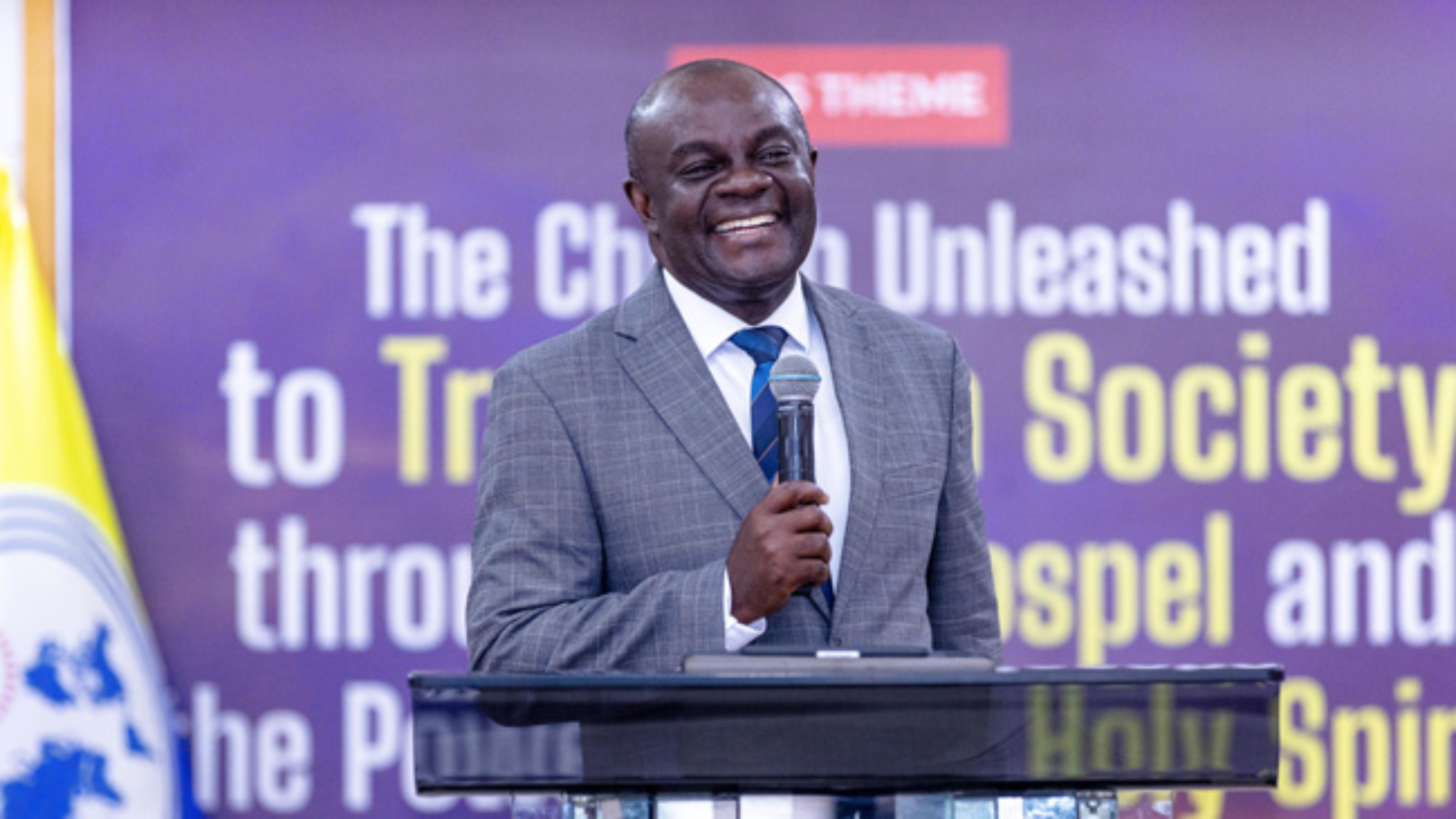
Pentecost Power Must Produce Tangible Impact – Apostle Obuobi Charges Believers web

Pentecost Power Must Produce Tangible Impact – Apostle Obuobi Charges Believers

The General Secretary of The Church of Pentecost, Apostle Samuel Gyau Obuobi, has stressed that the power of Pentecost must produce visible transformation and impact in the lives of believers and society at large.

According to him, the outpouring of the Holy Spirit is not merely an emotional or ceremonial experience but a divine empowerment that transforms ordinary lives into extraordinary vessels for God’s purpose.

Apostle Obuobi said this when he joined the Sophia McKeown Temple under the La District on Sunday, May 17, 2026, together with his wife, Mrs Juliana Korkor Obuobi, during Day 3 of Pentecost Week 2026 — a major spiritual event on the calendar of The Church of Pentecost.

Preaching on the theme, “The Effects of the Power of Pentecost,” the General Secretary referenced Acts 2:1-4, explaining that the events of the Day of Pentecost demonstrated the manifestation of divine power through the sound of a mighty rushing wind, tongues of fire, the infilling of the Holy Spirit, and speaking in tongues.

He noted that the prophecy of Joel concerning the outpouring of the Spirit upon all flesh was fulfilled on the Day of Pentecost, adding that the Holy Spirit is fundamentally the Spirit of power.

Quoting Acts 1:8, Apostle Obuobi emphasised that believers receive power through the Holy Spirit to become effective witnesses of Christ to the ends of the earth.

He further stated that one undeniable effect of Pentecost power is transformed living.

“Worthless lives become lives with meaning, ordinary lives become extraordinary, natural lives become supernatural, timid people become bold, and the weak become strong,” he stated.

Drawing lessons from the experiences of the early church, Apostle Obuobi cited the healing of the lame man at the Beautiful Gate by Peter and John as well as the extraordinary miracles performed through Apostle Paul’s handkerchiefs and aprons as evidence of the supernatural impact of Spirit-filled believers.

According to him, the power of Pentecost must always produce results.

“We cannot be walking in the power of Pentecost without an effect,” he stressed.

He explained that the Holy Spirit empowers believers not only to experience personal revival but also to make lasting impact on their generation.

Describing Pentecost as “the gateway to supernatural living,” Apostle Obuobi urged Christians to seek a fresh encounter with the Holy Spirit and live lives that demonstrate God’s power through transformation, influence, and service to humanity.

He concluded by reminding the congregation that life is ultimately about impact and not merely material gain, stressing that the Holy Spirit empowers believers to affect generations yet unborn through the gospel and righteous living.

PENT NEWS

THE CRY FOR A FRESH PENTECOST IN THE MODERN CHURCH web.jpg

The Cry For A Fresh Pentecost In The Modern Church

The greatest need of the modern Church is not larger auditoriums, advanced technology, or intellectual sophistication. The greatest need is a fresh outpouring of the Holy Spirit — a genuine return to the power, purity, and passion of Pentecost. In many places today, the Church appears active outwardly yet weak spiritually. We have mastered organisation, perfected presentation, and embraced modern systems, but spiritual fire is fading in many congregations. The Church of the apostles transformed the world not because of earthly influence or human brilliance, but because they were filled with the Holy Ghost.

Before Jesus ascended into heaven, He gave His disciples a vital instruction. He did not ask them to seek positions, titles, or recognition before beginning ministry. Instead, He commanded them to wait in Jerusalem for the promise of the Father — the baptism of the Holy Spirit. In Acts 1:8, Jesus declared:

“But ye shall receive power, after that the Holy Ghost has come upon you: and ye shall be witnesses unto me…”

The disciples already knew Christ personally. They had walked with Him, listened to His teachings, and witnessed His miracles. Yet Jesus understood that human experience alone was insufficient for the task ahead. They needed divine empowerment. They needed heavenly fire.

This truth remains relevant today. Many believers possess knowledge, theological training, and ministry experience, yet lack the transforming power of the Holy Spirit. Some have come to rely heavily on academic achievement, eloquence, or church systems while neglecting the place of prayer and spiritual intimacy with God. Education and structure are valuable, but they can never replace the anointing of the Holy Spirit.

The Gospel was never intended to be reduced to motivational speeches or intellectual debates. The Apostle Paul declared in 1 Corinthians 2:4:

“And my speech and my preaching was not with enticing words of man’s wisdom, but in demonstration of the Spirit and of power.”

The world today is not searching for more religious performances. It is searching for the reality of God. Broken lives need restoration. The sick need healing. The oppressed need deliverance. Communities trapped in fear, sin, and hopelessness need revival. Human wisdom alone cannot solve these spiritual problems. Only the power of the Holy Spirit can bring true transformation.

Pentecost was not merely an event in biblical history. It marked the birth of a Spirit-filled Church — a Church characterised by prayer, holiness, boldness, evangelism, miracles, and unwavering devotion to God. The fire that fell in the upper room empowered ordinary men and women to accomplish extraordinary things for the Kingdom of God.

The modern Church must therefore return to the altar of prayer and consecration. We must pursue genuine repentance and cultivate a deeper hunger for God. Religious activities without the Holy Spirit only produce empty Christianity. Programs without power cannot transform lives.

This generation does not need entertainment disguised as worship. It needs a fresh move of God. It needs ministers whose hearts burn with holy fire and believers who value God’s presence above popularity. The cry of the Church today must be for another Pentecost — not merely emotional excitement, but authentic spiritual awakening.

May God raise a generation that refuses to settle for form without power. May He baptize His Church afresh with the Holy Ghost and fire. And may the flame of Pentecost burn once again in our pulpits, our homes, and our hearts.

For when the Holy Spirit takes His rightful place in the Church, revival will no longer remain a story of the past; it will become the reality of our present generation.

Written by Elder Daniel Amoah, Ashaiman Area