Jesus' Death Is The Prerequisite For Eternal Life – Apostle Nyamekye Asserts web

Jesus’ Death Is The Prerequisite For Eternal Life – Apostle Nyamekye Asserts

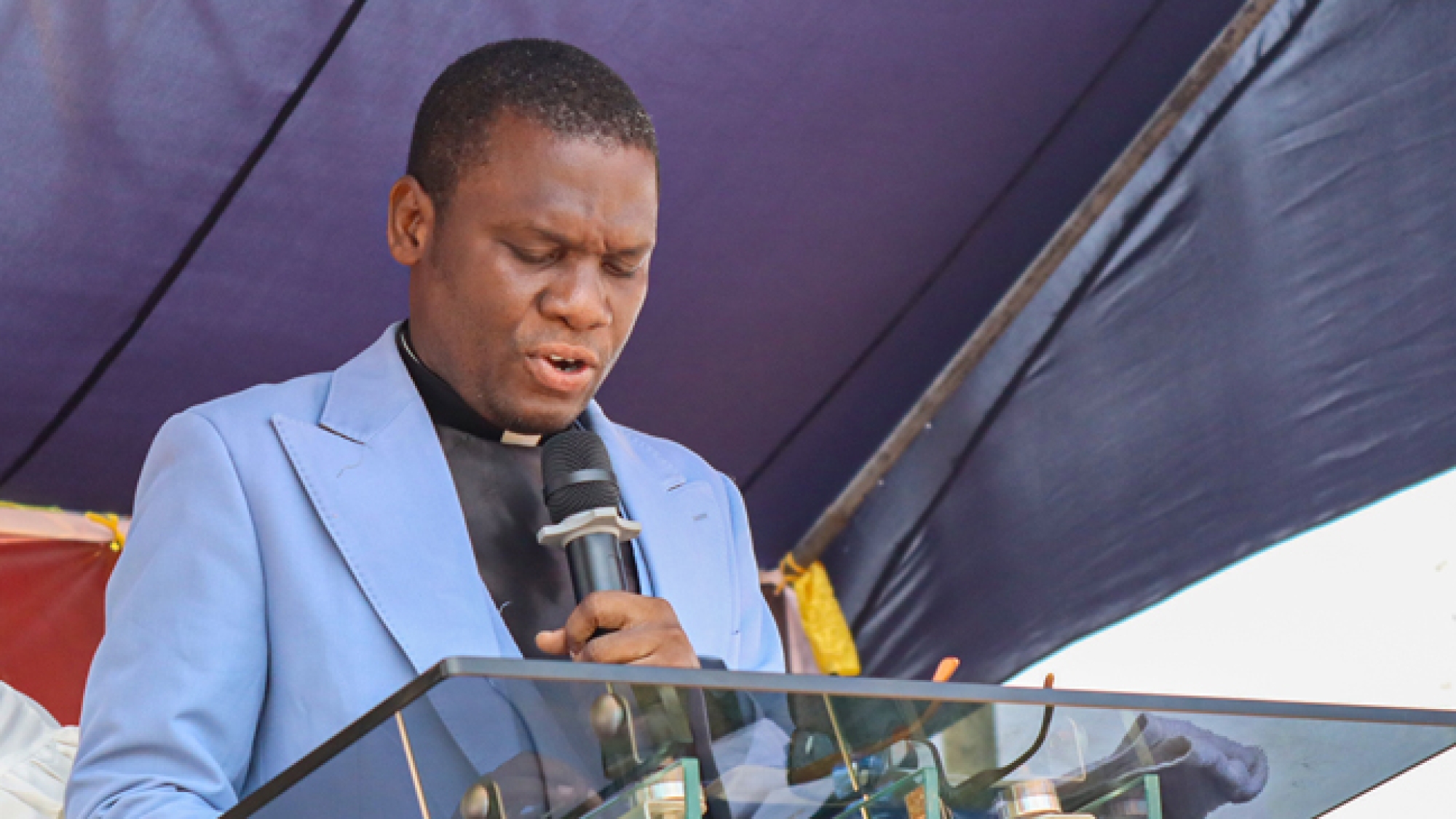
The Chairman of The Church of Pentecost, Apostle Eric Nyamekye, has asserted that without the death of Jesus Christ, believers would not have the promise of eternal life.

He said this during the Duayaw Nkwanta Area’s 2024 Easter Convention at the Methodist Park on Friday, March 29, 2024.

In his sermon, Apostle Nyamekye noted, “When Jesus declared ‘It is finished,’ He accomplished everything necessary for our salvation.”

The Chairman drew references from 1 Corinthians 15:1-4, stressing the centrality of Jesus’ death in the Christian message.

Reflecting on the brutality of crucifixion, Apostle Nyamekye remarked, “Crucifixion, reserved for the vilest of criminals, became the means by which God’s redemptive plan was fulfilled.”

Quoting John 19:28-35 and Deuteronomy 21:22-23, he highlighted the intentional nature of Jesus’ death as ordained by God.

Touching on Hebrews 9:10-12, Apostle Nyamekye explained, “Through the sacrifice of His blood, Jesus secured our redemption and sealed the new covenant.”

He further articulated the concept of inheritance, stating, “Jesus’ death is the prerequisite for us to inherit eternal life and God’s promises.”

In a stirring call to action, Apostle Nyamekye urged, “As heirs of God’s promises, let us embrace our identity and live out the transformative power of the Gospel.”

PENTECOST NEWS

Jesus Died To Redeem Mankind – Prophet Fred Antwi Declares web

Jesus Died To Redeem Mankind – Prophet Fred Antwi Declares

Prophet Fred Antwi, the Duayaw Nkwanta Area Head of The Church of Pentecost, has asserted that the death of Jesus on the cross of Calvary was to redeem humankind from the bondage of sin.

He said this in a sermon he delivered during the opening day of the Area’s 2024 Easter Convention at the Methodist School Park in Duayaw Nkwanta in the Ahafo Region of Ghana. His message centered on the theme: “It Is Finished.”

Drawing from John 19:30, which captures the last words of Jesus on the cross, Prophet Fred Antwi emphasised the significance of this declaration.

“When someone says they have finished, it implies the completion of an assigned task. In the case of Jesus Christ, uttering these words signified the fulfillment of His purpose on earth,” he explained.

According to him, despite being only 33 years old, Jesus defied conventional expectations, saying; “His declaration of completion did not come with old age or natural death; instead, He was unjustly killed. The cross, where many saw Him as a sinful figure deserving of death, became the stage for His ultimate sacrifice.”

Prophet Antwi, however, revealed that over the course of three years, Jesus accomplished His mission.

“His purpose extended beyond performing miracles or teaching; it was to bring salvation. The prophecies of Prophet Isaiah foretold His suffering and death, underscoring the divine plan”, he said.

Referencing a quote of the Chairman of The Church of Pentecost in his most recent Circular to the Assemblies, the Duayaw Area Head noted that Easter serves as the foundation of Christianity.

 “Jesus’ declaration of completion—“It is finished”—holds reflective meaning. It signifies His sacrificial death to save humanity from sin. Even if God had granted Him a longer life on earth, His destiny remained unchanged: to die and redeem mankind”, he noted.

According to him, the cross, where Jesus breathed His last, became the bridge between humanity and God’s love.

“Accepting Christ as Lord and personal Saviour unlocks a special package—a gift filled with love and abundant life,” he said.

The Duayaw Nkwanta Area Easter Convention began yesterday, March 29, 2024 and is expected to end on Sunday, March 31, 2024.

Present at the Easter Convention were the Chairman of The Church of Pentecost, Apostle Eric Nyamekye, together with his wife, Mrs. Mary Nyamekye, a cross-section of the Area pastorate and their wives and the entire church populace.

PENTECOST NEWS.

The Indwelling Christ Is The Essence Of Resurrection Power - Pastor Adubofourh web

The Indwelling Christ Is The Essence Of Resurrection Power – Pastor Adubofourh Asiedu

The Yennyawoso District Minister of The Church of Pentecost, Pastor Maxwell Adubofourh Asiedu, has stated that the resurrection power is not just an abstract concept, but a living presence within believers, personified in Christ Jesus.

In a message shared with the congregation at the ongoing New Tafo Zone Easter Convention at the New Tafo M/A Division School Park on Thursday, March 28, 2024, Pastor Adubofourh Asiedu spoke on the topic: “Experiencing the Pentecostal Power Through the Death and Resurrection of Jesus Christ.”

The convention is being held under the theme: “Jesus Christ, The Resurrection and Life,” – John 11:25.

Focusing on John 11:25, Romans 8:11 and Acts 2:36 as his main biblical references, the Yennyawoso District Minister highlighted the significance of Jesus’ death and resurrection, emphasising the immense power that believers inherit through their faith in Him. He encouraged the congregants to recognise and utilize this power, reminding them that they have the ability to bring life to dead situations through their faith in Christ.

“When you speak life into a dead situation it must live again because of the resurrection power that is in you,” he said.

Drawing from Ephesians 1:17-20 and Philippians 3:9-10, the clergyman noted that the resurrection power is an active manifestation of the move of the Holy Spirit. He explained that Christians have access to this power through their belief in Christ Jesus (Romans 8:16-17), their unity with God (John 10:30), and their role as good servants of God (Matthew 25:14ff).

He stressed the importance of obedience, fulfilling the Great Commission, and maintaining a humble and servile attitude to nurture and activate the resurrection power within them, cautioning against self-gratification and self-glorification, as these could hinder the operation of the resurrection power.

Emphasising the enduring and transformative nature of the resurrection power, Pastor Adubofourh Asiedu called on non-believers to come to Jesus and experience this power for themselves.

The event concluded with a prayer, during which 10 individuals received the baptism of the Holy Spirit, and several others received spiritual gifts.

Report by Emmanuel Nana Nsiah

Christ’s Death & Resurrection Has Changed The World Forever – General Secretary Asserts web

Christ’s Death & Resurrection Has Changed The World Forever – General Secretary Asserts

The General Secretary of The Church of Pentecost, Apostle Samuel Gyau Obuobi, has asserted that the death and resurrection of Jesus Christ for the atonement of the sins of humanity is one of the two most important events that has changed the world forever.

Apostle Samuel Obuobi said this today, Thursday, March 28, 2024, during the opening session of this year’s Easter Convention at the Osu Central Assembly auditorium.

Opening the event, the General Secretary stated that two monumental events transformed the course of history: the birth of Christ, celebrated as Christmas, and His death and resurrection, observed during Easter. These occurrences, according to him, continue to resound through time, shaping the very fabric of our world.

Buttressing his assertion, he stated that the timeline of human history is divided into two epochs: Before Christ (BC), signifying the era preceding His birth, and Anno Domini – After Death (AD), which denotes the period after His death. Christianity hinges upon these foundational events, which underscore the core of our faith.

“It is imperative that we proclaim the truth of Jesus Christ’s death and resurrection. Despite various theories and conjectures, the undeniable reality is that Christ was crucified.

“As attested by Paul, Jesus died for our sins and was buried in the tomb of Joseph of Arimathea. Yet, the story does not end there. On the third day, Jesus triumphantly rose from the dead, defying the grave and validating His divine authority,” he said, adding that the significance of Easter lies in commemorating this unmatched event, which serves as the linchpin of our faith.

He, therefore, urged Christians to take an active part in the Easter celebration and to actively share the Good News and resurrection to all people.

“In times like these, it also calls for sober reflection on the profound impact of Christ’s death and resurrection on our world. Without this pivotal event, our reality would be very different. The death of Christ stands as the cornerstone of our existence today. Imagine where we would be if Christ had not made that ultimate sacrifice.

He also advised them to open up and seek a special encounter with God during the season.

PENTECOST NEWS.

THE PASSOVER FEAST web

The Passover Feast: A Typology Of Easter Celebration (Lessons For Today’s Church)

INTRODUCTION

The Passover Feast and Easter Celebration are two of the most significant celebrations cherished by Judaism and Christian traditions, respectively. These celebrations may appear distinct from one another but are deeply connected through various shared themes. The Passover Feast, as recorded in Exodus 12, commemorating the Israelites’ liberation from slavery in Egypt, serves as a foundational event in Jewish history and faith. Similarly, Easter, celebrating the trial, crucifixion, death, and resurrection of Jesus Christ, serves as the foundation of Christianity and is central to our Christian beliefs and practices. In this article, we will explore the parallels between the Passover Feast and the Easter Celebration, drawing out the typologies that exist between them to draw some lessons for contemporary Christians.

HISTORICAL ORIGIN OF THE PASSOVER AND EASTER CELEBRATIONS

The idea of typology has to do with New Testament indications of patterns and people in the Old Testament, who were, in a sense, created to serve as pre-figured shapes of what Christ would do. To understand the typology between the Passover Feast and Easter Celebration, it is important to first understand the historical events that these celebrations commemorate. The Passover Feast originated from the story of the Exodus of the nation of Israel, as described in the Book of Exodus. According to the biblical account, the Israelites were enslaved in Egypt under the rule of Pharaoh, who oppressed and mistreated them. In response to their cries for deliverance, God raised Moses as a leader to lead the Israelites out of bondage and into freedom. Through a series of miraculous plagues and events, including the Passover Sacrifice, the Israelites were ultimately liberated from slavery and began their journey to the Promised Land.

Similarly, Easter commemorates the crucifixion, death and resurrection of Jesus Christ; it reminds Christians of the vicarious death of Christ, that is, the agony and disgrace Christ had to go through. Jesus was crucified by the Romans as a criminal, but three days later, he rose from the dead, conquering sin and death and offering salvation to all who believe in him. The Easter celebration marks the culmination of Jesus’ life and ministry, emphasising his sacrificial death as atonement for the sins of humanity and his victorious resurrection as a sign of new life and hope.

THE TYPOLOGY BETWEEN THE PASSOVER FEAST AND EASTER CELEBRATION

The Passover Feast in the Jewish tradition serves as a typology, or foreshadowing, of the Easter celebration in Christianity. Both celebrations share several themes and symbols that connect them in a meaningful way:

1. TYPOLOGY OF LIBERATION AND REDEMPTION

One of the key typologies between the Passover Feast and Easter Celebration is the theme of liberation and redemption. In the Passover story, the Israelites were enslaved in Egypt, held captive by Pharaoh’s tyranny and oppression. Through the intervention of God, they were set free from bondage and led to freedom in the wilderness. The Passover Feast serves as a symbolic remembrance of this liberation, with the retelling of the Exodus story, the eating of unleavened bread, and the sacrificial lamb pointing to the deliverance and redemption that God provided for his people.

Similarly, in the Easter story, Jesus’ crucifixion and resurrection represent the ultimate act of liberation and redemption for humanity. C.H. Spurgeon once said, “the heart of the gospel is redemption, and the essence of redemption is the substitutionary sacrifice of Christ”. By dying on the cross, Jesus paid the price for sin and broke the power of death, offering salvation and forgiveness to all who believe in him. His resurrection symbolises new life and victory over sin and death, demonstrating God’s power to redeem and restore broken lives. The Easter Celebration serves as a reminder of this redemption, with the symbols of the cross, the empty tomb, and the resurrection pointing to the transformative work of Christ in the lives of believers.

2.  SACRIFICE AND ATONEMENT

Another typology between the Passover Feast and Easter Celebration is the theme of sacrifice and atonement. In the Passover story, the sacrificial lamb plays a central role in the redemption of the Israelites. According to God’s instructions, each household was to select a perfect lamb, slaughter it, and place its blood on the doorposts of their homes. When the Angel of Death passed over Egypt, he spared the houses marked with the blood of the lamb but visited judgment on the rest. The sacrificial lamb thus served as a substitute for the firstborn sons of Israel, offering protection and deliverance from death.

In the Easter story, Jesus is portrayed as the sacrificial Lamb of God, whose death atones for the sins of humanity. As the perfect and sinless Son of God, Jesus willingly offered himself as a sacrifice on the cross, shedding his blood for the forgiveness of sins. His death is seen as the ultimate act of atonement, reconciling humanity with God and paving the way for salvation and eternal life. The Easter Celebration commemorates this sacrifice, with the symbols of the cross, the blood, and the bread and wine in the Eucharist representing the body and blood of Christ given for the redemption of all.

3. NEW LIFE AND RESURRECTION

Another typology is the theme of new life and resurrection. In the Passover story, the Israelites experienced a new beginning as they were led out of slavery into freedom. Their journey through the wilderness was a time of testing, purification, renewal, and transformation. The Passover Feast marks the beginning of a new chapter in the history of Israel as they prepare to enter the Promised Land and fulfil God’s covenant with them.

Jesus’ resurrection in the Easter celebration signifies a new beginning for humanity, as believers are reconciled with God and given the promise of eternal life. By rising from the dead, Jesus demonstrated his power over sin and death, offering the hope of resurrection to all who believe in him. The Easter Celebration proclaims the victory of Christ over the grave, with believers participating in his resurrection through faith and baptism. According to Romans 6:4 NIV,

“We were therefore buried with him through baptism into death in order that, just as Christ was raised from the dead through the glory of the Father, we too may live a new life.”

LESSONS FOR TODAY’S CHURCH

I want to conclude by providing some lessons from these typologies for today’s believers. Christians must not view Easter as just an annual celebration that comes and goes. Instead, it calls for constant reflection on the freedom and new life Christ’s death and resurrection brought mankind. The believer must live their lives in a way that truly reflects the newness of life in Christ.

Also, Jesus’ willingness to lay down his life for the salvation of humanity, demonstrating the ultimate act of self-sacrifice motivated by love, is worth emulating by all. This must challenge all Christians to prioritise serving others, putting the needs of others above their own, and embodying a spirit of humility and generosity in their interaction with others.

In conclusion, we learn of the power of forgiveness and reconciliation. Through Christ’s sacrifice on the cross, Jesus provided a means for all people to be forgiven and reconciled back to God. This must serve as a reminder for Christians to extend forgiveness and reconciliation to others, following Jesus ‘example of unconditional love and mercy. As we observe the Easter Celebration, may we be reminded of the timeless truths of God’s love, mercy, and grace, and may we experience the power of redemption and resurrection in our own lives.

Written by Pastor Prince Augustine Ababio (Jema Nkwanta District- Kintampo Area)

The Suffering & Sacrifice Of Christ Understanding The Ten Stages Of Crucifixion And Their Significance web

The Suffering & Sacrifice Of Christ: Understanding The Ten Stages Of Crucifixion And Their Significance

INTRODUCTION 

The Old Testament foretold the death of Christ. Gen. 3:15 says that Satan, the Serpent, would ‘bruise’ the head of the special person to come. The mystery of the cross of Christ is depicted by the serpent of bronze, a type of Christ “made sin for us” in bearing the penalty we deserved. “And as Moses lifted up the serpent in the wilderness, even so must the Son of Man be lifted up” (John 3:14). 

We deserved to die in place of Christ, but He rather died for our sins. Christ took the punishment on Himself in our place. “He substituted himself for us and took what we rightly deserved. God made him who had no sin to be sin for us so that in him we might become the righteousness of God” (2 Cor. 5:21).

22 What shall I do, then, with Jesus who is called Christ?” Pilate asked. They all answered, “Crucify him!” 23 “Why? What crime has he committed?” asked Pilate. But they shouted all the louder, “Crucify him!” 24 When Pilate saw that he was getting nowhere, but instead an uproar was starting, he took water and washed his hands in front of the crowd. “I am innocent of this man’s blood,” he said. “It is your responsibility!” 25 All the people answered, “Let his blood be on us and on our children!” 26 Then he released Barabbas to them. But he had Jesus flogged and handed him over to be crucified (Matt 27:22-26, NIV)

This write-up seeks to look at the ten stages of suffering Jesus went through during the crucifixion and the significance of these sufferings to the world.

DEFINITION OF TERMS

CRUCIFY: The English dictionary defines “crucify” to mean to execute a person by nailing to a cross. Or to punish or otherwise express extreme anger at, especially as a scapegoat or target of outrage.

CRUCIFIXION: This historical method of capital punishment involves tying or nailing the victim to a large wooden beam, leaving them to hang for several days until they succumb to exhaustion and asphyxia. The word “crucifixion” comes from the Latin word “crucifixio” or “crucifixus,” meaning “fixed to a cross.” The Greek word for the crucifixion is staurōsē (σταυρώσει). It comes from the verb stauroō (σταυρόω), which means “to crucify.”

CRUCIFIXION IN HISTORY: In antiquity, crucifixion was considered one of the most brutal and shameful modes of death. The Persians systematically used it in the 6th century BC, likely originating from the Assyrians and Babylonians. Alexander the Great brought it from there to the eastern Mediterranean countries in the 4th century BC, and the Phoenicians introduced it to Rome in the 3rd century BC. Pre-Hellenic Greece rarely used it. Constantine I abolished crucifixion in the 4th century AD after the Romans perfected it for 500 years. Crucifixion in Roman times was applied mostly to slaves, disgraced soldiers, Christians, and foreigners—only very rarely to Roman citizens. Death, usually after 6 hours–4 days, was due to multifactorial pathology: after-effects of compulsory scourging and maiming, haemorrhage, and dehydration causing hypovolemic shock and pain, but the most important factor was progressive asphyxia caused by impairment of respiratory movement. Resultant anoxemia exaggerated hypovolemic shock. Death was probably commonly precipitated by cardiac arrest, caused by vasovagal reflexes, initiated, among other things, by severe anoxemia, severe pain, body blows, and breaking of the large bones. The attending Roman guards could only leave the site after the victim had died and were known to precipitate death by means of deliberate fracturing of the tibia and/or fibula, spear stab wounds into the heart, sharp blows to the front of the chest, or a smoking fire built at the foot of the cross to asphyxiate the victim.

STAGES OF CHRISTS SUFFERING LEADING UP TO HIS CRUCIFIXION

HE BEGAN TO BE SORROWFUL (MATT. 26:37): He was depressed because he was under a great deal of stress about what lay ahead of him. He didn’t mind the physical death, but he feared the spiritual death—that is, the separation from his father, God. It was in Gethsemane that he experienced this agony. This location represents “Torculus Olei,” an olive mill that grinds oil. There, the Lord was pleased to “bruise” and crush him so that all believers would receive fresh oil from him.

SPIT STRUCK AND SLAPPED (MATT 26:67): This is the second stage of suffering Jesus went through. After his arrest, the disciples abandoned him, and he was brought to Caiaphas and the Jewish Council. They blindfold him, repeatedly ridicule him, spit on him, and hit him in the face.

HANDED HIM OVER TO PONTIUS PILATE (MATT. 27:2): The third stage of suffering took place the next morning. Pilate, the Roman governor of the region, takes Jesus, already battered and exhausted, through Jerusalem to question him. Reluctant to sentence Jesus, he offers to release him. But the leaders and the crowd refused to let Jesus go and asked instead for the release of the notorious robber Barrabas. Jesus is flogged and handed over to be crucified. Note that from the place of Caiaphas to Pilate, it is nearly a mile. Jesus’ hands have been clipped at his back to cross Jerusalem by foot to this place.

PILATE HAD JESUS FLOGGED (MATT. 27:26): Flogging was the fourth stage of Christ’s sufferings leading up to his crucifixion. Roman flogging involved stripping the victim of his garments, stretching him against a pillar or bending him over a low post with his hands tied. The instrument of torture was a short wooden handle that had several strips of leather attached to it. Interwoven into the pieces of leather were bits of iron or bones. Two men usually whip the victim, one lashing the victim from one side and the other from the other. This led to severe cuts in the flesh, exposing veins, arteries, and sometimes even inner organs. Sometimes, victims died during the flogging. Flogging was a brutal form of torture. The severe flogging that Jesus endured was surely the greatest physical reason he was not able to carry his own cross all the way to Golgotha. “But he was pierced for our transgressions; he was crushed for our iniquities; the punishment that brought us peace was upon him, and by his wounds, we are healed” (Isaiah 53:5, 1 Peter 2:24)

A SCARLET ROBE …A CROWN OF THORNS (MATT. 27:28-29): The Roman soldiers position Jesus in the middle, drape a robe across his shoulder, place a stick in his hand, and press a circle of branches covered with long thorns into his hand. The soldiers make fun of him as they hit him across the face and head, diving the thorns deeper into his scalp.

LED HIM AWAY TO CRUCIFY HIM (MATT. 27: 31): This stage involved tying a heavy beam to his shoulders. He began the slow journey to Golgotha. The weight of the wooden beam, together with the severe physical exhaustion, causes him to fall. He tries to rise but cannot. Simon is forced to carry the cross of Christ. 

THEY … CRUCIFIED HIM (MATT. 27:35): This took place at Golgotha (a hill called ‘Skull’ where executions were often performed). The cross beam is placed on the ground, and Jesus is laid on it. He stretches his arms along the beams, driving a heavy, square, wrought iron nail through his hand and deep into the wood. Next, he lifts the cross using ropes or ladders, and ties or nails the cross beam to an upright beam that has a support attached to it.

HURLED INSULTS AT HIM (MATT. 27:39): The eighth stage of suffering involves personal humiliation from those who witnessed this gruesome event and came by to observe the public execution. By now, Jesus is a pathetic spectacle, blood-streaked, covered with wounds, and exposed to all views. He experienced hours of pain in the body—fatigue in the arms, great waves of muscle cramps, and skin torn from the back. Eventually, another aspect of agony begins: a crushing pain deep in his chest as fluid builds up, quenching his breath and compressing his heart. He feels an intense thirst (John 19:28) and is well aware of the abuse and ridicule of those who pass by the cross. Those who raised insults at Jesus were the passers-by, the chief priests, the elders, and the robbers too. 

THE FATHER FORSAKEN HIM (MATT. 27:46): This is perhaps the worst and most fearful suffering Jesus went through before his death. It is not only involved in physical torture but also in the spiritual anguish of an unimaginable sense of separation from God, which is the ultimate consequence of sin. His saying in Aramaic, “My God, My God, why have thou forsaken me?” indicates that Christ experienced the separation from God that was in store for all people as a result of sin. We cannot fully comprehend the sense of abandonment that Jesus felt as he hung on the cross. Here, we see God’s son, the creator of the universe (John 1:1–3), not only rejected by man but also isolated from the one who is everywhere. Even though he had never sinned, God made him “to be sin for us.”

JESUS … CRIED OUT AGAIN (MATT 27:50): At the final stage of the suffering surrounding Christ’s death and sacrifice for our sins, Jesus cries out in a loud voice, “It is finished” (John 19:30). These final words mark the end of his sufferings and the completion of his mission to pay the ultimate price for our sins and restore our opportunity for a personal relationship with God.

THE SIGNIFICANCE OF CHRIST’S SUFFERING 

The significance of Christ’s suffering is a central theme in Christian theology and has various theological, spiritual, and ethical implications.

REDEMPTION AND ATONEMENT: Christian doctrine posits that Christ’s suffering, particularly his crucifixion, served as the ultimate sacrifice to atone for humanity’s sins. The idea of atonement relies on this deed, asserting that Jesus’ death restored the relationship shattered by sin and united humanity and God.

VICTORY OVER SIN AND DEATH: Christ’s suffering and resurrection symbolise the triumph over sin and death. Jesus showed that he was willing to submit to God’s will by going through suffering and dying on the cross. This provided believers with a means to overcome sin and secure eternal life.

IDENTIFICATION WITH HUMAN SUFFERING: The perception of Jesus as fully identifying with human suffering stems from his own personal experiences. Believers going through their own hardships can find solace and hope in this part of Christ’s suffering because they know they have a sympathetic and caring Saviour who shares their suffering.

EXAMPLE OF LOVE AND SACRIFICE: Many people hold the view that Christ’s suffering represents the height of love and selflessness. It offers Christians a role model to follow, inspiring deeds of kindness, forgiveness, and service to others.

FULFILMENT OF PROPHECY: Christians believe that Christ’s suffering and death fulfilled many Old Testament prophecies, highlighting the historical continuity and fulfilment of God’s plan of salvation.

CONCLUSION

We must be convinced that our Lord Jesus did, in fact, die for us, and we must rely only on Him. For believers, relying on their own discernment and guidance is highly unsettling. Christ has made it possible for us to depend on Him for almost everything through His death. He commands us to obey him completely, and we must rely solely on him. Being obedient to his righteous feet and following His example.

Written by Pastor Bismark Aidan (Apam District)

THE MONUMENTAL BETRAYAL BY APOSTLE JUDAS 2 web

The Monumental Betrayal By Apostle Judas: If You Were Christ

A little over 2,000 years ago, an innocent young Man in His early 30’s was betrayed by one of His closest pals. That single act, perpetuated by a chosen Apostle, is the greatest of all time (G.O.A.T) betrayal this world would ever witness. And who else could have been at the receiving end? Our one and only Christ, the Messiah. Jesus was betrayed, not that He felt betrayed like some of us sometimes experience. Betrayal is the sense of being harmed by a trusted person’s intentional actions or omissions. In the context of our discussion, it is an act of deliberate disloyalty exhibited by a trusted person to one’s detriment.

After forty days of fasting and prayer, Jesus presented His mandate in Luke 4:18-19 to the congregation in the temple. He said, “The Spirit of the Lord is on me because he has anointed me to proclaim good news to the poor. He has sent me to proclaim freedom for the prisoners and recovery of sight for the blind, to set the oppressed free, to proclaim the year of the Lord’s favour.”

To help push and execute this assignment around the first century AD, Jesus prayerfully and carefully selected twelve men called the twelve (12) apostles. He picked them with the notion of transforming them unto His likeness so they could equally multiply their kind throughout the world after He had gone to be with the Father. From His teachings of the beatitudes until the period just before His crucifixion, the twelve trusted apostles enjoyed good fellowship with Jesus. Even when rebuked by Him, they took it in good faith and clinched even closer to Him. As a good Teacher, He came to their level and even gave some nicknames and shared secrets He did not expect them to tell others until His resurrection. After one outreach, they rejoiced that even the demons obeyed their commands. When some of the disciples opted to stop following Him, Jesus asked the twelve if they also wanted to leave. Simon Peter answered, “Lord, to whom shall we go? You have the words of eternal life. We have come to believe and to know that you are the Holy One of God.” (John 6:66-69).

None of the twelve (12) at this time gave his colleagues any clue of his misgivings or grievances against the Lord. However, Christ knew that one of them had started admiring the world and entertaining Satan in his heart. As early as John chapter six, Jesus announced to the apostles that one of them would betray Him. He told them in John 6:70, “Have I not chosen you, the Twelve? Yet one of you is a devil!” The apostles probably saw such statements as one of His weird parables He often told them. Was that how Judas himself saw it? Unfortunately, all the clues Christ gave him were brushed aside. Were these early warning signals by Christ not meant for the apostles and Judas himself to work at it? Or better still, leave that for some unbelievers or new converts to execute since someone must, by all means, betray Him for our salvation? Is it true that those who betray others do not know until D-day? That is what even makes Apostle Judas’ betrayal a monumental and a record-breaking one that will stay in the world’s books of records until thy Kingdom comes.

The objective of the write-up is to examine how trusted people betray the trust reposed on them and suggest ways of managing such people once their footsteps are sensed. I would also seek to advise all who have specialised in betraying people on desisting from such ungodly practices using the end of Apostle Judas as a case study.

Ordinarily, it shouldn’t be too difficult to predict who a person’s betrayers would be in the household setting, the marketplace, or even amongst the company of believers. Jealous, envious, and greedy characters and those who harbour intense hatred for others are easy suspects to pick whenever a betrayal occurs. In John’s account, Jesus rebuked the apostles, especially Judas, for harassing a woman who anointed His head with her expensive perfume before He died. He told them, “Leave her alone,” Jesus replied. “It was intended that she should save this perfume for the day of my burial. You will always have the poor among you, but you will not always have me.” The Lord exposed the inherent weaknesses in that argument and singled out Judas as a dishonest person with no integrity. (John 12:4-8).

Was Apostle Judas offended at this open rebuke? According to the account of Matthew, the next thing Judas did was to visit the Chief Priest and negotiate with them on how much they would pay him if he betrayed Jesus to them. Wow! It is, therefore, not out of place to conclude that one of the things that also leads to the betrayal of others is an offence. He asked the Chief Priest, “What are you willing to give me if I deliver him over to you? So, they counted out for him thirty pieces of silver. From then on, Judas watched for an opportunity to hand him over.” (Matthew 26:14-16). It would be better to openly discuss and deal with an offence if it’s becoming challenging to forgive and let go than to harbour resentment, which can lead to a betrayal.

Apostle Judas started so well, but towards the end of his Master’s days on earth, he started “flirting” with the Chief Priest and his officials. Little did he know that by pitching camp with the opponents of Christ, he was threading on very slippery grounds. Why didn’t he open up to one of the disciples about the money in his pocket, even if he was afraid to tell Christ and own up openly? Unfortunately, Corrupt minds and hearts, courtesy of a lousy company, would almost always betray others helplessly, even if they don’t want to. Judas wouldn’t have had easy access to the opponents of Christ if he had not already gained their confidence and trust. Discussing how much they were willing to.

“Now the betrayer had arranged a signal with them: ‘The one I kiss is the man; arrest him.’ Going at once to Jesus, Judas said, ‘Greetings, Rabbi!’ and kissed him. (Matthew 26:48-50). According to Luke’s account, “Jesus asked him, ‘Judas, are you betraying the Son of Man with a kiss?”(Luke 22:48). It is instructive to learn that betrayers have their own arranged symbols, signs, and media they use to perpetuate their acts. In Matthew 26:48-49, Judas chose “kissing” of his victim for his operation. Choosing the language of Love to betray the Love of God in the person of Christ, coupled with his behaviour at the Last Supper, is why I think his betrayal was monumental. Today, there are many more avenues of betrayal to watch out for. These include but are not limited to strategic visits, offering gifts for entrapment, recording others unknowingly, or putting phones on loudspeakers without informing the party at the other end, etc.

It is worth noting that professional betrayers usually don’t operate in an aggressive mode because the objective is to wrought their wicked acts under the guise of Love and friendliness. They typically come singing fake praises, but like Jesus did with Judas, one must stay alert and spiritually conscious anytime their footsteps are sensed. Dealing with aggressive people sometimes becomes much simpler and less stressful in the long term. It is better to manage an aggressive “Peter” than lurk around with a hypocritical “Judas.”

The tricky part of the betrayal of Jesus was His foreknowledge about the person even before the time, yet he still managed to dine with him before D-day. How many of us could’ve accommodated Judas before the day of his betrayal without messing up the entire salvation process? It takes Grace to dine with a person who you know has harboured hatred for you and is waiting to explode in a matter of hours. Even though nothing ever surprises the Sovereign and all-knowing God, Jesus’ rhetoric about the mode Judas chose to hand Him over to be crucified smacks some level of surprise. He only expressed His shock in the manner through which he betrayed Him. He, however, still called Judas, His friend, saying, “Do what you came for, friend.” (Matthew 26:50).

If Jesus were to be one of us, we would still have wondered how an Apostle on earth could have done that against us. Convincing answers would have been sought before completing the task of procuring the salvation of humankind. Many have, thus, given up on their God-given projects intended to be a blessing not only unto themselves but also to their household and generations due to a betrayal they cannot still come to terms with. Judging from the mode of kiss the Apostle used in betraying his Boss, others in the shoes of Christ would have fought Judas vehemently by any available means, including a possible physical assault. It was, therefore, not surprising that Peter pulled a sword and slashed the ear of one servant in the company of Judas. This option could also have encouraged the thugs who came to arrest Jesus, which would have been bloody for the other apostles of Christ. Physical assault of your betrayers, no matter how painful, can also not be the way to go because you may likely put many more innocent people in harm’s way. So, Jesus immediately fixed back and restored the ear of the high Priest’s servant. Realising how compromised Judas had become, many in the shoes of Christ would have severed normal relationships with him and planned for his early replacement before it would be too late.

In today’s world, many would have set Judas up with some of the modern-day electronic gadgets to record all the proceedings of Judas and the Chief Priest. Was that in any way going to bring repentance to Judas’ infected heart by Satan? Therefore, it is not surprising that even the possibility of entrapment and awareness of a CCTV recording in our society today is still insufficient to prevent a heart determined to patronise ill-gotten riches. At best, these gadgets may only explain what happened, but they can’t prevent such evil occurrences. The mere deployment of electronic devices cannot transform a callous heart. It is the Lord Jesus who heals such a warped heart. Some would also have picked issues with the remaining eleven Apostles as comrades who could not sit Judas down and reprimand him for the strange attitude he had begun putting up.

Advising people is divine, but a heart focused on the course of betrayal is another thing and level all together. Jesus, therefore, chose instead to pray for His apostles, including Judas. Praying to the Father in John 17:9, Jesus said, “I pray for them…He continued in verse 12, “None has been lost except the one doomed to destruction so that Scripture would be fulfilled.” So, let us also do the same as the first step in managing those we sense are likely to betray us.

The million-dollar question is whether Apostle Judas really needed the thirty pieces of silver the Chief Priest gave him. This works to a maximum of Two Hundred and Eighty dollars ($280.00) in today’s terms. Was he able to spend that money in any profitable way? “So, Judas threw the money into the temple and left. Then he went away and hanged himself.” (Matthew 27:5). The money was used to purchase the parcel of land called the Field of Blood. According to Acts 1:18, it was on that piece of land that he hanged himself and died. It appeared Judas lost interest in some of the prayer meetings Christ called with His apostles. At the last 3-hour marathon prayer, the Lord called at Gethsemane; Judas absented himself because he was with the Chief Priest and his men. (Matthew 26:46-49). What could have accounted for this?

Meanwhile, this Apostle of Christ ironically appeared to be in the good books of the office of the Chief Priest. (Mark 14:10). Those whose preoccupation is to always please men, even at God’s expense, are suspects in any betrayal incidence. From the above, greed, envy, wickedness, hatred, bitterness, hypocrisy, ingratitude, men-pleasing syndrome, lousy company, and ill-advised ambitions are some traits that drive people to betray their neighbours.

Learning from Christ lets us all manage our betrayers maturely so we don’t behave as though something strange is happening to us. Do not also end up making everyone a scapegoat out of that single person who betrayed you. Your strength far outweighs theirs, so be sober and exhibit the highest Christian values since the end will always be glorious. Let us all guard our spirits and hearts, or else we will threaten to break the record of the Apostle, who was instead supposed to be a module and example for people like Martha and Lazarus to emulate. If you have been contracted to betray someone for any handsome reward, please repent and desist from that wicked act. The bizarre end of the Late Apostle Judas offers us enough lessons for our Christian pilgrimage. Walking in the Spirit and eschewing all manner of evil, men-pleasing, and hypocritical tendencies are ways of avoiding the tag of a betrayer. Stay blessed.

Written by Pastor James Orhin Agyin

Website 1-1

Apostle Raymond Odei Ends Missionary Visit To Oman

The National Head of The Church of Pentecost (CoP) in the United Arab Emirates (UAE), who also serves as the Regional Coordinating Committee (RCC) Coordinator for the Middle East and Gulf Regions of the Church, Apostle Raymond Odei, has concluded a five-day working visit to Oman.

Apostle Raymond Odei, accompanied by his wife, Mrs. Martha Odei, arrived in Oman, Muscat, on January 14, 2024, to assess the progress of the church, which was planted over a year ago with only four souls won from the evangelistic efforts of Apostle Samuel Appiah (Of blessed memory).

As part of their historic visit, Apostle Raymond Odei shared the word of God on Wednesday during the midweek prayer session.

Speaking on the topic, “A People of God Transforming their World Through Prayer,” based on scriptures such as 1 Peter 2:9, Jeremiah 29:12, and 1 Thessalonians 5:17, Apostle Raymond Odei emphasised the significance of prayer in the life of a believer, urging believers to make prayer not just an occasional activity but a lifestyle, a daily affair and based on the word of God.

“Prayer releases anointing, prayer opens heaven, so we must make prayer a priority and our daily sustenance,” he advised, highlighting that prayer lies at the heart of every vibrant and fruitful ministry.

On the last day of their visit, the couple joined the Church for the climax of its officers’ retreat, known as “Apostolisation.”

Preaching on the 2024 Theme of the Church, “A People of God Unleashed to Transform their World,” with 1 Peter 2:9, Acts 1:8, and Ephesians 3:10 as scripture references, Apostle Odei elaborated on the theme, which marks the first of the second phase of the “Possessing the Nations” agenda.

He stated that the theme serves as the foundation for mobilising and unleashing the whole Church to transform their world.

According to him, the theme is a call to challenge every member to see themselves as a channel through which God’s grace will flow in blessing to humanity.

He urged the church to be intentional in sending out members to every sphere of society to transform it.

During their visit, the couple also shared fellowship with some members, allowing them to connect beyond the pulpit.

They interacted with members to understand their general well-being and encouraged them to remain firm in their Christian faith while also advising them to take their work seriously.

Concluding the visit, Apostle and Mrs. Odei, along with the Resident Missionary, Overseer Stephen Akorabo, and his wife, Mrs. Adelaide Akorabo, undertook an evangelism outreach at the City Centre and shopping mall in Oman on Wednesday, January 17, 2024.

Apostle and Mrs. Odei left the shores of Oman on January 19, 2024, following the Friday morning service.

Report by Mrs. Adelaide Akorabo

Website 1

Burma Camp Worship Centre Boosts Missions Efforts With Generous Donation

The Rhema Assembly of the Burma Camp Worship Centre in the La Area of The Church of Pentecost has demonstrated its commitment to advancing the missions work of the church by donating a motorbike valued at GHS9,000.00 to the International Missions Office.

Led by Resident Minister Pastor Cornelius Edem Lotsu, a delegation comprising Elder Lt. Col. Felix Mautsueni (District Missions Committee Chairman), Mr Theophilus Owusu (Assistant), Deaconess Barbara Sedode (Committee Member), Elder John Teye, and Asafoatse Otouaku, presented the keys to the motorbike along with essential accessories such as a helmet and raincoat to the International Missions Director (IMD), Apostle Emmanuel Agyemang Bekoe.

The presentation took place at the church’s headquarters in Accra on Wednesday, March 27, 2024.

Expressing gratitude on behalf of the International Missions Board, Apostle Bekoe commended the Burma Camp Worship Centre for its timely and significant contribution to the church’s missions enterprise. He remarked, “This motorbike has come at an opportune time.”

Apostle Bekoe highlighted the pivotal role the motorbike would play in aiding ministers in Internal Missions areas in Ghana in reaching remote communities inaccessible by conventional vehicles.

He offered blessings to the church for its thoughtful donation, acknowledging the tangible impact it would have on extending the church’s outreach.

Mrs Victoria Kumi-Woode, Senior Administrative Manager at the Missions Office, attended the short presentation ceremony.

This generous donation is a testament to the dedication of the Burma Camp Worship Centre to furthering the mission of spreading the gospel to all corners, ensuring that no community remains untouched by the message of faith and hope.

PENTECOST NEWS

CHRIST ON THE CROSS web

Christ On The Cross: The Gospel Of Easter

INTRODUCTION

Easter, the cornerstone of our Christian faith, is not just a historical event but a personal journey. It commemorates the crucifixion and resurrection of our Lord Jesus Christ. At the heart of Easter lies the profound significance of Christ’s sacrificial death on the cross and his triumphant resurrection. Through biblical references, we uncover ten pivotal aspects that highlight the importance of Christ’s death and resurrection and their enduring relevance in our Christian faith.

  1. ATONEMENT FOR SIN

The death of Jesus Christ on the cross serves as the ultimate atonement for the sins of humanity. As stated in Romans 5:8, “But God demonstrates his own love for us in this: While we were still sinners, Christ died for us.” Through his death, Christ bridged the gap between God and humanity, offering redemption and forgiveness of sins.

  • VICTORY OVER DEATH

The resurrection of Jesus Christ signifies his triumph over death. In 1 Corinthians 15:55, Paul declares, “Where, O death, is your victory? Where, O death, is your sting?” Christ’s resurrection conquered the power of death, offering believers the hope of eternal life.

  • JUSTIFICATION BY FAITH

Through Christ’s death and resurrection, believers are justified by faith. Romans 4:25 emphasises, “He was delivered over to death for our sins and was raised to life for our justification.” This justification is not earned through works but is a gift of grace received through faith in Christ.

  • RECONCILIATION WITH GOD

Christ’s sacrifice reconciles humanity with God, restoring the broken relationship caused by sin. 2 Corinthians 5:18-19 states, “All this is from God, who reconciled us to himself through Christ and gave us the ministry of reconciliation.” Through Christ, believers are brought near to God and can experience His love and fellowship.

  • NEW LIFE IN CHRIST

The resurrection of Jesus Christ offers believers a new life. Romans 6:4 affirms, “We were therefore buried with him through baptism into death in order that, just as Christ was raised from the dead through the glory of the Father, we too may live a new life.” Believers are spiritually resurrected with Christ, empowered to live victoriously over sin.

  • PROMISE OF ETERNAL LIFE

Christ’s resurrection guarantees believers the promise of eternal life. John 11:25-26 records Jesus’ words, “I am the resurrection and the life. The one who believes in me will live, even though they die, and whoever lives by believing in me will never die.” Through faith in Christ, believers have the assurance of life beyond the grave.

  • DEFEAT OF SATAN

The death and resurrection of Jesus Christ dealt a decisive blow to Satan’s power. Hebrews 2:14-15 explains, “Since the children have flesh and blood, he too shared in their humanity so that by his death he might break the power of him who holds the power of death—that is, the devil—and free those who all their lives were held in slavery by their fear of death.” Christ’s victory over death and sin nullified Satan’s authority, offering freedom to believers.

  • DEMONSTRATION OF GOD’S LOVE

The sacrificial death of Jesus Christ epitomises God’s love for humanity. In John 3:16, Jesus declares, “For God so loved the world that he gave his one and only Son, that whoever believes in him shall not perish but have eternal life.” Christ willingly laid down his life out of love, demonstrating the depth of God’s love for humanity.

  • HOPE FOR THE FUTURE

The resurrection of Jesus Christ instils hope in believers for the future. 1 Peter 1:3 assures, “Praise be to the God and Father of our Lord Jesus Christ! In his great mercy, he has given us new birth into a living hope through the resurrection of Jesus Christ from the dead.” This living hope transcends earthly circumstances and anchors believers in the promise of Christ’s return and the fulfilment of God’s kingdom.

  1. COMMISSION TO SHARE THE GOSPEL

The death and resurrection of Jesus Christ commission believers to share the Gospel with the world. Mark 16:15 records Jesus’ command, “Go into all the world and preach the gospel to all creation.” The message of Christ’s redemptive work on the cross and his victorious resurrection is to be proclaimed to all nations, inviting them into a relationship with God.

CONCLUSION

As we celebrate Easter, let us reflect on the profound significance of Christ’s death and resurrection. Through biblical references, we have explored ten pivotal aspects that underscore the importance of Easter in the Christian faith. Christ on the cross is indeed our Gospel, offering redemption, reconciliation, and hope to all who believe. May the message of Easter resound throughout the ages, proclaiming the love and salvation found in Jesus Christ.

Written by Pastor Prince Daniels-Hortsoe (Gomoa Eshiem, Winneba Area)