

If our church were a person walking the streets of our city, would the broken and the messy call it a friend—or cross the road to avoid it?
That is an uncomfortable question every congregation must eventually answer, because the way outsiders instinctively respond to it may reveal far more about our true priorities than any mission statement displayed on our walls.
Somewhere along the way, many churches have quietly rewritten their purpose. What was meant to be a hospital for sinners has, in practice, become a gallery for saints—a place where the presentable are polished while the broken are politely kept at the door.
This is a misplaced priority, and it is costing the Church the very people Christ died to reach.
A church that has no room for sinners has, without realising it, no room for Jesus—for He is always found where sinners are.
THE SCANDAL OF ZACCHAEUS’ HOUSE
Nowhere is this tension more vivid than in Luke’s account of Jesus and Zacchaeus, the chief tax collector of Jericho—a man whose wealth was associated with the exploitation of his own people.
When Jesus stopped beneath the sycamore tree and invited Himself to Zacchaeus’ house, the crowd did not celebrate. They murmured:
“And when they saw it, they all murmured, saying, that he was gone to be guest with a man that is a sinner.”
Luke 19:7
Notice what troubled the onlookers most. It was not simply that Zacchaeus was a sinner; it was that Jesus went to him before he had cleaned himself up.
In their minds, holiness meant distance. In Christ’s ministry, holiness meant proximity.
The crowd wanted a Messiah who kept sinners at arm’s length. They encountered one who was willing to pull up a chair at their table.
That single verse exposes a spirit that has outlived the Pharisees and can quietly shape the Church today: the assumption that association with sinners defiles us, rather than the conviction that Christ in us can redeem what we touch.
DIAGNOSING THE PHARISEE SPIRIT AMONG US
This spirit rarely announces itself as hostility. It is far more subtle—a misdirected hunger for holiness that gradually replaces mercy with management.
It can show itself in several familiar ways.
Self-righteous distance: Our language, dress codes and unwritten rules may quietly signal that only “respectable” people truly belong.
Judgment over grace: We become fixated on a person’s past record rather than the future God intends to redeem in Christ.
Misplaced holiness: We guard institutional purity and minor rules while neglecting “the weightier matters of the law: justice, mercy, and faith” (Matthew 23:23).
None of this is necessarily born of malice. Sometimes it comes from sincere people trying to protect something sacred—but protecting it in the wrong direction.
Jesus did not lower God’s standard of holiness. He simply refused to allow that standard to become a wall instead of a door.
FIVE LESSONS FROM THE MINISTRY OF JESUS
If the Pharisee spirit is the disease, the ministry of Christ provides the cure. His example gives the Church five practical shifts that can help us recover our mission.
1. PROXIMITY OVER PURITY — GO TO THEM
Jesus ate in the homes and workplaces of sinners (Luke 5:29). He did not remain at a distance, waiting for the lost to clean themselves up before crossing the threshold.
Mission-minded churches go into the community; they do not simply wait for the community to find the courage to walk through their doors.
2. COMPASSION OVER CONDEMNATION — SEE THE PERSON, NOT THE LABEL
Jesus saw Zacchaeus not merely as a tax collector but as a person in need of salvation (Luke 19:10).
Every visitor who walks through our doors carries labels the world has given them. Our calling is to look beyond those labels and see the soul Christ came to save.
3. QUESTIONS OVER LECTURES — LISTEN FIRST
Jesus built relationships through genuine dialogue rather than immediate correction. He engaged people where they were and created room for meaningful encounters.
Curiosity can soften a guarded heart; condemnation often shuts it tighter.
Leaders who listen first may earn the opportunity to be heard later.
4. GRACE THAT TRANSFORMS — BELIEVE IN CHANGE
To the woman caught in adultery, Jesus offered radical acceptance without lowering God’s standard: “Neither do I condemn thee: go, and sin no more” (John 8:11).
Grace and holiness were never enemies in Christ’s ministry. Grace was the means through which transformation could take place.
The Church must therefore be a place where people encounter grace that does not merely make them comfortable in their brokenness, but points them towards genuine transformation.
5. WILLINGNESS TO OFFEND RELIGIOUS EXPECTATION
Jesus accepted being labelled “a friend of publicans and sinners” (Matthew 11:19) without allowing that accusation to distract Him from His mission.
He was willing to challenge religious expectations when doing so meant reaching those whom society had rejected.
A Church more concerned with rescuing the broken than protecting its reputation may occasionally be misunderstood by the religious. But our concern must remain the mission of Christ.
AN HONEST AUDIT FOR EVERY CONGREGATION
Every leadership team would do well to ask some searching questions about its culture.
What does a first-time visitor feel at our entrance—welcome or scrutiny?
Does our language from the pulpit sound like an invitation to the weary, or a verdict on the unworthy?
Are our altar calls and follow-up systems designed to walk broken people all the way into discipleship, or are we merely satisfied with recording a decision and moving on?
These are not questions about abandoning doctrine. They are questions about posture.
A church can hold firmly to biblical truth and still, through its atmosphere and habits, communicate that sinners are tolerated rather than treasured.
The correction is not a compromise of holiness. It is a recovery of the very holiness Christ modelled—a holiness that draws near without being defiled and that seeks transformation rather than exclusion.
A CALL TO ACTION
This month, let every believer—and especially every leader—accept a simple but costly challenge: build one authentic relationship with someone outside the faith.
Not a project.
Not a conversation with a hidden agenda.
A friendship, offered in the way Christ offered His to Zacchaeus—before any change was visible.
The Church of Pentecost was not raised up to be a museum for the righteous, but a rescue mission for the lost.
May we recover that first love—moving from distant grumbling at the sinner’s table to sitting down and eating with him, until, like Zacchaeus, he too stands up transformed.
“For the Son of man is come to seek and to save that which was lost.”
Luke 19:10
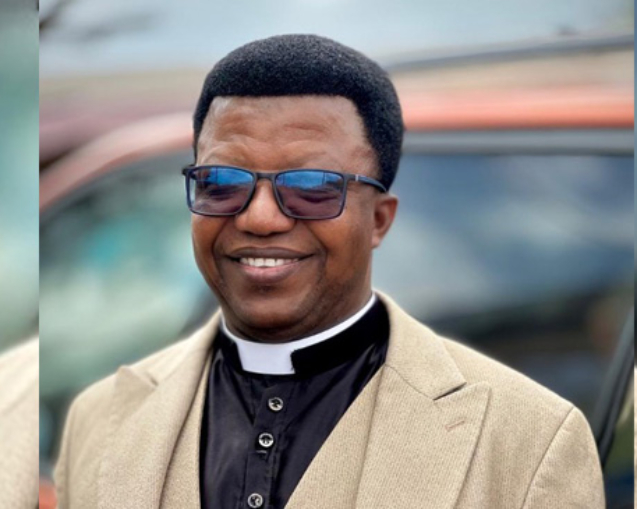
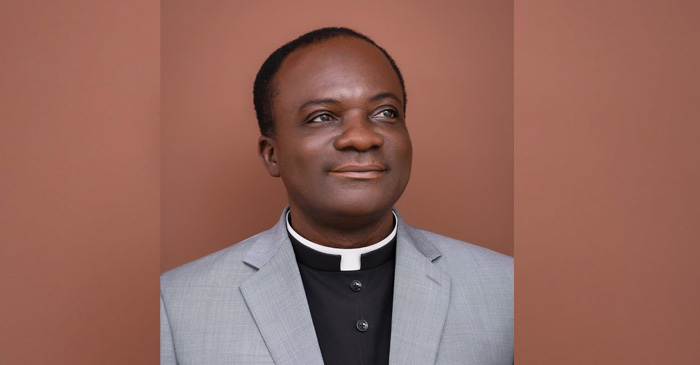
Written By Apostle Samuel Berko (Area Head, Amrahia)