



THE COP GLOBAL MISSIONS FOOTPRINT web.jpg

The CoP Global Missions Footprint

Many years ago, missionaries from Europe — including the Basel and Bremen missionaries — travelled to Ghana and other African countries to spread the gospel.

In Ghana, they planted churches, established schools, built healthcare facilities, and laid institutional foundations that transformed communities and shaped generations.

For decades, Africa was viewed primarily as a mission field — a continent receiving the gospel from the outside world.

Today, that story has changed

Ghana, once a recipient of missionary enterprise, has become a missionary force. The nation that once welcomed foreign missionaries is now sending them, and at the forefront of this remarkable shift is The Church of Pentecost.

Born from the seeds of early missionary work, The Church of Pentecost has evolved into one of the fastest-growing Christian movements in the world, carrying the gospel far beyond its national borders.

Present in 211 countries and territories, the Church is increasingly shaping conversations around global Christianity, leadership, mission strategy, and faith-based community transformation.

Its expansion represents far more than numerical growth. It reflects a changing centre of gravity in global Christianity.

This is not expansion driven by institutional ambition or charitable enterprise. It is a Holy Spirit-led movement grounded in evangelism, discipleship, and cultural engagement.

By 2025, the Church had deployed approximately 2,000 missionaries across the world, spreading the Christian faith in diverse cultural settings.

Perhaps nothing captures this story better than seeing the Chairman of The Church of Pentecost, Apostle Eric Nyamekye, being welcomed into Maasai culture and dressed in traditional attire — a symbolic gesture that reveals how the gospel is influencing cultures and systems across Africa and other parts of the world.

THE HISTORY OF THE MAASAI

The Maasai, found mainly in Kenya and Tanzania, are one of Africa’s most culturally distinct communities. Known for their red garments, beadwork, cattle-based livelihood, and strong communal identity, they have preserved their traditions across generations despite modern pressures and urban change. Among the Maasai, clothing is not merely decoration; it is communication.

When a visitor is dressed in Maasai attire, it is a powerful sign of honour and acceptance. It signifies that the visitor has been received with fellowship and respect.

Consequently, when Apostle Eric Nyamekye was dressed in Maasai clothing during his recent visit to Kenya and Tanzania, it was more than symbolism. It was a cultural embrace. It demonstrated that when the gospel enters a community, it does not need to erase identity. Instead, it can walk gently into it, understand it, and speak through it.

In that moment, wrapped in the colourful attire of one of Africa’s most iconic communities, Apostle Nyamekye did not merely wear a cultural garment. He wore the story of a people — their heritage, resilience, and aspirations.

Above all, it reflects the Church’s growing commitment to building a Christianity that is multicultural, multiracial, and multigenerational.

During the visit, Apostle Eric Nyamekye also made a simple but powerful statement that captured the heart of the Church’s mission. He said they were not in Kenya to teach people how to worship God, but to encourage them to know God more and worship Him more.

That message was important. It shifted the focus away from instruction and control, and toward encouragement and relationship.

The gospel did not arrive to replace Maasai identity, but to engage it. It speaks to a people who already understand community, sacrifice, leadership, and belonging — values that align closely with Christian teaching when expressed in their purest form.

The Maasai world, with its strong sense of unity and tradition, becomes a living example of how the gospel and culture can meet without conflict when handled with respect

At this meeting point, something important is revealed: Christianity does not grow by removing culture, but by transforming lives within culture.

This is why the honour bestowed upon a visiting church leader through Maasai tradition carries such significance. It reflects relationship, not distance; acceptance, not rejection. It demonstrates that the gospel can be received in forms people understand best — through their own cultural language.

It is the same Christ, carried by different peoples, expressed in different languages, and lived out within different cultures.

The Maasai encounter becomes a mirror of this truth. It shows that Christianity is not bound to one place or one people. It can be received in the savannahs of East Africa and carried from there to the cities of Europe. It can move from rural communities in Tanzania to global cities in America. It can travel from African villages into international spaces without losing its essence.

Written by Ps. Dr. Felix Dela Klutse, Pent Media Director.

The Executive Council Of The Church Of Pentecost In Focus web

The Executive Council Of The Church Of Pentecost In Focus

One of the most significant moments of the 47th Session of the General Council Meetings of The Church of Pentecost is the election of new members to serve on the Executive Council—the highest decision-making body of the Church, second only to the General Council itself.

Today, as the Church prepares to elect new leaders to this august body, we reflect on the legacy, structure, and evolving composition of the Executive Council, and celebrate the remarkable contributions of the outgoing members.

THE STRUCTURE AND ROLE OF THE EXECUTIVE COUNCIL

The Executive Council is a 15-member committee that plays a pivotal role in the governance and spiritual direction of The Church of Pentecost. It functions as the administrative and doctrinal steering committee of the Church, supporting the Chairman in the day-to-day running of the global Church and ensuring that policies and practices align with the Church’s vision and divine mandate.

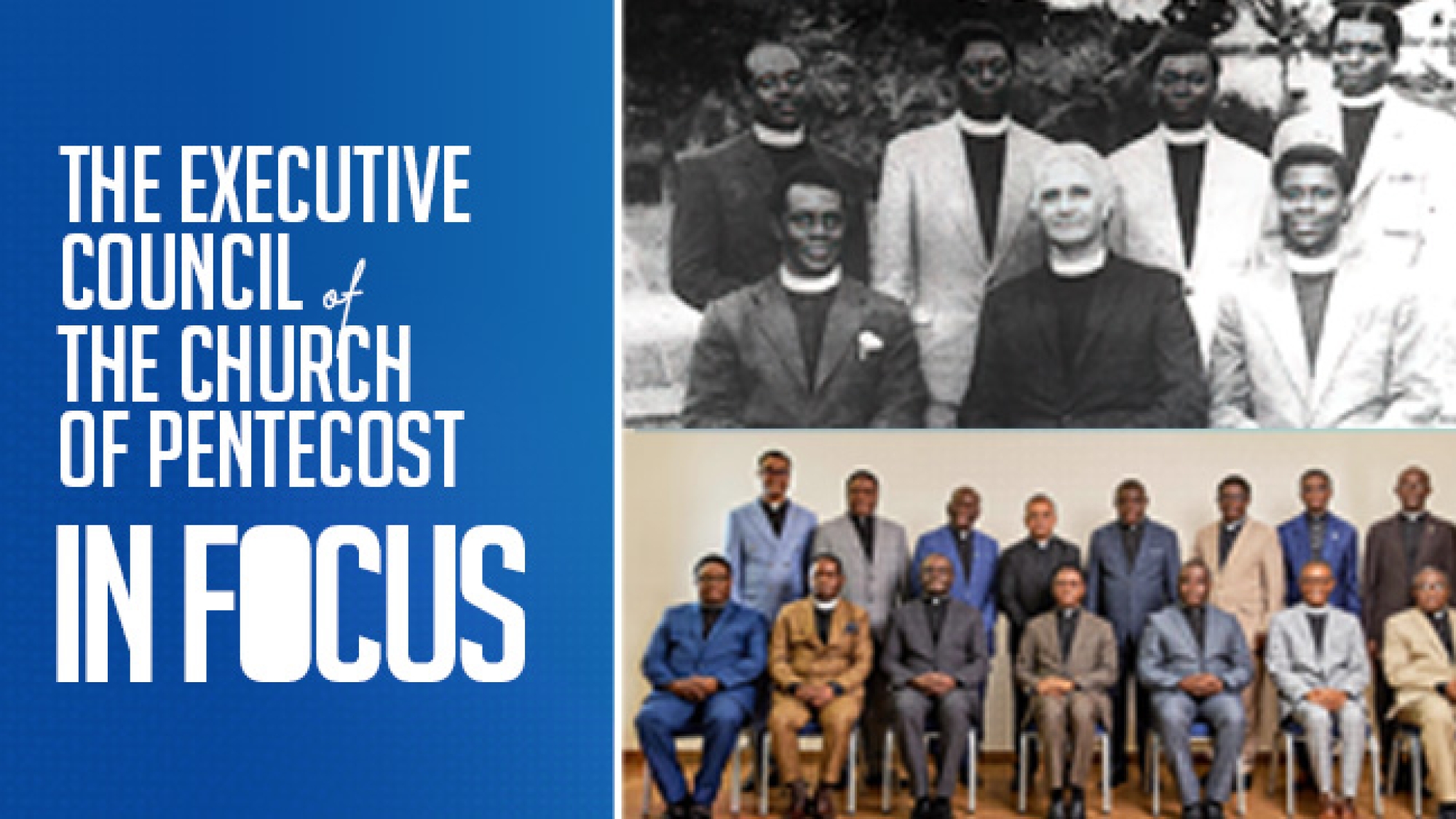
Historically, the Executive Council began as a seven-member body in the early years of the Church, composed of the Chairman, the General Secretary, and other senior ministers. As the Church grew in size and influence, there was the need for broader representation and shared leadership.

Many years later, the membership expanded to nine (9) during Apostle Dr. Michael Ntumy’s tenure as Chairman of the Church in the latter years of the 20th century.

A major turning point came in 2015 under the leadership of Apostle Professor Opoku Onyinah, the immediate past Chairman (now retired) when the membership was again expanded.

Recognising the Church’s increasing global footprint and complex administrative needs, he spearheaded the expansion of the Council from nine to fifteen (15) members. This reformation allowed for greater diversity in representation across nations, ministries, and generations.

A HISTORICAL GLANCE

The first Chairman of the Executive Council was Pastor James McKeown, the founder of The Church of Pentecost. He was joined by early Ghanaian leaders such as Apostle Fred Stephen Safo, who later became the first African Chairman of the Church, Apostle Joseph Egyir Paintsil, the then General Secretary, Apostle Appau Asante, Apostle J.C.Quaye, Prophet M.K. Yeboah and Apostle C.G.A. Hushie, who laid the foundations of governance for the young Pentecostal movement. Over the decades, the Council has seen many renowned leaders who have contributed immensely to the shaping of the Church’s doctrines, missions, and global evangelistic thrust.

A historic milestone was achieved during the tenure of Apostle Eric Nyamekye-led Council in 2020 when Apostle James Raj Sundaram, a missionary of Indian descent, was elected to the Council. He became the first non-African minister to serve on the Executive Council since the time of Rev. James McKeown—a powerful testament to the Church’s increasing global inclusivity and international reach.

CELEBRATING THE OUTGOING MEMBERS

This year’s elections are particularly significant as seven distinguished members of the current Executive Council conclude their term of service. These include:

          •         Apostle Yaw-Adjei Kwarteng

          •         Apostle Samuel Osei Asante

          •         Apostle Mike Etrue

          •         Apostle Isaac Nii Kotei Djani

          •         Apostle Sylvester Arhin

          •         Apostle Dr. Dela Quampah

          •         Apostle James Raj Sunduram

These men of God have served faithfully and diligently, offering wise counsel, spiritual insight, and sacrificial leadership during a time of global challenges and significant transitions, including the implementation of the Vision 2023-28 agenda. Their legacy includes strengthening doctrinal purity, promoting missions and church planting, and enhancing the visibility of the Church in various spheres of society.

As they bow out, the Church owes them a debt of gratitude. Their service has not only impacted the present but has laid a strong foundation for future leaders to build upon.

LOOKING AHEAD

As the General Council prepares to elect new members today, we prayerfully anticipate a new chapter in the history of the Church. A chapter that will require leaders of deep spiritual conviction, administrative skill, and cultural sensitivity. The new Executive Council must be equipped to navigate the complexities of a fast-changing world while remaining anchored in the unchanging truths of Scripture.

May the Spirit of God guide every step of the process. And as new voices join the council, may they be graced with wisdom, vision, and the humility to serve.

“The God of our fathers shall be our God, and we shall not fail.”