
There are conferences, and then there are conversations that quietly reveal the condition of a nation. The National Development Conference (NADEC) belongs to the latter.
In a country where discussions about development often revolve around roads, hospitals, jobs, inflation and economic growth, the Church of Pentecost has chosen to ask a different question: What if the greatest challenge confronting Ghana is not merely economic, but moral?
It is a question many have pondered privately, but few institutions have had the courage to place at the centre of a national conversation. That is what makes NADEC remarkable.
The significance of this conference is not simply found in the calibre of its speakers or the beauty of its venue – the Pentecost Convention Centre. It lies in the fact that leaders who represent the highest offices of the land—government, Parliament, the Judiciary, traditional authority and the religious community—are all willing to sit around the same table and acknowledge one simple reality: something is not working as it should.
That admission, by itself, is powerful. Nations rarely change because they become richer. They change because they become honest enough to confront what is broken.
For years, Ghana has invested in policies, institutions and reforms. Governments have changed. Development plans have been launched. New laws have been enacted. Yet many of the challenges that continue to frustrate national progress remain stubbornly present. Corruption persists. Public trust has weakened. Leadership is increasingly questioned. Integrity often appears negotiable.
It is becoming clearer that while laws can regulate behaviour, they cannot manufacture character.
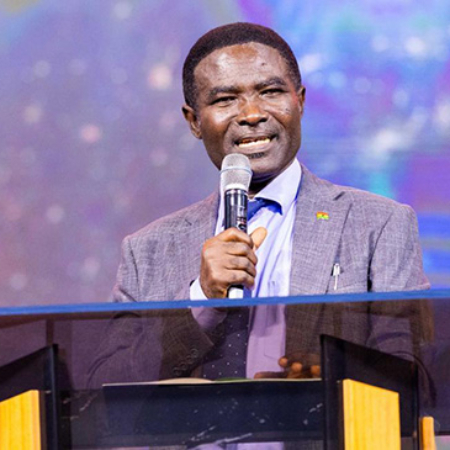
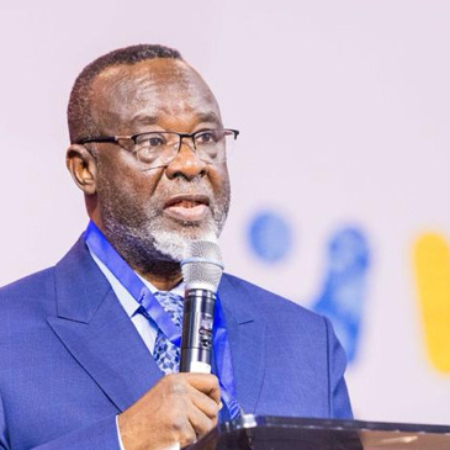
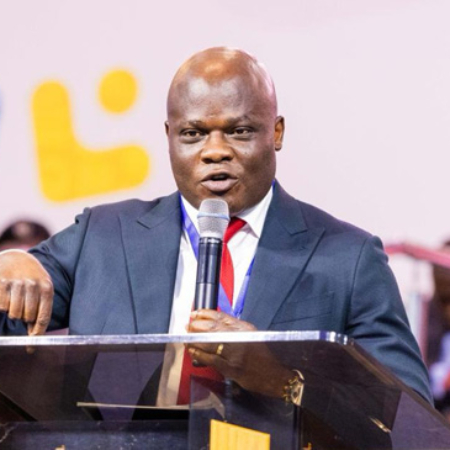
This is why the remarks made at this year’s conference resonate so deeply. The Chief Justice, His Lordship Justice Paul Baffoe-Bonnie, observed that the law alone is limited in developing a nation. The Speaker of Parliament, Rt. Hon. Alban Sumana Kingsford Bagbin, similarly acknowledged that Parliament can enact laws, but legislation by itself is insufficient to transform society.
Those are not ordinary statements. They are profound acknowledgements coming from the very institutions entrusted with making, interpreting and upholding the law. Together, they point to a truth that many societies eventually discover: transformation begins long before the courtroom. It begins in the human heart.
A nation cannot legislate honesty. It cannot vote integrity into existence. It cannot prosecute its way into becoming ethical. Character must exist before laws become effective. Before any law is obeyed, a decision has already been made in the human heart. And perhaps that is where the Church has a unique contribution to make.
For generations, churches have been viewed primarily as places of worship. But throughout history, the Church has also served as the conscience of society—reminding nations that development is ultimately about people before it is about projects.
Roads can connect cities, but only values connect people. Hospitals can heal the body, but only integrity heals institutions. Schools can produce graduates, but only character produces trustworthy leaders. Without that moral foundation, even the most ambitious development agenda eventually begins to crack.
This is why it is significant that The Church of Pentecost is spearheading this national conversation. The Church is not attempting to replace government, neither is it venturing into partisan politics. Rather, it is doing what the Church has always done at its best: bringing people together, elevating the conversation beyond political interests and calling society back to timeless values.
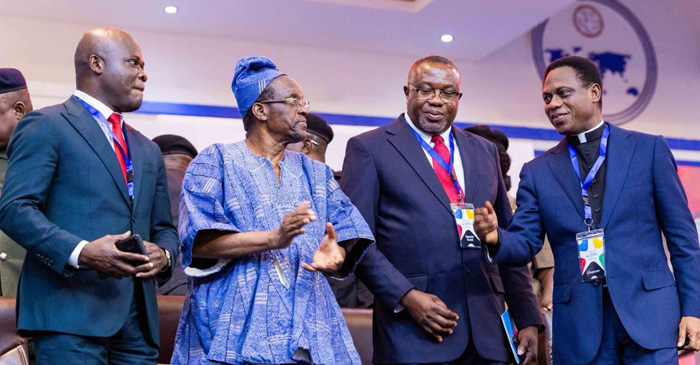
Perhaps this explains why the conference brings together individuals who would ordinarily meet only within the boundaries of their respective institutions—the Vice President, the Speaker of Parliament, the Chief Justice, traditional rulers, religious leaders, academics and policy experts—all gathered under one roof, not to debate political victories, but to reflect on Ghana’s moral future.
That image alone carries a lesson. Development cannot remain the responsibility of government alone. Neither can morality remain the responsibility of the Church alone. Every institution has a role to play.
The Church shapes values. Government shapes policy. Parliament shapes legislation. The Judiciary safeguards justice. Traditional authorities preserve culture. Families nurture character. Schools cultivate future citizens.
When these institutions work in isolation, progress becomes fragmented. When they work together, transformation becomes possible.
Interestingly, this approach mirrors the broader vision that has increasingly defined the ministry of The Church of Pentecost in recent years. Whether through environmental stewardship campaigns, educational interventions, healthcare, agriculture, prison reformation initiatives or national policy conversations, the Church continues to demonstrate that the Gospel is not confined to the pulpit. It reaches the marketplace. It enters classrooms. It influences boardrooms. It shapes communities.
NADEC is therefore not an isolated initiative. It is another expression of a Church that believes national transformation is part of its divine mandate. The Gospel changes individuals. Changed individuals build healthy families. Healthy families build ethical communities. Ethical communities build stronger nations. That progression has never changed.
Perhaps this is why the conference feels so timely. Across the world, nations are beginning to realise that prosperity without values is fragile. Economic growth without integrity creates inequality. Political power without accountability breeds mistrust. Technology without ethics becomes dangerous. Development without morality eventually begins to consume itself.
Ghana is not alone in confronting these realities. But Ghana has an opportunity—an opportunity to recognise that national renewal requires more than new policies. It requires a renewed people.
That journey begins with conversations like NADEC. Some conferences end when the closing prayer is said. Others begin when participants leave the auditorium. The real measure of NADEC will not be the speeches delivered or the applause received. It will be whether those conversations inspire decisions, whether those decisions influence institutions, whether those institutions rebuild public confidence, and whether ordinary citizens choose integrity even when no one is watching.
Because, in the end, nations are not transformed by documents alone. They are transformed by people. And people are transformed when values shape their hearts before policies shape their actions.
Perhaps that is the quiet but profound significance of the National Development Conference. It reminds us that while governments can build nations, only a people of character can sustain them.
And when the Church helps lead that conversation—not for political influence, but for national renewal—it is not stepping outside its mandate. It is fulfilling one of its highest callings.
Written by Prince Kojo Asare (Pent Media Centre)