The Next Generation Is Mission Field – Apostle Dr Tsekpoe Reveals web

The Next Generation Is Mission Field – Apostle Dr Tsekpoe Reveals

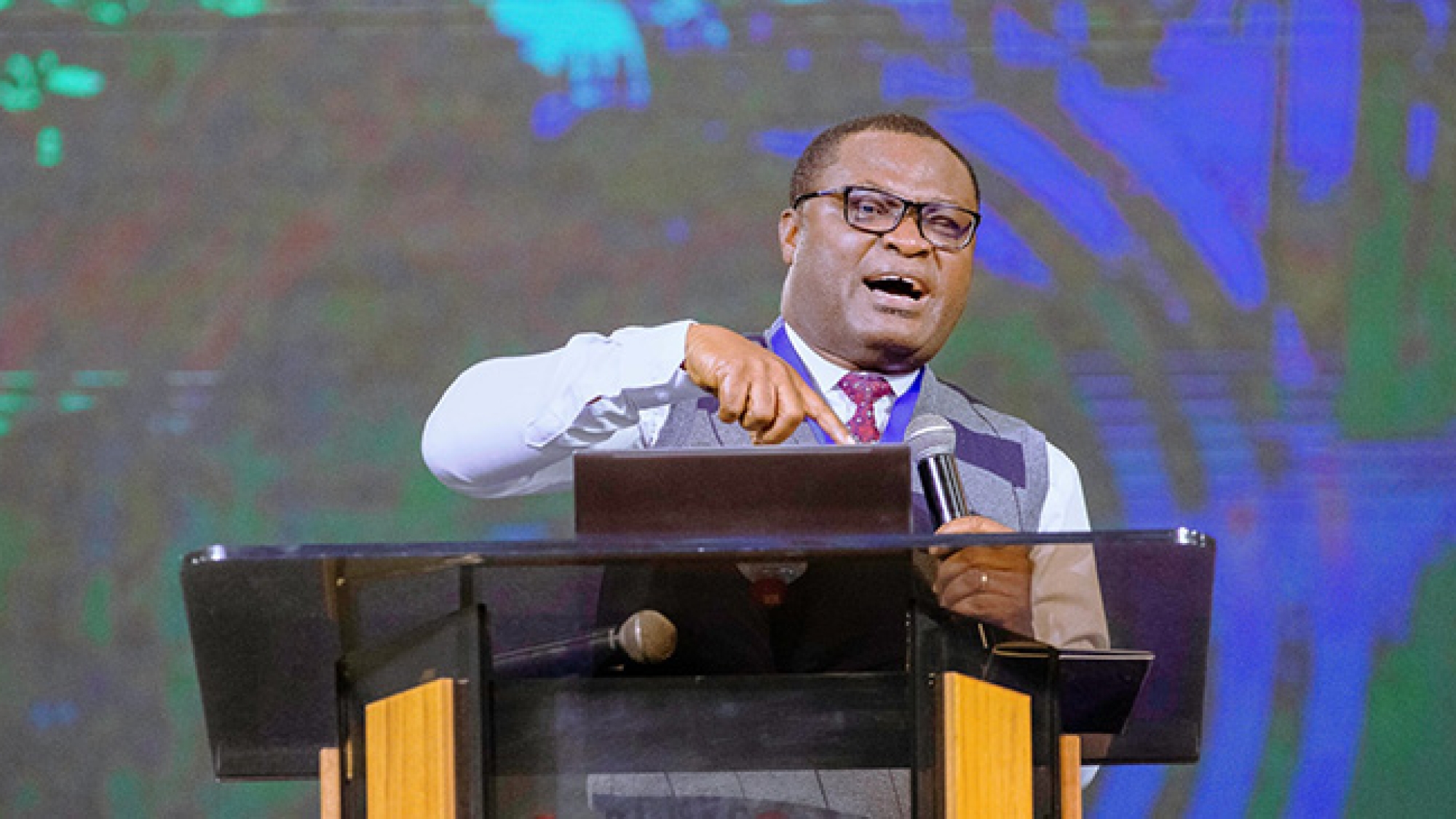
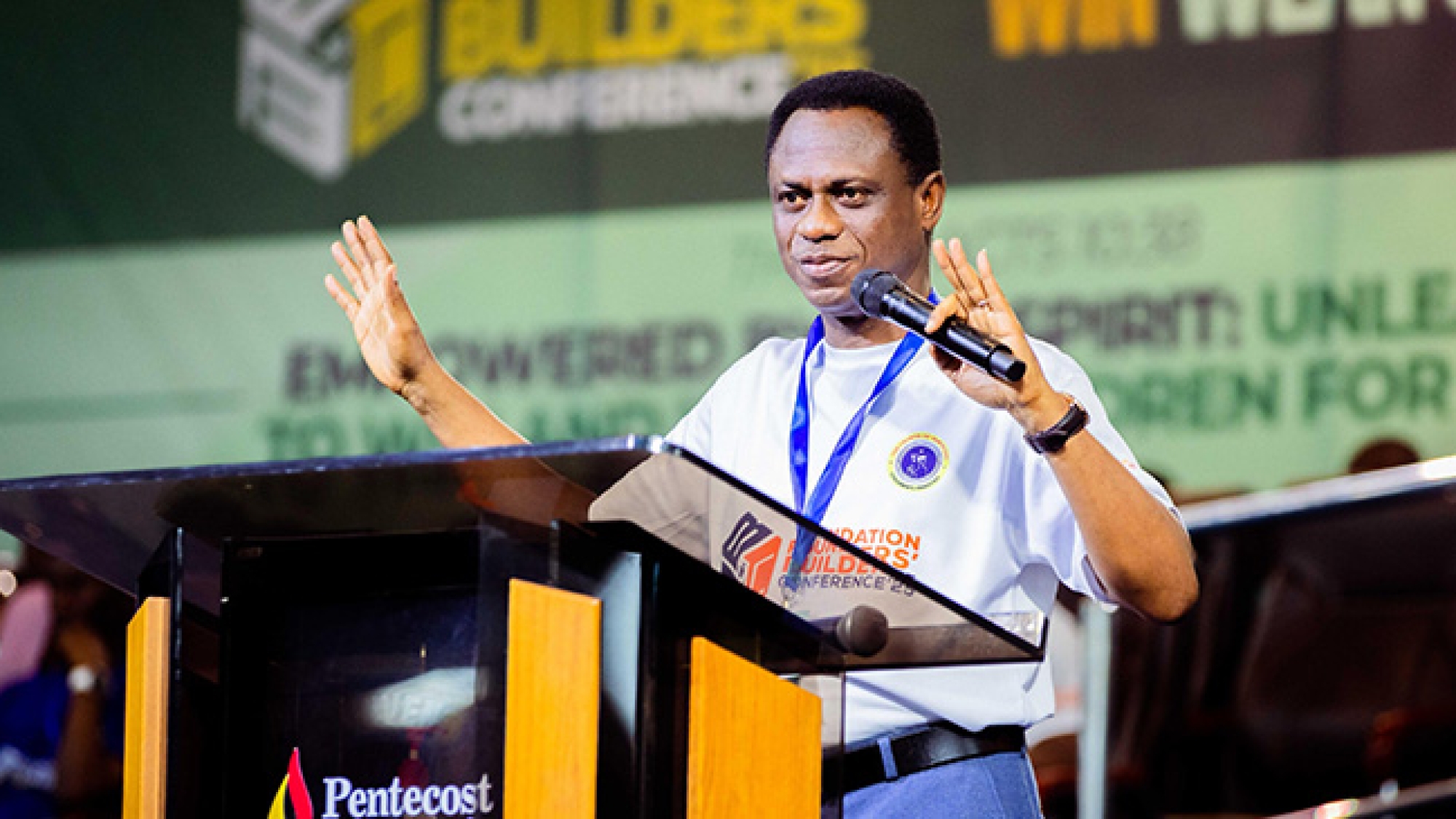
The Head of Ministerial Formation at the Pentecost School of Theology and Mission (PSTM), Apostle Dr Christian Tsekpoe, has made a passionate appeal to the Church to refocus its missional priorities towards future generations. He warned that neglecting this crucial area could jeopardise the continuity of God’s mission in the years to come.

Delivering a message titled, ‘Sustaining God’s Mission Through the Generations’ based on Judges 2:7–12 at the 2025 Missions Orientation at the Pentecost Convention Centre (PCC), Gomoa-Fetteh, Apostle Dr Tsekpoe reflected on the sobering truth that even a faithful generation can fail to pass on the knowledge of God to their children.

‘The problem is not with the generation that doesn’t know God,’ he stated, ‘but with the previous generation that failed to transmit the gospel to them.’

He noted that the remarkable growth and spiritual depth currently witnessed in The Church of Pentecost is the fruit of the faithfulness of earlier generations. However, he cautioned that this legacy is not self-sustaining and must be intentionally preserved by engaging the youth with contextualised expressions of faith.

‘Just because we are serving God faithfully today does not guarantee that the next generation will do the same,’ he stated. ‘We must view our children and young people as a mission field and approach them with a missiological mindset.’

Referencing Matthew 28:18–20 and Acts 1:8, the respected theologian acknowledged the Church’s commendable commitment to global missions but pointed out a critical oversight—the need to sustain the mission across generations.

‘The Church has rightly focused on cross-cultural missions,’ he explained, ‘but we must not forget to engage the next generation right in our homes, churches, and schools. Missions is not only geographical; it is also generational.’

Drawing parallels between global missions and youth ministry, he stressed that just as missionaries undergo rigorous training to understand foreign cultures and worldviews, the Church must apply the same diligence in reaching emerging generations within its own context.

‘Early missionaries in Africa sometimes failed because they imposed European culture on the people. Today, we are better at contextualising the gospel for other nations, yet we often fail to do the same for our own children.’

He criticised the tendency of mission orientation programmes to overlook younger demographics entirely.

‘We must treat youth and children’s ministry as critical mission work. Acts 2 reminds us that the gospel is for all generations, and we must be attentive to how each one hears and responds.’

Using Luke 5 as an illustration, he pointed out that God works uniquely in every generation, warning that outdated methods may hinder the reception of new spiritual movements.

‘You cannot put new wine into old wineskins,’ he said. ‘God is doing something new in every generation, and we need fresh strategies that are fit for purpose. Otherwise, we risk losing both the method and the message.’

Apostle Dr Tsekpoe concluded with a call for an intergenerational mission approach—one that fosters intentional interaction between older and younger believers to cultivate faith expressions that are both culturally relevant and spiritually grounded.

‘We must stop assuming the next generation will automatically inherit our faith. It must be deliberately and lovingly handed over—not merely taught, but translated.’

Pent News

The Other Sheep Ministry Outreach In Ejura Yields 51 Souls web

The Other Sheep Ministry Outreach In Ejura Yields 51 Souls

An outreach initiative undertaken by The Other Sheep Ministry of The Church of Pentecost in Ejura on Tuesday, July 15, 2025, resulted in the conversion of 51 individuals to the Christian faith.

The exercise was led by Evangelist Abraham Addae Agyemang, the National Coordinator of the specialised ministry, alongside members of the GO YE TEAM from the national office. The team took to the streets of Ejura, engaging in one-on-one evangelism, which culminated in a fruitful harvest of souls.

Earlier in the day, Evangelist Agyemang addressed various stakeholders of the ministry at the Heaven’s Gate Auditorium of The Church of Pentecost in Ejura, as part of his visit to the Ashanti Mampong Area of the church. In his message, he asserted that Jesus Christ is the Absolute Truth, the Ultimate Gate and the Sure Doorway to eternal life.

Citing John 10:16, John 10:9, and John 14:6, Evangelist Agyemang asserted that Jesus Christ is not simply the founder of the Christian faith, but the only accredited Saviour of humanity.

He urged members of the church to fully embrace Vision 2028, describing it as a divine blueprint that fosters redemption, reshapes Christian living, and realigns church administration with God’s manifest wisdom and purpose.

Evangelist Agyemang expressed profound gratitude to the leadership of the church for establishing The Other Sheep Ministry, which aims to broaden the scope of soul-winning efforts within the church. He also paid glowing tribute to Apostle Dr Dieudonne Komla Nuekpe, Chairman of the National Executive Committee of the ministry, for his exceptional leadership in advancing the ministry’s mission.

Apostle Samuel Kwabena Asare, the Mampong Area Head, reaffirmed the Area’s commitment to fully realising the church’s vision.

Other personalities present at the event included Pastor Luke Sei Nemen, the Ashanti Regional Coordinator of The Other Sheep Ministry, who also serves as the Mampong Area Coordinator and a member of the National Executive Committee, along with several other ministers and church leaders.

Pent News

Your Health Is Your Ministry Responsibility — Apostle Dr Koranteng Cautions web

Your Health Is Your Ministry Responsibility — Apostle Dr Koranteng Cautions

The Director of the Pentecost Hospital, Madina, Apostle Dr Edward Arko Koranteng, has stated that maintaining one’s personal health is not optional, but essential for fulfilling their divine calling.

He made this statement on Wednesday, July 16, 2025, during a presentation titled ‘The Minister and His Health’ at the 2025 Missions Orientation, held at the Pentecost Convention Centre (PCC), Gomoa-Fetteh.

‘Without the enabling of the earthly vessel, you cannot fulfil your ministry,’ Apostle Koranteng stated. ‘Health is not a collective asset; it is a personal responsibility.’

Referencing 3 John 1:2, he indicated that mission work demands vitality of body, mind, and spirit.

Quoting the World Health Organisation, he noted that health is not merely the absence of disease, but ‘a complete state of physical, social, and mental well-being.’ Apostle Dr Koranteng expanded this definition to include spiritual health as a vital component of well-being for missionaries.

‘Our body is a special design of God which is glorious, beautiful, and wonderful,’ he said, adding, ‘Yet we are responsible stewards. Our health is our business.’

Highlighting the importance of personal agency, he encouraged deliberate choices in diet by limiting sugar, salt, and fat, while focusing on complex carbohydrates, fish, and poultry and ensuring proper hydration.

He also cited 1 Timothy 4:8, pointing out that physical exercise, though seemingly minor, yields profound benefits.

‘In this life, a little exercise is very important, so be intentional about it. Intentionally move your body,’ he stated.

Referencing Mark 6:31, he acknowledged the demanding nature of ministry but urged ministers to prioritise rest and sleep.

Addressing emotional health, Apostle Dr Koranteng quoted Philippians 4:6, calling believers to ‘be anxious for nothing,’ and encouraged them to adopt God-given strategies for managing stress.

PENT NEWS

Convert The Systems, Not Just Souls — Apostle Prof. Agyapong Kodua web

Convert The Systems, Not Just Souls — Apostle Prof. Agyapong Kodua

The Vice-Chancellor of the Pentecost University, Apostle Professor Kwabena Agyapong Kodua, has challenged the Church to engage not only individuals but also the very structures that shape societies in its missions agenda.

He made this known on Wednesday, July 16, 2025, during a presentation delivered under the theme, ‘The Missionary’s Compass for Influencing Spheres’ at the 2025 Missions Orientation held at the Pentecost Convention Centre, Gomoa Fetteh.

Apostle Prof. Agyapong Kodua defined spheres as domains of control – family, education, religion, government, media and communication, sports, arts, entertainment, business, and the economy – each of which influences human behaviour and decision-making.

He urged missionaries to operate like compass bearers, charting directions for cultural and systemic transformation.

‘Souls or converts live and are governed through spheres or systems,’ he said, adding, ‘You cannot win souls and not be concerned about health issues, legal frameworks, or economic systems. Missions are sphere-dependent, and we must deliberately engage the systems.’

He warned of the risk believers face in compromising their faith when operating within corrupt systems, saying, ‘When you live in an evil system, no matter your righteousness, you may compromise.’

Apostle Prof. Agyapong Kodua referenced Matthew 28:19–20 and Acts 1:8, reaffirming two-fold mission priorities, cross-border evangelism and intergenerational discipleship, and stressed that explorers of faith must also become architects of systemic change.

He cautioned that spheres operate on embedded philosophies and theologies, noting that even seemingly neutral areas such as government or business carry moral frameworks that require Christian critique and engagement.

Apostle Prof. Agyapong Kodua further challenged leaders to influence policies, sign petitions, and proactively foster systemic change in whatever sphere they inhabit.

‘The world is governed through spheres and their systems,’ he said, adding, ‘If we truly want Kingdom transformation, we must let God’s compass guide us into every sphere, shaping structures with His truth.’

PENT NEWS

Preserve The CoP Brand For Generations — Apostle Kumi-Larbi Charges Ministers web

Preserve The CoP Brand For Generations — Apostle Kumi-Larbi Charges Ministers

The immediate past General Secretary of The Church of Pentecost, Apostle Alexander Nana Yaw Kumi-Larbi, has reminded ministers that they are ambassadors of the Church, entrusted with a legacy spanning multiple generations.

Apostle Kumi-Larbi, who is currently the Area Head for Ashaiman and a member of the Executive Council of the Church, made this statement while addressing participants of the 2025 Missions Orientation on the theme: ‘The CoP Brand’ at the Pentecost Convention Centre in Gomoa Fetteh on Wednesday, July 16, 2025.

‘The Church of Pentecost is now in its third generation,’ he said. ‘God established His covenant through our forebears in 1931 at Akoroso, confirmed it in 1940 at Winneba, and again in 1948 at Koforidua. We must carefully pass on both the spirit and the letter of that covenant to the next generation,’ he added.

He explained that, in addition to formal Church policies, The Church of Pentecost operates under a sacred covenant, which is God’s binding promise with the Church. This covenant, he said, is upheld through core values, culture, and rules of conduct outlined in the Church’s constitution, ministerial manuals, and on baptism certificates.

‘Just as land owners must preserve their landmarks (Proverbs 22:28; Deuteronomy 19:14), we must protect and preserve The CoP brand—our identity, values, and legacy,’ he continued.

Apostle Kumi-Larbi emphasised that branding extends far beyond a name or logo. He described it as both tangible—seen in Church structure, worship format, and public engagement—and intangible—reflected in core beliefs, practices, and communal ethos.

Highlighting the distinctives of The Church of Pentecost, he said: ‘Our brand is Christ-centred and Pentecostal. It is built on selfless service, solid biblical teaching, strong leadership and succession, evangelism, discipleship, sacrificial giving, fellowship, and discipline.’

He reminded ministers of the Church’s name change on 1st August 1962, from the Ghana Apostolic Church to The Church of Pentecost, noting that this shift reinforced its Pentecostal identity.

He urged them to be vigilant in cultivating this identity through consistent adherence to rules of conduct and core values, including the divine authority of Scripture, prioritising Word-centred gatherings, and maintaining practices of prayer, fasting, and holiness.

‘Our rules of conduct are not mere guidelines; they are inspired by God to equip the saints and uphold a life worthy of our calling,’ he stated.

Apostle Kumi-Larbi challenged ministers to deeply internalise and live out The CoP brand in all areas of ministry, saying, ‘As we seek to possess the nations for Christ, it is crucial that this generation, and every future one, knows, upholds, and jealously guards the time-tested Pentecostal attributes that define us.’

Pent News

Ghanaian Robotics Team Presents Trophy To Leadership Of The Church of Pentecost web

Ghanaian Robotics Champions Present Trophy To Leadership Of The Church Of Pentecost

Three talented young members of The Church of Pentecost, who represented Ghana at the recently held Robofest Competition in the United States, have presented their championship trophy to the leadership of the church.

The team visited the General Headquarters of the church to present the prestigious award to the Chairman, Apostle Eric Nyamekye, on July 14, 2025.

The team, all students of Apam Senior High School in the Central Region, achieved a remarkable victory in the international robotics challenge.

The triumphant trio – Gabriel Nkunyim Acquah, Lordina Akua Ofosuaa Yeboah, and Joseph Nyameyie Acquah – showcased their innovative robotics skills at the competition held in Michigan, USA.

Their participation was facilitated by the Ghana Robotics Academy Foundation (GRAF), which organises Robofest in Ghana from its base at the Kofi Annan ICT Centre. GRAF has been nurturing young robotics enthusiasts since 2011.

According to their trainer, Elder Alfred Acquah of the Apam Central Assembly in the Winneba Area of The Church of Pentecost, this year marked a significant milestone.

‘It was only last year that we were able to travel outside the country,’ Elder Acquah stated. ‘But this year, members of the church represented Ghana and returned with a trophy.’

The team competed in the BottleSumo category, a challenging segment where robots are designed to detect and push obstacles along a designated track.

The Ghanaian students impressed judges with their ability to independently research and programme their robot to effectively navigate and clear the course. The competition featured participants from 16 countries, with 33 teams vying for the top spot in their category.

Receiving the award, the Chairman of The Church of Pentecost, Apostle Eric Nyamekye, expressed profound gratitude for the achievement. He thanked God for the success, not only for the nation but also for the church.

He emphasised the importance of providing platforms to nurture young talent, stating: ‘God created us and we are like Him – that is how wonderful we all are. There is so much you can do to impact the world so that your light will shine.’

He further encouraged the young winners, saying, ‘This is just the beginning; work very hard. There are greater things God wants you to see. Develop the expertise you have gained and keep your focus.’

Among those present at the presentation were Apostle Samuel Gyau Obuobi (General Secretary, The Church of Pentecost), Apostle Alexander Nana Yaw Kumi-Larbi (Executive Council Member/Ashaiman Area Head), Apostle Daniel Nii Tetteh Tackie (Winneba Area Head) and Pastor Frank Amoah Owusu (Administrative Secretary to the General Secretary).

Also in attendance were the parents and guardians of the students.

Pent News

PENTECOST LITERACY PROJECT LAUNCHED IN YENDI WITH TRAINING FOR 236 FACILITATORS web

Pentecost Literacy Project Launched In Yendi With Training For 236 Facilitators

The Church of Pentecost has officially launched the Pentecost Literacy Project in the Yendi Area with a week-long training programme for 236 facilitators, marking a significant step in the Church’s efforts to combat illiteracy and enhance leadership capacity at the grassroots level.

The training, which began on Monday, July 14, 2025, is part of a strategic literacy initiative embedded in the Church’s Vision 2023 and 2028, which seeks to equip every member to become a minister and evangelist. The Yendi Area project is serving as a pilot for nationwide implementation across all Areas of the Church.

The facilitator training is being organised in collaboration with the National Leadership Development Committee (NDLDC), Home and Urban Missions (HUM), Literacy Evangelism Ghana (LE-GH), and the Yendi Area leadership.

Speaking on behalf of the Chairman of the Church, Apostle Eric Nyamekye, the Northern Regional Coordinating Committee Coordinator and Tamale Area Head, Apostle John Budu Kobena Tawiah, officially opened the training workshop. He described the initiative as a major priority of the Chairman and called on trainees to commit wholeheartedly to the programme. He also noted the significant investments made by both the Headquarters and the Yendi Area in ensuring the project’s success.

Apostle Dr. Samuel Kojo Gakpetor, Chairman of the NDLDC, delivered a keynote exhortation, citing 2 Timothy 3:16-17 and Acts 17:11. He underscored the link between literacy and spiritual growth, stressing that the ability to read enhances personal engagement with Scripture and protects believers from doctrinal errors. He explained that the Literacy Project is critical to realising the Church’s vision of a thoroughly equipped membership capable of transforming lives and communities.

In his remarks, Yendi Area Head, Apostle James Magyam, expressed deep appreciation to the Chairman and the Executive Council for selecting the Yendi Area to pilot the project. He commended all stakeholders for their support and pledged the Area’s full commitment to ensuring its success.

Also present was a team from Literacy Evangelism Ghana comprising Rev. Joseph Darling McCarthy, Pastor Reuben Adrakpanya (Rtd.), Elder Richard Toxla, and Ms. Angelica Crabbe. They expressed gratitude to The Church of Pentecost for the continued partnership and commitment to literacy development in Ghana.

Other notable figures at the event included Pastor Bernard Kwarteng, a National Executive Committee member of the NDLDC, and Pastor George Mpoamoh Yenobi, Head of the Konkomba Translation Team under the NDLDC.

The training, which involves all ministers in the Area as well as 230 other church officers and members, is expected to end on Saturday, July 19, 2025.

Report by Pastor Bernard Kwarteng

Wa Area Inaugurates Deaf Assembly web

Wa Area Inaugurates Deaf Assembly

In alignment with The Church of Pentecost’s vision of ‘Possessing the Nations’ and ensuring that no soul is left behind, the Wa Area Head of the church, Apostle Bernard Azizu Mohammed Abogorago, has inaugurated a Deaf Assembly in Kabanye District.

The new assembly was established under the Ministry to Persons With Disabilities (MPWDs).

The inaugural service, which took place on July 13, 2025, was a vibrant and joyful occasion, attended by 25 deaf individuals.

In a brief address, the Northern Sector Coordinator for MPWDs, Pastor Joshua Korko Semador, commended the Wa Area leadership for this significant milestone and stressed the need for intentional efforts to nurture and grow the new assembly.

Delivering the keynote message, Pastor Peter Reuben Wuni, National Coordinator for the Deaf Ministry, indicated the value of every soul in the eyes of God. He reminded the congregation of the joy in heaven over each soul won for Christ and encouraged members to let Christ dwell richly in their hearts, live holy lives, and pursue their salvation with reverence and commitment, keeping heaven as their ultimate goal.

To the glory of God, four deaf individuals and one hearing-impaired person gave their lives to Christ during the service.

The District Minister for Kabanye, Pastor Karim Awuni, on his part, urged the members to each win at least one soul for Christ. He noted that the strong sense of community among the deaf could be a powerful tool for evangelism and church growth, encouraging them to invite their peers to join the fellowship.

The Area Head, Apostle Abogorago, after praying for the newly appointed local leaders, encouraged the members to work diligently to expand the assembly. He expressed hope that the Wa Deaf Church would grow to become one of the largest deaf congregations in Ghana and beyond.

Also present at the service were Pastor Alfred Owusu (Wa Area MPWDs Coordinator) and his assistant, Overseer Benjamin Sekyere; Pastor Stephen Supir Bedim (District Minister for Kumbiehi); Elder Jacob Tobo (Area Deacon), who will serve as the acting Presiding Elder for the new assembly; and Elder Samuel Baidoo, Presiding Elder of the Nungua Deaf Church in Accra, among others.

Report by Overseer Joseph Kyei Asomaning

Missions Start At The Foot Of The Cross – Apostle Dr Anim Asserts web

Missions Start At The Foot Of The Cross – Apostle Dr Anim Asserts

The Director of the Pentecost School of Theology and Mission (PSTM), Apostle Dr Emmanuel Anim, has stated that true missionary work is rooted in humility, obedience, and a clear understanding of God’s redemptive mission through Christ.

Speaking on the topic, ‘The Call of a Missionary’ at the 2025 Missions Orientation currently ongoing at the Pentecost Convention Centre (PCC), the respected theologian provided a deep theological reflection on the nature of missions and the divine responsibility of every believer to be a vessel of blessing to the nations.

‘Missions must always begin at the foot of the cross in all humility,’ he declared, adding, ‘We are not going in our name or by our perspective. We go as agents of God, carrying His message to His people.’

He began by tracing the historical use of the word ‘mission,’ explaining that until the 16th century, it was used exclusively to refer to the sending of the Son by the Father and the sending of the Holy Spirit by the Son, a doctrine rooted in the Trinity.

Apostle Dr Anim clarified the difference between ‘mission’ and ‘missions.’ According to him, ‘Mission’ is God’s eternal purpose, thus His redemptive work through Christ, while ‘Missions,’ on the other hand, refers to the specific ventures of the Church in response to that purpose, shaped by time, place, and need.

Referencing Genesis 12, he noted that God’s call to Abraham marked the beginning of a global vision—to bless all nations through one man. He indicated that missionaries are ambassadors of that same covenant.

‘Our calling, like Abraham’s, does not end with us. It’s generational. The blessing of your obedience is for your children and your children’s children,’ he said.

Apostle Dr Anim also stressed the importance of cultural sensitivity in missionary work. He explained that context is not secondary but foundational.

‘In missions, context gives meaning. You cannot transform what you do not understand. Most aspects of culture are subtle—intuitive, even hidden. But every culture communicates something about its people. That’s where transformation begins,’ he revealed.

Citing Acts 2 and Acts 8:26-39, he reminded participants that God reaches people where it makes sense to them, and that missionaries, like the apostle Philip, are called to interpret the gospel in ways that connect deeply with their hearers.

‘You are not taking God to the people; He is taking you to them,’ he asserted. ‘Our responsibility is to explain, not impose. We must ask for wisdom on how best to communicate God’s truth on the ground.’

He also cautioned against the danger of localizing God within personal or national contexts, saying, ‘Any time God calls people, there’s the tendency to localize Him. But God is bigger than our culture. We must not reduce the global gospel to local mindsets.’

He concluded by reminding missionaries that systems and structures matter just as much as words.

‘The Great Commission is also about changing systems. If the systems are corrupt or unjust, people will resist the message, no matter how pure it is. The gospel must engage both people and the environment they live in,’ he said.

PENT NEWS

Carry the Concept, Not The Context – Apostle Agyemang Bekoe Urges Missionaries web

Carry the Concept, Not The Context – Apostle Agyemang Bekoe Urges Missionaries

The Missions Director of The Church of Pentecost, Apostle Emmanuel Agyemang Bekoe, has underscored the importance of separating personal context from spiritual concepts in missionary work, warning that failing to do so can distort the gospel and render one ineffective in ministry.

Speaking at the 2025 Missions Orientation at the Pentecost Convention Centre (PCC), Gomoa-Fetteh, on Tuesday, July 15, on the topic: ‘Concepts and Context,’ Apostle Agyemang Bekoe indicated the critical role of the mind, particularly the subconscious in shaping belief systems and missionary effectiveness.

‘A concept is simply an idea,’ he explained. ‘Concepts are generated from the mind, but they must be applied within new contexts without dragging old environments along.’

He urged missionaries to carry the gospel concept into new cultures, but not to impose their native cultural contexts on their mission fields.

‘When you move with both the concept and the context, what you arrive with is not the original idea anymore – it becomes a misconception,” he stated, adding, ‘That’s why many people leave home with good intentions, but their message gets lost in translation.’

Drawing from 1 Peter 1:13, Apostle Agyemang Bekoe encouraged believers to prepare their minds for action, noting that spiritual effectiveness begins with mental transformation. He explained that the human mind functions on two levels – the conscious and the subconscious. It is the subconscious mind that governs lasting behaviour and identity.

‘The real seat of who you are is not the conscious mind; it’s the subconscious. That’s what the Bible refers to as the heart or the inner man,’ he revealed. ‘Until the subconscious is affected, the person remains unchanged. That’s where your culture, attitudes, and deep-seated beliefs reside.’

He added that while the conscious mind deals with mindsets, the subconscious stores set minds, built over time by repeated thoughts, cultural values, and personal experiences. These, he said, often become barriers when not subjected to the transformative power of Christ.

‘Seeing new things and saying new things is one way to restore the subconscious,’ he noted, stressing, ‘You cannot truly change until the inside changes.’

Apostle Agyemang Bekoe warned that many missionaries struggle because they subconsciously carry cultural baggage, such as tribalism, nationalism, or traditional values into contexts where they are called to preach Christ alone.

‘Do not carry your tribe, ethnicity, or nationality into the nations you are sent to,’ he cautioned. ‘Take Christ to the people. The gospel must engage culture, not be swallowed by it.’

He also spoke about the unchanging nature of core Christian doctrine, urging missionaries to distinguish between essential truths and cultural expressions of faith, saying, ‘Doctrine does not change, but if you’re not careful, you’ll allow the things stored in your subconscious through years of culture to affect how you interpret and deliver the message. That’s when people stop listening.’

The session ended with a charge to missionaries to become spiritually and mentally prepared vessels, yielding their minds to the influence of the Holy Spirit so that divine concepts may be rightly applied across diverse contexts for maximum impact.

The 2025 Missions Orientation is part of the church’s effort to prepare missionaries being sent across the globe, equipping them with spiritual depth and practical wisdom to engage new territories effectively with the gospel.

PENT NEWS