


LET THE LITTLE CHILDREN COME TO “MEAN” FIGHTING THE PUBLIC HEALTH THREAT OF CHILDHOOD OBESITY NOW web

Let The Little Children Come To “Mean”: Fighting The Public Health Threat Of Childhood Obesity Now

INTRODUCTION

The growth of a child into adulthood tells a beautiful story of progress, thrive, resilience, focus, and purpose. A sound mind and body are critical to the thriving of children. This has important implications for their future. How they get acquainted with their environment, learn new skills, acquire social acumen and norms, and aspire high in life are intimately intertwined with a healthy mind and body. Anyone who claims to love children must give them a good start in health, as the lingering effects of their health status today can be overwhelming. In adult life, a good health echo from the past must be created now in childhood.

In today’s fast-evolving world, an issue of great concern is obesity. Obesity is a medical condition defined by the accumulation of excessive fat in the body. Its accompanying health outcomes are enormous. Obesity is a driver of several non-communicable diseases (NCDs), that is, diseases that cannot be transmitted from one person to another, as we see with contagious diseases such as tuberculosis. Obesity predisposes one to heart diseases, certain cancers, and diabetes (type II). Obesity is an important health threat among children today. The United Nations International Children’s Emergency Fund (UNICEF) recently reported that 9.2% of children worldwide are obese; one in every ten children is obese. This figure is disturbing. The health and economic implications of this for the future are scary.

Dietary behaviour and sedentary lifestyles are major modifiable causes of this condition. Its growing burden calls for intentional effort towards addressing it in time. It is a public health imperative. Parents, faith communities, schools, traditional communities, health centres, and health directorates at all levels have important roles to play in warring against childhood obesity.

COMING TO MEAN

The term “come to mean,” on the one hand, carries the sense of demonstrating love and warmth towards children as depicted in the biblical anecdote in which Jesus insisted that the children be allowed to come to him when his disciples attempted to prevent that. On the other hand, it indicates the statistical method by which the “weight” of a child is classified as “overweight” or “obese.” Obesity is fairly determined by measuring body mass index (BMI), which is a ratio of the mass of an individual to the square of his or her height.

Meanwhile, in children, this BMI markedly changes with growth as they age, and this varies between the sexes (boys and girls). Consequently, a child’s BMI is measured relative to that of his or her peers using age-for-sex growth charts. That is, a single mean (and standard deviation) cannot accurately tell the BMI of a child.

A more accurate way to do this is to determine the extent to which a child’s BMI departs from the mean of a population of their mates (with respect to age and sex), a standardised method called “Standard Deviation Scores,” determined using percentiles and standard deviation. This method has been recommended by the World Health Organisation (WHO). The fight against the problem of childhood obesity is also about bringing a child’s BMI closer to the mean value of the reference population.

CHILDHOOD OBESITY ECHOES

Nipping overweight and obesity in the bud rests on the fact, which has been scientifically tested, that children who are overweight and obese will likely be obese in adulthood and thus suffer the associated NCDs. It has been shown by Elizabeth A. Lundeen and her colleagues in a prospective cohort study (one in which a group of people exposed to a given risk factor is followed up to see whether they will develop a medical condition) carried out for 20 years that overweight or obesity tends to persist into adult life with its attendant cardiovascular diseases and type-2 diabetes.

Already, there is an alarming increase in the prevalence of NCDs around the world. The WHO, in a 2014 report, takes note that globally, NCDs are responsible for 68% of all deaths. In middle- and low-income countries, where Ghana falls, 75% of this mortality emanates from NCDs, as a 2013 report by WHO indicated. Cardiovascular diseases, diabetes, cancers, and chronic respiratory diseases are the four main contributors to this increasing prevalence. Cardiovascular diseases and diabetes are particularly important in this regard. Diabetes, particularly type-2 diabetes mellitus, and cardiovascular disease are directly linked to diet choices. Dietary behaviours such as consuming saturated fat, low intake of fruits and vegetables, and high consumption of salt are more specific nutritional factors that have been associated with NCDs.

If things are to remain the way they are at the moment, then we have no option as a world but to expect the worst. Children who are presently overweight and obese face a challenge to their body and mind, which will negatively impact their physical and cognitive development.

SHOWING LOVE, PLAYING OUR ROLE

Our love for children must be demonstrated in how we safeguard their health now. Why won’t society pay particular attention to protecting them from the menace of NCDs?

Children are exposed to energy-dense foods like noodles and sugary drinks. On TV and in shopping centres, they are confronted with such food products through advertisements. Such foods are marketed at vantage places in schools and the larger community. Parents are also often seen feeding their children with such foods as a way of making the children happy, in many instances. Some of them do it because the children demand it. Such an attitude is like a response to this statement I saw on social media: “Forcing your child to eat what you have and not what they like is the highest form of child abuse.”

Children often prefer sugar-sweetened beverages and noodles. Protecting them from consuming these obesogenic foods and encouraging them to eat healthy meals is the highest form of love to show them in this critical period of their life. This is far from being child abuse. This is to say that parents and other family members have an integral role to play in combating childhood obesity. Apart from dietary habits, parents can also ensure that their children do not stay glued to their TV set and electronic gadgets, which will make them sedentary or inactive. Rather, plan a family jogging session and go for walks.

Children’s ministry of churches and other religious bodies must also see themselves as key stakeholders in this public health fight. The practice of sharing sugar-sweetened beverages at children’s meetings must be discouraged. Physical education sessions must be included in the curriculum of these children’s ministries. This “physical exercise intervention” can also be done at the community level through boys’ and girls’ clubs, fully endorsed by community leaders.

Schools must create an environment that will encourage the consumption of healthier foods. Local regulations should be established to prevent the marketing and sale of sugary drinks to schoolchildren. School athletics and sports should be open to all students, not limited to those who are talented in sports. The curriculum of schools must include lessons on food environment, including but not limited to lessons on the health risk of consuming energy-dense foods, sugary drinks, saturated fats, and foods high in salt; and lessons on how to read food labels. Child health departments of health facilities must adopt a system that tracks the BMI of children and follows up on them to assess how they are progressing in controlling the risk factors.

At the national level, policies that control the marketing of unhealthy foods for children must be enacted and enforced. Furthermore, there must be an increase in taxation of unhealthy food products. Meanwhile, manufacturers of such foods must see it as their ethical duty to safeguard the health of the public by producing healthy products.

CONCLUSION

Children must necessarily come to mean. It can be done when we put our minds to it. All stakeholders have a duty to help them thrive now, whilst safeguarding their health for the future. It is a way to hold them dear to ourselves. Whilst darkness looms due to the prevalence of childhood obesity and NCDs with their accompanying morbidity (ill health) and mortality (death), a people who are determined to fight this public health threat can become the light to dispel the darkness.

Written by Dr. Stephen Ofotsu Ofoe
LITTLE PAPARAZZI IN THE CHURCH web

Little Paparazzi In The Church

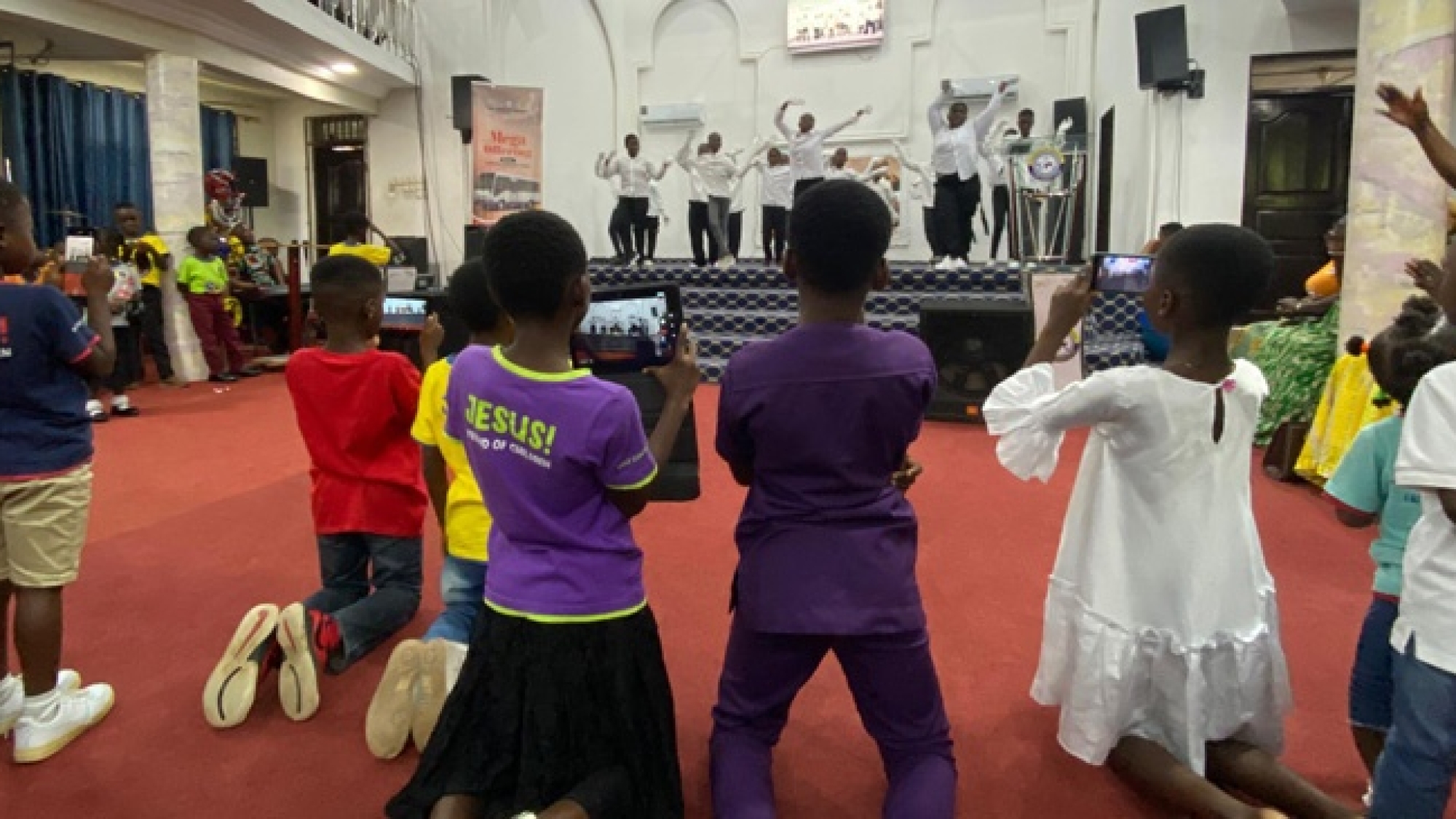
On Sunday, during our Children’s Ministry service, I witnessed something that was both remarkable and a little thought-provoking.

A group of little ones had taken it upon themselves to capture the proceedings—snapping photos and recording videos like seasoned professionals. It was a delightful sight! Imagine children, some barely four years old, crouching and angling their shots so they wouldn’t block the view of others. That’s pure media instinct at work! Clearly, the church has some budding cameramen and women in the making.

But here’s the part that caught my attention: children copy what they see. Every move. Every action. They had clearly observed our media team in action—the squatting, the precision, the focus—and they mimicked it perfectly. It’s both beautiful and a little sobering because it reminds us how closely they are watching us adults.

Now, here’s the gentle concern. We live in a time where everyone wants to be a photographer or videographer simply because we all carry gadgets that can do the job. It’s one thing at a press conference, but during a church service, it can easily become distracting. Let’s leave the capturing of moments to those designated for it. After all, not every prayer, dance, or worship moment needs to be on our personal camera roll.

Don’t get me wrong—I’m not frowning at the children. In fact, I admire their passion and creativity! What we need, though, is for us adults to set better examples. If we do, these young ones will grow up knowing when and how to use their gifts properly.

For now, I celebrate them. What I saw today was more than play; it was raw talent. And if we nurture it well, the church will have an amazing crop of media professionals in the future.

Written by Prince Kojo Asare (News Editor, Pent Media Centre)

CREATIVITY IN MINISTRY - MAKING TRUTH VISIBLE web

Creativity In Ministry: Making Truth Visible

In today’s media-driven culture, creativity is often reduced to performance, something designed to catch the eye or impress an audience. But in ministry, creativity carries a different calling. It’s not primarily about flair; it’s about faithfulness. It’s not about aesthetics; it’s about encounter. In a world saturated with visuals, videos, and endless content, it’s easy to assume that creativity in ministry is about keeping up, making things look polished, modern, and appealing. But for the Church, creativity is not just decoration. It’s a revelation. It’s a sacred tool that helps people experience God in ways that are both deeply spiritual and profoundly human. True ministry-driven creativity makes truth visible. It opens hearts, stirs souls, and invites people into moments of divine encounter, not through spectacle, but through Spirit-led expression.

A few reflections to offer:

1. Creativity as a Tool for Revelation

Before creativity was a strategy, it was a divine attribute, God’s first act of revelation. From the intricacies of nature to the poetry of scripture, His creativity reveals His character. As Psalm 19:1 declares, “The heavens proclaim the glory of God,” and Romans 1:20 reminds us that “For since the creation of the world God’s invisible qualities, His eternal power and divine nature have been clearly seen, being understood from what has been made…”
This means creativity isn’t something we add to the Gospel; it’s woven into how God has always revealed Himself to the world. When we create, whether through design, music, storytelling, or media, we reflect His image and participate in His mission to make truth known. In ministry, creativity serves as a sacred bridge between the eternal and the everyday, helping people see God more clearly through sermon visuals, testimony videos, or spoken word pieces that open hearts to truths that might otherwise be overlooked.

2. The Gospel Deserves More Than Good Design

Excellence is not optional in the kingdom of God; it’s an offering. But excellence doesn’t always mean having the trendiest design or the biggest budget. It means giving God and His people our very best. As Colossians 3:23 reminds us, “Whatever you do, work at it with all your heart, as working for the Lord.”  In ministry, great design and quality content are not ends in themselves; they are tools to communicate the Gospel with clarity and care. Our goal is not to impress but to illuminate, creating beauty that serves truth rather than distracts from it. When our creative work amplifies the message instead of overshadowing it, we help people not just see but understand. So before publishing that design, video, or post, ask yourself: Is this serving the message, or just trying to be impressive?  When we create with purpose, we’re not just making things look good—we’re helping people see God more clearly.

3. Making the Invisible Visible

Jesus didn’t deliver abstract theological lectures. He told stories, drew in the dirt, pointed to fig trees, and held up coins. His parables painted vivid pictures because He understood that spiritual truths often need visible handles. As Mark 4:34 notes, “He did not say anything to them without using a parable.”  In the same way, our creative work in ministry helps people visualize the invisible grace, hope, redemption, and love. A baptism video doesn’t just show water; it reveals resurrection. A sermon graphic sets the tone for expectation. A worship lyric video or song bridge can stir hearts before a single word is preached. Creativity becomes a lens through which truth is magnified, helping people not only hear the Gospel but experience it.

4. Creativity That Points to Christ

At its best, creativity in ministry becomes invisible, not because it lacks beauty, but because it so clearly reveals Jesus. When our work is rooted in Scripture and guided by the Holy Spirit, it becomes a window, not a mirror, revealing Christ rather than reflecting ourselves. As Matthew 5:16 reminds us, “Let your light shine before others, that they may see your good deeds and glorify your Father in heaven.”  Creativity is powerful, but it must be surrendered. Our colours, compositions, lyrics, and lighting cues aren’t just artistic choices; they’re instruments of revelation. The goal isn’t applause, but alignment. Every element we create should point people to Jesus, not to us. So, ask yourself: Does this inspire transformation or just admiration? Does it point people toward Christ or toward me? When we offer our creative gifts to God, He uses them not just to impress, but to draw hearts to Himself.

5. Creativity as Ministry, Not Just Media

It’s tempting to view creative work in the church as “supporting content.” But creativity is a ministry in its own right. The person writing the social media post is a communicator of God’s hope. The video editor crafting a baptism testimony is a storyteller of redemption. The graphic designer working on a youth retreat flyer is helping teenagers meet Jesus. “Each of you should use whatever gift you have received to serve others…” —1 Peter 4:10 (NIV). This mindset shift is vital: creativity in the church isn’t a side hustle for the talented. It’s a calling for the faithful.

Encouragement for Church Creatives: Your Photoshop file is a canvas of hope. Your lyrics are pathways for worship. Your stage design is a setting for divine encounter.

Final Thoughts:

Creativity in ministry isn’t just about making things look good—it’s about making truth visible. It’s about transforming pixels, words, and melodies into portals for encounter, helping people see the Gospel, feel the presence of God, and understand His love in ways that words alone can’t always express. It’s about making the eternal accessible, the invisible visible, and the unseen Saviour seen. Whether you’re behind a camera, designing a flyer, writing a script, or leading worship, remember: your creativity is a calling. You are not just a creative—you are a messenger. So, keep creating. Keep praying. Keep crafting work that points beyond itself to the One who is truth, beauty, and grace embodied. Let your creativity rise not as performance, but as worship. As Ephesians 3:20 reminds us, “Now to him who is able to do immeasurably more than all we ask or imagine…”  trust that God can use your creative offering to do far more than you can see. Keep Creating with Purpose.

Written by Deacon Seth Mensah Odifo (Head of Media, Arts and Sports, HUM)

THE SIGNAL IS STRONG – CHECK YOUR ANTENNA! web

The Signal Is Strong – Check Your Antenna!

While reflecting on how televisions receive channels through antennas, I realized that in many cases, the problem is not with the TV or the decoder, but with the antenna. This simple analogy holds a deep spiritual truth. Often, the issue in our spiritual growth is not the Word being preached, but our reception of it.

Many believers point fingers at preachers for their lack of growth. But what if the preacher is sound in doctrine, diligent in study, and accurate in delivery – yet the hearer remains unchanged?

This scenario highlights a critical reality. Spiritual growth does not occur merely because sound doctrine is preached; it occurs when that sound doctrine is properly received and applied.

A viable seed can only flourish in fertile soil. Likewise, even the most powerful sermon, if not received with the right heart and attitude, will not produce growth. Sometimes, the issue is not in the preaching—it is in the posture of the listener.

Time for Honest Reflection

Consider these questions:

  1. How do you receive the Word of God? Is your heart open and attentive, or are you distracted and disengaged?
  2. Do you listen to the Word for others rather than yourself? When the Word confronts or corrects, do you see it as a message for someone else, or do you allow it to examine your own life?
  3. Is your focus only on writing notes without reflecting on the message? Do you revisit your notes prayerfully, or do they gather dust without impact?
  4. Are you so caught up in “serving” during church services that you miss the sermon altogether? Ministry involvement is vital, but not at the expense of your own spiritual nourishment.

Do not Waste the Shepherd’s Effort

When God blesses you with a faithful and gifted teacher of the Word, it is your responsibility to receive, reflect, and grow. The skill of a good shepherd should not be wasted on poor listeners. Be intentional about your growth.

Be a fertile ground for the Word. Be teachable. Be transformed. The signal is strong – check your antenna!

Written by Elder Emmanuel Baidoo Madugu, Michel Camp District Youth Leader

A TRIBUTE TO ELDER J. K. ARKOH - A PILLAR OF THE CAPE COAST AREA MEDIA MINISTRY wev

A Tribute To Elder J. K. Arkoh: A Pillar Of The Cape Coast Area Media Ministry

As I reflect on my journey as the Cape Coast Area Media Pastor, I am reminded of the instrumental role Elder J. K. Arkoh has played in the Media Ministry of The Church of Pentecost, Cape Coast Area. Since my appointment in 2018, I have had the privilege of working alongside this dedicated servant of the Lord, and I must say, his commitment to the propagation of the Gospel is truly inspiring.

Elder Arkoh’s humility, approachability, and visionary leadership have made him a beloved figure in the Central Region and beyond. His selflessness and willingness to cooperate with pastors and leaders have been a blessing to many. As a knowledgeable student of the Word, he has been a valuable asset to our ministry.

One of Elder Arkoh’s greatest strengths is his ability to use the media to spread the Gospel. Through his work on Radio Central (GBC) and ATL FM, he has reached countless people in the Central Region, sharing the love of Christ with a wide audience.

I often refer to Elder Arkoh as “The Media Pastor,” and his dedication to our ministry is reminiscent of the biblical character Caleb, who followed God wholeheartedly (Numbers 14:24). Like Caleb, Elder Arkoh’s life and character are a testament to the power of faithfulness and obedience.

As we celebrate Elder Arkoh’s contributions to the Kingdom of our Lord Jesus, I pray that God will grant him long life to continue to expand the Kingdom business. May his legacy continue to inspire and uplift the body of Christ for generations to come.

Let us appreciate this gallant worker in the Kingdom while he is still with us, that we may sing his praise while he can still hear and see.

Written by Pastor Ebenezer Ayivi Okoampah, Cape Coast Area Media Pastor

A BODY UNITED web

A Body United: A Glimpse Of Heaven At The All Ministers’ Conference

The third edition of the All Ministers’ Conference (AMC) has begun at the Pentecost Convention Centre (PCC), Gomoa Fetteh, and the early signs are nothing short of remarkable. From the arrival to the opening session, it has become clear that this gathering of over 448 denominations is more than just another programme—it is a living testimony that the Church in Ghana can truly stand as a body united.

Already, the atmosphere is different. Doctrinal walls have given way to fellowship, denominational labels have faded into the background, and the love of Christ has taken centre stage.

Ministers from diverse traditions have blended seamlessly, painting a picture of heaven—where no denomination exists, only the redeemed, united in worship of the Lamb.

And indeed, this is what strikes the heart most deeply: it feels like heaven. For once, it does not matter who came from where or which church they represent. In heaven, there will be no Baptist, Methodist, Pentecostal, Charismatic, or Catholic. There will only be the blood-washed, gathered before the throne, lifting one voice in adoration to Christ. The All Ministers’ Conference is giving us a foretaste of that reality.

It has been striking to observe: no one cares about seating arrangements, liturgical styles, or who emphasises offerings and who does not. Instead, there is a shared commitment to the One who unites us all—Jesus Christ.

The queues at the dining halls capture this perfectly: men and women from various churches eating the same food, drinking the same water, and sitting shoulder-to-shoulder with no distinctions. Truly, what unites us is far greater than what divides us.

These early moments offer a profound lesson. Like the people at Babel, whose unity made them unstoppable, the Church—once united—cannot fail. And with the conference theme, “Building the Church for Impact” (Matthew 16:16-18), already resonating strongly, there is no doubt that the coming days will deepen this sense of oneness and set the stage for a more impactful Church in Ghana and beyond.

What we have seen so far is only the beginning. If these first steps are anything to go by, then the future promises a Church knit together in love, walking in power, and poised to make an indelible mark on the world.

The event is being organised by The Church of Pentecost in collaboration with the Lausanne Movement, Ghana.

Written by Prince Kojo Asare (News Editor, Pent Media Centre)

THE HEALTHY SHEPHERD web

The Healthy Shepherd: Sustaining Ministry With Wisdom

There is a quiet ache that hides behind the pulpit and the prayer circle. It does not always show in public, but it weighs heavily in the late nights, the unanswered questions, and the constant demand to be “strong” for everyone else. Ministry is a sacred gift, yet without wisdom and rest, even the most gifted risk burning out. Too often, those who give the most guard the least for themselves.

Stress in ministry is rarely sudden; it accumulates over time. It comes through small sacrifices, ignored warning signs, and the quiet belief that “the work of God cannot wait.” Sometimes it appears as performance stress, the pressure to deliver every sermon with fresh revelation: “Not that we are competent in ourselves…but our competence comes from God.” (2 Corinthians 3:5). At other times it is relational stress, absorbing the unspoken criticisms or conflicts within the congregation: “If it be possible, as much as lieth in you, live peaceably with all men.” (Romans 12:18). There is also administrative stress, with its endless budgets, projects, and compliance demands; and personal stress, where family and health quietly suffer. An even more deceptive still is eustress – the excitement of revival meetings, fundraisers, and ambitious projects. Noble as they seem, if unchecked they drain the body and spirit. Passion without pacing becomes peril.

Yet Scripture offers timeless wisdom. When Moses tried to bear the nation’s weight alone, Jethro warned him: “You will wear yourself out… The work is too heavy for you; you cannot handle it alone.”– (Exodus 18:18). Jesus Himself modelled balance: “But Jesus often withdrew to lonely places and prayed.”– (Luke 5:16). His invitation still calls: “Come to me, all you who are weary and burdened, and I will give you rest.”– (Matthew 11:28). These are not suggestions but strategies for sustaining ministry.

The way forward is clear. Delegation is not abdication; it is multiplication. Like Moses, pastors must learn to empower others, trusting capable leaders to share the load. Rest is not weakness but stewardship; even Christ withdrew to renew His strength. Pastors must also guard their bodies with exercise, nutrition, medical care, and their souls with prayer, Scripture, and accountability. Leadership should move from control to cultivation, creating a culture where responsibility is shared and the pastor is freed to focus on depth. Above all, ministry must flow from intimacy with God. A busy pastor without devotion soon discovers his reservoir is empty.

Healthy routines sustain the long journey: prayerful mornings, weekly disengagement from ministry concerns, family-centered evenings, reading and learning, and seasonal retreats. These are not luxuries but lifelines. The true goal of ministry is not only to complete assignments but to finish well. A pastor’s success lies not just in growing a congregation but in modelling a God-centered, sustainable life. The sheep thrive best under a healthy shepherd.

In the end, the legacy of a faithful servant is not burnout but wholeness. As Paul declared: “I have fought a good fight, I have finished my course, I have kept the faith.”(2 Timothy 4:7).

Written by Kojo Essuon

THE PRIDE OF A WATCH web

The Pride Of A Watch: A Reflection On Purpose And Usefulness

One morning, I arrived at work only to realise I had forgotten to wear my newly purchased watch. As someone who genuinely enjoys wearing timepieces, this minor oversight unsettled me more than I had anticipated. Fortunately, I discovered my old watch tucked away in my bag and promptly fastened it to my wrist. Though it was rather worn—and I often felt self-conscious wearing it—I was nonetheless grateful to have something to accompany me through the day. In that moment, I imagined the watch whispering, “At last, I’ve been worn.” It felt like a quiet celebration of being chosen once more.

Later that day, while heading home, a thought echoed in my mind: “The pride of a watch is to be worn.”  Strange as it may sound, it struck me deeply. A watch, no matter how beautiful or functional, finds its worth in being used by its owner. It fulfils its purpose—and takes pride in doing so—especially when other options are available.

This simple experience reminded me of a profound truth: in every existence, there is a maker, a master, and a purpose. In other words, for every created asset, there is a user or an owner. And just like the watch, we too are fashioned with intention. Life may burden us with worries and distractions, but Ecclesiastes 12:1 exhorts us to “remember our Creator in the days of our youth.”  This is not merely a suggestion—it is a necessity.

As we reflect on our relationship with the Creator, we must also be mindful of our availability to be used by Him. Just as a watch finds pride in being worn, so too should we find joy in being considered worthy and useful to our Creator. Our true pride as human beings lies in knowing our purpose and fulfilling it. When we do, our Maker is glorified (Matthew 5:16).

A good name, they say, is better than riches—and history affirms this. Generations pass, yet we remember a few, not for their wealth, but for the legacy of their name. The philosophy that “service to humanity is service to God” is one I urge every reader to embrace. Life is fleeting, and this moment is all we truly possess.

Though we are not privy to the mysteries of the afterlife, Hebrews 9:27 offers a glimpse: “It is appointed unto men once to die, but after this the judgment.” With this in mind, let us take pride in being available for the Master’s use. It is a privilege—and it is worth it.

Written by Bismark Owusu Ampong

FAITH OVER DOUBT web

Faith Over Doubt:  Trusting God In Uncertain Times

Every Christian youth encounters moments when their faith is tested. For some, it may be unanswered prayers for healing, the disappointment of failing an exam despite hard work, or the struggle of witnessing corruption and injustice in society. In such times, doubt creeps in with whispers like, “Maybe God is not listening. Maybe His promises aren’t true.”

This tension between faith and doubt is not uncommon in the Christian life. While faith anchors believers in God’s promises, doubt tries to uproot them. The real question is not whether doubt will come – it certainly will – but how the Christian youth responds when it does.

Faith, according to Hebrews 11:1, is “the substance of things hoped for, the evidence of things not seen.” It is trusting God even when the outcome is unclear. Abraham left his homeland without knowing where he was going (Genesis 12), and the woman with the issue of blood declared, “If I just touch his clothes, I will be healed” (Mark 5:28). Faith is rooted in God’s unchanging character, not in circumstances.

Doubt, on the other hand, is the hesitation that arises when one questions God’s promises. It is not the absence of faith but the presence of fear and uncertainty. In Matthew 14:29–31, Peter began to walk on water by faith, but when he focused on the wind and waves, doubt caused him to sink. Like Peter, many youths stumble when they focus on their problems rather than on God’s power.

Faith and doubt, therefore, constantly wrestle within. Faith says, “God can.” Doubt replies, “But what if He doesn’t?” James 1:6 cautions that the one who doubts is like a wave of the sea, “blown and tossed by the wind.” Faith brings stability, while doubt breeds instability.

To overcome doubt, the Christian youth must first know God’s Word, for “faith comes by hearing, and hearing by the Word of God” (Romans 10:17). They must also learn to pray honestly, as the father in Mark 9:24 cried out, “Lord, I believe; help my unbelief!” Remembering God’s past faithfulness, as David did before confronting Goliath (1 Samuel 17:37), strengthens trust in present battles. Staying connected to fellow believers also provides encouragement (Hebrews 10:25). Ultimately, faith is not always a feeling – it is a deliberate choice to trust God’s promises, even when circumstances suggest otherwise.

In conclusion, both faith and doubt will present themselves, but one will prevail depending on where believers place their focus. Doubt looks at the storm, but faith looks at the Savior. Doubt shakes, but faith anchors. As Paul affirms, “For we walk by faith, not by sight” (2 Corinthians 5:7).

The next time doubt whispers, may Christian youth confidently respond: “I trust God.”

Written by Elder Gideon Annan (Downtown District Youth Leader)

CALLED TO RESCUE- BEYOND THE CHURCH WALLS web

Called To Rescue: Beyond The Church Walls

“Those who had been scattered preached the word wherever they went.” – Acts 8:4

The call to evangelism is not reserved for pulpits and crusade grounds. Every believer carries the light of Christ into daily life whether in a shop, a classroom, a trotro, or on social media. Under the ‘Possessing the Nations’ agenda of The Church of Pentecost, God is calling His people to live as witnesses wherever they find themselves.

Colossians 3:23 reminds us that “Whatever you do, work at it with all your heart, as working for the Lord.” A Christian’s work ethic, honesty, and integrity can be the loudest sermon. In a society where corruption is common, a life of truth and godliness shines brightly. Before people will hear your gospel, they must first see your Jesus in you.

Words also matter. 2 Timothy 4:2 urges us to “preach the word in season and out of season.” A simple question, a caring comment, or a testimony shared in conversation can open doors to salvation. In today’s world, this includes the digital space. Our WhatsApp statuses, TikTok videos, or even a kind reply online can be pulpits in God’s hands.

Jesus said in Matthew 5:16: “Let your light shine before others.” Small acts of faith – returning excess change, refusing to cheat, forgiving instead of retaliating – can disciple others silently but powerfully. Every believer is a living sermon.

Above all, rescue begins with prayer. Luke 10:2 reminds us that the harvest is plentiful, but the workers are few. Prayer gives us compassion and direction, and the Spirit leads us to hearts ready for the gospel. No one is beyond God’s reach, and through prayerful obedience, even the hardest lives can be transformed.

Souls are perishing daily – some silently, some openly. This rescue mission is not for pastors alone, but for every believer. In classrooms, offices, marketplaces, and online spaces, God is sending you. Let your life, your words, and your prayers point others to Christ.

Written by Elder Isaac Owusu-Ansah, Sokode Gbogame District, Ho Area