

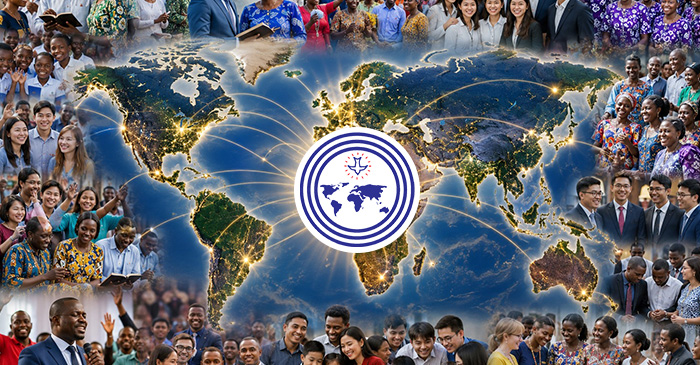
Many years ago, missionaries from Europe — including the Basel and Bremen missionaries — travelled to Ghana and other African countries to spread the gospel.
In Ghana, they planted churches, established schools, built healthcare facilities, and laid institutional foundations that transformed communities and shaped generations.
For decades, Africa was viewed primarily as a mission field — a continent receiving the gospel from the outside world.
Today, that story has changed
Ghana, once a recipient of missionary enterprise, has become a missionary force. The nation that once welcomed foreign missionaries is now sending them, and at the forefront of this remarkable shift is The Church of Pentecost.
Born from the seeds of early missionary work, The Church of Pentecost has evolved into one of the fastest-growing Christian movements in the world, carrying the gospel far beyond its national borders.
Present in 211 countries and territories, the Church is increasingly shaping conversations around global Christianity, leadership, mission strategy, and faith-based community transformation.
Its expansion represents far more than numerical growth. It reflects a changing centre of gravity in global Christianity.
This is not expansion driven by institutional ambition or charitable enterprise. It is a Holy Spirit-led movement grounded in evangelism, discipleship, and cultural engagement.
By 2025, the Church had deployed approximately 2,000 missionaries across the world, spreading the Christian faith in diverse cultural settings.
Perhaps nothing captures this story better than seeing the Chairman of The Church of Pentecost, Apostle Eric Nyamekye, being welcomed into Maasai culture and dressed in traditional attire — a symbolic gesture that reveals how the gospel is influencing cultures and systems across Africa and other parts of the world.
THE HISTORY OF THE MAASAI
The Maasai, found mainly in Kenya and Tanzania, are one of Africa’s most culturally distinct communities. Known for their red garments, beadwork, cattle-based livelihood, and strong communal identity, they have preserved their traditions across generations despite modern pressures and urban change. Among the Maasai, clothing is not merely decoration; it is communication.
When a visitor is dressed in Maasai attire, it is a powerful sign of honour and acceptance. It signifies that the visitor has been received with fellowship and respect.
Consequently, when Apostle Eric Nyamekye was dressed in Maasai clothing during his recent visit to Kenya and Tanzania, it was more than symbolism. It was a cultural embrace. It demonstrated that when the gospel enters a community, it does not need to erase identity. Instead, it can walk gently into it, understand it, and speak through it.
In that moment, wrapped in the colourful attire of one of Africa’s most iconic communities, Apostle Nyamekye did not merely wear a cultural garment. He wore the story of a people — their heritage, resilience, and aspirations.
Above all, it reflects the Church’s growing commitment to building a Christianity that is multicultural, multiracial, and multigenerational.
During the visit, Apostle Eric Nyamekye also made a simple but powerful statement that captured the heart of the Church’s mission. He said they were not in Kenya to teach people how to worship God, but to encourage them to know God more and worship Him more.
That message was important. It shifted the focus away from instruction and control, and toward encouragement and relationship.
The gospel did not arrive to replace Maasai identity, but to engage it. It speaks to a people who already understand community, sacrifice, leadership, and belonging — values that align closely with Christian teaching when expressed in their purest form.
The Maasai world, with its strong sense of unity and tradition, becomes a living example of how the gospel and culture can meet without conflict when handled with respect
At this meeting point, something important is revealed: Christianity does not grow by removing culture, but by transforming lives within culture.
This is why the honour bestowed upon a visiting church leader through Maasai tradition carries such significance. It reflects relationship, not distance; acceptance, not rejection. It demonstrates that the gospel can be received in forms people understand best — through their own cultural language.
It is the same Christ, carried by different peoples, expressed in different languages, and lived out within different cultures.
The Maasai encounter becomes a mirror of this truth. It shows that Christianity is not bound to one place or one people. It can be received in the savannahs of East Africa and carried from there to the cities of Europe. It can move from rural communities in Tanzania to global cities in America. It can travel from African villages into international spaces without losing its essence.
Written by Ps. Dr. Felix Dela Klutse, Pent Media Director.