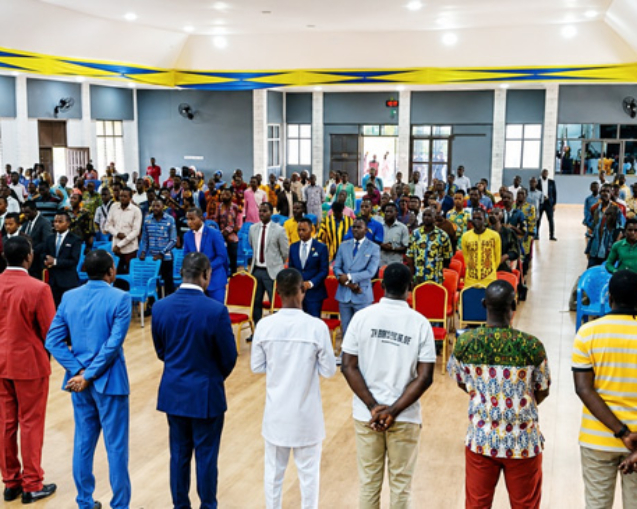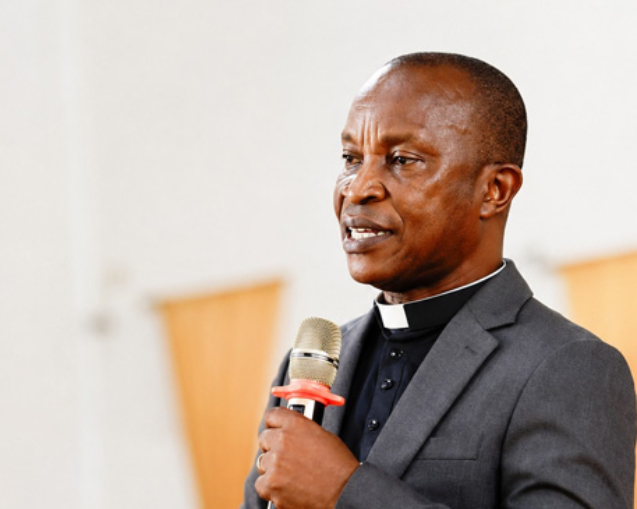



A linguist and interpreter trainer, Dr Cyril Mawuli Honu-Mensah, has reminded church interpreters that interpreting in the church carries both linguistic and spiritual responsibilities.
Speaking on the topic, “Interpreting Techniques in the Church Setting,” Dr Honu-Mensah explained that sign language interpretation in church is not merely a linguistic task but a sacred duty.
“Interpreting in church has both linguistic and spiritual connotations; it has an extra responsibility to it,” he said, adding, “As a sign language interpreter, you are conveying a divine message, and so the context should be preserved. You don’t just interpret in church; you are giving a spiritual message to the deaf. If the vessel is unclean, the message will be corrupted too.”
He emphasised the importance of accuracy and faithfulness in interpretation, noting that interpreters must ensure that the message they deliver remains true to the speaker’s intent.
“The content must be accurate from the source; it must be close or exact to the speaker. If you dilute the message, theological inaccuracy occurs,” he warned.
Dr Honu-Mensah also highlighted the need for interpreters to stay emotionally and culturally connected to the deaf community, adding, “The interpreter can diffuse a message to the deaf consumer by not being emotionally in tune and accurate. You must operate within the cultural context of the deaf consumer, which is church-specific.”
He further noted that effective interpreting requires a balance of ethics, linguistic skill, and theological understanding.
“Ethics also come into play in the interpreter’s mind. All these processes go on at the same time, and you still have to maintain your theological acuity as a church interpreter,” he explained.
Outlining practical techniques for church interpreting, Dr Honu-Mensah mentioned “explanatory pausing” – the practice of briefly pausing to clarify complex theological or metaphorical concepts. He explained that every new term must be explained after pausing. Most interpreters skip valuable insights because they don’t apply explanatory pausing, he observed.
He also discussed “simultaneous interpreting,” which involves real-time translation and is particularly effective when interpreters are familiar with a preacher’s speaking pattern.
Dr Honu-Mensah further elaborated on role-space management, which involves using movement, facial expression, and eye gaze to make interpretation more vivid, especially in plays or dramatic church presentations. He encouraged interpreters to use expansion techniques by adding visual imagery for clarity and team interpreting, where two interpreters alternate during services for accuracy and stamina. He also cited the Gish Model, Colonomos Model, and Non-Manual Markers as some essential theoretical frameworks for effective church interpretation.
Touching on the role of interpreters, Dr Honu-Mensah described them as “conduits and interventionists” who must prepare spiritually and remain in tune with the Holy Spirit. He also addressed the ongoing debate between service and professionalism, asking whether interpreting should be viewed as paid professional work or a voluntary act of service to God. “That understanding greatly influences one’s attitude and demeanor toward work,” he said.
Concluding his presentation, Dr Honu-Mensah reminded participants that the ministry of interpreting is a divine calling that requires commitment and sacrifice.
“This ministry is a call; get a heart and be ready to sacrifice on many levels, because your labour in the Lord shall not be in vain,” he encouraged.
PENT NEWS