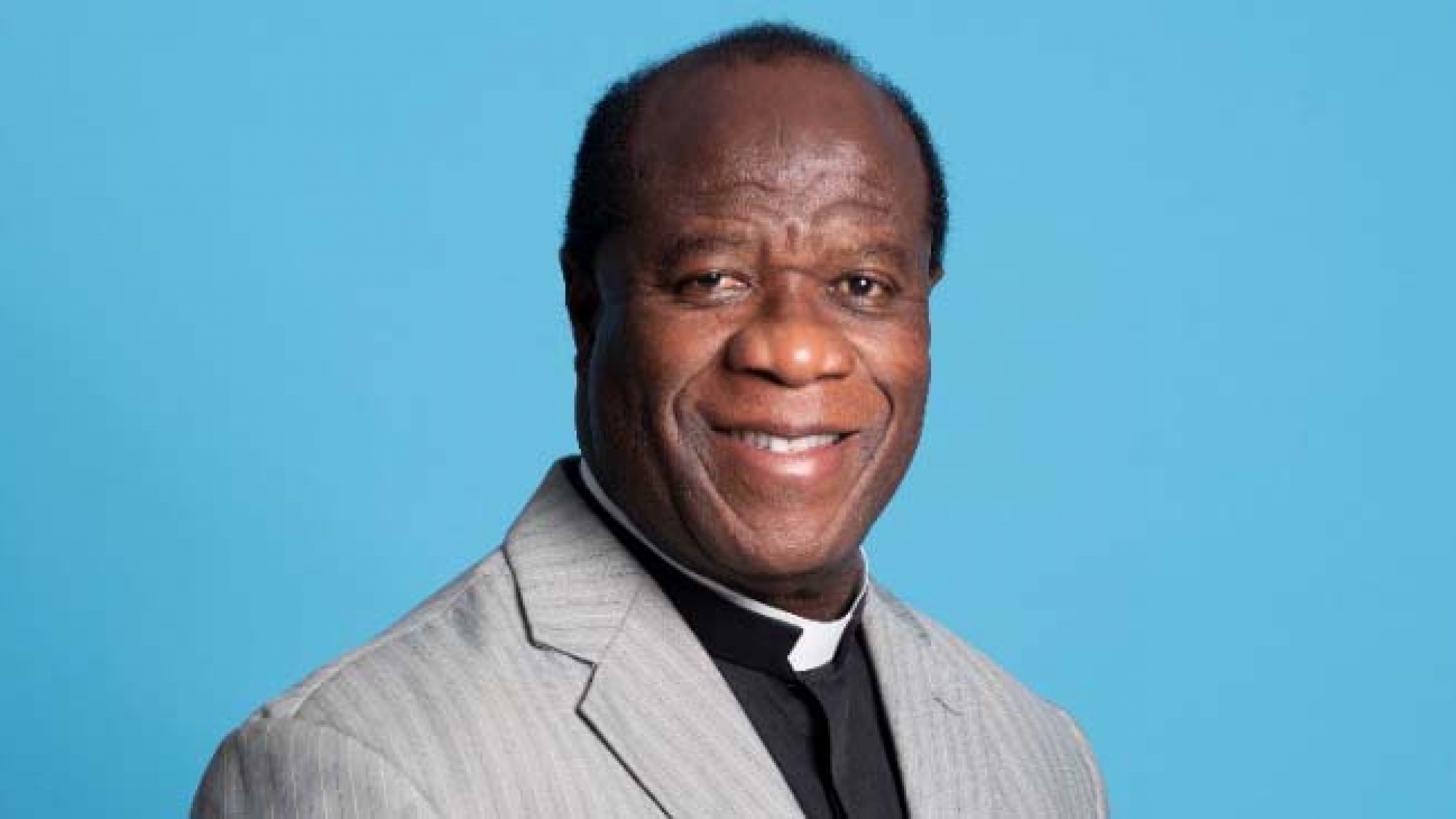


Pastor James Orhin Agyin

Real-Time Response To The Calling: Rev. James & Sophia McKeown

Real-time is the actual time during which a process or event occurs. It also means instantaneously, or at the moment something happens. Words used for the opposite of this expression are delayed, late, behind, deferred or overdue. The dictionary defines calling as an inner impulse toward a particular course of action, especially when accompanied by conviction of divine influence. It can also be the vocation or profession in which one engages. Responding to the calling in real-time in the context of this article is, therefore, responding instantaneously in the affirmative to God’s divine call for a specific task within a time during the days of one’s lifetime. It is not restricted to the calling into the full-time ministry of a church. It encompasses the work of the laity in any para-church organization, those called to be Tent Ministers and everyone assigned to execute specific tasks by God in His vineyard. God is, therefore, the One who does the calling and is usually through and confirmed by fellow humans no matter how one hears Him audibly. The strong innate feeling, intuition or signals we pick from others when we begin to live up to our Christian commitments does not necessarily metamorphose into a calling into the full-time ministry. Grey as this area may be, God is the best and ultimate judge in such matters bothering on the individuals in question.

Humankind’s general response to the calling of God to execute specific tasks on His behalf has usually been fraught with loads of inadmissible excuses. A cursory diagnostic of this phenomenon indicates something more severe than mere sabotage, spiritual shyness, fatigue or laziness. Humans somehow suddenly tend to discover their weaknesses and incapabilities when God calls them to fix something for Him in His vineyard. “Who am I?” “Why me?” “How do I do it, Lord?” “Wait for me, Lord” and “I am not ready” are some of the rhetorics we courteously adopt in turning down God’s divine appointments for us. We are, therefore, most likely to respond late even when fortunate to be implored upon by others to sit up. Around 1513 B.C.E, God called Moses out of the Middle East, precisely, Midian, to Egypt to rescue the Israelites from the grip of Pharaoh and bring them to Canaan, a Land He had promised to give them (Exodus 3:8).

In Exodus 3:11, Moses said to God, “Who am I that I should go to Pharaoh and bring the Israelites out of Egypt?” The above response by Moses was not unexpected because 40 years before that day, he had been on Egypt’s most wanted list as a fugitive. Moses was not in his best psychological state during this period because he referred to himself as “a stranger in a foreign land” according to Exodus 2:22. Besides, at the age of 80, the usual feeling of retirement or having finished contributing his quota to Egypt and the inhabitants of Midian would have set in. Apart from the feeling of having lost touch with his fellow Israelites who knew him as a murderer for close to 40 years, he also had a speech disability or impairment of a sort. He told God, “Pardon your servant, Lord. I have never been eloquent, neither in the past nor since you have spoken to your servant. I am slow of speech and tongue” (Exodus 4:10). It is, therefore, not surprising that Moses would ask God over and over again, “Who am I?”. We can now appreciate why God had all the patience to deal with every single one of Moses’ legitimate concerns, at least per human standards. God took time to ease every one of his concerns, and when it appeared Moses wanted to hide behind his speech impairment as an excuse, God asked Moses, “who makes a person’s mouth? Who decides whether people speak or do not speak, hear or do not hear, see or do not see? Is it not I, the LORD?” (Exodus 4:11). God’s response to Moses has loads of wisdom, knowledge, discernment and direction for all who use any physical, cultural, academic, or socio-economic challenge to refuse to respond to the call in real-time.

Three thousand four hundred forty-nine (3,449) years after calling Moses, God called Rev. James Mckeown from England to the then Gold Coast in West Africa to rescue millions from this perishing world. Like Moses, it is on record that when God called Rev. James Mckeown through a prophecy at a large Apostolic convention in England, he initially dragged his feet for close to fifteen months. He thought his lack of formal training or education would hinder him in his missionary journey. Thank God his wife Sophia urged him to respond, which they did in real-time. The next logical question after “Who am I?” is “How do I do it?” Unfortunately, some still allow this fearful rhetoric to deny them their God-given heritage or, better still, bring about unnecessary delays in responding to the call in real-time. Moses said to God, “Suppose I go to the Israelites and say to them, The God of your fathers has sent me to you, and they ask me, What is his name? Then what shall I tell them? … What if they do not believe me or listen to me and say, The LORD did not appear to you? … Pardon your servant, Lord. Please send someone else.” (Exodus 3:13; 4:1, 13). Moses was primarily asking God, how do I do it?

The answer to the question of the “hows” lies in the bosom of the Almighty God with the singular honour of calling individuals to execute specific tasks in His vineyard. So, when Moses thought he had a difficult question for God to answer, God replied, “Now go; I will help you speak and teach you what to say. But Moses said, “Pardon your servant, Lord. Please send someone else” (Exodus 4:12). God heard what Moses enumerated as challenges, but He knew what He had invested in him. Moses did not need anyone as his spokesperson for that task per God’s original plan when He called him. The mission was not a soccer commentary at Cairo International Stadium, which demanded a person who could run the mouth with uninterrupted words per minute. In that case, Moses could have been justified as a misfit for that purpose because he was a stammerer. The call to divine duties is a kind that demands all seriousness from those fortunate to be called.

God is the one who equips, helps and works through human vessels. It is not for the appointees to have all answers to the “hows” when they respond positively to the call. It is, therefore, not surprising that God became angry with Moses. Aaron finally became Moses’ attached condition for accepting the mission to Egypt. Aaron’s extra luggage as Moses’ spokesperson and some of its negative consequences from Egypt to the boundaries of the Promised Land is a lesson for all who set conditions before responding in real-time (Exodus 32:2-4; Numbers 12:1-2). It is worth noting that anything designated as a condition to respond to the call in real-time almost always becomes an albatross around the necks of the called during the days of their ministry lives.

Others also ask God, “Why me?” when God calls and expects them to respond in real-time. Questions like these usually come when prospective servants of God try viewing their weaknesses in the light of other people’s strengths. Quite unfair to themselves, they tend to shy away from the calling by suggesting other people they deem suitable for the task. They forget what the Bible speaks about God in 1 Samuel 16:7. It reads, But the LORD said to Samuel, “Do not consider his appearance or his height, for I have rejected him. The LORD does not look at the things people look at. People look at the outward appearance, but the LORD looks at the heart.” When God called Jeremiah in his late teens, he told God, Alas, Sovereign LORD,”  “Ido not know how to speak; I am too young.” (Jeremiah 1:6). Jeremiah was probably comparing his age, stature and lack of experience in the light of the constituents God was sending him. He was, therefore, literally asking God, “Why me?”. One question that naturally bounces back to such people is; If not you, who else?

God’s response suggested Jeremiah would work amongst very intimidating, rough, fearsome and spiritually rusty characters during the period of Israel’s captivity in Babylon (Jeremiah 1:7-8; 17-19). Meanwhile, before he even told God he was too young for the task God was assigning him, God had said to him that He knew him before forming him in the womb. To convince him that he was far capable of the task, God added, “…before you were born I set you apart and appointed you as a prophet to the nations” (Jeremiah 1:4-5). The above investments the Lord made in Jeremiah before forming him settle the question of one’s suitability for purpose when called by God for any given task. What other time could be the right time for someone appointed as a Prophet before being born other than his boyhood age in his late teens? Anytime beyond the period of Jeremiah’s call would lag far behind God’s calendar for his life. In like manner, rather than asking “why me?” Believers must begin lacing their booths to hit the ground running anytime God calls because He prepares right from before we are even formed in our mother’s wombs. Thank God Jeremiah quickly dressed up and responded to the call in real-time. Pastor James and Mrs Sophia Mckeown were present at an Elim meeting when someone prophesied that someone from that group would go to Africa. They were, however, not present at the large Apostolic convention in England when their names were explicitly mentioned through another prophecy to go to West Africa as missionaries. Naturally, the question that quickly comes to mind is why God would bypass all the seasoned ministers at that convention and call an absentee and his wife for such a Herculean mission. It is, therefore, not surprising that his wife Sophia had to impress upon him severally to dress up and jump onto the bandwagon. Thank God for the life of Mrs Sophia Mckeown, and no wonder the pivotal role spirit-filled women are playing in The Church of Pentecost today. They will forever be a force to reckon with.

Some also do not necessarily decline the calling but respectfully tell God to wait for them to finish what they are doing before attending to the duties of the call. What such people fail to appreciate is the time value not of money but spiritual treasures and profitability in the Kingdom business. In Luke 9:59-62, Jesus called some to follow Him, but the first replied, “Lord, first let me go and bury my father…..and the other said, “I will follow you, Lord; but first let me go back and say goodbye to my family.” The Lord replied to the first, “Let the dead bury their dead, but you go and proclaim the kingdom of God. And to the second, He said, “No one who puts a hand to the plough and looks back is fit for service in the kingdom of God.” The import of Jesus’ response in both cases was for all He calls to prioritize issues concerning His Kingdom over any other activity.

The thought-provoking bombshell He drops was in His second response, which suggested a lack of fitness to make an impact in His Kingdom by those who do not respond in real-time. Jesus calls the attitude of marking time as against responding in real-time a “looking back” posture. Yes, there are many things the called of God leaves behind, which, if allowed, could demand constant attention and end up becoming a distraction to them. Believers have been wondering what at all could have caused Lot’s wife to look back and perish as a pillar of salt. Her reason for looking back is not far fetched. Let us not be surprised by her action because it is the same reason those who tell God to wait for them consider and decide to mark time.

Another fallacy about “time-marking” when called by God for a specific task is the presumption that He will keep that task undone, awaiting us anytime we are ready to take it up. “Wait for me to finish what I am doing” is not a phrase to rehearse as a response when God calls. It smacks of doing God a favour instead of the other way round. It disqualifies one and always finds them on a wrong footing even when it is later considered. The method and manner God substituted King Saul with David, his boy, in executing the task initially assigned to the former should be a lesson to all who have signaled God to wait for them. In 1 Samuel 13:13-14, Samuel said to Saul. “You have not kept the command the LORD your God gave you; if you had, he would have established your kingdom over Israel for all time. But now your kingdom will not endure; the LORD has sought out a man after his own heart and appointed him ruler of his people because you have not kept the LORD’s command.” God always has what we call a plan “B” but is part of His plan “A” in every operation in His vineyard. If the time value of money is given serious considerations in transactions of earthly and perishable things, then God cannot do any less in His Kingdom business. All effort must, therefore, be made to respond to His call in real-time to avoid needless losses.

Unfortunately, some have also developed the nerves in turning God’s calling down entirely for one reason or the other. It is an attitude equivalent to questioning God’s intelligence, sovereignty or wisdom. 1 Corinthians 1:25 declares, “For the foolishness of God is wiser than human wisdom, and the weakness of God is stronger than human strength.” The Lord Jesus illustrated the phenomena of refusing the divine call with excuses by the three gentlemen and their repercussions using the parable of the great banquet in Luke 14:15-24. Per the reading, the reason the first invitee gave for not responding to the calling in real-time was because of a newly bought field he wanted to go and inspect. The other also cited the five pairs of Oxen he had just bought, which needed to be tried on his farm. The most ridiculous of the three was the last excuse which reads, “I now have a wife so can not come.” Do you not think this gentleman had the singular honour of attending that great banquet with his newly wedded wife and even spice their marriage through that occasion? The above excuses for the utter refusal to the giver of life’s call can be summarized as one’s profession, carreer ambitions and family life uncertainties, respectively. Who are we without God? And what at all do we have that the Lord did not give?

The consequences of the “no show” response to God are not funny. Jesus illustrates God’s reaction in verses 21 and 24. It reads, “The servant came back and reported this to his master. Then the house owner became angry and ordered his servant, Go out quickly into the streets and alleys of the town and bring in the poor, the crippled, the blind and the lame. I tell you, not one of those who were invited will get a taste of my banquet.” The Lord, therefore, does not smile at us when we refuse His calling. He gets angry at us per the above reading. He finds our replacement and then vows not to allow those who treat His call with disdain any other opportunity. The excuses the three gentlemen gave lacked the appreciation that they could have still attended to the invite to the banquet in real-time and still taken care of those concerns they had about profession, career, business and family life. Jesus admonishes all to seek first the Kingdom of God, and its righteousness and all the others would fall in place or be added unto us (Matthew 6:33).

Thank God there are also good examples of those who responded to the call to divine assignments in real-time in the Old and New Testaments. When God called Elisha, he took his yoke of oxen and slaughtered them, burned the ploughing equipment, gave the meat to the people to eat and then set out to follow Elijah (1 Kings 19:19-21). Elisha at the time possessed twelve yokes of oxen and was actively driving the twelfth one, unlike the gentleman in Jesus’ parable who had bought just five and was about to try them. Yet Elisha found reason to trust the Lord God who created the oxen and blesses the work of human hands to address all of his present and future needs. In similar terms, some of us today do not have or even enjoy a quarter of the comfort Rev James Mckeown had to sacrifice with his wife Sophia to accept and leave Europe and come and live at Asamankese in 1937. Some of us just cannot imagine leaving the city or metropolitan lifestyle to the smaller towns and the socio-economically deprived parts even within the same country. They would, thus, do whatever it takes to refuse such temporal relocations even if they have to tender in their resignation letters. Driving around some of the environs of even Accra today makes me wonder what would motivate an European to respond to God’s calling in real-time and be stationed at Asamankese in those days. It was just faith, trust and obedience to his Maker; worthy of emulation by all and sundry.

Then came the swiftness with which the Apostles of Christ responded to the calling. Let us never forget they were not idle and depressed members of the unemployed folks or tradesmen association in Galilee. They were workers who did not lack earthly possessions, yet they found it wiser to pursue things of heavenly value. In Mark 2:14, Matthew was at the post as a tax officer when Jesus called him into the full-time ministry. Peter, James and John were equally working when Jesus called them, yet the Bible uses the expression “immediately” and “at once” to describe their real-time response to the call (Matthew 4:18-22;9:9-10).

The following are some of the factors that prevent many from responding to the call in real-time;

  1. Insecurity and fear of the unknown
  2. Transfers and their related discomforts and encumbrances
  3. Lack of appreciation of what is at stake.
  4. Immaturity in the Lord
  5. The discomfort associated with breaking family and relationship ties.
  6. The perception of losing all hopes of ever living a joyful, comfortable life once you decide to respond in real-time.
  7. The complete lack of understanding of the nature of the Caller and His attributes
  8. A weak appreciation of the coming dreadful day of God’s judgment on the nations.
  9. Exaggerated hopes of our financial and Socio-economic lots should we continue in what we were doing before the call.
  10. The sense of inadequacy, unpreparedness and fear of falling or suffering spiritual attacks.

Moses, who asked God during their first encounter, Who am I? had this to tell Joshua at his handing over ceremony, “Be strong and courageous, for you must go with this people into the land that the LORD swore to their ancestors to give them, …… The LORD himself goes before you and will be with you; he will never leave you nor forsake you. Do not be afraid; do not be discouraged.” (Deut 31:7-8). Jeremiah, who was also literally telling God he was too young for the task, also had this to say a few years after responding to the calling, “LORD, I know that people’s lives are not their own; it is not for them to direct their steps (Jeremiah 11:23). Pastor James Mckeown, who did not know how he would fare on the missionary front in Africa due to the lack of formal training and education, entered the Gold Coast, stayed, worked and left with unstained hands or clean sheets. He said at the church’s headquarters during his last visit in 1984, “You are witnesses that my hands are clean.” Wow! What changed? When we respond to the calling to divine duties in real-time, we tend to understand a lot of things over time which has the propensity to cause us great pain and disappointments if we had objected to it. Moses, Jeremiah and Pastor James Mckeown had matured over the period to see how childish they would have been should they have continuously dragged their feet for God to pass them by.

I hear some who God had invested so much over the years citing age, profession, career ambitions, financial insecurity, physical or health challenges, past life, culture, ambition and societal status as excuses for their “no show” when God called. As we mature in God, we would not entertain such spiritually naïve reasons. The antidote, therefore, goes beyond orientation, convincing, coercing or counselling by experienced and matured minds. It is God’s voice of wisdom in igniting our senses to awaken us to the spiritual realities and what is at stake. This consciousness is what brings one from “Who am I” or “Why me” or “How do I do it” or “I am not coming” to the level of “Here am I, send me”.

After responding in real-time, Abraham became known as the friend of God. Moses won the accolade of “God’s face-to-face friend”. Jeremiah won the title as “a prophet ordained in the womb” and Elisha was honored to share the title, “chariots and horsemen of Israel” with Elijah. The 12 apostles of Christ have equally received their appointment letters as the sitting judges going to judge the twelve tribes of Israel at the culmination of the age. Another name given to Pastor James Mckeown is “The giant in Ghana.” The Executive Council of The Church of Pentecost, in the last sentence of their tribute to him, said, “Never has any human life been so willingly dispensed with as an offering for so many millions of lost souls, as Pastor James.”  As of 2021, The Church of Pentecost boasts of the numerical strength of almost 4 million, with 24,141 congregations spread across 135 countries in the world. God turned the Glasgow tram driver into one of the Chief drivers of modern-day Pentecostalism worldwide. There are always millions of lives to rescue anytime God calls. Instead of trumpeting our inadequacies and weaknesses, let us focus on our God-given and ordained potentials and respond in real-time because He who calls is ever true and faithful.

Written by Pastor James Orhin Agyin (j.orhinagyin20@icloud.com)

S. K. Fianko-Larbi (Apostle)

The Difference Between Missions Offering And Mckweon’s Missions Offering

In The Church of Pentecost, we give a number of offerings including our lives, energy, skills, talent and money (in various forms) towards the advancement of winning souls and discipling them for Christ, thus possessing the nations for Christ. There are many different ways to make monetary contributions towards the missions work of The Church of Pentecost. Two of such monetary offering are the Monthly Missions Offering and the Yearly McKeown’s Missions Offering. Aside these two regular monetary offerings, individuals are encouraged to make periodic donations as the Spirit leads them – in kind and in cash – to be given to other nations (through the Missions Office) towards mission work. In this article, I seek to mainly explain the difference between Missions Offering and McKeown’s Missions Offering and to also discuss different ways one can be a partner of the mission enterprise of The Church of Pentecost.

The mission work is not only outside Ghana. There are places in Ghana designated as internal mission zone; this includes the Home and Urban Missions (HUM) as well as various places in Ghana that are deprived – in need of boreholes, and various kinds of support. The Home and Urban Mission has two dimensions of mission work – the Home Mission which seeks to reach out to other nationals living in a nation such as Chinese, Lebanese etc. living in Ghana or Ghanaians, Nigerians etc. living in Kenya. The other dimension is Urban Mission which seeks to reach out to the vulnerable and the marginalized living in major urban centres in every nation.

In supporting missions work in deprived areas within a nation, it is worth noting that, few days ago, Pentecost International Worship Centre (PIWC) Asokwa sponsored the construction of a fibre boat for the Afram Plains Area ofThe Church of Pentecost to make mission work there, which requires crossing the Volta Lake, easier. The Church of Pentecost is supporting a lot in many deprived areas in Ghana.

Now to the two regular monetary offering towards mission work in The Church of Pentecost. As stated earlier, one is the MONTHLY MISSIONS OFFERING. This is taken in every local assembly once a month on THE FIRST SUNDAY OF THE MONTH (which is Communion Sunday). It is the Monthly Missions Offering that is sent to support missionaries in the various nations, to acquire places of worship and to support those in need such as the recent evacuation of those caught in the midst of the Russia-Ukraine conflicts.

In the nations outside Ghana, the Monthly Missions Offering is kept in an account in the nation and used for similar purposes periodically in the nation or in support of other nations with permission from the International Missions Director (IMD). The purpose behind the Monthly Missions Offering especially for nations outside Ghana is for members in those nations to also contribute towards mission work in other nations else it will appear that members in those nations are only receiving for their mission work and not being self-supporting or supporting of mission work in other nations. For instance, during the landslides in Sierra Leone few years back, whiles I served as a missionary in Seychelles, The Church of Pentecost in Seychelles made a donation of $300 to the church in Sierra Leone.

The other type of regular monetary offering towards mission is the yearly McKeown Missions Offering. The second week in March of every year is designated in The Church of Pentecost globally as the McKeown Missions Week, climaxing on the second Sunday of March. As you may be aware, Reverend James McKeown and his wife Sophia arrived in Ghana in 1937 to begin their missionary work which eventually led to the formation of The Church of Pentecost. Thus, every year, we revisit the records of the missionary work of the McKeowns to draw lessons and to be inspired to pray for nations, for global mission work, for the mission enterprise of the Church of Pentecost, and for missionaries. During this week, all of us are encouraged to give the McKeown Missions Offering and also get in touch with a missionary and encourage them. On the Sunday, we watch and discuss a documentary on the mission work of The Church of Pentecost around the world. The video link for the 2022 McKeown Missions Week is below:

While the monthly Missions Offering is kept in the various nations and used by the nation for their mission work or to support other nations with permission from the IMD with the aim to instil self-supporting attitude in the members within the nation, the yearly McKeown Missions Offering is a joint global contribution into one pool to push the mission enterprise of The Church of Pentecost, especially in breaking new grounds. Between September 2021 to date, The Church of Pentecost has moved into 27 new nations and we have listed many more to move into this year. It is the McKeown Missions Offering, together with tithes, which helps in fulfilling this work.

The philosophy behind the McKeown Missions Offering is for all members in all nations to have a sense of belonging in the overall centrally-joined missions work of The Church of Pentecost as a body so that members in individual nations do not see themselves as doing their own mission work in the nation and not part of the overall picture. Hence, no amount is too small.

All these said, a group of people can also come together in each local assembly around the world and call themselves “Friends of Missions” and decide to contribute a certain fixed amount as a group or as individuals (or individuals within the group) to make donations to the Missions Office on routine basis – weekly, monthly, quarterly etc.

In case you have any question or enquiry, kindly contact me on WhatsApp number +254790259944.

God bless you and thank you for reading this piece.

S. K. Fianko-Larbi (Apostle)

[Missionary & National Head for The Church of Pentecost, Kenya]

[Coordinator for The Church of Pentecost Mission in East Africa]

Vincent Anane Denteh (Rev.)

The Power Of The Gospel To Make The Devil Feel “Lonely”

In one of his presentations, Apostle Eric Nyamekye, the Chairman of The Church of Pentecost, made an illustration that struck me to write this article. During the presentation, he invited me and one Pastor Benjamin Ofei Badu to stand by the lectern while holding hands with him. He then urged Apostle Dr Jimmy Markin to preach the gospel to two of us – Pastor Benjamin Ofei Badu and myself – till we accepted Christ as our Lord and personal Saviour.

Upon the altar call extended to us by Apostle Dr Jimmy Markin, we abandoned the Chairman’s group (which illustratively representing the “camp of evil”) and responded to the gospel. It was at this stage that I had an intuition to write about the existential and relative “loneliness” of the devil, because when people hear the gospel and convert in their numbers to Christianity, they denounce evil so as to follow Christ. In other words, they abandon the camp of evil people to make the devil feel lonely as they settle with Christ.

In this article, we shall discuss the nature of the devil, how he operates, and the role the gospel plays in dealing with the devil and the evil associated with his activities. The overwhelming impression of the article is that the gospel is powerful enough to destroy the evil of society and diminish the influence of the devil.

Who is the Devil?

The Greek term for the devil is diabolos, which means “slanderer” or “accuser”. The devil is the epitome of the concept of evil and, as a result, he is alluded to severally as the prince of evil, evil spirit, Serpent, Lucifer, and demonic spirit. There are numerous similar assumptions about the devil in Scripture, and a cursory observation would prove that none of them is glorious or denotes a good person who helps people to worship God. No wonder he is the embodiment of scattered evil.

Traditionally, the devil is identified with idols, witchcraft, sorcery, ungodliness and wickedness.  The devil has been in existence right from the creation of the universe. His first recorded activity in the Scriptures is in Genesis 3:9-13 in which, acting through the Serpent, he deceived Adam and his wife to eat of the fruit of the forbidden tree in the Garden of Eden. Prior to that, God had forbidden them not to eat of the fruit of the knowledge of good and evil as well as the fruit of life, but the devil, as typical of him deceived them to eat of the fruit (knowledge of good and evil) in rebellion against God.

Right after this event, evil continued to infest the human race to the extent that Cain killed his brother Abel out of jealousy and envy (Gen. 4:8). The succeeding generations were plunged into evil to the chagrin of God leading to His pronouncement of first judgement on the world with the flood (Gen. 9:1-17). 

The Biblical Perspective on the Devil                                                      

As stated above, most of the references to the devil in the Bible are tied to evil. They include social vices, destruction of human lives, rebellion against God, deception of people to disobey God or subtly swaying them from the precepts of Scripture. He is described in Genesis 3:1 as being crafty: “Now the serpent was craftier than any of the wild animals the Lord God had made. He said to the woman, “Did God really say, ‘You must not eat from any tree in the garden’?”(Gen. 3:1, NIV). Basically, the way the devil is mentioned in scriptures and how God’s children are cautioned to beware of him live no doubt about the evil nature of his activities and his existence in the world.

Examining a few references to him, either directly or indirectly, may deepen our understanding of this discussion. The devil is referred to as Beelzebub (Matt. 12:24–27), thief (Jn. 10:10), father of lies and a murderer (Jn. 8:44), and the tempter (Matt. 4:3). The prophet Isaiah gives a unique description of the devil: How you are fallen from heaven, O Lucifer, son of the morning! How you are cut down to the ground, you who weakened the nations!” (Isa. 14:12, NKJV).

Isaiah sees him as the one who weakens the nations, ostensibly by his evil ploys, schemes, and wicked activities. This description of the devil gives a strong justification in the need for “Possessing the Nations” (Psalm 2:8) with values and principles of God’s Kingdom such as are being espoused by The Church of Pentecost. If the devil’s key task is to weaken the nations, God has also empowered His children to possess the nations to His glory.

The perception about the devil as the adversary of God is real and each religion has its own way in their attempts to deal with him. All the names ascribed to the devil portray him as the adversary of God and His children, and this understanding is held by all religions, particularly the Abrahamic religions such as Christianity, Judaism, and Islam.

In Christianity, for example, everything about the devil represents evil, deception, and ungodliness (see Jn. 10:10) and there is no justification to consider any of his work as “good” or glorious. The references to him as the “evil one”, evil spirit, and demon inundate Christian theology and discourse. He is so hated that no genuine Christian audience will entertain anyone positive claim about the devil in the world. The names ascribed to him in scriptures are enough to attest to the belief that there is nothing good in the devil.

The Task of the Devil

The fundamental task of the devil is to deceive people (see Acts 5:3; 2 Cor. 11:3) so that they do not discover the truth in the gospel or the ways of God for their lives and worship Him. He is the originator of evil, deception, and the epitome of ungodliness. But knowing that the gospel is the church’s most effective weapon to disorganise his kingdom, he tries to do whatever he can to either discourage Christians from propagating the gospel or even deter non-Christians for accepting the gospel.  

Jesus’ statement about the devil in John 10:10 enhances our understanding of the real task of the devil: “The thief comes only to steal and kill and destroy; I have come that they may have life, and have it to the full” (NIV). The devil is described in the above passage as a thief. Who is a thief and what does a thief do? A thief is somebody who steals another person’s wealth or property.

Every thief is a criminal and has a limited time to live; so can the devil or all who indulge in evil practices be described. The Bible says, “Do not fret because of evil people, or be envious of wicked people, for the evil person has no future, and the lamp of the wicked will be extinguished” (Prov. 24:19, 20, NET).

The Phenomenon of “Killing” the Devil?

Today, it has become a common practice to see some Christians praying for the death of the devil but is it how the Bible enjoins us to do? We are aware of casting demons out of persons who are demon-possessed but not those who claim to have “killed” the demons entirely as purportedly being practiced in some churches (Matt. 10:8; Mk. 3:15; Lk. 11:20). Our duty as Christians is not to pray for the sudden demise of the devil, knowing very well that as a supernatural being his final destruction on earth will be executed by God himself. The cessation of existence of the devil is drawing closer by the immanence of the apocalypse. The Day of Judgement will be the doomsday of the devil and that is evident in Romans 16:20: “The God of peace will soon crush Satan under your feet” (NIV).

The final punishment of the devil to bring every activity of his to an abrupt end is the Judgement Day when God will judge the whole world (Acts 17:31; 2 Pet. 2:4). Until then, the devil continues with his ploys, schemes, craftiness, deceptions, and pretense, as usual. Sadly, these vices of his are so terrible that some people keep asking when the devil will die for humanity to enjoy an “evil-free” society?

Making the Devil Feel Lonely

In the face of struggling to answer the question about the demise of the devil, it is important to focus on the biblical models of handling him with his evil schemes that have affected the human race. There are a number of ways recommended in the Bible. They all suggest that the devil is not as fearful as people perceive him to be as long as one consistently and steadfastly remains in Christ; he can be dealt with to weaken his kingdom and influence even before his appointed time of God’s Judgement comes.

The devil does not operate in a vacuum. He largely operates with agents to unleash terror or evil against the precepts of God. My own Christian life is a typical example of how the gospel can be used as the weapon to destroy the works of evil and render the devil and his agents lonely.

My Personal Testimony

Growing up in my village, I was raised in a typical pagan community with idols dotted in front of almost every house. But when the gospel started taking hold in my community, the visibility of idols in the community began to wane. Like almost every person in my community, I also grew up worshipping idols, but something dramatic occurred when the gospel was preached to me.

I got converted to Christianity and denounced idolatry and evil practices. Later, my parents and many of my siblings, together with some members of my extended family, also followed suit leaving the family idols in the hands of few people. The conversion of the rest continued, making some of the idols I knew to fizzle out of power and influence because there were no longer worshippers to attend to them.

Today, walking through my community, the buildings containing some of the idols are broken down while some of them can be seen in dilapidated states, because the power of the gospel in the community has transformed the lives of many people leading to their denouncing of those idols. When the gospel is proclaimed under the power of the Holy Spirit, it renders the devil lonely. In other words, his influence consistently weakens long before his final judgement takes place.

The inference is that the influence of the devil or the activities of evil people in society can be dealt with not necessarily by only conventions and numerous laws, but mainly by the power of the gospel. When the gospel is preached with the focus on its capacity to transform people’s lives with the principles and values of God’s Kingdom, evil is made to stand alone. The devil himself tends to feel lonely, and the axis of evil is distorted. Thus, the church must give the gospel its rightful influence in society. 

For us as Christians, our main focus must not be on what the devil and evil people are capable of achieving, but rather, the propagation of the transforming power of the gospel should be our major weapon. The gospel carries authority to change people’s lives and makes them denounce their wickedness and all kinds of evil. A typical example is the conversion of Saul (Acts 9:1-8).

Saul’s Conversion and its Effect on Evil and Wicked Practices

Before his conversion, he was an agent of the devil with the passion to execute terror against Christians and to stop the rapid spread of the gospel. His evil was hailed by the people in his community but right after his conversion to Christianity, his life was transformed and he left the company of his wicked friends.

Instead of the Lord “killing” the devil that influenced Saul’s wicked decisions and actions, He rather revealed himself to Saul and that alone made him to denounce his wickedness against innocent people. His encounter with Christ on his way to Damascus led to the then Saul’s dissociation from his friends and thus rendering the devil relatively lonely. In other words, by his conversion hell was depopulated and the kingdom of God on earth populated. Whenever evil people like Saul get converted, the devil becomes frustrated because he has lost a committed agent and that can always happen if Christians witness the gospel to people.

Christians must know that the appointed day for the devil is coming, but for us to break the syndicate of evil, we must make the propagation of the gospel our main focus. The fact is that the gospel is very powerful enough to dismantle the works of the devil and that is clear in 2 Corinthians 10:5: “We demolish arguments and every pretension that sets itself up against the knowledge of God, and we take captive every thought to make it obedient to Christ” (NIV).      

The understanding here is that instead of giving the devil too much attention, it is good to remain constantly in the Lord, live by the principles and values of God’s kingdom, and make the propagation of the gospel under the power of the Holy Spirit a way of life. When the gospel enters a society, the first thing that takes place is the breaking of every stronghold of the devil while disorganising the formation of evildoers and that has always been our reason for testimony.

Above all, the Bible says, “You, dear children, are from God and have overcome them, because the one who is in you is greater than the one who is in the world” (1 Jn. 4:4, NIV). This biblical passage assures Christians of the authority they possess. It means that every Christian is superior to the devil and what is required is for the person to sustain his superiority by living a righteous life, being prayerful, and remaining faithful to the Lord. For the Bible says, “No weapon forged against you will prevail…” (Isa. 54:17, NIV). What this means is that there are certain kind of weapons but God’s assurance gives us an authority over them. Thus, for this assurance to always work for Christians, we need to consistently abide in Christ (Jn. 15:1-13; Col. 2:6).

Conclusion

The devil exists but the believer in Christ is divinely resourced with the power of the gospel to expand God’s Kingdom of light at the expense of the devil’s kingdom of darkness. Wherever evil and corruption triumph, the transforming power of the gospel is the solution. The devil fears the gospel because when people receive it in totality, their lives are transformed and evil is denounced making the devil feels lonely and more frustrated (cf. 1 John 3:8; 5:18).

The strength of a Christian is not only about binding and casting evil from society, but also by witnessing the Good News to humankind and teaching people to make way for God’s Kingdom values and principles to take pre-eminence in their hearts and minds. When their minds are taken captive by the power of the Holy Spirit, the devil will be left stranded and wandering in loneliness.

Any Christian with authority of God must not relent on the propagation of the gospel. It is a powerful weapon to disorganise the forces of darkness and render the enemy’s kingdom powerless. If there is one great mission for every Christian to accomplish in his lifetime, it is the vigorous propagation of the gospel to overcome the whims and caprices of the forces of darkness, thus possessing the nations for Christ.

The gospel is enough to equip the church as an army of God to possess the nations and that explains why Christians must not rationalise the vigorous propagation of the gospel. Being aware of this, Paul says, “For I am not ashamed of the gospel, because it is the power of God that brings salvation to everyone who believes” (Rom. 1:6, NIV) and that must also be the watchword of every Christian.

Vincent Anane Denteh (Rev.)

Email: vadentcop@gmail.com

© 2022

Coup D’etat, The E-Levy Stand Off Et Al Judah Will Intervene

Coup D’etat, The E-Levy Stand-Off Et Al: “Judah” Will Intervene

Four significant issues have dominated discussions amongst the Ghanaian citizenry and the prints and media landscape since the last half of 2021. They are the draft bill on “Proper Sexual Rights and Ghanaian family values Bill 2021”, The proposed E-Levy introduced in the 2022 budget considerations and the retrogressive wind of Coup d’etat blowing across Sub-Saharan Africa countries, with the most recent occurring in Burkina Faso. The Universities Teachers Association of Ghana (UTAG) has also embarked upon a strike action since the beginning of the 2021/2022 academic year.

The Bill on “Proper Sexual Rights and Ghanaian family values” introduced in Ghana’s parliament in July 2021 went through its first reading in August 2021, with subsequent readings and debates on it expected at any moment. Whereas a whooping majority across the rank and file in both political divides seem to support the Bill, some notable academicians, legal luminaries and civil society organizations do not accept the Bill in its present format. They wonder why people’s bedroom freedoms and rights should become a matter of public discourse. They also dread the dire economic consequences to the nation from its developing partners who have openly kicked against the Bill. Most Ghanaians across the religious divide are determined to see the passage of the Bill. At the same time, the international community with elements from within insists its passage will infringe on people’s human rights.

The proposed Electronic Transaction Levy (i.e. E-levy) is a tax applied on transactions made on electronic or digital platforms in Ghana. Tabled by the finance minister during the 2022 budget reading, the citizenry appears almost divided on the issue concerning its suitability or otherwise. While some argue that it is appropriate for the nation’s development, others insist it is regressive and a full display of insensitivity towards the Ghanaian populace. Others are also for the E-levy but think the government must reduce it drastically from the proposed 1.75%. Four (4) months after its first introduction, there seems to be no end in sight concerning the brawls, chaos, bitter exchanges amongst civil society organizations, the two main political parties, the Executive and the legislative arms of government.

Whereas one party insists it is the best thing that can ever happen to the country to reduce its infrastructural deficits, the other party remains determined not to support its passage into law. The latter argues the government must instead focus on the prudent financial management of the country’s resources by mainly cutting down wastages. In human co-existence, no party wins in any stand-off situation when they take entrenched positions. The canon of scriptures has many examples of sharp disagreements on issues related to the E-levy stand-off in Ghana today.

Then comes the eight (8) weeks UTAG strike. Whiles the government insists on maintaining some macroeconomic balance in its offer, UTAG are determined to go the full haul and collect what they term as their due, which they think is long overdue. Not an exciting time to opt to lead in a world bearing the brunt of the fall out of the Covid crisis, the menace of Coup d’etat have also reared their ugly head in Sub-Saharan Africa. In any family or societal setting, anytime there is an issue, and one party insists on a course of action with the other also determined not to give in, there is bound to be a destructive stand-off complex to resolve.

The book of Genesis chapters 37-45 narrates some happenings within the household of one of the Christian faith pillars in Jacob’s person. There were about three  stand-offs that attempted to tear his family apart. In every one of them, when there was no headway in sight, Judah seems to possess the magic wand to turn things around and keep their family and the progeny of Jacob alive. The object of this article is not to necessarily side with any of the opposing arguments but rather look at their collective effect on our national cohesion as a people and recommend one surest way out of these stand-offs.

Judah was the fourth son born to Jacob and Leah’s first wife. At a point, Jacob’s household consisted of not less than eighteen (18) people comprising Jacob, his two wives and their respective maids, twelve strong boys together and their only sister Diana. Looking at the dynamics of this household, a total of not less than five possible factions could be operating amongst their ranks. The notable ones are Jacob’s first wife Leah and her seven (7) children, Rachel and her two (2) children, Zilpah and her two (2) children. Others are Bilhah and her two (2) children and Jacob and Joseph, due to the special love and bond.  We should, therefore, not be surprised about the different ideological orientations amongst the Ghanaian populace with a population not less than 30 million. Members of Jacob’s household were to bury all their differences and live in harmony as one family. Try as they did, some schisms were still brewing, especially when Jacob offered Joseph the coat of many colours to signify his special love for him. Young lad Joseph’s problems got compounded when he began to report the evil deeds of his senior brothers to Jacob, his Dad. Besides, his dreams also suggested someone holding the future leadership mantle. There was, therefore, a sudden spike in their level of hatred for him. “… And they hated him all the more…” (Genesis 37:8)

One faithful day, Jacob sent Joseph to go and check how his brothers were faring after they took the flock for grazing. When a man found him wandering in the plains of Shechem, he asked him what he was looking for, and he responded, saying, “I’m looking for my brothers. Can you tell me where they are grazing their flocks?” (Genesis 37:16). Joseph was directed to their exact location in Dothan. As they saw him coming from a distance, those he wholeheartedly referred to as his brothers said to each other,” Come now, let’s kill him and throw him into one of these cisterns and say that a ferocious animal devoured him. Then we’ll see what comes of his dreams.” (Genesis 37:20). Per his brothers, Joseph’s crime was the expose’ of the evil deeds to their Dad, his night dreams and Jacob’s special love for him through no fault of his. So, even before he got closer to them, they plotted what could be likened to a coup d’etat since they could not just contain the fulfillment of the dreams of serving under him.

It is also quite instructive to learn that coup-makers always peddle falsehood, exaggeration, and lies to justify their actions. Joseph’s brothers said, “Come now, let’s kill him and throw him into one of these cisterns and say that a ferocious animal devoured him. “(Genesis 37:20). Irrespective of the type of governance style chosen by nations, God is still the major stakeholder in the affairs of all countries of the earth. Therefore, every happening must fit well into His divine calendar of activities culminating to the end of the age. He, thus, selects, appoints, allows, endorses or approves whoever is leading any nation at any given time (Romans 13:1). Before this day, Joseph’s brothers had begun hatching plans of eliminating him and overthrowing all his dreams of ever leading them. They, therefore, saw a considerable relief accruing to them should they overthrow everything “Joseph” and his dreams. They were looking for the slightest opportunity to stage that coup against him.

Coup experts or those who have gained notoriety for staging coups in this world, I believe given a second chance would not give it a try. The misery, chaos, bloodshed, civil unrest and decline of the developmental agenda coupled with their failures are visible for all to attest. Primarily, every leader aspires to lead and better the lots of their citizens within the mandated period. Sheer hatred, ideological differences, envy, jealousy or visible challenges in governance should never become the basis for planning their unconstitutional overthrow. The God who endorsed and approved the inaugural ceremonies of leaders is the same God who supervises their exit as and when He deems fit.

Then, the planned coup d’etat began to unfold. “So when Joseph came to his brothers, they stripped him of his robe—the ornate robe he was wearing— and they took him and threw him into the cistern. The cistern was empty; there was no water in it.” (Genesis 37:23-24). Before this move, Reuben, the senior-most amongst them, tried his best to prevent the shedding of his blood which was the next on their agenda. He, therefore, suggested they instead detain him in a nearby empty well in the wilderness, pending their final decision. Joseph’s brothers then sat down to take their meal. According to the account from verses 24-30, Reuben was unsuccessful in his rescue attempt of Joseph because the latter would be killed and buried in that cistern. Reuben, the firstborn of Jacob’s children, represents all the efforts humankind can ever make to prevent needless bloodshed and chaos through the staging of coups. From 2010, the following countries have suffered coup d’etat or its attempt; Yemen, Turkey, Myanmar, Tunisia, Guinea, Mali, Central African Republic, Niger, Sudan, DR Congo, Burundi, Lesotho, Chad, Ethiopia, Gabon. The rest are Zimbabwe, Libya, Egypt, Guinea Bissau and the most recent Burkina Faso. Do you think there are no “Reubens” or highly respected senior and honourable citizens in these countries? How many haven’t Civil Society groups published extensively on the consequences of coups in Africa or Sub-Saharan Africa? What literature of sound reasoning don’t we have on the effects of coups in the third world? And what military strategies haven’t the developed nations partnered with their Sub-Saharan countries to put in place to avert the possible overthrow of their governments? How many world-renowned peace brokers and experts in mediation haven’t been engaged to bring their expertise to bear on the menace of coup d’etat?

As it appeared that time was ticking for the life of innocent Joseph to ebb away without even a chance for a befitting burial, Judah, the fourth Son of Jacob who did not come from the same matrilineal line as Joseph lifted his hands to submit. Quiet as they listen to his offer, including Senior brother Reuben, he said, “What will we gain if we kill our brother and cover up his blood? Let’s sell him to the Ishmaelites and not lay our hands on him; after all, he is our brother, our own flesh and blood. ” His brothers agreed.” (Genesis 37:26-27). Joseph’s bloodthirsty, jealous and power-drunk brothers to agree with Judah’s submission after ignoring Reuben meant there was something more than meets the eye in that intervention. Equally loaded with some level of risk and uncertainties for Joseph was this bitter and by force transfer or relocation to Egypt as an enslaved person per Judah’s intervention. Time was, however, going to judge the wisdom in the latter’s submission that prevented the needless bloodshed and gained general acceptance by the other siblings. It is now clear that when certain elements in the society are burnt on, causing mayhem with deep-seated hatred garnished with their self-interest, the “Judahs” must be sought and allowed to intervene. Who are the “Judahs” in the country? And where are their offices in Ghana to report the activities of the coup mongers? These are some of the questions the article will attempt to answer

.

On their way back home, Joseph’s brothers killed a goat, dipped his ornate robe in its blood, and reported to Jacob, their father, that an animal had torn Joseph into pieces (Genesis 37:31-35). At this, Jacob mourned for many days. It, however, brought some temporal fulfilment to the brothers because the one who appeared to be a nuisance had been overthrown and dispatched to a place of no return. Temporal “relief” but permanent struggle with the self is always the lots of all who believe in eliminating perceived opponents by rough tactics.

By the passage of time, and against all odds, Joseph the slave boy rose by God’s help and through Judah’s intervention to occupy the highest administrative office in the whole Land of Egypt. Yes, the Prime Minister or Governor of Egypt at the time famine had begun hitting the entire world then. (Genesis 41:57: 42:6). Concerning Joseph, Pharaoh said, “You shall be in charge of my palace, and all my people are to submit to your orders. Only concerning the throne will I be greater than you”. He continued, “I am Pharaoh, but without your word, no one will lift hand or foot in all Egypt.” (Genesis 41:40, 44). Wow!

When the famine became severe, Jacob sent his children to Egypt to buy grain. (Genesis 42:2). Joseph recognized his brothers when they got to his palace, but he intentionally decided to drill them to get more information about Jacob, his Dad and Benjamin, his brother (Gen 42:7-21). During their drilling exercise, they told Joseph in Genesis 42:14, “Your servants were twelve brothers, the sons of one man, who lives in the Land of Canaan. The youngest is now with our father, and one is no more.” Coup makers usually have lots of regrets when the realities on the ground, which does not support their skewed impressions at the time of staging the coups, begins to dawn on them. Like Joseph’s brothers, these are some of the words they say to themselves in their native language, “Surely we are being punished because of our brother. We saw how distressed he was when he pleaded with us for his life, but we would not listen; that’s why this distress has come on us.”(Vs 21). They did not realize that Joseph understood everything they were saying since he used an interpreter. The “Reubens” representing the CSOs, senior and respected citizens of the Land whose advice and research findings get easily ignored, also have a lot to say when things go hey wire. Reuben told them, “Didn’t I tell you not to sin against the boy? But you wouldn’t listen! Now we must give an accounting for his blood.” (Vs 23)

Then came the stand-off between Joseph and his brothers regarding their bail condition since Joseph had incarcerated them for three days arguing they were spies. Simeon was bound to remain in custody until they brought Benjamin to Egypt to meet the bail conditions. By so doing, Joseph would strike out the preliminary charge of conspiracy to overthrow the Egyptian government. Joseph had charged them during their interrogation that, “You have come to see where our Land is unprotected (Genesis 42:12). We can also learn from here that, even when they repent and have nothing more under their sleeves, certified coup makers and their conspirators are never trusted again during the days of their lives. When they got home with their food supply, they realized Joseph had returned their silver in each one’s sack. They explained to Jacob the condition under which Simeon would be released from detention. Jacob had this to say, “You have deprived me of my children. Joseph is no more, and Simeon is no more, and now you want to take Benjamin. Everything is against me! ” When it was becoming difficult to convince Jacob to release Benjamin, Reuben the first born again told his father, “You may put both of my sons to death if I do not bring him back to you. Entrust him to my care, and I will bring him back.” Jacob did not mince words when he replied to Reuben, saying, “My son will not go down there with you; his brother is dead, and he is only one left.” (Genesis 42:36-38)

Reuben was determined to do whatever possible for Jacob to release Benjamin to him. He even offered to sacrifice his two Sons to be put to death should he fail to bring Benjamin back. Jacob, however, insisted he was not going to entertain any such discussion again with his children. This can be likened to the E-Levy stand-off in Ghana today between the sitting NPP government and opposition NDC. Meanwhile, Simeon was still in detention in far away Egypt, with the issue of the famine worsening by the day whiles the stand-off between the parties back home in Canaan persisted. Jacob’s insistence on not releasing Benjamin was not necessarily helping or providing any relief to the pain he was going through. Apart from mourning “late” Joseph, Simeon had also been detained. Reuben’s arguments and all the concessions he offered on the table also lacked credibility because his record as the leader of the brothers did not support his argument.

To Jacob, Simeon, and Joseph, his beloved son had not been accounted for under Reuben’s leadership except for heart-wrenching stories after each trip. Similarly, there is justification in those who insist on passing the E-levy and those determined to resist its passage. Four (4) months down the lane, this stand-off is having dire consequences on the nation’s economy, not to talk of deep division and cracks it is creating amongst the rank and file of the populace. Members at the chamber of parliament representing their constituencies are also not having it easy at all. The ongoing Russia-Ukraine war and its severe consequences for the world’s economy already at its knees due to the ravages of Covid-19 are not going to offer Ghana’s economic indices any particular respect. The famine, which cared less about their stand-off as a household on the issue of Benjamin, continued biting so hard until they ran out of food supply. Jacob then called his children and said, “Go back and buy us a little more food.” (Genesis 43:2b).

For the second time, Judah lifted his hands to make a submission when it appeared Jacob and Reuben were not making any headway out of their stand-off. He reminded Jacob that there was no way they could return to Egypt to buy any more grain without Benjamin. He said to Israel his father, “Send the boy along with me, and we will go at once, so that we and you and our children may live and not die. I myself will guarantee his safety; you can hold me personally responsible for him. If I do not bring him back to you and set him here before you, I will bear the blame before you all my life. (Genesis 43:8-10). Quite revealing in Judah’s submission is the use of the expression “I myself”, “all of my life”, and “guarantee his safety”. These expressions resonate very well with God the Father, the Son and the Holy Spirit, respectively. God’s first, middle and surname, according to Exodus 3:14, is “I AM THAT I AM”. Jesus Christ offered His life, took our place, bore our iniquities and was personally held responsible for our sins (1 Peter 2:24). In Ephesians 1:14, the Holy Spirit is the guarantee of our inheritance. We, therefore, see the whole triune God unleashed through the person of Judah and his submission. It is also worth noting that whereas Reuben promised to sacrifice his two sons should there be any mishap with the trip with Benjamin, Judah was offering his own life.

It is, therefore, not surprising that, just after Judah’s submission, Father Jacob could not contain the stand-off anymore. He said to his sons, “If it must be, then do this: Put some of the best products of the Land in your bags and take them down to the man as a gift —a little balm and a little honey, some spices and myrrh, some pistachio nuts and almonds. Take double the amount of silver with you, for you must return the silver that was put back into the mouths of your sacks. Perhaps it was a mistake. Take your brother also and go back to the man at once. And may God Almighty grant you mercy before the man so that he will let your other brother and Benjamin come back with you. As for me, if I am bereaved, I am bereaved.”(43:8-14). The above refreshing reading shows that no matter the complexities when the “Judahs” intervene in any stand-off, the parties give in, fine-tune and offers even more than the subject matter of the dispute and add their blessings to it. When Judah speaks, He does not only allay all fears and calm down jittery nerves. He also soothes all pains and causes even the most troubled to offer their best to society. One would ask, what at all do the “Judahs” have and put in their submissions that the “Reubens” lack? “Judah” must, therefore, be invited and allowed to break the deadlock in the stand-off concerning the E-Levy and the UTAG strike.

Joseph’s brothers then set off with Benjamin to Egypt to buy more food and possibly bail Simeon, their incarcerated brother, back home. They safely got to Egypt with all the relief from the broken stand-off and the prospects of reuniting with Simeon and their father when they return with Benjamin. Little did they know that another challenging stand-off at the palace of Joseph the Governor was awaiting them. When Joseph saw his brother Benjamin, his own mother’s son, he was deeply moved, rushed out to an inner room and wept because he could not control himself (Genesis 43:29-30). Joseph finally organized a feast and dined with his brothers, seated according to their ages.

Before returning home, Joseph instructed his servants to load each one’s sack according to the food supply it could carry free of charge. As a continuation of the drill he took his brothers through, he instructed his steward to secretly add to Benjamin’s sack his personal silver cup before allowing them to leave (Genesis 44:2). They all set off back to Cannan with Simeon and Benjamin but were intercepted a few miles away from Egypt, and they were slapped with another charge of having stolen Joseph’s silver cup. During the interrogation, a deal was struck that whoever is found to have the silver cup would be killed. Joseph’s brothers said, “ If any of your servants is found to have it, he will die; and the rest of us will become my Lord’s slaves. Very well, then,” Joseph’s steward said, “let it be as you say. Whoever is found to have it will become my slave; the rest of you will be free from blame (Genesis 44:9-10).

Joseph’s steward searched and found the silver cup in Benjamin’s sack. At this, Joseph’s brothers tore their clothes, loaded their donkey and returned to the City. Per the deal struck, they returned to offer Benjamin as an enslaved person in Joseph’s palace and possibly serve with him per the offer they initially put up. Joseph told them the ten of them could freely go back to Cannan, but the terms of the deal would not allow Benjamin to go with them. Conspicuously missing was Reuben’s voice this time around. Reuben kept mute in this stand-off between Joseph and his brothers concerning Benjamin. Was it that he had learned his lesson not to intervene in such difficult stand-offs again? Or had he come to his wit’s end as the firstborn amongst them? Did Reuben’s loud silence suggest he had already given up and warming and psyching himself to start serving as a slave in Egypt? Or he advised himself not to attempt any submission this time around since it appeared more complex than the first two, which he was even not successful? When the going gets tough, the “Reubens” loses their voices and become helpless. This can be likened to the LGBTQII+ puzzle or stand-off facing most developing nations today, with Ghana not being an exception.

Any attempt to re-align humankind’s conscience with that of God, their creator in sexual orientation is met with fierce resistance and indirect sanctions of all kinds by the developed and United Nations. It is, therefore, not surprising that the “Reubens” of our day have suddenly lost not only their confidence but also their voices in breaking the LGBTQII+ stand-off confronting our dear nation. Whiles Joseph’s brothers were determined to take Benjamin back to their Old man Jacob, Joseph also insisted on taking Benjamin as his slave. Similarly, whereas most Ghanaians are determined to ensure the Bill on “Proper Sexual Rights and Ghanaian family values” is passed, others, with the support of our development partners, insist the Bill should not be allowed to become a law.

Apart from God’s utter disapproval of LGBTQII+, it is as though the nation is being forced to swallow a bitter pill larger than the entire circumference of our neck as a people. Is it because we need one aid or the other from our development partners? Similarly, Joseph’s brothers in that drill were being forced to accept that Benjamin, their youngest brother was an ungrateful thief who needed to serve as an enslaved person in Egypt. This was a difficult moment for them. No wonder Reuben lost his voice!

Then again, Judah raised his hands to make a submission saying, “let me speak a word to my lord…”. He concluded his speech with this offer to Joseph, “ Your servant guaranteed the boy’s safety to my father. I said, ‘If I do not bring him back to you, I will bear the blame before you, my father, all my life! Now then, please let your servant remain here as my Lord’s slave in place of the boy, and let the boy return with his brothers. How can I return to my father if the boy is not with me? No! (Genesis 44:32-34).

The greatest punch in Judah’s submission is when he said, “Please let your servant remain here as my Lord’s slave in place of Benjamin so he can return with his brothers”. Wow! That was the person of Christ speaking through Judah. After all, that is what Jesus Christ became for all sinners. He surrendered Himself as the perfect substitute to break the stand-off between God and humankind. He just could not have returned to Heaven without His marriage certificate as the bridegroom and believers as the bride.

After his submission, the entire atmosphere changed. In Genesis 45:1-14, ” Then Joseph could no longer control himself before all his attendants, and he cried out, “Have everyone leave my presence!” So, there was no one with Joseph when he made himself known to his brothers……., “Come close to me.” When they had done so, he said, “I am your brother Joseph, the one you sold into Egypt!……. Then he threw his arms around his brother Benjamin and wept, and Benjamin embraced him, weeping. And he kissed all his brothers and wept over them. Afterwards, his brothers talked with him. Judah, the one with the magic wand, does it again by breaking the deadlock and stand-off.

With the LGBTQII+ puzzle, which appears to be getting complex by the day, I humbly implore all the “Reubens” in our Ghanaian society to keep quiet as Reuben did and allow the “Judahs” to continue with their submission. They should not fall into the trap of canvassing for the brothers to accept and begin serving as slaves in the cultures of the Egyptians. Although Judah was the fourth of Jacob’s sons, he represented a typology of our Lord Jesus Christ, who is also known as the Lion of the tribe of Judah. This explains why He could break all the deadlocks and difficult stand-offs Reuben, the firstborn representing human effort and wisdom, could not solve. The association between Judah and the Lion of Judah can first be found in the blessing given by Jacob to his son Judah in the book of Genesis 49:9. The Lion of Judah is also mentioned in the book of Revelations 5:5; 19:11-16 as a term representing Jesus Christ.

When Judah intervened, it saved Joseph from that well-rehearsed assassination attempt on his life. It also prevented the Old Man, Jacob, from joining his ancestors in grief and pain. It preserved the progeny of Israel even until today as well as maintaining the cohesion between all the camps within the 12 brothers riddled with sharp differences at the time. This was only achievable through “Judahs” intervention. I, therefore, admonish all believers to seize every opportunity to be a “Judah” so the “Josephs” can be preserved for God’s purposes to come to pass.

The “Judah’s” are those vessels through which the Lord makes His counsel known and ensures His divine purposes are brought to bear in all situations. They represent you and me in whichever capacities the Lord has placed us. Scripture says our conversations should be seasoned with salts and grace so it will edify our hearers. We cannot continue to speak anyhow and insult the Elderly and those in authority under the guise of freedom of speech.

Difficult as the threats of Coup d’etat, the E-Levy, LGBTQII+ and UTAG stand-offs may appear, the Lion of the tribe of Judah acting through the “Judahs” of the Land have arisen and started making their submission. As we keep on praying, the Lord Jesus will work through them and by the time they are done, all the hard knots will be untied for the deadlock to be broken. I would also advise all parties to any stand-off, be it within the household, society, organization or the Socio-political space, to give in once the “Judahs” intervene. History informs us that all protracted stand-off ends up in a lose-lose situation.

God bless our homeland Ghana! Long Live Ghana!

RETHINKING AGRIBUSINESS - THE CHURCH OF PENTECOST MEN’S MINISTRY PERSPECTIVE

Rethinking Agribusiness: The Church Of Pentecost Men’s Ministry Perspective

Over the years, agricultural activities in Ghana and many parts of Africa were largely limited to subsistence farming. In recent times, however, the focus has shifted to agribusiness. The development of agribusiness has not only added impetus to the food value chain, but has also become a viable strategy in addressing the socio-economic challenges of society.

What is Agribusiness?  

It is not far-fetched to decipher the meaning of the term agribusiness from the layman’s perspective. As can be inferred from the name of the term, it is a combination of two words: “agriculture” and “business” and that gives an idea of a business-oriented farming activity. Agribusiness involves the market-worthiness of farm produce, its processing, and strategic distribution to consumers.

Agribusiness encompasses the use of any arable land for farming-related commercial activities such as animal breeding, crops husbandry, api-culture (bee-keeping), mushroom farming, and all aspects involving the agriculture value chain. Depending on the resources available and the context in which the project is carried out, the methodologies of doing agribusiness can be varied but sophisticated. That said, there are also simple ways by which farmers can start their agribusiness without depending on huge investments or delving into such complexities.

The agribusiness industry is relevant to every local context in such a way that one can start as a small-scale, medium-scale or large-scale activity, depending on availability of resources and other related factors.  The technology to use, the method of processing and distribution of the produce may depend on the category of agribusiness chosen by the farmer and the type of farming system involved in his activities.

The Economic Significance of Agribusiness

There is no doubt that humankind needs food to survive and that alone is a fundamental reason to go into agribusiness. Barring fasting and prayers, the religious person must feed on the produce of farmers to recoup energy to embark on his duties. All living organisms depend on food to survive, many of which contain agriculture produce from farmers.

Although some agribusiness industries also process agricultural products such as timber, which may not be part of edible farm produce, they are still important components of the agribusiness sector. Profit maximisation, conservation, and sustainability of the food value chain, with their benefit to the socio-economic development of society, are fundamental to the agribusiness venture.

Poverty reduction is very crucial in the economic significance of agribusiness as long as many in the developing world still live on farming. The agribusiness industry has the potential to create jobs in the private sector because of its inherent complexity and comprehensive farming activities. From production, processing, to distribution of farm produce to the market, the farmer needs more labour to accomplish his aim.

Since increasing unemployment is a societal issue, the church being no exception, agribusiness is a strategic venture that faith-based organisations like the church can explore to stabilise the economic challenges of its members. The church (the wider Christian community) by its calling has a dual purpose – service to God and service to humankind. This does not necessarily mean that the church should make the establishment of agribusinesses its major practice. That notwithstanding, the church, by its diverse resources, is strategically positioned to provide the needed technical support on agribusiness so that interested members or the larger society can leverage on the opportunities created for their agribusinesses.

Why is Agribusiness Necessary for the Pentecost Men’s Ministry (PEMEM)?

The agribusiness system forms part of the social intervention activities of the Ministry as its commitment to the general vision of the Church. The Church of Pentecost, through its five-year vision known as Vision 2023, has committed itself to various kinds of social intervention and community development programmes meant to address the socio-economic challenges faced by society. The Vision states, in part, that “The Church is instrumental in fostering growth and transformational development of every nation. Over the years, The Church of Pentecost has been instrumental in promoting growth and sustainable development in Ghana” (2018:29).

PEMEM, as a special ministry of the church, is committed to promoting the social transformation agenda of the Church’s vision coupled with the need to address the socio-economic challenges of the church’s members, particularly men in the church. Arguably, it would be unpleasant for a “hungry woman to submit (as indicated in Eph. 5:22) to an ‘irresponsible’ husband” – a general homily during marriage seminars.

When there is severe hunger in the household, the whole family becomes devasted, and frustrated and that is why empowering men in agribusiness skills as critical agents for tackling hunger and poverty is vital. The empowerment of men in the agribusiness sector is a prerequisite for the economic transformation agenda of society.

To compliment The Church of Pentecost’s agenda on possessing the nations, as indicated in the Vision 2023, the Men’s Ministry identifies agribusiness as a strategic place. The Ministry takes into account the numerous members of the Church who depend on subsistence farming as their major source of livelihood most of whom are men. Thus, any hindrance to the economic viability of men would have far-reaching consequences on the development of the family. It is with this in mind that PEMEM takes keen interest in promoting agribusiness among its members as a game-changer in the agricultural industry and the general management of the economy our various families and communities.  

Models of PEMEM Agribusiness

There are two models of PEMEM agribusiness outlined in the strategic plan of the ministry.

Model Farm Concept

For people to experience the possibility of having agribusiness in our Ghanaian context, the Men’s Ministry encourages the establishment of model farms with a high sense of technical support and grassroots participation. The PEMEM model of agribusiness will provide the average farmer with modern skills to increase food productivity while taking into account sustainable marketing of farm produce. The Ministry has identified activities like livestock production, aquaculture, api-culture, and crops farming as pivotal to economic growth of society.

Integrated Agribusiness Village

The Ministry has no intention to embark on large-scale commercial agribusiness activities, but a small-scale system, or model farms or demonstration farms for others to emulate the standard way of agribusiness systems available. The proposed integrated agribusiness includes a number of agricultural productivities taking place in a piece of land at the same time. In a technical sense, the integrated agribusiness model consists of very complex factors like soil management and fertility, crop and animal husbandry, and marketing of agricultural productivity, among others.

However, the PEMEM model of integrated agribusiness takes a slightly different approach. For example, in a land of about three acres, the Ministry suggests livestock, crops, aquaculture, and all forms of agriculture activities sited on the land. The targeted groups by the Ministry are individuals, districts, areas, and ministries of the Church which are financially and technically capable and may be willing to establish and manage these systems of agribusiness whose success stories others can experience and adopt. The idea is to use it as an educative model and transformative agenda in the agribusiness sector for those who may be interested in agribusiness but skeptical about its success and sustainability.

Empowering Women

It is worth noting that the Men’s Ministry sees agribusiness as a strategic activity to economically empower women, be it small, medium or large scale. The four-year strategic plan of the Men’s Ministry focuses on the holistic development and prudent economic management of the home and society at large. To achieve this goal, the Ministry considers women’s engagement in the agribusiness sector not only as a crucial for the home, but also as a game-changer in our quest for socio-economic improvement of society.

Women can venture into all kinds of agribusiness models. For example, the small-scale agribusiness model could even be established at homes that have spaces to accommodate farms such as grasscutter, rabbits, poultry, piggery, goats, vegetables, and fish farm. These are small scale, but can contribute to the food value chain and can be of immense support to the family.

Man as the Head of the Family

As heads of the family, it is men’s responsibility to improve the livelihood of their homes. Engaging them with all the technical support and the necessary skills to embark on agribusiness is very important for social development of families, communities, and humanity in general. This is against the backdrop of one of the Ministry’s Akan songs with its English translation below:  

I am a man, it’s my responsibility to build a prosperous home, because

When the home prospers, the church will prosper

When the church prospers, the nation will prosper, and

When the nation prospers, everything will successful.

This song underlies the philosophy of the Men’s Ministry, which is to build a solid home being fully aware that, the home is the basic unit of society. Once the home is well organised, peaceful, and prosperous, it will have a positive impact on the socio-economic development of society.

To accomplish the mandate stated in the song, it requires the holistic development of men and that is why the Ministry has rolled out four thematic areas in its strategic plan: spiritual, physical, sociological, and psychological development of men.

The Ministry’s agribusiness, therefore, falls within the context of sociological development of men. It is part of its social intervention activities, which gives an idea that any transformative impact felt by society must first be experienced at home. 

Curbing Rural-Urban Migration

Today, it has become a general phenomenon where people consistently migrate from the rural communities to urban centres for ‘non-existent’ greener pastures, but there is the need to take a positive action that can reverse this trend. Thus, the promotion of agribusiness at all levels of society is not only to address the world’s basic need of food, but to also foster stability of the movement of people in terms of rural-urban migration. Owing to lack of jobs in rural areas, it is becoming a general practice for young people to migrate to urban centres for non-existent greener pastures.

The phenomenon of massive rural-urban migration poses real challenges to mission activities of the church. Should it continue, it is not only some rural churches or parishes that may face a sharp decline in their membership in the near future, resources pumped into missionary work and infrastructural development may struggle to be sustained.

The large following of the churches in the rural communities should therefore help them see the proposed model of agribusiness initiated by PEMEM as a way out of poverty and perennial rural-urban drifts and an opportunity to embrace economic development.

Conclusion

Poverty is a threat to the growth of the church to which agribusiness is an antidote and must be embraced by all. It is believed that promoting agribusiness among the faith-based organisations is a basis of economic transformation of society. When agribusiness gains momentum among men, particularly the models being promoted by PEMEM, there will be a colossal positive impact on families and society as a whole.

The full participation of men in agribusiness is required in improving the food value chain and economically empower them to take responsible positions in society. Agribusiness is a crucial aspect of productive farming system that must be embraced by all. May the golden chance to seriously address their situation not elude them.

Vincent Anane Denteh (Apostle)

Email: vadentcop@gmail.com

© 2022

We Are Now Living In A TikTok World!

Attention: We Are Now Living In A TikTok World!

Article by Pastor William Boachie-Ansah

God who at various times and in various ways spoke in time past to the fathers by the prophets has in these last days, spoken to us by his Son, whom he has appointed heir of all things through whom also he made the worlds.

Hebrews 1:1-2 (NKJV)

Introduction: Tiktok – A New World

In every generation, God uses people as His mouthpiece in diverse ways and mediums, hence, He is a versatile God. Even the methods of delivering His Word to humanity, are remarkable and modified. Our Christian Leadership searches for avenues to aid their communication in every generation with the focus of reaching out to them perfectly. Therefore, it is justifiable for them to be innovative in their modes of communicating the Master’s commands; using the right channels to believers.

Previously, the most visited sites were Google, Amazon, Facebook, and YouTube. But 2021 changed the narrative, making TikTok, the most used social application.  The Internet has become a “TikTok world.”

TikTok, with origin from China as Douyin, is a video-focused social networking service owned by Chinese company ByteDance Ltd. It hosts a variety of short-form user videos, that includes varieties like dance, Christian content, and entertainment with the duration from 15 seconds to three minutes. 

Notably, TikTok influencers comparatively, currently, make more money than top American and European CEOs.

In 2021, user demographics displayed a one-quarter age usage between 10 and 19 years. This helps explain the viral ability of some of its videos, considered dangerous.

Considerably, two dynamics are propelling the trending nature of its contents: its Shortness and Visuality. These are the main secrets behind its popularity.

What We Should Do About Tiktok

Most internet users are currently subscribed to TikTok. In this era as Christians with a God-given agenda to Possess the Nations through Social Media, it is expedient if our focus could be geared towards that sector to help fulfill the Great Commission. Ministers of the Gospel and church leaders must be abreast with this; targeting it as a soul-winning zone.

Nevertheless, before the gospel is sent to TikTok, deliberate training should be organized to consciously learn about the application. Effective use of the app to reach more users depends on its precise and direct content. This is because the Youth and Teens hardly stay glued to subscribe to videos which take more of their time while other videos queue in to be watched.

Producing good, clear, and catchy visuals is key to gaining the needed attraction and attention. Therefore, every church leader should make it a necessity to collaborate with youth leaders and digital marketing professionals who are experienced in TikTok. This will help them learn more about the app. When the church properly understands its use, the Gospel can be packaged to suit its standards for the teeming youth in this dispensation.

Another issue worth noting is the need for Christians, especially Church leaders to demystify the use of the Application. Recalling from the inception of Facebook, those of us who took to the application as a medium to propel the gospel was seen as unspiritual. Today, they all testify to its immense help in spreading the Gospel and teaching our members to remain grounded in the faith.

TikTok, a great platform for churches, should not be secluded alone for the entertainment industry. The Great Commission must, therefore, be treated as a cross-generational and cross-technological assignment. It is now a new world to possess.

May the good Lord, give us the understanding in equipping ourselves for the Possessing the Nations agenda in this digital age.

Are you on Tiktok? Is your church operating a TikTok account? Let’s think about Tiktok!

To be continued…

God bless you.

Author’s Contact & Address

Tel.: 0244137880

Email address: boachieansah@gmail.com

Tiktok account: https://vm.tiktok.com/ZMLFpxPNG/

WHY NATURAL DISASTERS ... WHERE IS GOD IN ALL OF THAT - Apostle Seth Kwame Fianko-Larbi (Kenya National Head of The Church of Pentecost)

WHY NATURAL DISASTERS? … WHERE IS GOD IN ALL OF THAT?

1. God allows disasters to happen because He has given us freewill to choose and experience the consequences.

2. Disaster is always not God’s punishment against the sins of people. When a disaster is God’s punishment against a particular sin, He says so. Examples are Noah’s Flood; Sodom and Gomorrah and Hell Fire coming against people’s rejection of Christ as punishment for their sins.

3. God causes NATURAL EVENTS which are different from natural disasters. Natural Events are a result of the interaction of the forces of nature. Natural events are not a result of the sins of humanity, because they do happen on other planets. It is important to remember that, although natural events occur, the extent to which they occur on Earth seems to be within boundaries, so that life is possible.

4. Other planets, such as Venus, possess hundreds of volcanoes, and volcanic plains cover 80-85% of its surface. Neptune and Jupiter have storms that make ours look tiny by comparison and call for a redefinition of the term ‘extreme weather.’ On Earth, the most powerful hurricane, a Category 5, may reach 249kph, whereas on the gaseous planet of Jupiter they may be as strong as 400kph. Jupiter is most well-known for its Great Red Spot – an anticyclone 20,000 kilometers long and 12,000 wide, larger than two Earths put together, with an average temperature of -163Oc. This storm is so large that it consumes smaller storms and has been around for at least 400 years.

5. On Venus and Jupiter, and every other planet we know of, life, as we know it, is untenable.

6. Natural events have great benefits to God’s creation. For instance, after a volcanic eruption, the soil becomes rich due to the nutrients from the volcano. Precious stones and gems that were once deep within the earth are brought to the earth’s surface and will contribute greatly to the economy of the country. Some valuable emissions from volcanoes are pumice, opal, gold, mercury, and metals. It also releases good chemicals into the atmosphere – chemicals such as carbon dioxide and hydrogen that contribute to the water cycle.

7. Natural events only become disastrous when humans stay in their way such as when we build in waterways and in the way of earthquakes. Why will humans stay in the path of natural events when cattle even run to high grounds before tsunami and birds go quiet before a storm?

8. Natural events will continue to happen but we can reduce the probability of it becoming a natural disaster when we stay out of its predicted course and also avoid corruption and build strong systems and infrastructure.

9. The Richter scale measures the magnitude of an earthquake (how powerful it is). Earthquake is measured using a machine called a seismometer which produces a seismograph. A Richter scale is normally numbered 1-10, though there is no upper limit.

10. Comparing two earthquakes of similar severity, California in 1989 (m6.9) and Haiti in 2010 (m7.0), highlights how corruption and poverty influence the impact of earthquake on people. 57 people died in California, whereas 230,000 died in Haiti. It is therefore obvious that, although people are generally not responsible for the natural event itself, poverty, corruption and injustice caused by human greed and folly, undoubtedly add to the death toll.

11. All that said, Jesus clearly says in Luke 13:1-5 that natural disaster is not because people have sinned; it can happen to anyone who stands in the way of natural events. However, if a person does not turn to Christ and he/she dies (through or outside of natural disaster), they have perished (died without Christ as Saviour and Lord). Lord have mercy!

12. Even when natural disasters happen, God is present to help the situation through the hearts and hands of compassionate human beings around. So where is God in natural disasters? Through the hands and hearts of compassionate people.

–By Apostle Seth Kwame Fianko-Larbi (Kenya National Head of The Church of Pentecost)

Pastor Emmanuel Foster Asamoah (Abasraba District, Winneba Area)

AFTER CHRISTMAS WHAT NEXT?

Christmas, a mass celebration of Christ, is one of the memorable Christian festivals that is celebrated worldwide to remember the birth of our Lord Jesus Christ who entered into this world through the womb of the virgin Mary. God implanted the seed of His Son—Jesus Christ—into the flesh of Mary so that Jesus would enter the world through the accepted means. The Christmas story marks the entrance of Jesus Christ in the activities of humankind in human form. This happened some 2000 years ago. The essence is for humanity who has fallen short of God’s glory because of sin to be restored through the saviour’s blood. God gave us the saviour because of his love for the world.

Yearly, Christians celebrate Christmas out of gratitude for what God did and is still doing, by giving to us Jesus. During such times, believers remember Jesus’ birth by giving each other gifts, worshiping him, and being especially conscious of the poor and less fortunate. During such periods, believers anticipate God’s visitation to cause them to ‘conceive’ treasures from above as Mary conceived Jesus. Some heavenly treasures could be wisdom, healing, business opportunities, marriage, and others.

Technically speaking, December 25 is the day earmarked for the celebration of Jesus’ birthday. Arguments are surrounding this day as to whether Jesus was really born or not on December 25. In spite of all these, the most important part of the story is that Jesus was born, and he lived among men. Fixing his birthday anywhere does not negate the fact that our saviour came into the world.

Now that the celebration of Jesus’ birthday (December 25) is passed, what must Christians do afterward? What must believers do after celebrating Christmas? In other words, after observing the birth of Jesus which is an event so to speak, what must believers do as lifelong activities? In short, “After Christmas, what next?” This write-up seeks to help Christians to know what must be done after observing Jesus’ birthday. Lessons are taken from the wise men (Magi), I prefer using the former in this study to guide us to live as ‘wise men’ by following their examples as they followed the leadings of God in search for Jesus after birth.

Who is a Wise Man?

Merriam-Webster Dictionary gives more than one definition of who a wise man is. One of them is that a wise man is a man of unusual learning, judgment, or insight. Wise men are people who are highly respected in their communities, for they speak wisdom and their messages carry weight. They comport themselves were well, hence makes it difficult for people to speak ill of them. They are thinkers and intellectuals in nature. Because of this, people look to them as mentors in life. Solomon opines that a wise man is very cautious, fears the Lord and does not condone evil (Prov. 14:16). Adam Clarke adds that such a person can never trust in himself, though he can be satisfied from himself. He knows that his sufficiency is of God; and he has that fear that causes him to depart from evil, which is a guardian to the love he feels. Love renders him cautious. This caution leads him from sin, and his confidence leads him to God. Out of fear of harm, Matthew Henry asserts they keep out of harm’s way, and stand in a fright when they find themselves entering into temptation. Adding on, John Wesley believes that wise men have all these qualities because they tremble at God’s judgments when they are either inflicted or threatened.

The Wise Men

Generally, it is assumed that there were three wise men because of the three gifts that were given: gold, incense, and myrrh (Matt 2:11). It must be stated clearly that the Bible does not give any number. There could even be only two, since such a calibre of persons might not be common in a given community. Some even have given the names of the wise men as Gaspar/Caspar, Melchior, and Balthasar/Balthazar.

The wise men came days, months, or possibly even years later to Jerusalem to look for Jesus, and not as early as the shepherds did (in Luke 2:8-20). They came from afar—from eastern lands (Matt 2:1), a vague point of origin that left room for many subsequent hypotheses. Some church fathers proposed Arabia on the basis of where the gifts (gold, frankincense, and myrrh) were likely to have originated. Others suggested Chaldea or Media/Persia because Persia had a caste of priests (magi), which would fit the description in Matthew. In a nutshell, the wise men came from a distant place. It is for this reason that Matthew tells his audience that the wise men visited and worshiped Jesus in a house, not at the stable (Matt 2:11). The implication was that when they got to Judea, Jesus had been moved into a house.

The historian Herodotus, together with Plutarch and Strabo suggested that wise men were partly responsible for ritual and cultic life (supervising sacrifices and prayers) and partly responsible as royal advisers to the courts of the East. Herodotus explained this belief by saying the ruler of the East commonly utilized the wise men’s knowledge of astrology and dream interpretation to determine affairs of state. The wise men were, therefore, concerned with what the movement of the stars (as signs and portents) might signify for the future affairs of history.

Such an interest could account not only for the wise men’s interest in the star in Matthew but also their conclusion, shared with Herod, that the star’s appearance signified the birth of a new ruler of great importance (Matt 2:2).

The Visitation by the Wise Men

We are told that the birth of Jesus sent signals to many people including shepherds (according to Luke) and wise men (magi), according to Matthew. Some people find it difficult to get a clear picture of these two groups. While some think they are not different just that the evangelists gave them different identities, others hold that they are not the same. I side with the latter. God intentionally through his agents (angels and star, Lk 2:9; Matt 2:2) broke the news about Jesus’ birth to both the shepherds and wise men. He did it for a reason, all relating to a common meaning. With a Gentile audience, Luke’s focus is on Mary (the favoured, Lk 1:28, 30) and the shepherds (the not favoured, Lk 2:14), while Matthew, with a Jewish audience, is on Joseph (Jew) and the wise men (unbelieving Gentiles). The Jews would have found it difficult to accept Luke’s Gospel for choosing a woman, Mary and the shepherds who were considered ‘perpetually unclean’. Hence, Matthew’s usage of Joseph and the wise men sounded okay to his audience. The essence of these two groups visiting Jesus is for the world to know that Jesus will show God’s favour, love, peace, and bring healing not only to his own (Jews), but to anyone willing to come to him: Jew or Gentile, those near or far, ‘the clean’ or ritually unclean, or the ones who have not even believed in Israel’s God.

Immediately when they received the information about Jesus’ birth and have observed his birthday by acknowledging him as ‘the new born king of the Jews’ (Matt 2:2), the wise men decided to go beyond acknowledging his kingship to search for him (the giver of life). While the shepherds went to Jesus’ birth place earlier because they stayed closer, the wise men came later. From a distant place in far Eastern land, how did the wise men identify where Jesus was? They followed the leadings of God through the star to search for Jesus. Because of time constraints, I will limit myself to the activities of the wise men from their home country to the time they finally saw Jesus to help us know their steps and take a clue.  I am doing so because of Solomon’s assertion that when we walk with the wise, we become wise, but associating oneself with fools leads them into trouble (Prov 13:20). This does not literally mean that the shepherds were fools, for they are not our focus of discussion. Not at all! They are also ‘wise men’, for they sought for Jesus. As said earlier, this study is limited to the wise men. Let us identify their footprints in search of Jesus to help us live as such in the days ahead of us.

Activities of the Wise Men

On receiving the news of the birth of the king of the Jews (Jesus) through the appearing of Jesus’ star (that is how the wise men referred to it), the wise men engaged in so many activities till they finally saw Jesus at Bethlehem in Judea. The following are some of their activities or what they encountered.

Wise men immediately set off to search for Jesus and worship him. They never exhibited a lackadaisical attitude but marshalled all their energy and strength to pay homage to Jesus. Not being Jews or believers, the wise men decided to walk through storms, rains, and dust to look for Jesus; they were from a distant place. They did it from their own volition; without compulsion. They did not allow the distance to deter them from undertaking that deadly journey, for they could have been devoured by wild animals. But because their intention to see Jesus was a good one, God ordered their steps till they found Jesus. As Christians, we must eschew laziness and dress up to search for Jesus at all times, irrespective of the times. Jesus offers life daily when all and sundry seek him continually. God through his prophet Jeremiah (29:13) tells us that “If you look for me wholeheartedly, you will find me.” Let us in humility search for Jesus to receive life and mysteries of life. It is no wonder that during the earthly ministry of Jesus, Gentiles sought to look for him (cf. Jn 12:21). They knew what was in him. We must search for him at all places as well as the temple, where God has placed his name. Jesus could be found anywhere—in homes, schools, workplaces, etc., but here is a place God has put his name where he wants his own to meet and worship him (2 Chr 33:7). Believers must not forsake the gathering of the brethren (Heb 10:25). As the wise men searched for Jesus, so must we do likewise to see the glory of the Lord. We must do so by following the leadings of God.

Wise men leave in humility. The wise men were no ordinary persons so to speak, for their outfits and gifts (gold, incense, and myrrh in Matt 2:11) give a clue of who they were. They were also partly responsible as royal advisers to the courts of the East. They never looked at who they were but made it a point to go and worship the child who was born. This is real humility. In this sober manner, God also made it possible for them to see Jesus. Aside that God exalted them to the point of making them sit with King Herod and the priests when they got to Jerusalem and were looking for Jesus. This affirms James 4:10 statement that when one humbles themselves, God lifts them up. As Christians, we must be humble in all matters that is our holistic Christian walk. In so doing, God will lift us up in all our endeavours, in addition to making us see Jesus.

Wise men look for the king of life to worship him. In their quest of looking for the king of life, their goal was to worship him when found. Waoo! People who are not even Jews and do not relate with Jesus in any way purposed to worship him at the expense of their god. (Looking at where they come from they do not serve the Almighty God). Remember the wise men are not Jews and would not be serving the LORD God Almighty. But their reason to worship Jesus tells that they mean business. Some Christians of late are looking for Jesus, not as the wise men did; their goal for searching for Jesus is other than to worship him. Are you searching for Jesus for material gains? Or for what reason? To receive healing? Or what? Let your reason for searching for Jesus be to worship him. It should not be limited to what you will get as Peter inquired (Matt 19:27; Lk 18:28). Worshipping Jesus is a form of seeking the kingdom of God and its righteousness (Matt 6:33). In so doing, God will add to you the all other things you will need for life and godliness.

Wise men pay attention to God’s leadings. The leadings of God is so clear that if one follows it closely they will not miss their way. God is our guide who leads us on always. He does so perfectly and in many ways. God leads the wise men with a star. This is a miracle! According to scientists (Astronomers), stars do not move. But in this story, we are told that the wise men are led by a star from the Eastern land to Jerusalem. There are always miracles for those who pay close attention to God’s leadings. I pray you will receive a miracle by pursuing the directions of God.

In following the leadings of God, we need not go ahead of him, neither must we fall far from him. Remember, he is our guide. As a tour guide will lead their tourists around to show and explain some tourist sites, so does God lead us in our Christian journey and tell us mysteries. We must neither go ahead of him nor fall far from him; we may miss what he tells us. Remember, he knows the way, and Jesus is the way. Paying attention to the one who knows the way is a done deal, for he will definitely take us home. We must follow the Lord closely with our senses working; he will speak to us and show us things. If we follow him punctiliously, we will know all these. Those who do not pay attention to God’s leadings fall into trouble. I guess you remember the story of the Israelites from Egypt to Canaan, a picture of believers walk to Heaven. Those who failed to follow the directions of God through his servant Moses did not get to Canaan; they died. May it not be said of you!

Words of wise men words, which come from their beliefs trouble wicked rulers and their kingdom (v 3).

Hardly do wise men speak loosely, for they live according to their name tag. They speak wisdom to effect changes and bring transformation. This wisdom comes from God who gives without measure. Wise men use this wisdom to speak against ills to cause people to live an upright lifestyle. This is exactly what the wise men did. On reaching Jerusalem, the star that led them disappeared. In wisdom, they decided to visit the king of the land to greet and inquire of the birth of Jesus. Their words (which were all about Jesus) that came from their mouths brought trouble to the wicked king and his kingdom. Why? On hearing of the birth of Jesus, they did not become okay. For the king knew someone was after him to take away his throne. Being partly Jewish, Herod knew someone with full Jewish descent was after his kingdom. Hence, became troubled. You have received Jesus in your life. Speak the oracles of God to cause trouble among people who have taken over your rightful possession. They have to leave the property for you. God should let it happen. Aside the physical is spiritual. There are times spiritual powers inhabit people to torment and destroy them. But these powers will always fall to the mighty power of God when God’s people speak. With Christ in you, speak to subdue their powers, for God to take over.

This causes rulers and priests to sit up in emergency meetings to conduct research (v 4). The inquiries of the wise men brought work to men—to search for where Jesus was to be born. The rulers and priests who were supposed to know the times and season for the Messiah’s coming had forgotten. Could it be that they had abandoned their assignment of searching through the scriptures? I think your guess is as good as mine. They should have told the king off head immediately they were asked. Well, it is to let us know that when wise men speak, it causes people to sit up for work. As believers, we must also not be like the priests, but must work vigorously and be studious. We should not be like those who do not know Jesus. As the priests forgot the times they found themselves to the extent of forgetting the birth of Jesus, if research had not been conducted, so this can happen to us when we fail to always stay glued to Jesus. Also, now that Jesus who is life is in us, may our messages cause lackadaisical people to work. As Christians, we must make sure things are working as expected; we have life.

Wise men engage in meetings with top officials to give them situational reports about the king of life (vs 4-6).

Who on earth has ever thought that foreigners could hold meetings with top officials without protocols? But it happened. The wise men were able to hold meeting with the king, and later with the others where the place of birth of Jesus was made known. This clearly tells us that anyone who diligently seeks Jesus is elevated to a higher position. Hardly did the natives had meeting with their leaders, but the wise men had the opportunity to have meeting with them. Herod had an ulterior motive of having the secret meeting with them, but it was all to underscore the fact that they were recognised in a foreign land. Be recognised as a true child of God in all spheres of life. Be elevated like the wise men to a position you will be among top management. God will surely let it come through.

Wise men search diligently for the king of life to help the unknown to know.

When the star that was leading them disappeared, the wise men in wisdom, as said earlier, went to inquire from the king of the land. I believe God intentionally made the star to disappear for the wise men to break the announcement of the birth of Jesus to the citizenry through the king; they did not know what was going on. This tells us that as believers anytime we fail to understand the times, God will bring people from nowhere to teach us what to do. We must not let this happen to us. Because God wanted them to be part of the story, God used the wise men to bring in the unknown for them to know. The king and the priest who did not know what was happening were made to know when the wise men paid them a visit to inquire of the birth of Jesus. This also tells us everything that happens to us is for a purpose. The wise men could have blamed God for causing the star to disappear. Or better still, they could have said so many adverse things about God as some Christians often do when they enter into trouble. But they seized the opportunity to inquire from the king. They continued to search for Jesus, and never abandoned their search. It was from this that they had the opportunity to have a meeting with the king. It was God’s way of announcing Jesus’ birth. It affirms that God works in mysterious ways. Some things happen to you for a purpose, to make God’s purpose or plan be fulfilled. We should avoid unnecessary talking and follow the leadings of God. He knows what he does.

Wise men are not cut off from God’s leadings, for the star appeared to them again. After God had brought in the king and his citizenry to hear of the birth story of Jesus, he made the star to appear to them again. Unbelievable! God will never leave his own to suffer loss. Never! He is always on time to save a situation. When he got to know that the wise men would have a challenge, aside bringing in the people, he continued leading them with a star. Note that when the star disappeared, God was still leading them not with the star, but in their steps. Remember what David says: “The Lord directs the steps of the godly. He delights in every detail of their lives” (Ps 37:21). God really directed their steps into the king’s palace. This tells us that when we are not seeing physical signs, God will still not leave nor forsaken his own (Deut 31:6). You used to hear God but you do not hear from him anymore. It could be a reason best known to you or otherwise. It happened to Abraham. He did not hear God for some time. After he had separated himself from Lot, the LORD appeared to him again. Set yourself apart from the things that make it difficult for God to show himself to you, and you will hear from him.

Wise men rejoice when they see God’s leadings in their life again.

Immediately they saw the star, a representation of God’s leadings, the wise men became happy. Always be grateful to God when he makes himself available to you. If you are able to have visions and revelations, praise God for it and do not make yourself the champion and the only available person. Be informed that God can use other people. Just be grateful to him for counting you worthy and showing you mysteries. Their (wise men) joy tells us that they were eagerly waiting for the leading of God. We must likewise be eagerly waiting for God to lead us at all times, irrespective of where we find ourselves—workplace, in business meetings, schools, cars, lorry stations, etc.

Wise men enter into Jesus’ house and they see him (v 11).

They finally located the place where Jesus was staying, not in a manger, but a house. This tells us that they met Jesus not at where he was born, but in a house they had relocated to. This is clearly telling us it took more days and months for them to finally get to where Jesus was. God always rewards those who diligently look for him. The writer of Hebrews (11:6) affirms this: “And it is impossible to please God without faith. Anyone who wants to come to him must believe that God exists and that he rewards those who sincerely seek him.” God will never allow one to work in vain, especially when you are looking for him. He always wants his own to look for him, to give them life. The wise men found Jesus. Their journey finally has come to an end. This tells us that until we find Jesus, we must not stop searching for him. We stop our search when we are done with our life on this world. Oh, yes! Searching for Jesus is not a one-day wonder. You will find him today, but it cannot sustain you throughout. You must continually search for his deep mysteries. No wonder Paul tells us that “I want to know Christ and experience the mighty power that raised him from the dead. I want to suffer with him, sharing in his death, so that one way or another I will experience the resurrection from the dead!” (Php 3:10-11).

Wise men worship the king of life and give him treasures (vs 11, 12).

How sweet it will be if I happened to be there. The joy that filled their heart on seeing Jesus caused them to give a planned offering or gifts to Jesus. First, was their whole beings given as an offering to Jesus. That is why Paul tells us to present our whole being as a living sacrifice—a true way to worship God (Rom 12:1). This was followed by thoughtfully planned parcels that were possibly not from Jerusalem, but from their home country. Anytime one sees Jesus, the joy in them causes them to give bountifully. They give cheerfully. They do not think of what they have but think of what Jesus will get. They make sure that those working on Jesus will get enough to cater for him and his work. What do you have for Jesus? Offer to him something costly, and not from the abundance of what you have. Everything we have, we received from God. Let’s give our all—body, soul, and might including our resources to Jesus, for with an open arm, he is waiting to receive.

Wise men pay heed to God’s warnings.

The wise men were told not to go back to Herod, for he had a diabolic motive. They hurriedly listened to God’s directions and never took the old route. It might have been difficult if the king had promised them something. But they listened to God’s voice instead of man. We are often confronted with two voices—God’s and man. As the wise men listened to God’s voice, so we must do likewise in order to keep Jesus safe. If they had gone back to Herod, Jesus might have been killed. There are so many things Christians at times do to kill Jesus in our daily living—heeding to the voice of Herod (in this case the devil). We do so because the devil gives us juicy offers that we find it difficult to turn down. Let us heed to God’s voice, for it will give us life and keep Jesus safe.

Conclusion

From the foregoing discussions, we know who wise men are—people who fear God and always make it a duty to search for Jesus. In their search for Jesus, the wise men undertook the assignment with all seriousness and in humility. This made God to reward them by seeing Jesus and holding meetings with people in authority. They worshipped Jesus on seeing him and gave him gifts. They never deviated from God’s leadings to the extent of not using the way that lead to the king’s palace when going back to their country. Their messages caused trouble among wicked rulers and caused them to sit up to hold emergency meetings—towards knowing the place of birth of Jesus.

We have to follow in these footsteps to make us remain wise men in this perverse generation now that we are done with Christmas. Be informed that a true soldier always heeds to the instructions and leadings of his commander. To be successful, we must follow the directions of God in our quest to search for Jesus and to know more of him. After Christmas what next? We must live as wise men who will search for Jesus through the leadings of God to know more of him. “Search for the Lord and for his strength; continually seek him” (1 Chronicles 16:10, 11).

By Pastor Emmanuel Foster Asamoah (Abasraba District, Winneba Area)

Pastor James Orhin Agyin (2)

“Jonah” And The Innocent “Cargoes” In The Ghana Black Stars’ Ship

Giving people the sack is not new in organisations. Of course, some were found to be complicit and, therefore, to blame. Still, there are also some whose innocence came to light by the passage of time. Over the last thirty-nine (39) years, the Ghana football association (G.F.A.) has engaged and sacked not less than thirty-six (36) managers of the Black Stars. Barely twenty-one months after taking up the appointment of managing the Black Stars, Coach C.K Akonnor was sacked for non-performance. To the surprise of many, Coach Milovan Rajevac was re-engaged in September 2021 as the manager of the national team. Yes, we all cannot wait to see Ghana’s fourth participation in the World Cup and annexing our fifth AFCON title. I was just nine years of age when I watched goalkeeper Owusu Mensah saving a penalty on a black and white television in 1982 when Ghana last won the cup in Libya. 

The multi-million-dollar question is whether C.K Akonnor and his predecessors were the real problems of the Black Stars in recent times. Or he had probably become one of the numerous personalities after James Kwesi Appiah to have suffered the fate of what I describe as an innocent “cargo” of a stormy voyage. On April 16, 2014, a South Korean shipping vessel known as M.V Sewol, en route from Incheon towards Jeju, sank and killed 304 people onboard. While fighting a strong current, the ship, which had loaded more than twice the legal limit of cargo, made a sharp turn that affected its balance and ended up capsizing. “Cargo” refers to the goods carried aboard the Ship for hire. 

The first chapter of the book of Jonah describes a similar crisis that resulted in a particular response by the Captain of a Tarshish- bound shipping vessel. Unlike the M.V Sewol, the cause of this near disaster had nothing to do with the cargo on board. It was orchestrated by God. The first thing the sailors of this ship did was to call and cry out unto their gods. Conspicuously missing in that desperate prayer was Jonah, who had gone below the deck, sleeping. When it became evident that their gods could not offer any help, the Captain and his crew decided to throw the cargo into the sea to lighten the ship. The innocent cargoes which carried the livelihood of many had to be sacrificed whiles the main reason for the crisis (i.e., Jonah) had gone into hiding. In this article, the innocent “cargoes” refer to those who may have nothing to do with an individual or organisation’s woes, yet one of the first to be fingered and treated as the scapegoats of that crisis. The “Jonahs” represent the leading cause and reason for a particular problem. 

Jonah’s interrogation began after the cargo was sacrificed in the Tarshish-bound ship, but the situation kept worsening. After casting lots, it came to light that someone, much lighter in weight than the cargo, should instead have been offloaded into the sea. In the stormy weather the current Black Stars ship is cruising through, is there anyone lighter in weight than Kwesi Appiah or C.K Akonnor or Milovan Rajevac that needs to be offloaded instead?

Today, we can all conveniently take cover under the management principle of ultimate responsibility and call and justify the sacking of Coach Milovan who has been with the team just a couple of weeks since his re-engagement. Still, time is what will tell whether he and his predecessors were the real problems. Judging from where Jonah had gone to hide, he would have been the last to be found and thrown overboard if it got to the stage where human lives were to be treated as the cargo. As we oscillate between local or expatriate managers, are some “Jonahs” comfortably hiding in our football management who instead need to be ousted? Some of the possible “Jonahs” hiding in the Black Stars ship may include;

  • Defective player selection regime,
  • Lack of courage to rest some of the exhausted legs,
  • The attitude of those selected,
  • Populace’ impatience in the rebuilding process,
  • Lack of support for the players,
  • Low morale of players,
  • Quality of the managers engaged etc.

The simplest and easiest to offload from the Black Stars ship have always been the coaches. I will, therefore, not be surprised if people begin to call for the termination of Coach Milovan’s contract especially when the Stars have suffered an early and embarrassing exit from the ongoing AFCON in Cameroun. Similarly, and without condoning ungodly provocative dressing, specific colours, styles, hairstyles, and even footwear have been made scapegoats instead of dealing decisively with the people’s problem of lust. 

If favouritism in player selection is the problem, let us offload it and leave the issue of winning bonuses alone. If player attitude at camp and on the field of play is the problem, let us offload it and stop entertaining superstitious beliefs around jersey numbers and colours. Absolute calmness only comes after offloading the “Jonahs,” and not their accompanying innocent “cargoes.” The handlers of the national soccer team must, therefore, seek the face of God and gather the courage to imbibe professionalism in managing the team. It is well. We will surely bounce back. 

Long live Ghana Black Stars!

Written by Pastor James Orhin  Agyin (j.orhinagyin20@icloud.com)

Article - Apostle Denteh

Tackling The Prophecy Controversies In Ghana: An Open Discussion

Many Christians are displeased with the way the prophetic ministry is being handled by some “men and women of God” in Ghana as against the noble biblical standards of Christian leadership. The glorious ministry that is one of the five-fold apostolic ministry, characterised by the virtues and fruit of the Spirit, as stated in 1 Timothy 3:1-7 and Galatians 5:21-22, appears to have largely turned into a harem of ungodliness, mischief, and vices on the Ghanaian Christian landscape.

This article discusses fundamental issues of the desperation of a section of the Ghanaian public concerning “prophecy about deaths” of certain individuals, the chaos it creates among the populace, and the ridiculous behaviour of some so-called prophets behind such prophecies. An attempt will be made in the article to recommend ways to improve and streamline the prophetic ministry in Ghana to minimise the rampant scandals it has witnessed.

While one cannot rule out the presence of genuine prophets in Ghana who speak the mind of God in an aura of revered spirituality and Christian ethics, we equally cannot close our eyes to the excesses and unethical behaviour of some purported church leaders in the light of the precepts of Scripture. The limitation of this article is not to give a theological meaning to the prophetic ministry, but to address the ethical dimension of how the prophetic ministry is operated in Ghana. How do we deal with this situation in our cultural context and legal framework without stifling the fire of the Holy Spirit in the prophetic ministry?

The Biblical Qualifications of a Christian Leader

For the sake of the discussion, we need to take note that the apostle Paul is very particular about the qualifications of Christian leadership: 

Whoever aspires to be an overseer desires a noble task. Now the overseer is to be above reproach, faithful to his wife, temperate, self-controlled, respectable, hospitable, able to teach, not given to drunkenness, not violent but gentle, not quarrelsome, not a lover of money. He must manage his own family well and see that his children obey him, and he must do so in a manner worthy of fullrespect. (If anyone does not know how to manage his own family, how can he take care of God’s church?) He must not be a recent convert, or he may become conceited and fall under the same judgment as the devil. He must also have a good reputation with outsiders, so that he will not fall into disgrace and into the devil’s trap (1 Tim. 3:1-7, NIV).

The above passage opens with a description of Christian leadership as a noble task, but that statement is followed by a call for Christian leaders to be “above reproach.” In this context, “to be above reproach” means church leaders must be blameless and role models of society. A critical issue in the passage is the requirement for every God-fearing, noble, and decent Christian leader.

The church leader must be “faithful to his wife, have self-control, be respectable and not violent but gentle, not quarrelsome, and not a lover of money.” The inference is that the Bible is emphatic on the character of a church leader, even more than his capacity or anointing to perform a specific task in God’s Kingdom. This is evident in 2 Peter 1:5: “In your faith supply moral excellence.”

Paradoxically, and unfortunately, the aforementioned biblical principles are flouted by some church leaders today to the extent that they do not show remorse when they fall short of these biblical standards. Their unethical actions speak louder than the gospel they profess to preach. For example, how do we relate the attitude of ministers who boast of being quarrelsome, violent, and intemperate in their use of language to the qualification of Christian leadership stated in the above passage?

It is quite common in recent times to observe some Christian leaders spending time on various media outlets abusing others, fabricating stories against their innocent victims, priding themselves in being quarrelsome, treacherous, wealthy, and dreadful in unleashing terror or invoking curses on their perceived opponents. Sadly, their “disciples” applaud them for their rudeness and unethical behaviour. Are these traits what Christianity stands for?

Since the Bible is clear on the life and ministry of Christian leaders, many people who are well-versed in the scriptures and conversant with Christian ethics and virtues wonder why some church leaders, particularly the self-acclaimed prophets in our day, seem to comfortably behave contrary to the above biblical principles. 

Their aggression, vituperation, and threats make it difficult or risky for noble Christian leaders to attempt to counsel them. Their use of intemperate language has a national concern. The misconduct is becoming so alarming that continued silence will let some people perceive all Christians to be like-mannered and also cast a slur on the prophetic ministry.

The Battle Lines of the Prophets

Some of these “prophets” seem to have drawn the battle lines to assert their prophetic authority and supremacy in a bid to remain relevant to their followers. Their modus operandi has introduced what many people see as unethical practices into Ghanaian Christianity and the situation is very worrying.

Prophet versus Prophet

Fundamentally, prophets are ministers of God who declare the will of God to His people. The term “prophet” in the context of this discussion is chosen to represent any operator of the five-fold ministry stated in Ephesians 4:11, 12 (apostles, prophets, evangelists, pastors, and teachers) because some of them also prophesy. It is common these days to see two or more prophets with their “disciples” locking horns over trivial issues. The insults, uncharitable words, and invectives used by the contending factions make the church look unattractive to some people, including potential converts to Christianity.

The situation has become so common that, these contending prophets try to rationalise and theologise their actions just to give false assurance to their unsuspecting followers to accept their misconduct as normal of Christian leaders. Sometimes, they twist certain passages of Scripture to justify their actions. The most worrying aspect of these conflicts is that they prefer to be captured live in the mass media as they showcase their anger and power in terms of their ability to insult and invoke curses on their opponents.

To them, the more insults and curses they invoke, the more powerful and good they feel about themselves over others who are noble and meek in Christ and would not want to descend into the gutters with them. They have no regard for decorum, confidentiality, and Christian ethics. The church leader, as a spiritual mother or father, deals with many private issues of people making confidentiality and trust the hallmark of his or her ministry. Jesus says, “Take my yoke upon you and learn from me, for I am gentle and humble in heart, and you will find rest for your souls” (Matt. 11:29, NIV).

Unfortunately, most of the people purported to be doomed because of their curses still live on to enjoy God’s grace for their lives, and yet these prophets would not learn their lessons to model the life and ministry of Christ. Many of them have not come to the realisation that their style of ministry and behaviour is an affront to the tenets of Christ’s Kingdom principles and values because that is not how Jesus behaved even in the midst of adversity.

Warning against Revenge

The Bible says, “Never take revenge. Leave that to the righteous anger of God. For the Scriptures say, ‘I will take revenge; I will pay them back,’ says the LORD” (Rom. 12:19, NLT). This gives us an idea that even if it becomes necessary for us to exonerate ourselves amidst unfounded allegations, we should leave the vengeance aspect in the hands of God without resorting to pouring of curses and invectives on our opponents.

Much as we have the right to defend ourselves, it does not mean that we should use insults and curses to address our situation. The Bible says, “But I say, if you are even angry with someone, you are subject to judgment! If you call someone an idiot, you are in danger of being brought before the court. And if you curse someone, you are in danger of the fires of hell” (Matt. 5:22, NLT). This is a warning by Jesus against invoking curses on other people. How do we justify or defend the phenomenon of some people of God who curse their perceived opponents in the light of this Scripture? 

Prophet versus the State

There have been reports in the Ghanaian media about the contention between some prophets and the state security apparatus. The most recent of these situations resulted from the directive by the Ghana Police Service that reminded the nation that issuing statements of “doom with potential to cause fear and panic” in the name of prophecy is against the laws of Ghana and, therefore, prophets are to be discreet with their public utterances during the 31st December 2021 watch night-church services.

The directive caused anger among some prophets to the extent that they reacted differently to the order from the Ghana Police Service. The directive is against the backdrop of a series of what many consider as “the prophecy of doom” concerning certain individuals during previous December 31 watch-night church services and the chaos that followed those prophecies. This means that both our socio-cultural context and legal framework consider public declaration of impending deaths of individuals as causing “fear and panic,” particularly if it is declared through the mass media. 

Sadly, being so frustrated about the directives, some prophets and their followers hypocritically made it look as if the Police Service has banned prophecy in its entirety, and as such, they will fight back. They threatened that they would not allow any institution to gag the prophets of God from speaking the mind of God.

Although it is biblically acceptable to be steadfast in our faith as Christians and uphold our Christian values in the face of persecution, no matter how the consequences may be, the question being asked is, should this principle be applied to the case at stake when it is obvious to even the Christian community in Ghana that the mischief of some church leaders tends to undermine the development of Christianity in this country?

Another question parting my lips is: Did the police administration really say that they were banning prophecy? The answer is a big “NO”! and that is obvious to all well-discerning Ghanaians. Perhaps some people have resorted to these lies just to win public sympathy and to make room for their invectives and misconduct to thrive.

On the contrary, the police rather issued a warning to those prophets who seek to create fear and panic such as prophesying publicly through the mass media about the death of someone. Such prophets seem to be insensitive to the psychological trauma that their victims and families may pass through as a result of being informed in the media through prophecies that they are going to die. What prevents these men and women of God from issuing the prophecies privately to their intended recipients? Is the use of the mass media (even before the potential victims hear of it) a fame-induced or Spirit-inspired approach?

Confidentiality as Ethics

Frankly speaking, the Police Service would not prevent prophets to reveal privately to any individual who is facing a looming disaster and that has been the practice of men and women of God with high ethical standards. The new phenomenon of employing the media to telecast such revelations is actually very disturbing. After all, the prophecy is not meant for the consumption of all Ghanaians? How would society accept the behaviour of a health practitioner who makes public the medical condition of his or her client?

If we are to consider that the prophets of God are spiritual fathers and reputable people in society, then why should their revelations about a private individual (oftentimes some of these individuals are not even members of their churches), which are supposed to be confidential, be broadcast or telecast on all media outlets for the public to know about someone’s “spiritual problems”? Are they sensitive to the privacy of the individual and the stigmatisation he or she is likely to face? Is the prophet seeking fame or the redemption of the victim’s situation?

In the Bible, the Lord revealed to the prophet Isaiah the impending death of King Hezekiah. Instead of declaring it publicly to the hearing of the entire nation Israel, Isaiah delivered the prophecy privately to the king. The Bible says, “The prophet Isaiah, son of Amoz, went to him and said, ‘This is what the LORD says: Put your house in order, because you are going to die; you will not recover” (2 Kgs. 20:1, NIV).

In fact, any well-trained Christian leader with decorum knows how to handle confidential issues because every man or woman of God needs self-control as a fruit of the Spirit (Gal. 5:22). After all, our achievement in ministry is to glorify the name of the living God and not for our self-glorification.

Back to the discussion, while the directives of the Police Service aroused debate among the Ghanaian Christian community with many anticipating what the news on prophecies during the new year festivities (particularly during the 31st December, 2021 watchnight services) will be, some of the prophets settled on what people consider as funny and weird strategies. Out of desperation for fame and power, they adopted unethical schemes, ploys, fictions and lies to communicate their messages, just to give their “disciples” a false sense of hope that they were still in charge as “commanding” prophets of God. 

The Prophet and his Territory

Critical in the causes of battles among some prophets in Ghana is the issue of territorial powers, the battle for supremacy, political, and regional, national or international recognition. One may think that the various titles such as regional prophet, national prophet, major prophet, territorial prophet, and the African prophet found in our society are merely wading into absurd nomenclature, but they are not.

These titles have been strategically churned out by some prophets and conferred on themselves just to look dreadful or famous. The titles are jealously defended to the extent that they monitor the ministry of one another to undermine those who may want to rise to their levels. Ironically, these titles have also become the source of conflicts among some prophets and their followers. Like their masters, one’s ability to insult, vilify, and abuse the perceived opponents of one’s master has become proof of loyalty to some “men and women of God”. The most loyal disciple must be an expert in insults and vituperation on behalf of his or her master. Those who do that perfectly can secure their master’s favour and admiration.

In James 4:1-3, the Bible speaks into the dynamics of these kinds of pride-induced conflicts in the church and we must allow ourselves to be counseled by this passage:

What causes fights and quarrels among you? Don’t they come from your desires that battle within you? You desire but do not have, so you kill. You covet but you cannot get what you want, so you quarrel and fight. You do not have because you do not ask God. When you ask, you do not receive, because you ask with wrong motives, that you may spend what you get on your pleasures.

Insults as a Weapon – The Invective Ministry Syndrome

As already stated, insults and curses through the media have become the major weapons of these prophets, instead of God’s Word which is described as the sword of the Spirit. I have termed this shameful attitude as Invective Ministry Syndrome (IMS). IMS in a sense that the strand of ministry they exhibit is characterised by insults, vilification, vindictiveness, and abuses.

The IMS is so cherished by its followers that it is common nowadays to hear some men and women of God blatantly boasting of their ability to insult people rather than propagating the gospel for salvation of souls. Some so-called church leaders have been able to acquire their own television or radio stations not necessarily to promote the gospel as it is mandated in the Bible but to have a wider media platform to abuse their opponents and promote their ungodly attitude.

Sadly, when God wants His true children to dare harsh climatic conditions (like it happened in the early days of Christian mission) to propagate the gospel to His creation, some Christians today are seriously rehearsing insults, curses, flaunting their wealth on the mass media, and using profane language in place of righteousness. Most of them even fear to minister to the downtrodden at remote places where they know that their effort will not accrue any fame, financial returns, or dividends.

If this is the case, then how do we understand the Great Commission and the Missio Dei (the mission of God) divinely mandated through the church (Matt. 28:18-20; Jn. 20:21; Ac. 1:8)? The major concern is that the rich Christian legacy bequeathed to us may be corrupted with this Invective Ministry Syndrome and abuses if we all become passive and allow it to fester.

Addressing the Culture of Insults

Already the ecumenical bodies in Ghana are concerned about the culture of insults in the Ghanaian political space and its effect on our nation-building. They are trying their best to address the situation so for some church leaders to be exhibiting the same attitude is an issue of concern. We want our children to be innovative, creative, progressive, and people with decorum rather than being rude to the elderly and other innocent people. We have many progressive people in the world whose ingenuity has transformed their systems of this world without using insults and abuse of other people.

The unfortunate effect of this is that some young Christians wrongly think that the prophet who is ‘anointed’ or progressive is the one who is able to insult or curse more than his colleagues. This might suggest why some church leaders seem to have a stand-by squad of young people armed to the teeth with insults ready to cast insinuations against the perceived opponents of their masters. This model of Christianity being presented to the younger generation should be a serious issue of concern for every Christian; it is ridiculous because it is not what Christian values and principles stand for.

The future of Christianity with its glorious nature should not be destroyed in our day because our forebears toiled to develop the Christian faith to bring it to its current status. They fancied righteousness, holiness, and had the passion for mission work; instead of boasting of material wealth and abuse of innocent people. Christianity in Ghana has earned an enviable position across the globe and it must be jealously guarded for posterity to cherish.

All over the world, there are Christians sent by mission-minded churches in Ghana as missionaries to preach the gospel and that is what we want to see more of from any thriving Christian denomination in Ghana. We need more young people ready to sacrifice their lives and wealth for the propagation of the gospel; not those trained to cast insinuations as their core mandate in ministry.

Resolving the Issue

Based on the arguments advanced herein, the prophecy brouhaha in Ghana and the desperation to be the first to release a prophecy of doom about certain individuals is indeed largely, fame driven and about self-aggrandizement. Otherwise, there would not have been any reason to make it the core mandate of ministry while the propagation of the unadulterated gospel of Christ at every part of the country has been relegated to the background by some of these prophets.

Although this challenge seems insurmountable to address, the church would still have to attempt to resolve it in the light of biblical standards for Christian leadership. While we admit that no human being is perfect and may faulter in the discharge of their duty, the apostle Paul gives us a clue that Christians must press on towards perfection (Phil. 3:12).

In Matthew 5:16, Jesus admonishes Christians to be role models in society so that by their good behaviour, His name would be glorified: “In the same way, let your light shine before others, so that they may see your good works and give glory to your Father who is in heaven” (ESV). Children of God have the responsibility to model Christian virtues wherever they are; that is what makes people glorify God’s name. To glorify God means, through our good conduct in Christ, many are attracted to faith in Christ.

Another focal point is the role of the Christian community in redeeming the good image of the church in a society where many people ridicule the model of the prophetic ministry as demonstrated by some church leaders. The prophetic ministry itself is a noble office, but the misbehaviour of some prophets today constitutes serious concern for the church in Ghana.

To avoid external regulation of the activities of the church (as has been agitated in some quarters), we should avoid being passive or intimidated by the insults. We need to muster the courage to take the bull by the horns to address the excesses exhibited by the activities of some ministers of the gospel. The church should rethink models of Christian doctrines and practices to be promoted and develop strong ecumenical conferences to help church leaders pattern their ministries after that of Jesus from which the Christianity we believe in, live by and preach originated.

I must reiterate the point that some prophecies being experienced today are purely divine while the issue of fame has also been the main reason for some. The kind of fruit some prophets bear affirms this claim. An authentic ministry is a blend of character and charisma.  No genuine church leader should decouple one from the other. Our passion for the charismata (gift) must complement the desire to be virtuous leaders as enjoined in Galatians 5:22.

Finally, it should be stressed that Jesus is love and church leaders must demonstrate love in all aspects of their lives; Jesus preaches salvation and church leaders must do likewise. Jesus is not quarrelsome, boastful, arrogant, haughty, and lustful. Any person who claims to be a follower of Christ must exude the virtues of Christ; that is the only way to fulfill the diagnostic test prescribed by Jesus that: “Beware of false prophets, who come to you in sheep’s clothing, but inwardly they are ravenous wolves.You will know them by their fruits” (Matt. 7:15, 16, NKJV).

Having discussed the chaos being caused by some prophets and its negative effect on Christianity, there is the need to consider the recommendations made in this article. I end by calling on Christians to focus on Jesus Christ as the perfect example and Master. May the Lord have mercy!

By: Apostle Vincent Anane Denteh (vadentcop@gmail.com)